
Miami nonprofits prepare emergency medical aid for Cuba for when change comes
.JPG "Jorge Acevedo, CEO of La Colonia Medical Center, with Julio César Alfonso, president of Solidaridad sin Fronteras, and Taimy Alfonso, director of Cruz Verde Internacional, at an event held at La Colonia Medical Center in Hialeah on June 17. The event showcased “911 Cuba”—a plan for assistance and the reconstruction of the Cuban healthcare system in the event of socio-political change—and recognized Acevedo and La Colonia for their support of humanitarian health projects.")
When people in Cuba describe the state of their healthcare system they don’t use phrases like “on the brink” or “serious shortages.” Health care on the island, which was already noticeably deteriorating before the current energy crisis, has now completely collapsed.
Most pharmacies are out of medications and people in need can get them only if a relative sends them from abroad. The situation has widened the gap between those living on limited incomes—such as retirees and vulnerable families—and those who receive remittances from abroad.
The crisis that healthcare professionals on and off the island have been denouncing for years has mobilized nonprofit health organizations in Miami, which are preparing to act immediately in the event sociopolitical change comes to the island.
Solidaridad sin Fronteras and Cruz Verde Internacional announced last week an initiative called “911 Cuba,” a plan to rebuild Cuba’s health system in the event of political change. Businesspeople and owners of medical companies have joined the effort, including Colonia Medical Center, led by Jorge Acevedo, which operates 12 medical centers in South Florida.
“In Cuba not only are the hospitals in ruins, but primary care is completely at zero,” said Dr. Julio César Alfonso, president of Solidaridad sin Fronteras, a nonprofit organization founded in 2004 and dedicated to providing comprehensive support and financial assistance to healthcare professionals trained outside the United States.
Solidaridad sin Fronteras and Cruz Verde Internacional have extensive experience sending medicines and medical supplies to Cuba through a network of volunteers on the island.
“Doctors in Cuba have to work with what patients bring them, which is only what the exile community sends,” Alfonso said.
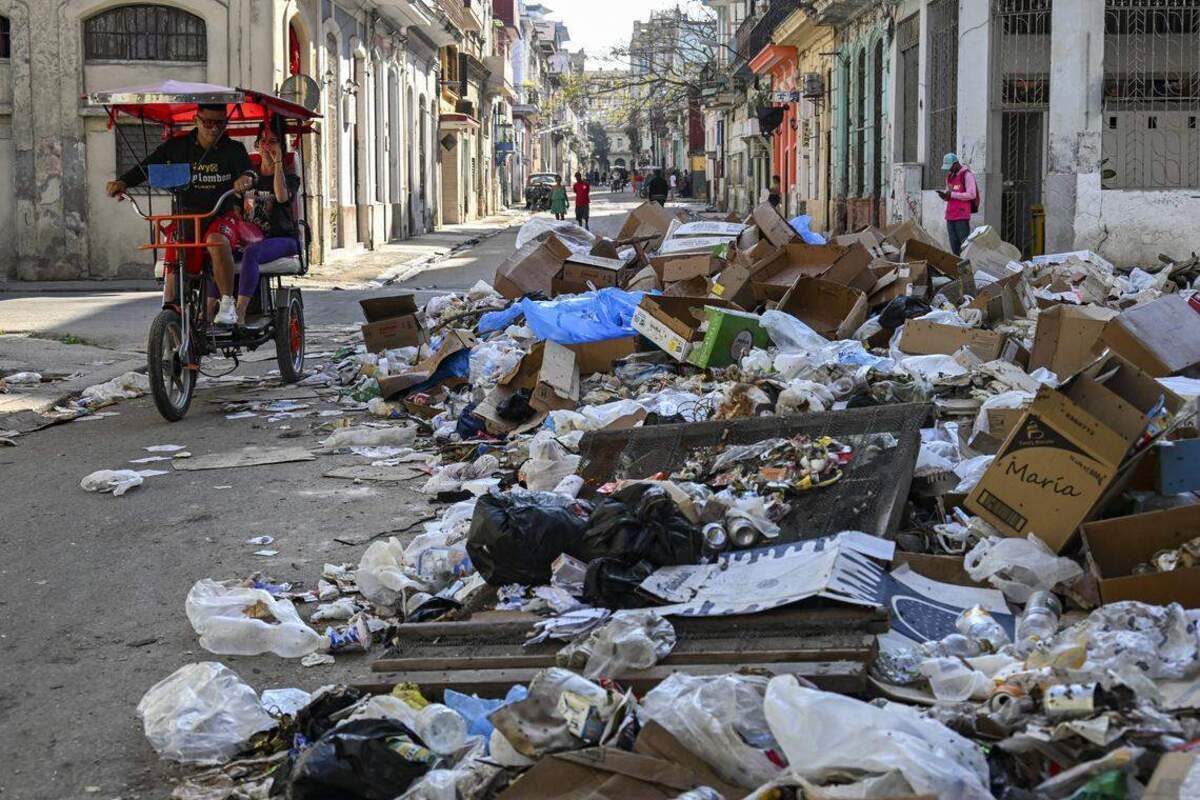
Epidemics, worsened by the unsanitary conditions caused by the mountains of garbage the government has stopped collecting, combine with the shortage of medicines and the dire state of medical facilities. To add to the problem, ordinary Cubans face malnutrition due to scarcity and high food prices. Retirees and people who don’t have family sending dollars or euros from overseas have a difficult time getting enough to eat.
For months Solidaridad sin Fronteras and Cruz Verde Internacional have requested that the World Health Organization and the Pan American Health Organization intervene in Cuba, and have only received bureaucratic responses, Alfonso said.
The doctor noted that help from Cubans abroad and from other foreign governments has been the lifeline for the sick, even though the Cuban government itself never acknowledges the assistance.
As a result of the energy and health crisis, which worsened in January when subsidized fuel deliveries to the island were suspended, nearly 100,000 surgeries have been postponed, according to the United Nations.
An estimated five million people with chronic illnesses could have their medications or treatments affected, including 16,000 cancer patients needing radiation therapy and 12,400 in need of chemotherapy, according to religious organizations carrying out independent humanitarian work on the island.
Diagnostics as basic as blood tests, ultrasounds, or electrocardiograms cannot currently be performed in Cuba due to the lack of basic services.
“Yesterday there was no water, today there is water and no electricity,” said a young Cuban on a Facebook video after trying for several days to get a blood test. “If I’m dying, the doctor told me it’s straight to the funeral home and that’s it, then two or three hours later they’d bury me.”
Aid in phases
Alfonso said the first step to address the island’s urgent needs would be to provide fully free humanitarian assistance.
“In Cuba children are dying for lack of ventilators,” he said, pointing out the most urgent need: treating patients with serious conditions who have been neglected for months.
Solidaridad sin Fronteras has 58,000 health professionals among its members. The nonprofit has defended the rights of doctors persecuted by the Cuban government and its representatives when they tried to escape from the island’s medical missions abroad, where they were essentially treated as indentured servants because they received a tiny payment for their work.
Upon the doctors’ arrival in the United States, the organization has also guided them so they could continue studies and obtain certifications and revalidations to enter the U.S. medical system.
Many of those professionals are now willing to help their country if the change they so hope for occurs, Alfonso said.
.JPG "f9513f5a-1c2c-4012-b92d-19e426ce4973 (1).JPG")
Alfonso has experience working in humanitarian efforts like those the United States provided after the 2010 earthquake in Haiti. He suggested the U.S. military could bring floating hospital ships to Cuba, citing the U.S. Navy’s Comfort, on which he has worked.
“These ships have burn units and facilities for respiratory patients, ambulances and helicopters, which can transfer the most critical cases,” he said.
He said Cuban doctors could work in those facilities because the U.S. military would allow them to do so without state medical licenses, especially in an emergency situation.
Hospital reconstruction in Cuba
The second phase would focus more on rebuilding hospitals and medical centers on the island, which are in a deplorable state. The Cuban government has not invested in maintenance or in building new healthcare centers because it has focused on constructing hotels for tourists.
Alfonso considers it essential to evaluate the health system across all sectors to calculate costs and methods for reconstruction.
The initial free aid would later be supplemented by a private healthcare system for those who can pay, alternating with a subsidized system for the most vulnerable, funded by a future Cuban government, he said.
The logistical part of the aid would be handled by Cruz Verde Internacional, which has been managing the shipment of medicines to Cuba, many donated by U.S. pharmaceutical companies.
The work they had been doing for years has decreased because Cuban state security began persecuting volunteers who distributed the medicines, said Taimy Alfonso, who leads Cruz Verde Internacional.
For now, the U.S. institutions have been meeting with companies that specialize in or have working relationships with medical supply firms, Taimy said, with the goal of entering Cuba with more medicines and first-aid items.
Alfonso said they have also received support from the Miami Medical Team, led by Dr. Manuel Alzugaray, which has extensive experience performing surgical interventions and providing healthcare in humanitarian missions in Latin America.
Other groups in Miami are preparing for change in Cuba. Businesspeople and investors created the Cuban-American National Chamber of Commerce in Miami with a view to Cuba’s financial reconstruction.
The Cuban-American Bar Association has also joined a coalition of opposition organizations in Miami to draft a legal framework for a future democratic Cuba.
“The good news is that inside Cuba, medical personnel are willing to work at anything, and they’ve told us so,” concluded Julio César Alfonso.
Those interested in helping can call 305-884-4110 and 888-481-5856.
