
Cuban‑American investors plan reconstruction of the island once democracy returns
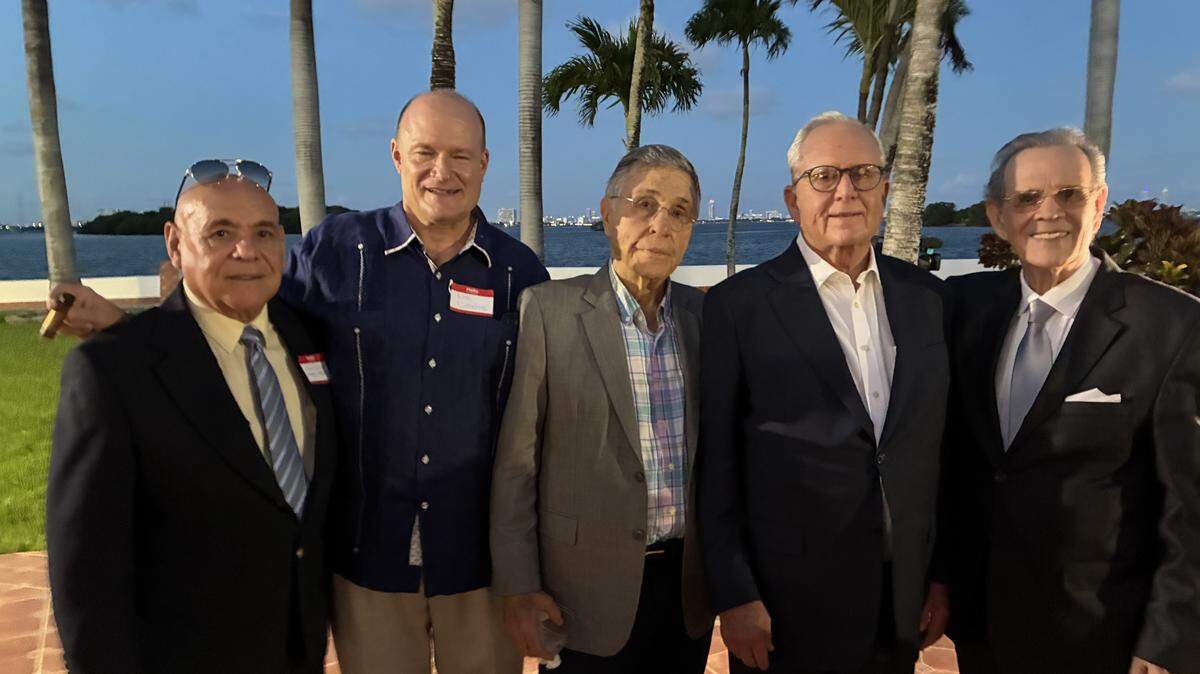
A group of Cuban-American businesspeople willing to support Cuba’s financial reconstruction in the event of political change met for the second time in Miami to announce the creation of the Cuban-American National Chamber of Commerce.
Formed as a corporation, the Cuban-American National Chamber of Commerce’s initial goal is to gather 100 wealthy Cuban-American families to promote investments in Cuba once political change comes to the island. The plan is to push for the creation of a stock exchange in which Cubans on the island can participate.
“The Chamber is completely focused on the business side of transferring the resources of Cuban-Americans in Miami and taking them to Cuba,” said businessman and publicist Juan Omar Sixto, who chairs the new chamber.
Sixto said the meeting on May 20 drew nearly twice as many people as attended the first gathering in early April. At that first meeting, Cuban-American business leaders signed a proclamation committing to “extend their financial resources, expertise, capital and patriotic motivation to develop a new and prosperous democratic Cuba.”
At the same time, the proclamation included references to the Helms-Burton Act, the 1996 U.S. law that codified the United States embargo on Cuba and prohibits its lifting until free elections are held on the island.
Since then, talks between the Cuban regime and the United States appear stalled, although there was a meeting of senior military officials from both countries near Guantánamo Naval Base on Friday.
Meanwhile, President Donald Trump and Secretary of State Marco Rubio have continued to mention Cuba, pointing to the need for change and increasing pressure on GAESA, the conglomerate run by the military that controls much of the Cuban economy.
“GAESA owns practically everything, and not a single penny of that money goes to the public treasury,” Rubio said Tuesday at a congressional hearing.
Financial education
The new chamber of commerce already has a work plan organized for the next three years. If it achieves its goal of bringing together 100 wealthy Cuban-American families, the combined net worth of its members would be around $200 billion, Sixto said.
Rebuilding and creating infrastructure on the island and modernizing banking structures would be among the chamber’s initial objectives. Cuba is currently facing a banking crisis that delays pension payments to retirees and limits cash withdrawals for the general population.
Businessman Joseph Hernández, a trustee of the Cuban-American National Chamber of Commerce and head of its financial section, noted that investments on the island must go into fundamental basic businesses that meet the population’s needs, such as food and water and electricity services, as well as distribution and transport.
“It’s like making a country again,” said Hernández, who plans to use his experience and contacts on Wall Street to create the stock exchange on the island.
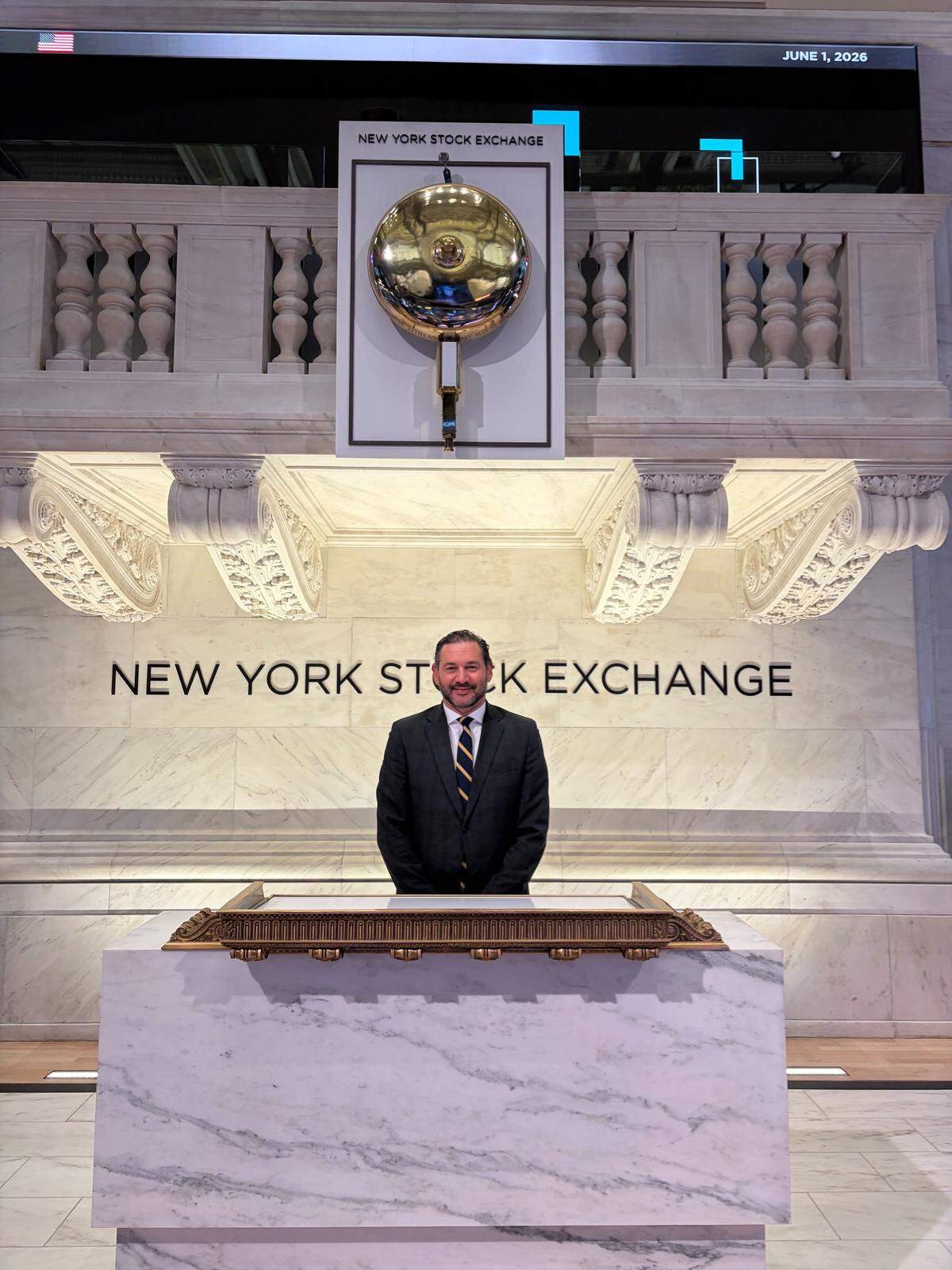
Hernández, CEO of the private equity firm Blue Water Ventures Partners in New York, said many investors are waiting for the opportunities that would open in Cuba when the communist regime ends.
“Everyone knows how hard-working we Cubans are and the opportunities in infrastructure, tourism, mining and trade,” said Hernández, who left Cuba as a child during the Mariel exodus in 1980.
Hernández says it’s important to have investors ready for when change comes to Cuba, and that requires a lot of planning.
The chamber has already taken preliminary steps to establish the Havana Stock Exchange and Commodities Exchange in Cuba as soon as conditions allow. The exchange’s aim is to attract international capital to the island.
Hernández will offer advice to Cuban-American businesspeople who plan to meet again on June 24 at the home of plastic surgeon Jorge Suárez Menéndez, host of the two previous meetings.
Sixto emphasized the importance of bringing financial education to Cubans on the island to familiarize them with how a stock exchange operates and the prospects for acquiring shares. The chamber plans to create an institute for stockbrokers in Cuba. They also propose promoting educational exchanges with U.S. universities to teach Cubans how to secure patents.
More businesspeople want to help
Several entrepreneurs who attended the two previous meetings have already joined the Cuban-American National Chamber of Commerce. Christian Eiroa, the son of Cubans and born in Honduras— where he heads the tobacco company C.L.E. Cigars — is a member of the new chamber’s board of directors. Others who have joined include Lombardo Perez, CEO of the METRO Ford car dealership, and Efraín Valdés, owner of Pinecrest Bakery, which has 32 shops in South Florida.
Valdés, who was born in Santiago de Cuba and came to the United States at age 2, wants to bring his experience in building companies to the island.
“I see it in a very organized way,” said Valdés, who grew his company in just 12 years. “You can plant the flag in different regions of the island and bring that delicious part of who we are to recover what Cubans already knew and that was part of their tradition.”
Valdés notes that Miami has become a business hub in part because of the work of many of the entrepreneurs who joined the group convened by Sixto and his brother Rafael, an architect who is preparing a proposal for the island’s architectural reconstruction.
Also present at the second meeting were other Miami entrepreneurs, including Tony Costa, CEO of Costa Farms; Armando Labrador, owner of the plastic surgery clinic My Cosmetic Surgery and founder of Cuba Primero, an organization that advocates for human rights and democratic change in Cuba; Orlando and Abraham Ortega, owners of Limitless Boats, a boat-building company based in Opa-Locka; and Manuel Menendez, CEO of building materials company Best Truss USA.
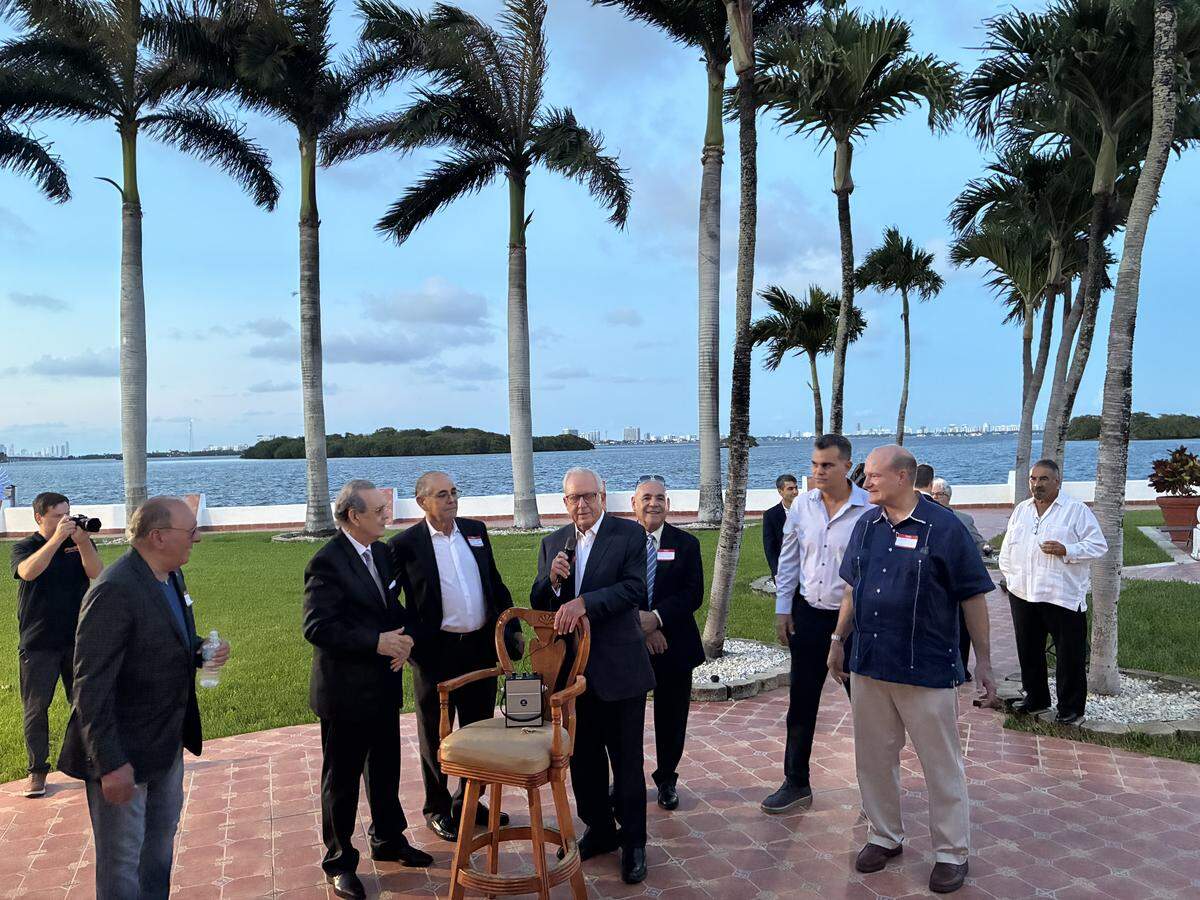
Cuban-American diplomat Otto Reich, who served as U.S. ambassador to Venezuela from 1986-89 and was assistant secretary of state for Western Hemisphere Affairs from 2001-02, attended the second meeting. Reich, 80, currently runs the lobbying firm Otto Reich and Associates.
Also expressing interest in investing in Cuba were Spaniard Federico Ramírez, managing director and CFO of Grupo Corporacion HMS in Albacete, and Nicaraguan Luis García, CEO of Adonel Concrete, the largest private concrete company in South Florida.
Sixto said he plans to seek a way to present the investment proposals for Cuba to the U.S. Treasury and State Departments to inform them that they are working on a business agenda for the island’s future. The third meeting of the group is scheduled for July 22.
Joseph Hernández, who is running for New York comptroller, says he always carries a message in both financial and political circles:
“Cubans want to be free and help the economy not only of Cuba, but of the world, and they have been very successful in the United States and want to work.”
