Can Miami embrace a July 4 milestone like this family did? ‘A lot has changed’
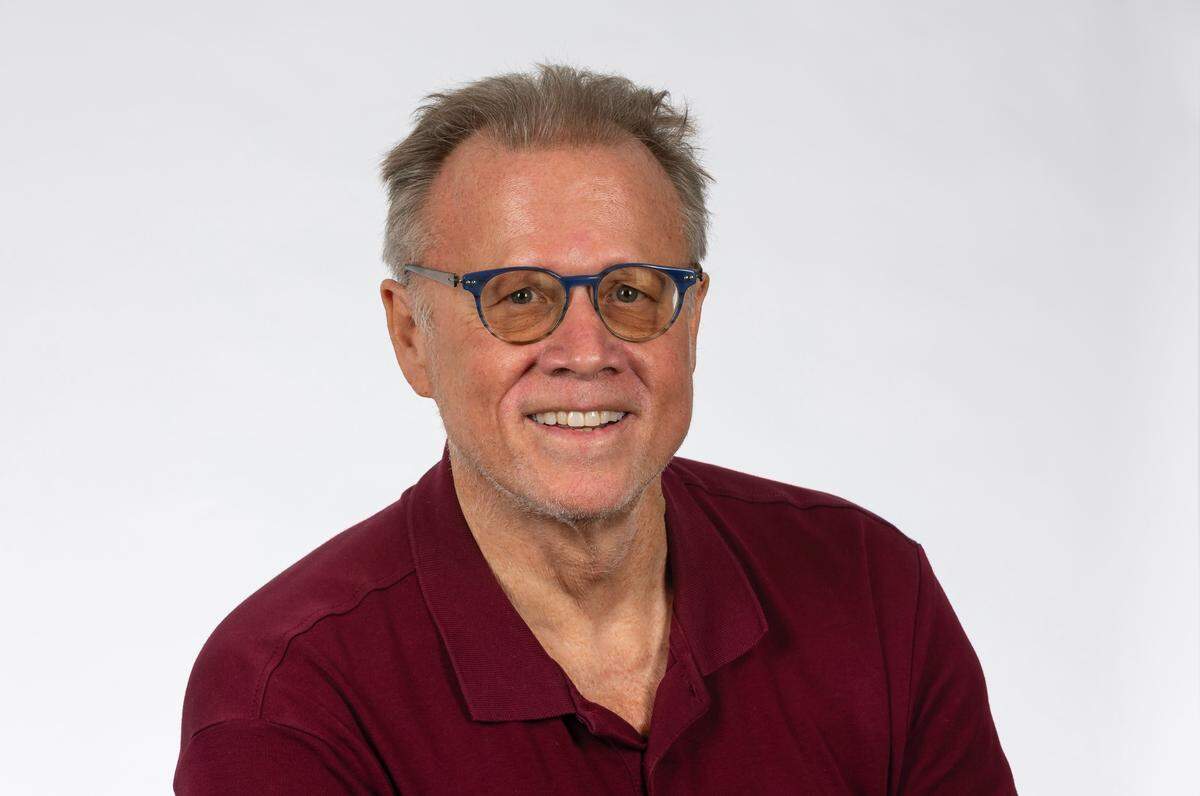
.jpeg "In this family photo, taken Mother’s Day weekend 2026 at Aryana’s University of South Florida graduation, left to right: Izaiah Purvis, Cory Purvis, Aryana Purvis and Natacha Purvis.")
Natacha Purvis was born in Miami during the nation’s bicentennial. Her arrival 50 years ago wasn’t the only big event for her family.
Just 12 hours before, her parents, Haitian-born Gerald and Mireille Delisfort, were naturalized in a July 4, 1976, ceremony alongside 7,200 other new citizens at the Miami Beach Convention Center. It was the second-biggest citizenship ceremony in history in a single venue that day, just behind New York’s Polo Grounds, where people took the oath as tall ships paraded in the harbor on America’s 200th birthday.
“A lot has changed since way back then, for sure,” said Purvis, born Natacha Delisfort at 3 a.m. July 5 at Mount Sinai Hospital in Miami Beach 50 years ago.
It’s a few days before her birthday and the United States’ 250th birthday. The semiquincentennial has started to gain traction in South Florida. From Publix to PetCo, we’re seeing store displays hawking merch with “America 250” logos.
There are America 250-themed festivities planned for Miami, too, including an ongoing exhibit of the nation’s founding documents, on loan from D.C. And something you wouldn’t have seen during the bicentennial, the year Purvis was born — drone shows.
Miami’s 1976 bicentennial
In a front-page newspaper story in July 1976, Natacha was welcomed as Miami-Dade County’s first baby of the country’s third century, the Miami Herald reported.
The country, flush with bicentennial fever, featured televised “Bicentennial Minutes” with celebrity hosts. They ran nightly for more than two years, starting July 4, 1974, to generate excitement for the nation’s 200th birthday.
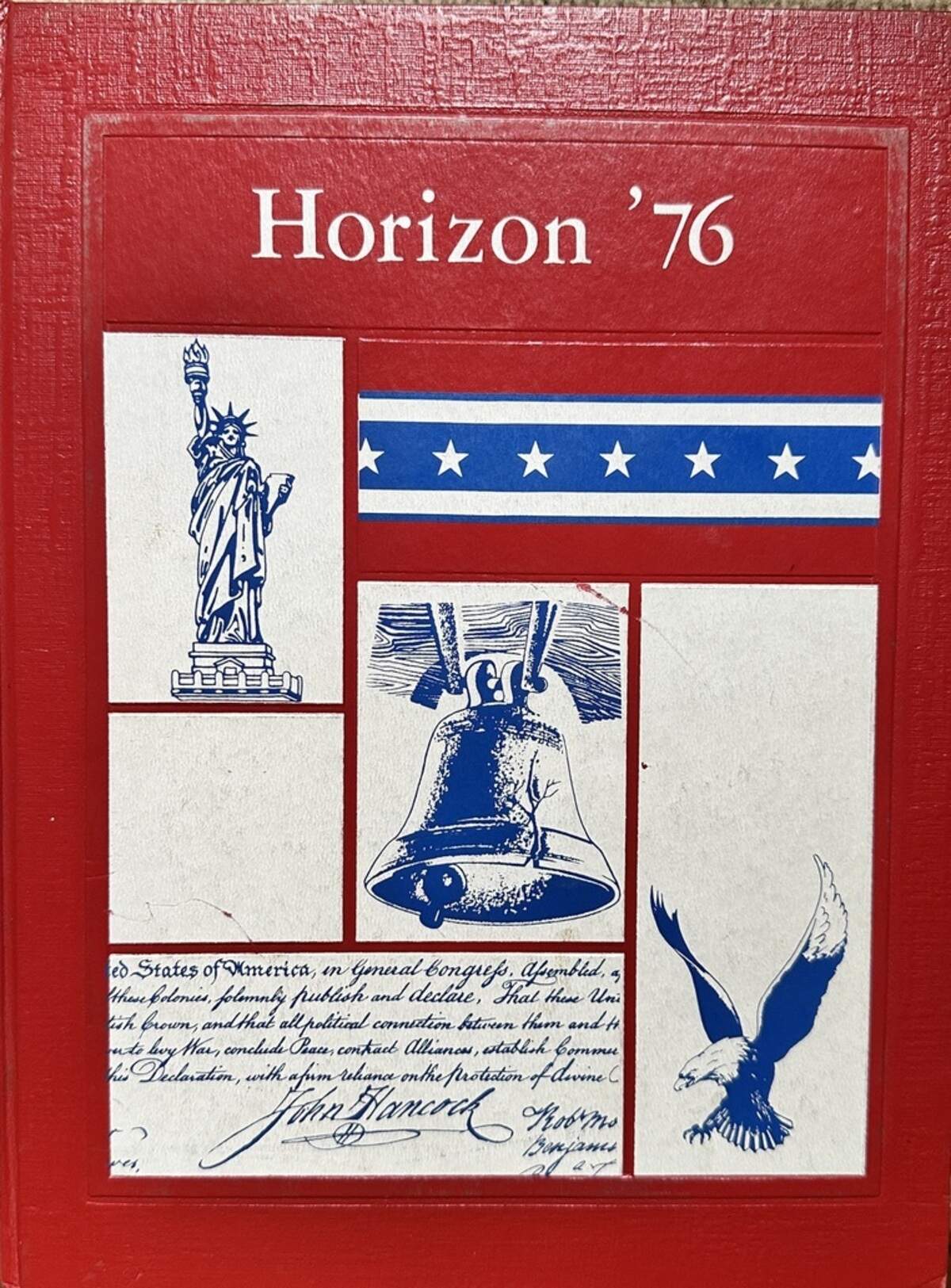
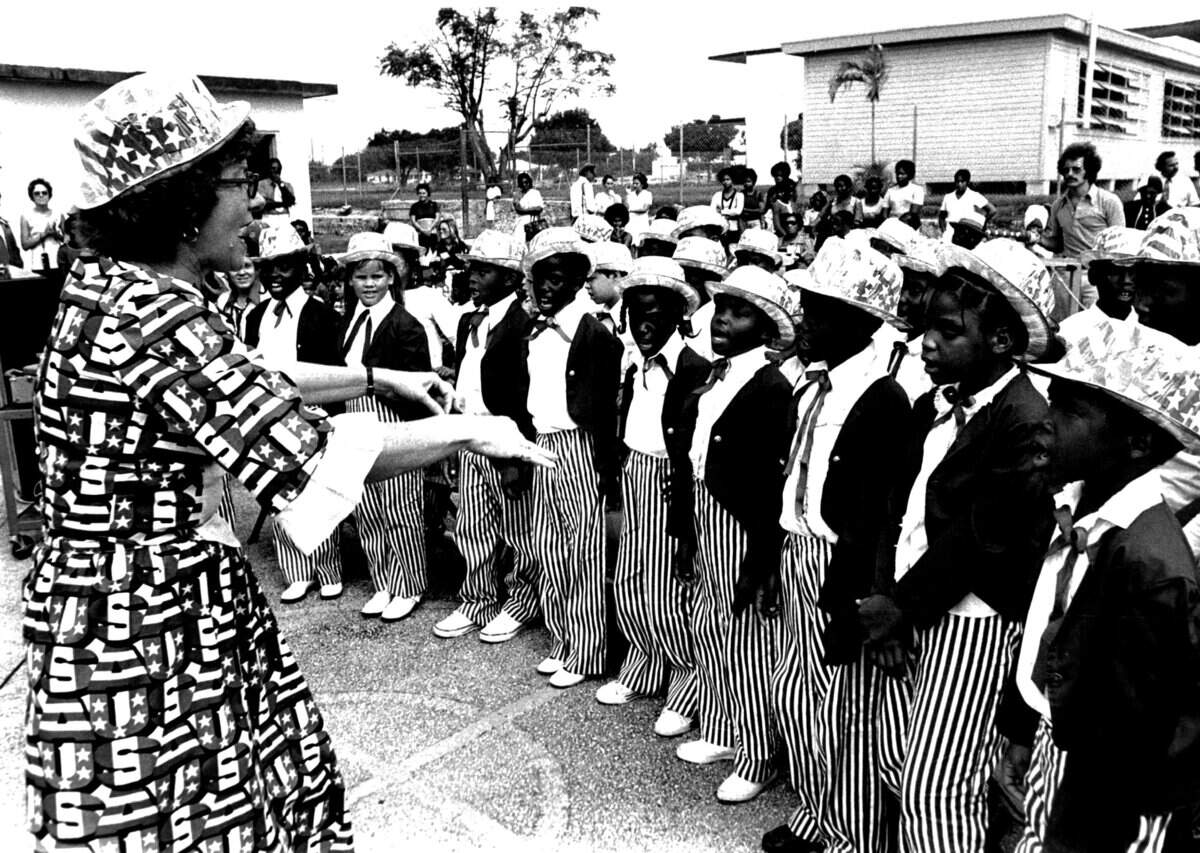
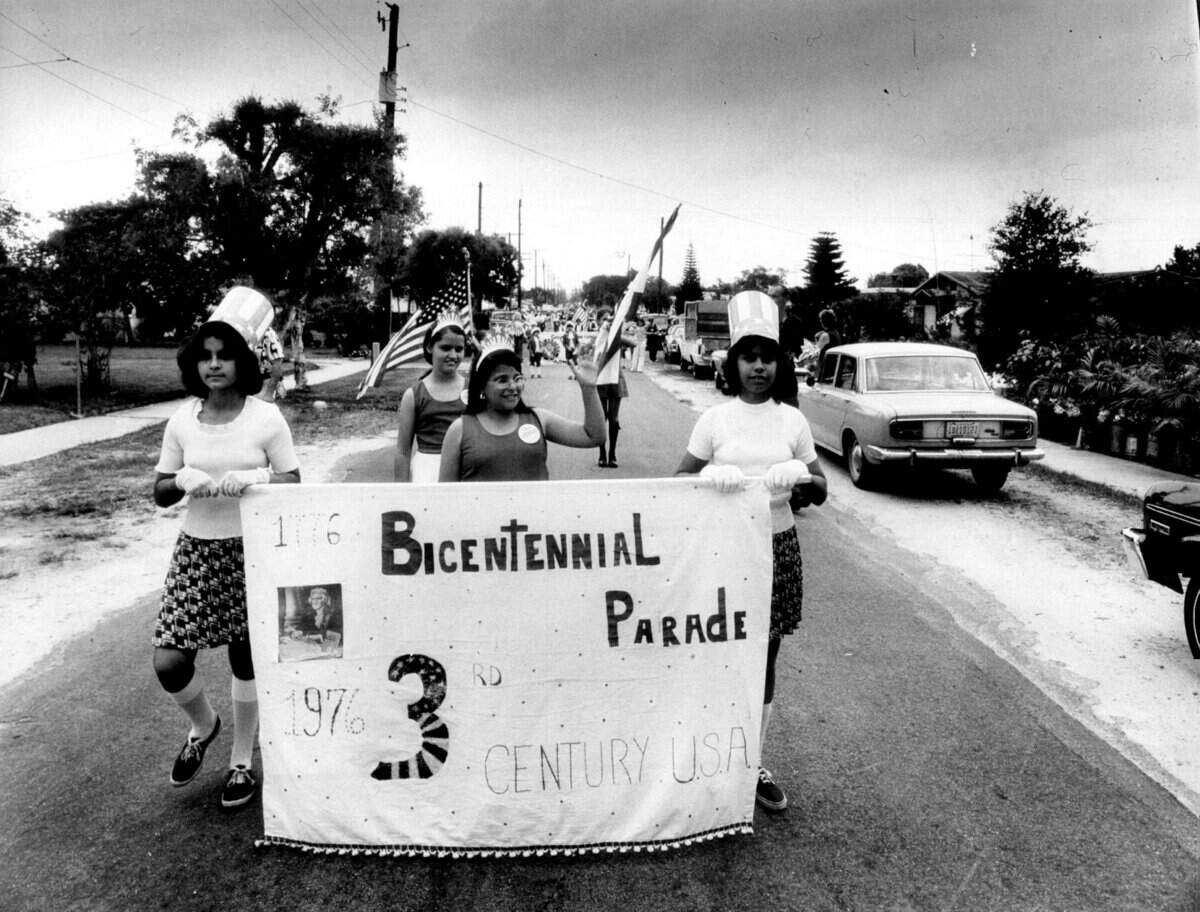
President Gerald Ford officiated over a Miami naturalization service at the Dade County Auditorium for more than 1,100 new citizens on Feb. 28, 1976. And months ahead of July’s bicentennial, Miami officials painted fire hydrants red, white and blue across the county. Ida Fisher Junior High in Miami Beach held a mock Ford-Carter presidential election with a ballot box in its recess courtyard to teach its students civics lessons. The South Beach school’s 1975-‘76 yearbook was a patriotic red, white and blue and illustrations of the Statue of Liberty, the Liberty Bell and the American Eagle.
And a major new park was to open on Independence Day south of the MacArthur Causeway and sandwiched between Biscayne Bay and Biscayne Boulevard in downtown Miami. Its name: Bicentennial Park.
That didn’t quite happen as planned. The $4.2 million Bicentennial Park managed to gather a 350-member interdenominational chorus on Independence Day 1976 to sing “One Nation Under God” before a gathering of elected officials to celebrate 200 years of freedom in America, but it was only two-thirds finished and didn’t officially open until the spring of 1977.
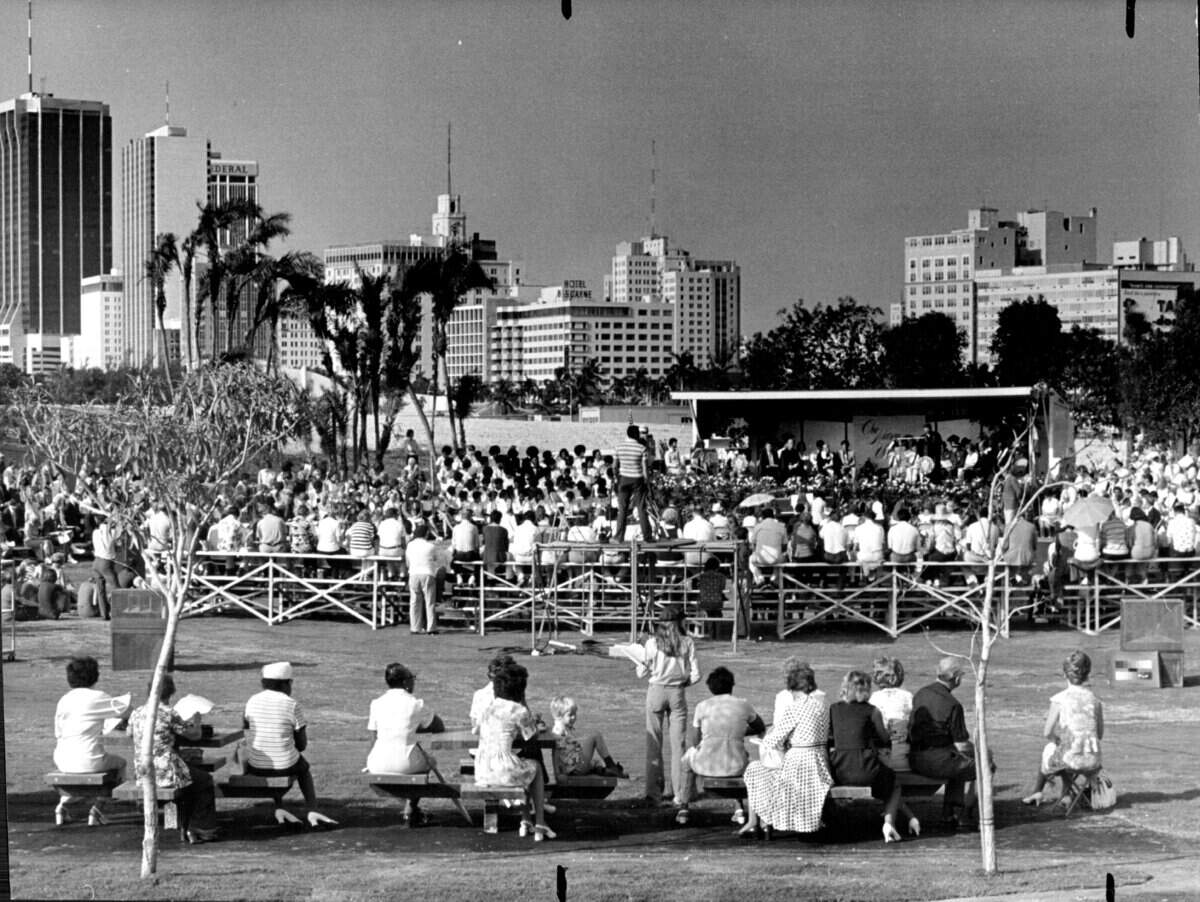
Bicentennial Park quickly fell into disrepair through the tumultuous 1980s. In 2014, the park was renovated and renamed Museum Park.
In 1976, Miami Marine Stadium’s bicentennial fireworks show drew a causeway-jamming capacity crowd of 15,000 while a downtown Miami parade attracted about 5,000 people. Today, the graffiti-stained marine stadium is shuttered from Hurricane Andrew in 1992.
But the downtown Miami’s skyline has erupted with the rise of multimillion dollar condo towers that we couldn’t have been imagined on Biscayne Boulevard 50 years ago. Still, America’s 250th birthday this year hasn’t quite matched the hoopla of that bicentennial year.
Sure, there’s World Cup mania in Miami. Seminquincentennial hoopla? Not so much.
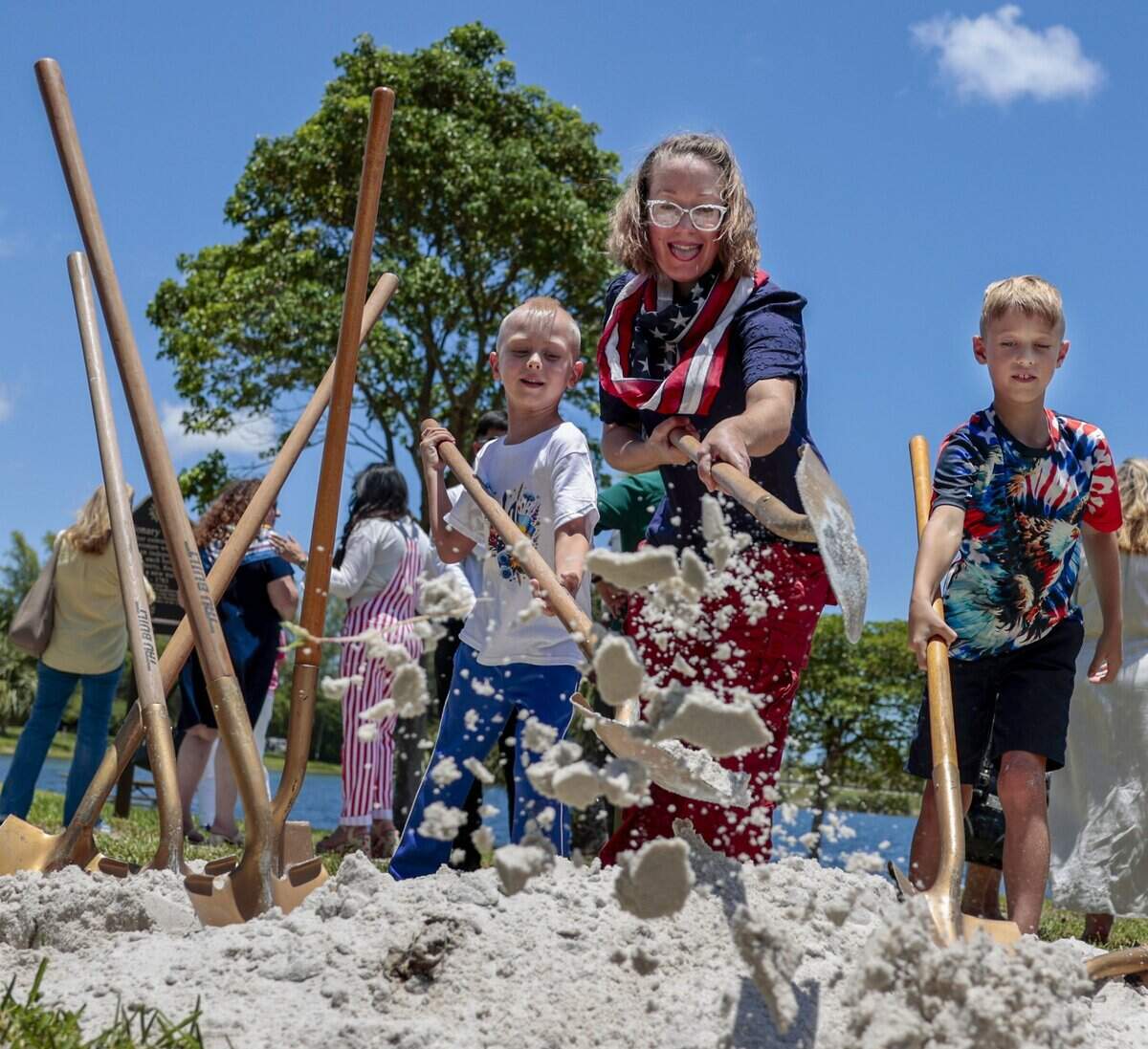
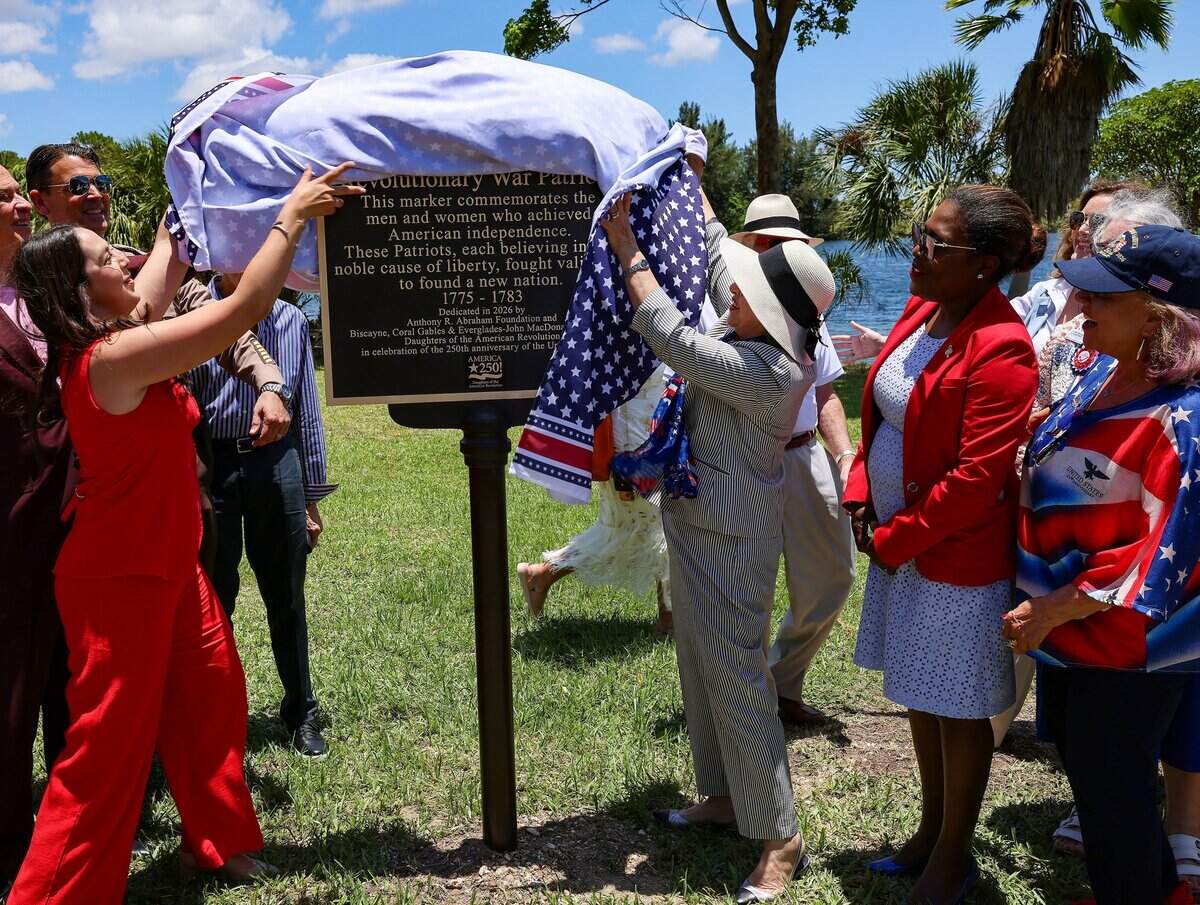
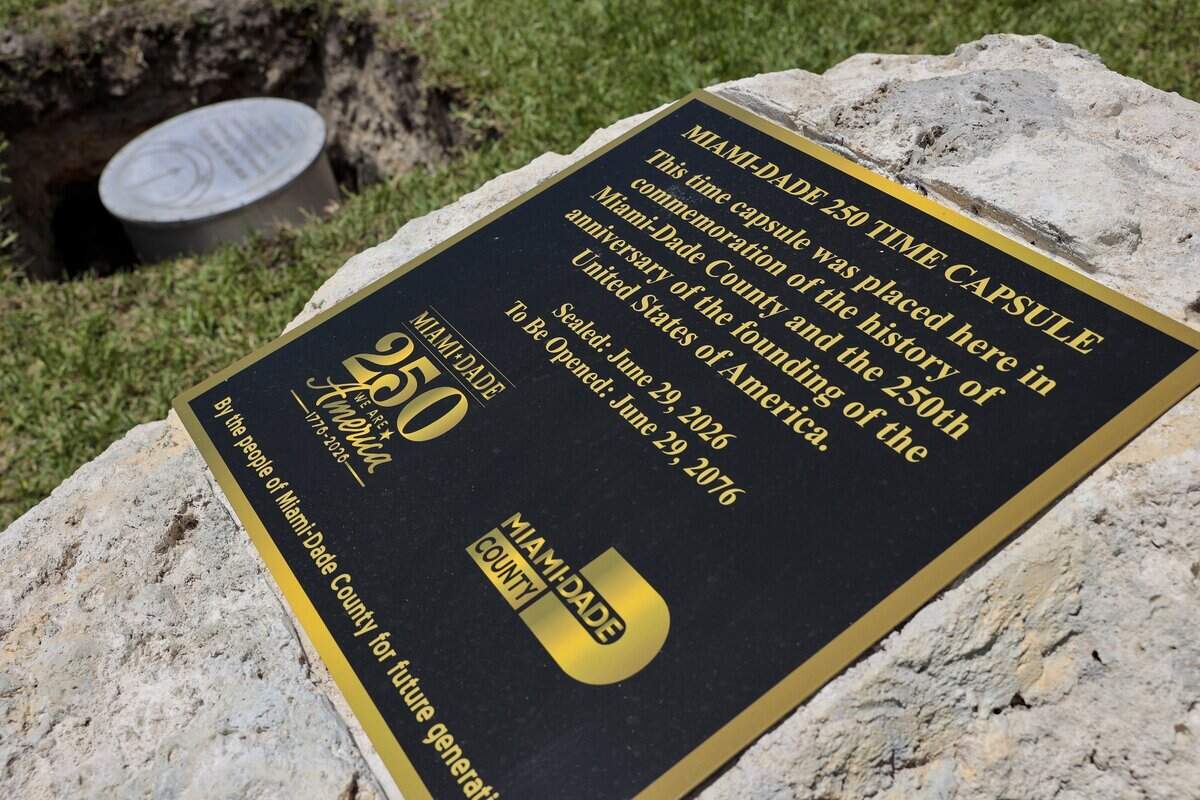
Of course, “semiquincentennial” doesn’t roll off the tongue as euphoniously as “bicentennial.” Miami-Dade Mayor Daniella Levine Cava, officiating over the placement of a time capsule and the unveiling of a monument to celebrate America 250 at Tropical Park on Tuesday, as the holiday neared, joked at the start of her presentation that she’s been “practicing” saying the seven syllable mouthful.
America 250
Still, there are some other key only-in-Miami events pegged to the semiquincentennial, beyond the annual Fourth of July fireworks displays in places including Bayfront Park in downtown Miami, Miami Beach, Tropical Park, Coral Gables’ Biltmore Hotel, Hialeah’s Milander Park and Fort Lauderdale Beach off Las Olas.
READ MORE: Ready to party for July 4? Get a rundown of events in Miami-Dade and Broward
The National Archives sent nine founding-era documents on tour and on June 20 the “Freedom Plane National Tour: Documents That Forged a Nation” landed at The Museum of Miami. The exhibit, on display through July 5, includes an engraving of the Declaration of Independence, the 1783 Treaty of Paris, a draft of the Constitution, and Oaths of Allegiance by George Washington, Alexander Hamilton and Aaron Burr. Many of the exhibits haven’t left the nation’s capital in decades.
Levine Cava hopes that the Tropical Park time capsule and America 250 monument get tricentennial Miami residents excited in 2076.
“I’m looking forward to all the Miami-Dade 250 events, but perhaps the time capsule event is the one I’m most excited about,” the mayor said. “Thinking ahead 50 years of what will be meaningful to the leaders and citizens of my beloved Miami-Dade County to mark this particular moment in our shared history has been a lot of fun.”
Miami’s bicentennial baby
Fifty years ago, the growing Delisfort family, which included toddlers Gerald, 3, and Muriel, 2, were among the millions nationwide swept up in the Spirit of ‘76. So much so, the couple, who bought a three-bedroom home in Miami after leaving Port-au-Prince in 1969, opted for citizenship in the bicentennial year.
A decade later, the family, which grew to include son Michael and, later, cousin Woosler Delisfort, an award-winning photographer and documentary filmmaker, was featured in a Miami Herald story that celebrated the 10-year anniversary of the bicentennial on July 4, 1986.
.jpg "79FE4475-2A9B-4F05-84EE-C80B4D76DFE8 (2).jpg")
Natacha, about to begin fifth grade at St. Mary’s School and already into math, watched the Fourth of July fireworks over Miami Beach. She eagerly awaited her birthday cake, “as long as it’s not pineapple.” And the 85-pound, nearly five-foot-tall, hours-shy of 10-years-old girl proclaimed to a reporter, “I’ll probably be a doctor. I want to help people.”
The now-49-year-old chuckles as she looks back.
“So a lot of life has happened. I left Miami. I ultimately love it here in Tampa, and I met my husband here and had two kids, so I did not go continue along the lines of being a doctor, but I still love helping people.”
After attending the University of South Florida and graduating with a bachelor’s from Strayer University in Miramar, Natacha Purvis is settled in the Spring Hill neighborhood of Tampa with her husband of 27 years, Cory, and their grown children Aryana and Izaiah. There, her grade school love for numbers and desire to help people was nurtured.
“I still have an opportunity to help people, and I’ve been in human resources now for, let’s see, 21 years,” she said.
“It’s been my desire to always try to help people in any capacity that I can. When my son was in high school, I helped while he was in his marching band. I volunteered even after he graduated high school, because I enjoyed doing it so much. And giving back to the community is just so important to those that need help. And being part of my church is something else that I enjoy doing,” Purvis said.
The couples’ daughter recently graduated from USF. Their son is going to USF.
“My children are kind of continuing along in my footsteps,” Purvis said. “My daughter shares my passion for numbers and so she’s going to be an accountant. And my son, he’s still in the marching band at USF and he’s still trying to figure out what he wants to be, but he’s trucking along.”
And so, too, America is trucking along, from bicentennial to semiquincentennial, Purvis, the daughter of immigrants, believes.
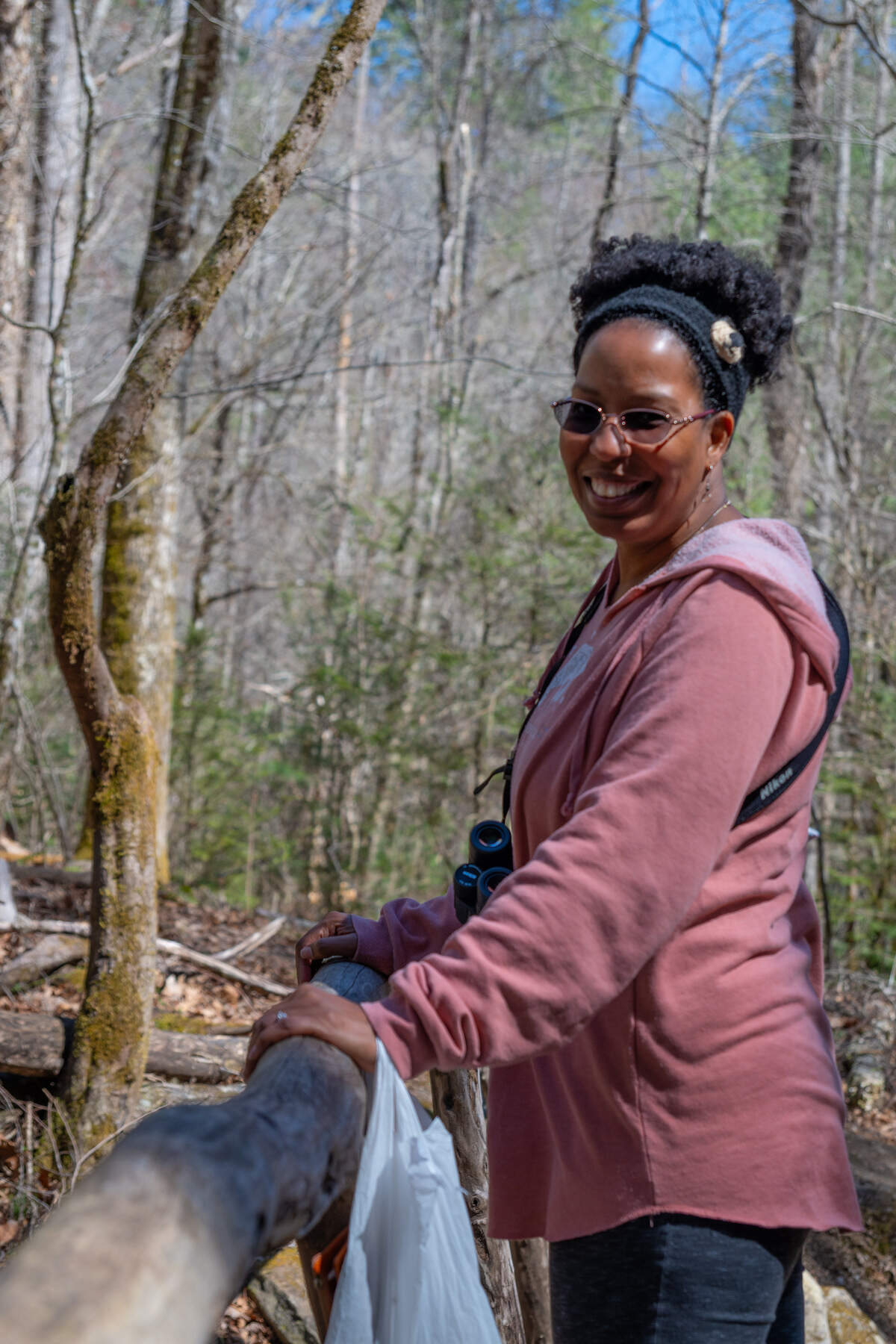
“I feel like our country is evolving to where we’re showing a lot more pride and sense of appreciation for the country, at least for me,” she said.
“I truly appreciate everything that our country has gone through, and I am just exceptionally blessed to have had my parents come in and make a living, a career here, and to raise four children, and just instilled the importance of making sure that we not only look out for each other, but we look out for others too,” Purvis said.
“My husband’s the same way, we’re like-minded, where we instill that to our children, to make sure that we’re not only taking care of each other but taking care of others that are less fortunate than us and continue to try to volunteer and help in any capacity that we can.”
This, despite a palatable wave of nationwide “frustration” and “dismay,” and a sense of procrastination that didn’t seem as such in post-Vietnam, post-Watergate 1976 Miami. It’s enough so that Miami Herald Editorial Board member Mary Anna Mancuso wrote a column in June urging readers to get on board and get excited about the semiquincentennial. “You don’t have to be satisfied with where America is to celebrate what America is,” Mancuso wrote.
Purvis credits her parents — Mireille, who still lives in South Florida, and her father, who died several years ago – with keeping the spirit of that bicentennial baby and hopeful 10-year-old girl watching fireworks on Miami Beach alive.
“I love that my parents were just such good role models that they were able to help teach that to me and to where I can pass that on to the next generation. I feel like we, as a country, as we’re getting older, we’re learning from our mistakes. We’re trying to do better, and we’re trying to get to a place where we can all hold hand in hand. And though we all have different opinions, we can still get past that and be amicable and appreciate each other.”
Revived local interest
Miami historian Paul George feels a similar sense of anticipation that we felt during the Spirit of ‘76.
“Like today, as July 4, 1976, neared, things really heated up,” he said. “Miami was selected as one of the country’s three bicentennial cities. We painted fire plugs red, white and blue. We worked on a [Miami River] walk as a bicentennial City of Miami project — it was not completed till the mid-‘80s. We welcomed the mobile bicentennial exhibit from the State of Florida. And we dedicated our new Bicentennial Park on the Fourth with plenty of politicians in attendance. We welcomed more than 7,000 mainly Cuban refugees as newly sworn in citizens that day.
“I think it will heat more,” George said. “We’re confused a bit.”
A simultaneous World Cup may even help, Levine Cava said.
“I think hosting the World Cup will help amplify the message about our treasured American ideals of freedom and democracy for all. People from all over the world are learning about American history at the same time as they learn about our culture,” the mayor said.
“It was such an exciting time in America. I remember the joy and patriotic spirit. It was the year I was learning all about democracy up close and personal,” Levins Cava said about the bicentennial year. “I was Student Council president in my first elected role at Yale University. I was learning to build consensus and taking positions on issues on both campus and the community.”
America 250 Host Committee members Rodney Barreto and former Coral Gables Mayor Don Slesnick also have opinions on bicentennial vs. semiquincentennial Miami.
“The World Cup is definitely a major event and, perhaps, a once-in-a-lifetime opportunity for Miami I wouldn’t say that much of the planning for the country’s 250th birthday has been overshadowed by the World Cup; rather, the world is very different from what it was 50 years ago, Barreto, co-chair of the FIFA Miami World Host Committee said.
“Miami is now a well-developed international city that is home to hundreds of thousands of people from all over the world. That simply wasn’t the case 50 years ago. And politics may play a role to some extent. More than that, though, I think the fact that we have so many residents from other parts of the world — and simply so many more people than we did 50 years ago — makes things feel a bit more diluted. And sure, 200 may seem snazzier than 250, just as a 20th or 30th wedding anniversary often gets more attention than a 25th. That said, I expect people to enjoy themselves more than usual this Fourth of July,” Barreto said.
Slesnick, and his late-wife Jeannett, welcomed son Don Slesnick III in the Miami of 1976. Other favorite celebratory Miami memories, he said, include tall ship gatherings in Miami in anticipation of the millennium in 2000 and now for this 250th birthday.
“And on each of those occasions the community put aside its differences for at least a while and came together to celebrate the good things in life,” Slesnick said.
Changing tastes
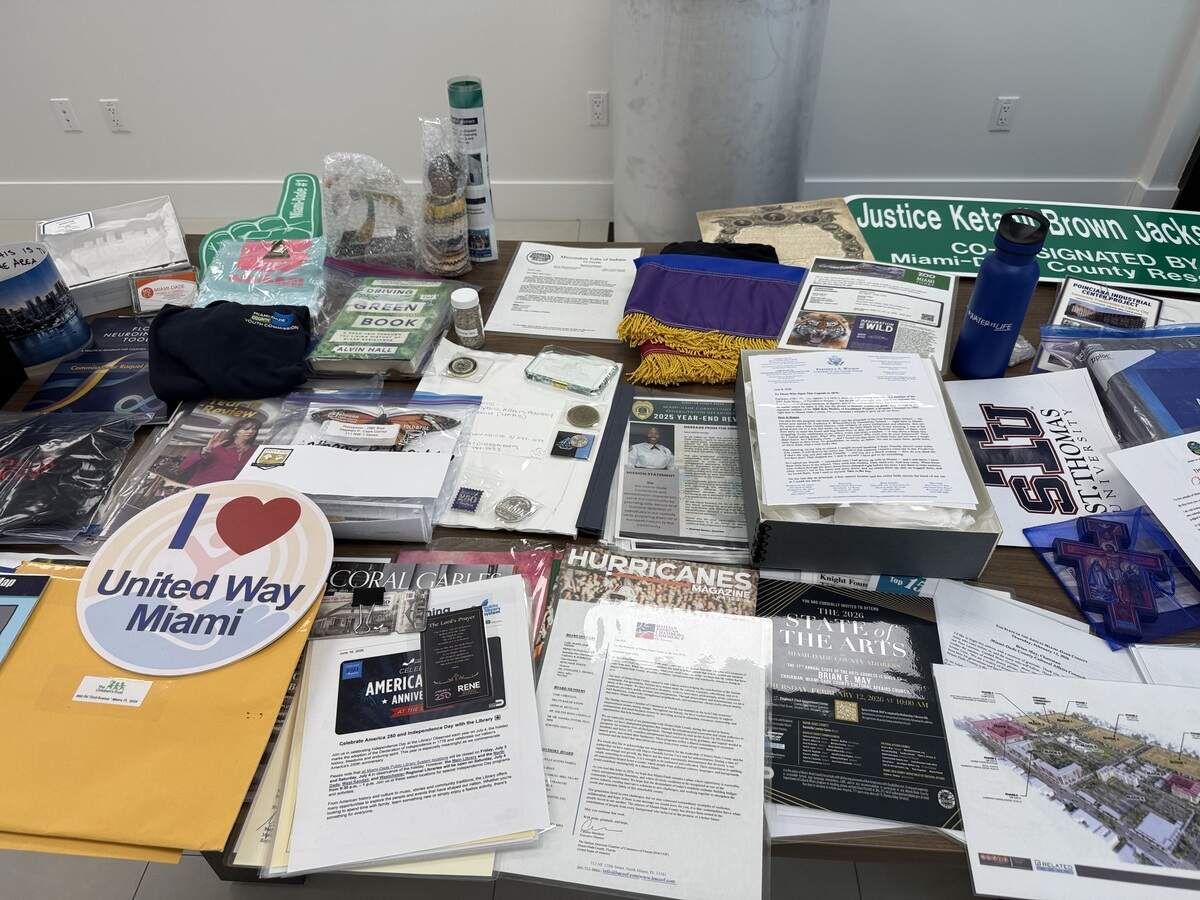
On July 4, 1976, Miami buried hermetically sealed time capsules that reportedly contained the city’s $15 million budget and a 6-year-old’s sugar cookie. On June 29, 2026, Miami-Dade buried a FIFA 2026 stole, an FIU Panthers mascot and memorabilia from historian Dorothy Jenkins Fields honoring her legacy in preserving Black history and culture including photos of the Historic Lyric Theater.
And we have no idea if that youngster’s 1976 sugar cookie endured its entombment, but at least one Miami bicentennial girl has had a major taste evolution.
Natacha Purvis enjoys pineapples in 2026.
“Actually, yes!” she says. “My favorite cake is the hummingbird cake. One of the main ingredients is pineapple. I also like pineapple in general.”
This story was originally published July 1, 2026 at 12:47 PM.