
A developer financed a film on what ails Miami. He says developers can do better
In the teaser to “The Future We Build,” a new short documentary about what ails Miami, environmental advocate Rachel Silverstein delivers some frank talk about sea-level rise as, behind her, dry-day flooding engulfs the shoreline at Matheson Hammock Park.
Housing advocate Annie Lord points to an affordability crisis that has “exploded.” As vintage clips of traffic jams and endless Miami-Dade single-family suburban sprawl roll, urban designer Juan Mullerat takes aim at poor planning, while University of Miami professor Joanna Lombard calls the resulting disconnection and lack of walkability “deleterious to health and well-being.”
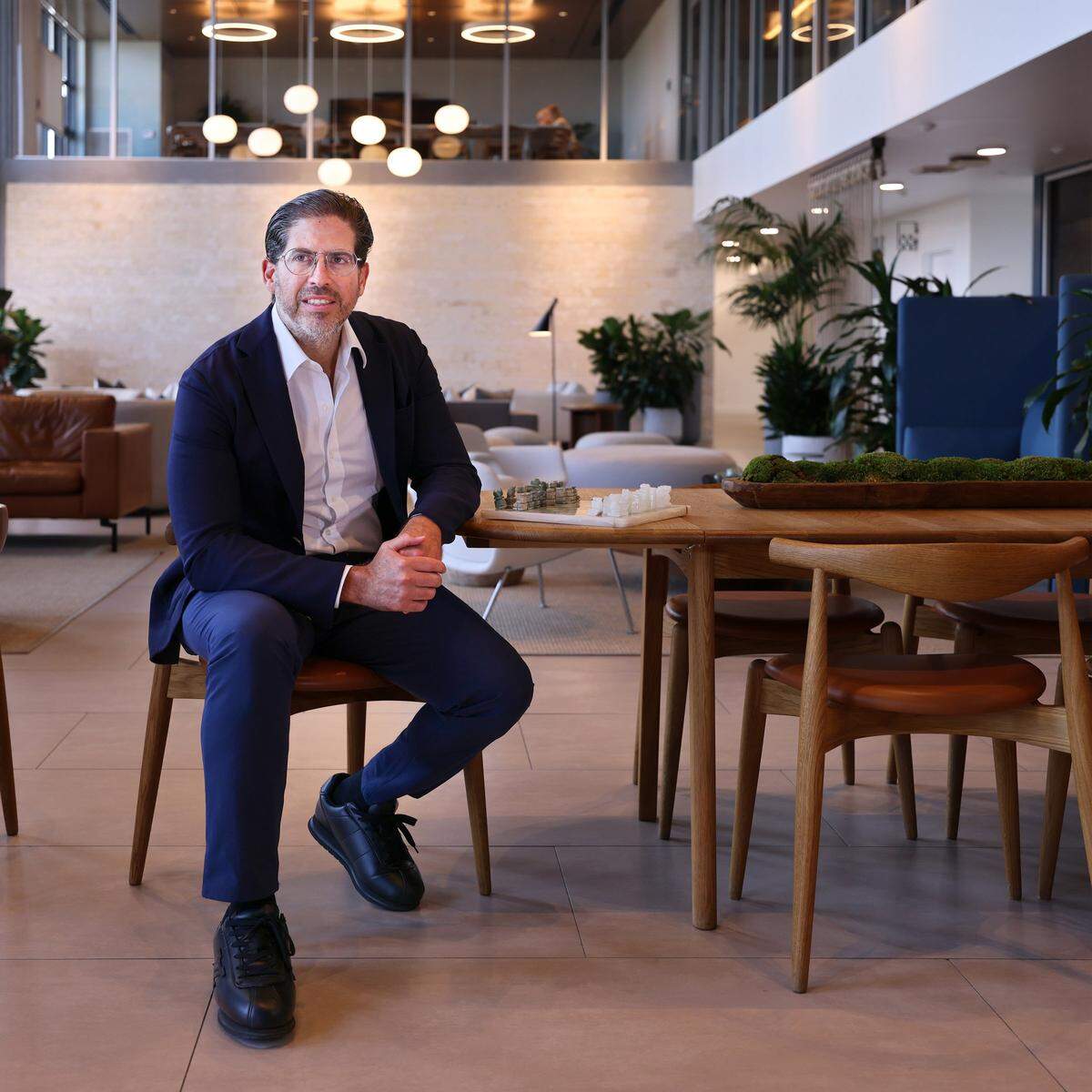
Then, in a subtly unexpected twist, developer David Martin, sitting in his office atop a Coconut Grove parking garage his firm redeveloped, issues an emphatic call to action: “We need to make changes. We must act. We must do things now.”
It’s hardly happenstance that Martin, who at 48 has emerged as one of Miami’s most visible, ambitious and prolific developers, pops up in the film. After all, he financed it.
But the 25-minute-long documentary, produced by Miami-born-and-raised filmmaker Yoav Attias, is no promotional vehicle. It’s a punchy but sober — and sobering — look at the salient issues facing Miami by some of its most prominent experts that also points broadly at solutions, like something that could run on public TV.
What kind of developer puts his money into an indie documentary that might give his business-as-usual peers — not to mention investors, luxury condo buyers and other beneficiaries of Miami’s prolonged but problematic and plainly inequitable real-estate boom — a conniption?
That would be Martin, a developer who’s trying to do things differently.
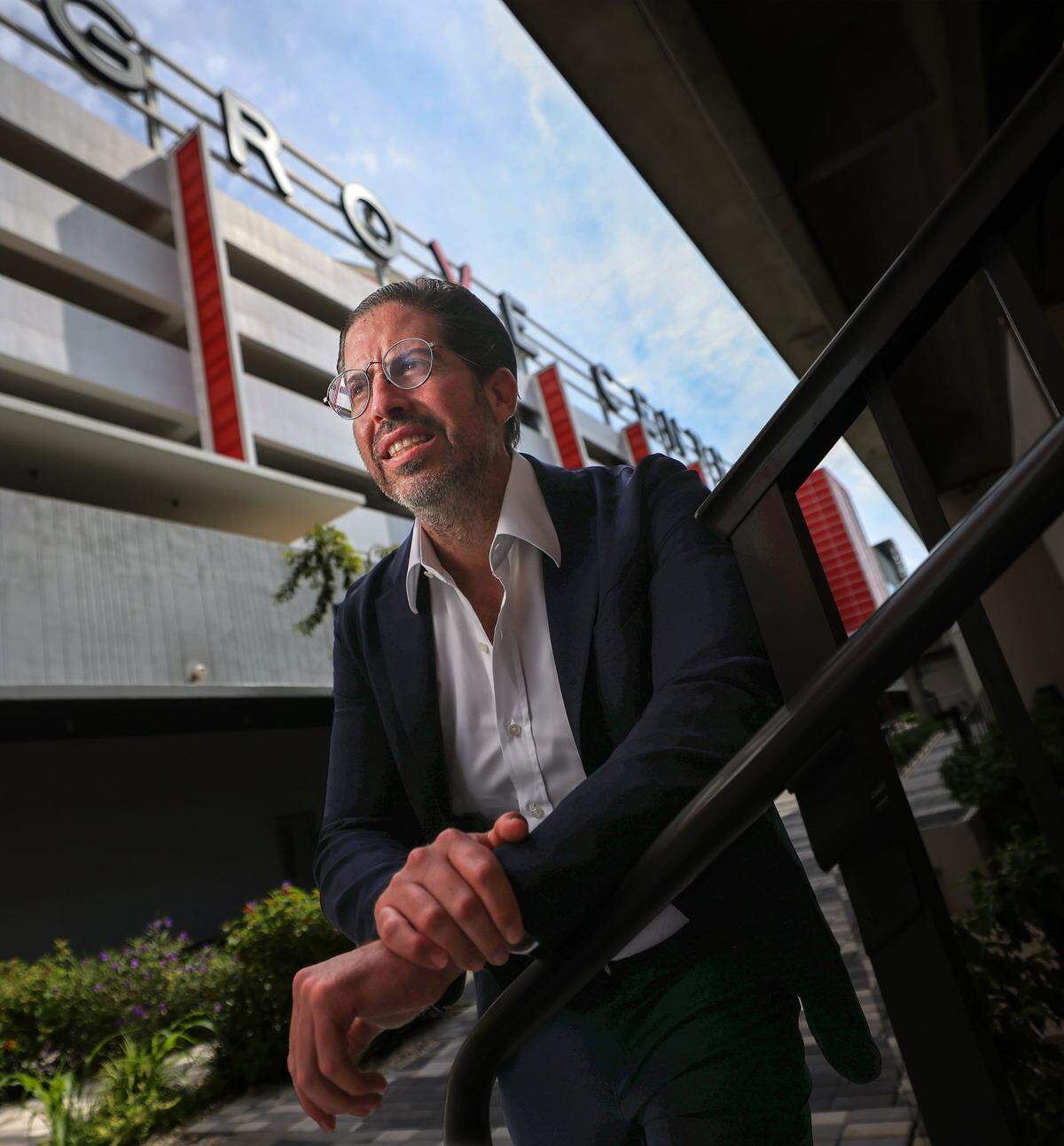
Martin, CEO of Terra Group, says he has come to believe that developers like him, working in ecologically fragile and urbanistically challenged Miami, have an obligation to do more than just build. They must think broadly about how to improve the city and solve its problems, project by project, as they go about their lucrative business, Martin said in a lengthy interview at his office in Coconut Grove, where he grew up and still lives today.
For Martin, departing from the norm applies whether the project involves — and this is but a sampling — a reconstruction of the fabled but vanished Deauville Hotel in Miami Beach; shops and luxury condo towers surrounded by lush gardens in the Grove; workforce housing at a Metrorail station or behind a Little Havana strip mall; a tower with an expansive public eco-park in Miami Beach; a massive self-contained new community on an underused bus terminal parking lot in far West Miami-Dade; or a hoped-for transformation of the shuttered, publicly owned Miami Seaquarium on Virginia Key.
“Today I realize more and more the responsibility I have to help make better communities,” said Martin, who supports several local environmental and philanthropic efforts, including helping to fund some of the Miami Herald’s climate reporting. “It’s not just about a building. It’s not just what we’re building, but how we’re building it. It’s not to build the most, but to build the smartest. We can do so much good in society.”
People who have worked with Martin, or watched his 25-year career closely, say it’s not just talk.
Martin, while closely watching his bottom line and, by all appearances, generating hefty profits, puts in practice what he preaches in every project he considers, said Mullerat, founder of award-winning Miami planning firm Plusurbia, which designed the plan for the redevelopment of Wynwood for the city and works frequently for Terra.
Mullerat says Martin deeply researches neighborhoods and their history, turns out time and again to speak with residents, often making significant changes to projects in response, and looks for ways to improve the surroundings beyond his building footprint.
Martin will go well beyond the brief for most developers, Mullerat said, by paying for studies and designs to improve streets, sidewalks, environmental resiliency and other elements of the urban and natural environment around his projects that, if he can’t implement, public agencies can put to use.
After announcing an uber-luxury tower for the site of an old Key Biscayne hotel he bought with a partner for $205 million, for instance, he hired Plusurbia, at his own expense, for a complex blueprint backed by Miami-Dade Commissioner Raquel Regalado for a radical makeover of the Rickenbacker Causeway. The plan calls for improved traffic flow while turning the causeway’s edges into an elaborate and environmentally resilient park called The Shoreline.
In similar fashion, as he planned a pair of new residential towers in Northeast Miami, Mullerat said, Martin asked the planner to draw up street, sidewalk, bike lane and intersection designs to better connect the disjointed but adjacent neighborhoods of Midtown, Edgewater, Miami Design District and Wynwood.
Martin has also long been a key supporter of The Underline, the 10-mile-long park, bike and pedestrian trail under the Metrorail line that’s now nearing completion, developing strategies for tax districts to help the nonprofit group that will manage it to pay for long-term maintenance, among other assistance.
“I don’t think he’s trying to be different,” Mullerat said. “I think he is different. I don’t have any other client like him. He’s playing more of a long game than most developers. He’s looking at long-term benefits beyond what he does in any one project.
“His greatest strength is that — this sounds corny, but it’s true — he listens. That is rare in a developer.”
High-profile projects draw high scrutiny
In the past decade in particular, Martin — often working with Miami-Dade County, municipalities or other developers — has tackled a wide range of projects of a scale, variety and complexity that’s hard to reckon with. And he’s displayed a relish for projects with a public profile, and the accompanying potential for contention, that would make many other developers blanch.
What they all have in common, whether urban infill projects or suburban redevelopment, is that they embrace density, a compact scale, neighborhood revitalization, walkability, transit connections and environmental sustainability — elements he touts, in the film he backed and in frequent public talks, as solutions to the problems of sprawl, traffic and ecological degradation.
The approach is inspired, Martin said, by a love for his hometown of Miami and the legacy of his parents and grandparents, among the Cuban exiles who in their struggle to establish a new life helped remake the city.
%20Robin%20Hill.JPG "Park Grove Photo (c) Robin Hill.JPG")
Born in Gainesville while his father, Pedro Martin, was in law school, Martin has lived in Miami all his life except for college and law school, also at University of Florida. In 2001, at 23 and fresh out of school, he joined Terra, the development firm his father, then a partner at the Miami legal powerhouse Greenberg Traurig, had just founded.
Early on, David Martin says, he adopted a methodical “think-tank” approach to projects, based on deep research and analysis that extends well beyond a standard financial pro forma to genuine neighborhood input, which he said often makes a project better than what he started off with, even if it takes longer to get there.
Underlying the strategy is a belief that the best solution is to build the way out of problems. That means building up, with taller buildings in the urban core and in urban nodes like Doral, Downtown Dadeland or Coral Gables, instead of out, with low-density suburban development beyond the urban boundary at the western edge of the county, Martin said. With all of that comes less reliance on cars and, if smartly designed, a greater sense of place and community.
“I want to be intellectually stimulated,” Martin said. “We thrive off solving those challenges. The secret is, can we find common ground? I’m somewhat of a perfectionist, and I want everyone’s buy-in.”
That commitment was fire-tested in 2005 when Martin and his father, who had purchased the Freedom Tower, famed as a processing center for Cubans exiled from their homeland, announced a plan to replace the landmark’s back portion with a glass cube backing up to a towering glassy condo, drawing a furious public reaction.
Terra dropped the condo plan, agreed to city designation of the 1925 tower as a protected historic site and donated the property to the abutting Miami Dade College. David Martin helped endow the creation of a museum of Cuban exile history at the tower.
The controversy, Martin says, was a lesson in the need for public consultation and communication before a project is designed and announced, and a reminder of the weight development can bring to bear on a community.
“I realized the responsibility of what I was doing,” he said.
At the time, Martin also said the reaction against Terra’s designs awakened him to the value of great architecture, and since then he has often turned to star-level architects both from Miami, such as Arquitectonica and Touzet Studio, and internationally famous figures like Denmark’s Bjarke Ingels and his BIG firm, the Italian Renzo Piano and Briton Norman Foster.
Today, like a real-life Little Jack Horner, Martin has his thumb in so many plum development pies across Miami-Dade and South Florida that keeping track requires a spreadsheet.
In Coconut Grove, Martin and Terra built or co-developed three big high-rise luxury condo projects — seven towers in all — that, while controversial among many residents, helped resuscitate what had been a senescent village center.
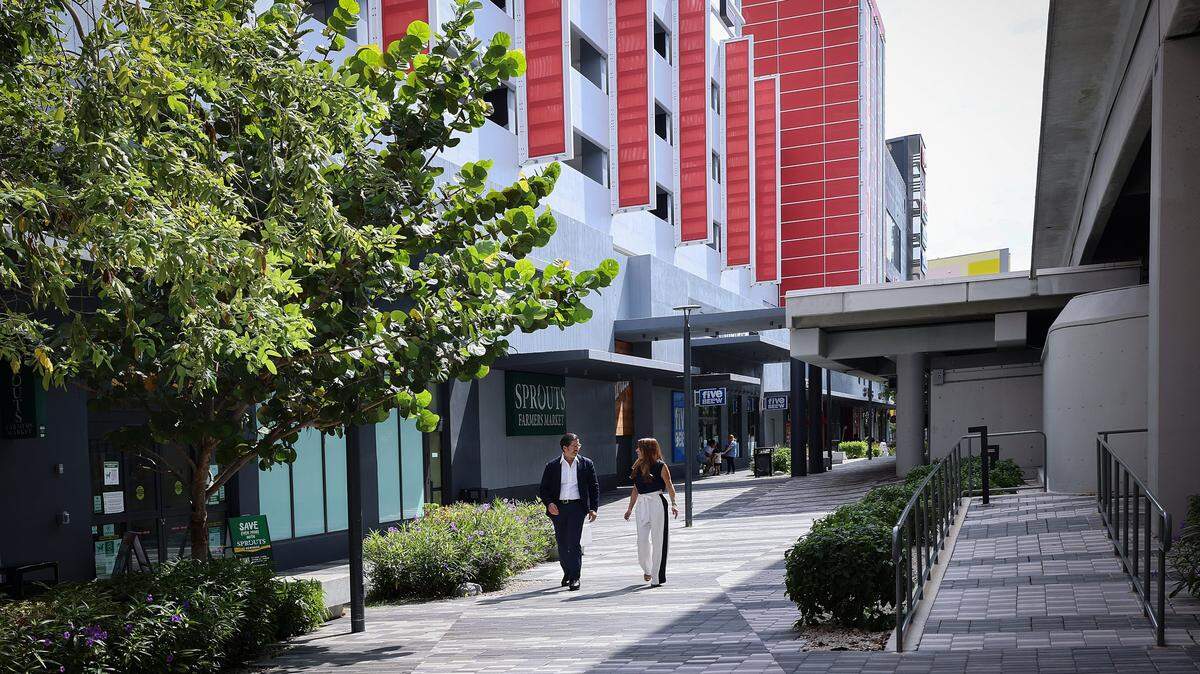
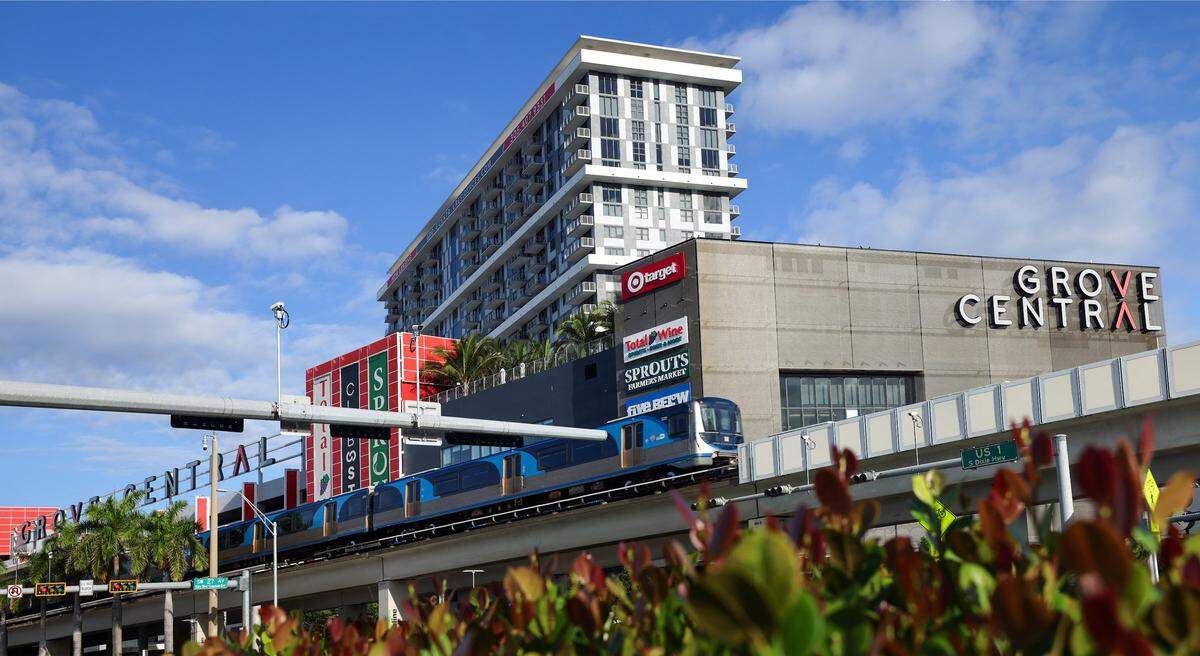
Nearby, at the Grove Metrorail Station at Southwest 27th Avenue, he filled an underused public parking lot with the massive Grove Central — 400 apartments, including workforce units, over a Target and a supermarket, with mass transit and a new segment of the Underline at their front step. In western Little Havana, he tucked another 400-plus workforce-rate apartments, Centro City, behind a large strip mall, putting residents steps from jobs, groceries and services.
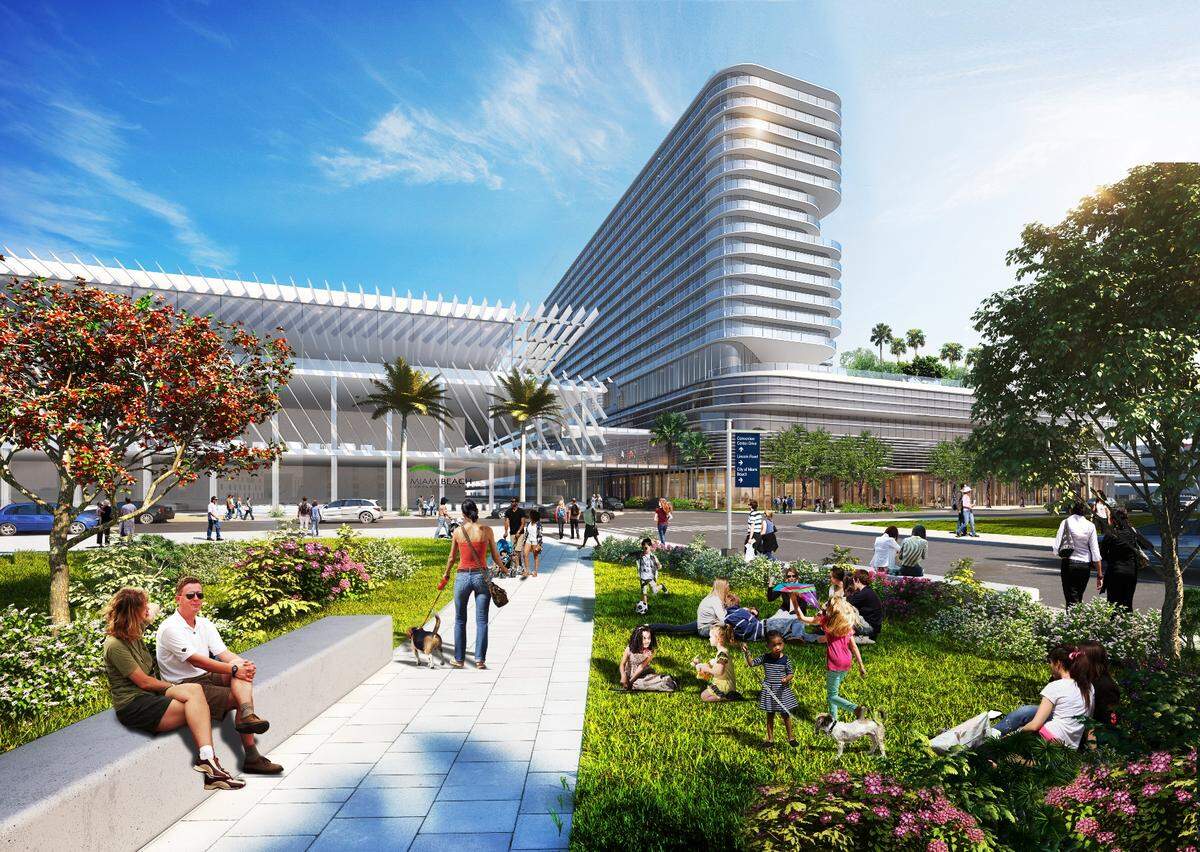
On Miami Beach, the new convention center hotel he co-developed, a linchpin of hopes to revive Lincoln Road and buttress a lagging convention business, is finally rising after years of planning.
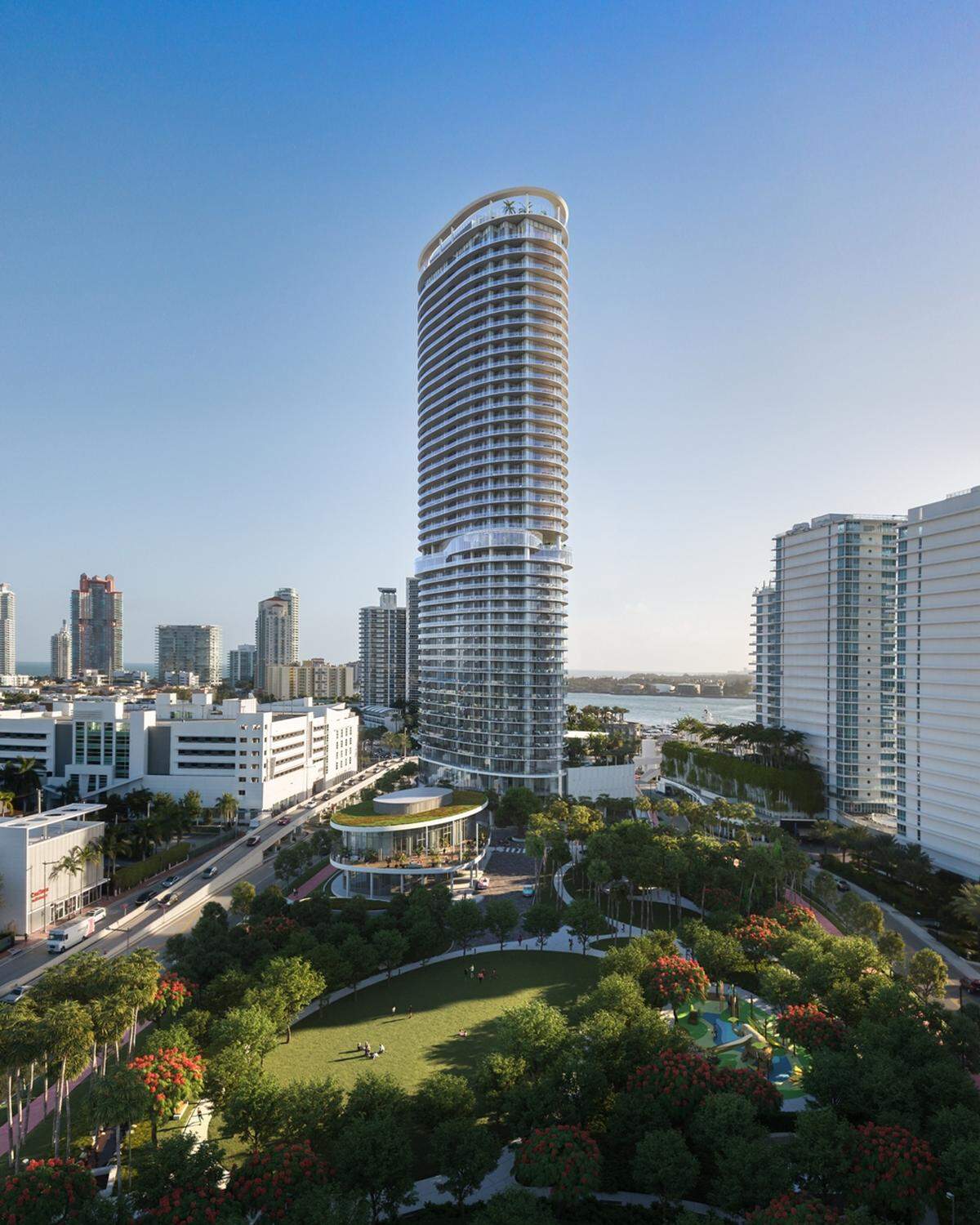
On Fifth Street, Terra and Crescent Heights transformed the once-derelict entrance to Miami Beach off the MacArthur Causeway with a round luxury residential tower, the city’s tallest at 48 stories, and a $10 million park with bleeding-edge eco-features like floodwater storage and natural filtration that the developers paid for in exchange for a substantial increase in building height.
“Terra was fantastic,” said Crescent Heights co-founder Russell Galbut, noting that Martin had called and offered to join and run the project. “He’s like me. He’s really a workaholic. He’s detail-oriented. He’s smart. He’s very disciplined. And he has experience.”
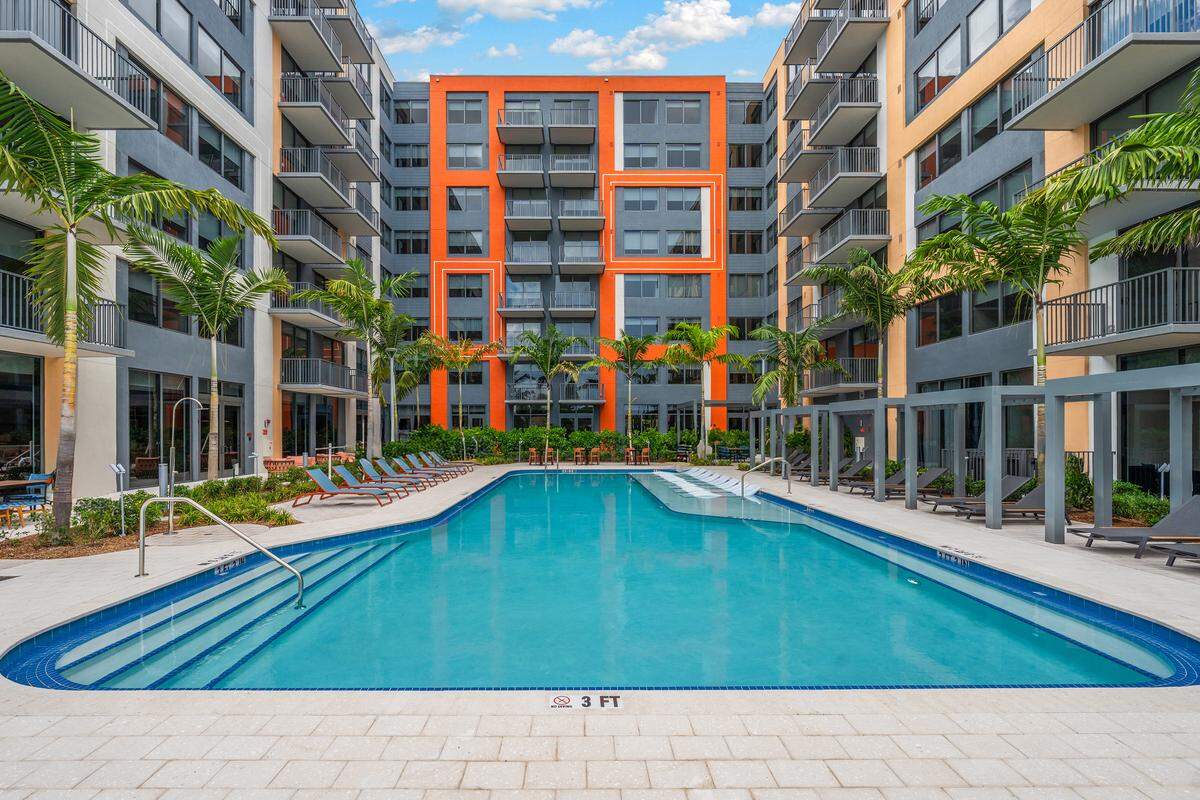
In west Hialeah, a place known more for concrete than green, Terra built 460-garden style apartments, with rents set at affordable market rates, that’s surrounded by botanical gardens. The garden apartments represent a middle scale of development once common but today rare — it’s been dubbed “the missing middle” — that Martin says is one solution to the affordability crisis.
And there’s more coming, including a new bid to redevelop the city-owned Monty Trainer property at the Miami Beach Marina with 14 stories of retail and office space. Substantial public reaction there prompted a significant design change that opened up a view corridor on one side of the proposed new building, he noted.
It’s Martin’s second stab at the redevelopment bid. Beach voters in 2020 narrowly rejected a deal with Terra to turn the site into condos.
There have been some other stumbles as well, and sometimes litigation. A billion-dollar bid to buy the vacant land on Biscayne Bay where the Miami Herald building once stood fell apart. That was Martin’s second failed attempt to develop the site. In Boca Raton, voters recently resoundingly rejected a city-led plan designed by Terra to redevelop downtown municipal properties.
At The Well, a health-oriented residential redevelopment in the heart of the Grove, across from his office, Martin took advantage of what may have been a zoning miscue by the city to add three stories over the village center cap of five stories, drawing withering criticism from Groveites and an ongoing lawsuit by neighbors.
%20Terra%20%26%20Robin%20Hill%20(1).jpg "Grove at Grand Bay (c) Terra & Robin Hill (1).jpg")
That caused some neighborhood residents who had come to grudgingly respect Martin for his open-minded listening, even if they didn’t like his towers, to turn against him once more.
“I do think he is unusual. He is more receptive to the public,” said Andy Parrish, a veteran small Grove developer and activist who became familiar with Martin’s projects as chairman, at different times, of the city’s historic preservation and planning and zoning boards. “I think he really intends for Miami to be a grand and glorious city.”
But, Parrish added, “he also acts like many other developers. He’s caught in between. He takes advantage of the zoning code and the city’s lack of enforcement. He lost a lot of the Grove. It just enraged everybody. That was a bad mistake on his part. But understandable. If the commission awards you eight stories instead of five, why wouldn’t you take it?”
Terra’s planned Deauville reconstruction, which delighted preservationists and Beach officials, has meanwhile been slowed by infighting among the controversy-courting family that owns a majority share of the property. It’s resulted in a dramatic lawsuit from some Meruelo family members against their relatives, now under settlement negotiations, that drew in Martin and Terra as co-defendants on allegations of fraud. Terra has denied the claims.
And sometimes controversy has found Martin. Terra was sued by survivors of the collapse of the Champlain Towers South condo in Surfside who claimed that vibrations from construction of his luxury Eighty-Seven Park tower next door contributed to the calamity. Terra settled through its insurers, and the contention has never been proven publicly.
‘Trying to address the wicked problems’
The idea for the four-part Miami film came to Martin when he watched a full-length 2025 documentary that Attias produced on San Francisco’s housing crisis, “Fault Lines,” that has drawn significant attention in the Bay Area.
Attias, who was raised in Kendall and is based in Miami, said Martin called him, proposed a documentary and some ways to frame the issues and solutions, then cut him loose. After that, Martin only saw a final cut, Attias said.
”He gave me a lot of freedom to say what I saw fit,” Attias said. “He trusted me to tell an honest story and one that was not promotional in nature. I never felt pressure to say anything on behalf of Terra and David. There is almost no developer who would do this.”
Even the Grove’s Parrish, who attended the film’s premiere at the University of Miami’s Cosford Cinema in April, said he was “impressed” by it.
“It should be showing on City of Miami TV, and the county’s website, too,” Parrish said.
The film, designed to be easily digestible and viewed online, is split into four short chapters on affordability, resiliency, health and the increasing utility of public-private partnerships between governments and developers.
That so-called P3 approach, Martin says, can address the shortcomings of purely private development, which is typically focused on short-term financial returns, and government, which can marshal resources for the greater public good. In his projects, Martin said, he’s often frustrated because he must make “a business case” to investors and lenders for every extra element he includes, and often can do only so much.
Rather than promote the film, Martin and Attias said, the idea is for people to find the film “organically” on social media or on its website, where they promise new chapters and podcasts to expand on the subject, and promote discussion and public action.
“We really want people to watch it, to share it, to spread it,” Attias said.
There’s also talk of putting together a group of experts to develop proposals for some of its solutions, such as reforming zoning codes to promote more “missing middle” development.
Elizabeth Plater-Zyberk, a longtime faculty member at UM’s architecture school who wrote the city’s Miami 21 code, which has underpinned the current explosion of dense, walkable redevelopment, said government should be clearly communicating the issues Miami-Dade faces, but isn’t. She praised Martin for taking up the mantle.
“He’s always trying to engage a bigger picture,” said Plater-Zyberk, who appears on the film but has not done work for Terra. “He is trying to address the wicked problems, as I call them — affordable housing, climate impacts.
“We haven’t run out of challenges. There is no silver bullet. Real estate in Miami often deals with the short term and the world of finance. But David understands the long-term problems, and continuing to work on them and discuss them as a community is the best way to respond.”
This story was originally published May 18, 2026 at 5:00 AM.