
Miami commission rejects proposal to build affordable housing on church land
In a supermajority vote, the Miami City Commission on Thursday swatted down a proposal that sought to change the city’s zoning code to allow the development of affordable housing, including mixed-use residential development, on land that has a place of worship on site or is zoned for certain civic uses, like schools, nonprofits and government entities.
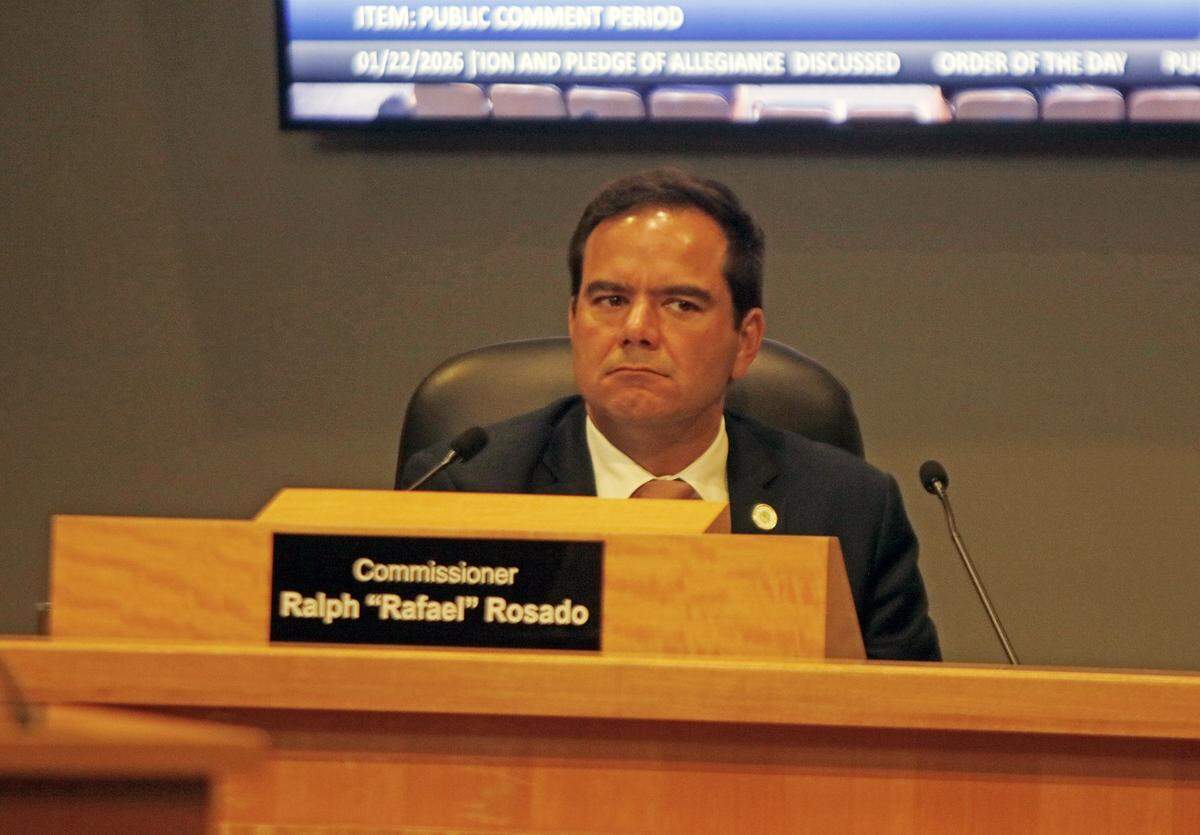
The city had identified over 660 properties totaling nearly 1,800 acres that fell into those categories. The item’s sponsor, District 4 Commissioner Ralph Rosado, said that while the proposed change wasn’t a “cure-all,” it would have been a helpful tool to address the region’s housing affordability crisis.
Speaking at Thursday’s meeting, Rosado said his colleagues’ decision to vote down the item was a “wasted opportunity in what is arguably the least affordable city in the United States of America.”
“We have such a massive, massive demand to address housing affordability,” Rosado said. “I would be negligent if I didn’t put this forward.”
Rosado tried to make a case for the zoning change, giving a presentation and offering to negotiate with his colleagues. If the item had passed a preliminary vote Thursday, it would have still needed to come back for a second and final vote at another meeting.
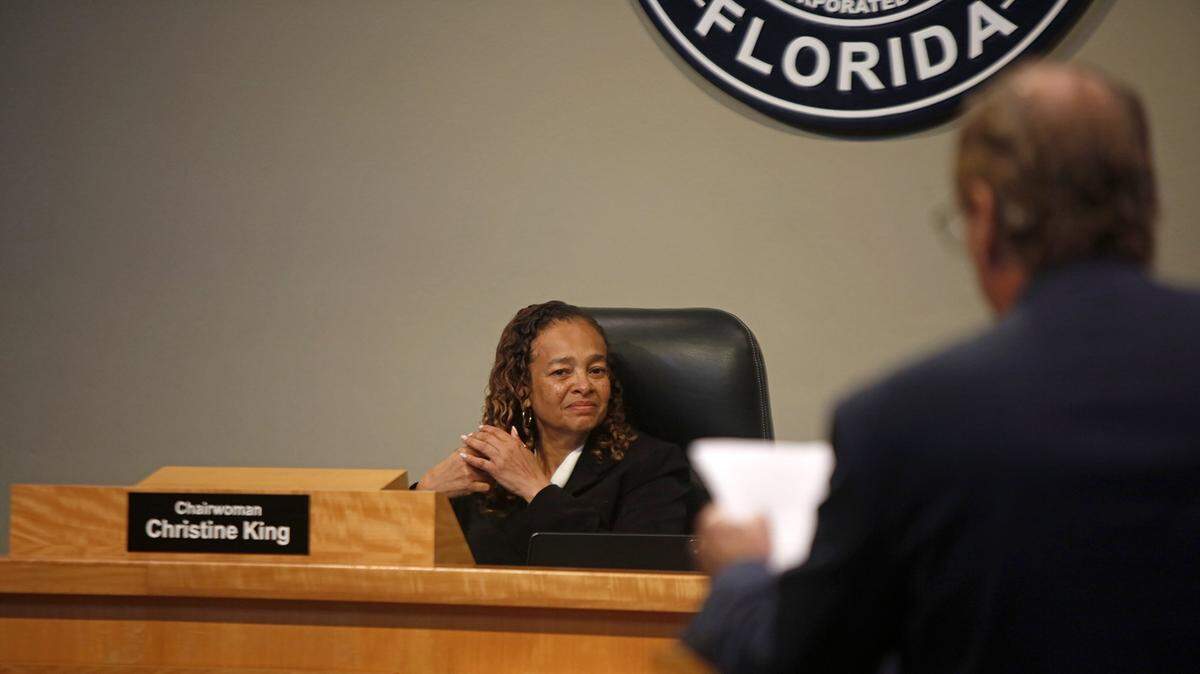
But Rosado’s colleagues weren’t interested. District 5 Commissioner Christine King, who chairs the meetings, was the most outspoken opponent.
Before Rosado began his presentation, King assured him that “it will not move me.” She said allowing development on religious land “by right,” as the change would have allowed, could be “disastrous for our churches, particularly our historic churches. They do not have the expertise to negotiate deals such as this.”
King pointed out that there were no religious leaders at Thursday’s meeting who gave public comment either in support of or against the proposal. An analysis by the city’s planning department showed that King’s district has the largest share of parcels either owned by a religious group or zoned as a civic institution in the city, with 247 parcels in District 5 meeting those criteria.
“I’m not typically this firm on ‘no,’ but this is a ‘no’ in every respect for me,” King said. “It is a solid, firm, I’m not crossing the line, I am not bending, modifying. These churches, historic churches — all they have is their land.”
Commissioner Miguel Angel Gabela tried to throw Rosado a bone by offering to defer the item to a future meeting. That motion failed 2-3, with no one else joining the pair. The commission then called for a vote to outright deny Rosado’s legislation. The denial passed 4-1; Rosado was the odd man out.
That was an unusual move for a City Commission where deferrals are commonplace, especially when it becomes apparent that an item’s sponsor doesn’t have support from the majority. Outright rejecting a colleague’s item on the floor, on the other hand, has been relatively rare in the city in recent years.
Despite Thursday’s vote, Rosado can still bring back the legislation another time, according to the city clerk.
“I look forward to continuing this discussion on this initiative with fellow commissioners, City staff, and community stakeholders,” Rosado said in a statement after the meeting. “We believe that allowing affordable housing as-of-right on educational, religious, and government properties, is a step in the right direction toward addressing the housing challenges in one of the most expensive cities in America.”
Rosado’s proposal followed a Florida Senate bill passed last year that gives local governments the option to allow the development of mixed-use housing on land owned by a religious institution, as long as at least 10% of the units in a given project meet the definition of “affordable.” Rosado’s measure would have required a minimum of 50% of units in a given project to be affordable, according to his office.
The state legislation is part of a movement dubbed “yes in God’s backyard,” or “YIGBY” for short, as an alternative to “NIMBY,” the pejorative acronym for “not in my backyard” used to describe anti-development advocates. At least one other Florida city, St. Petersburg, has adopted so-called YIGBY legislation in response to last year’s Senate bill.
In voting against the measure, Commissioner Damian Pardo said the legislation presented “a whole host of unintended consequences.”
Pardo and Rosado have been generally aligned on commission votes since Rosado’s June election, including supporting various efforts to move the city from odd- to even-year elections, and green-lighting a referendum last year that created lifetime term limits for elected officials.
But Rosado diverged from Pardo in recent weeks when he challenged the city’s controversial Watson Island land deal, which Pardo had sponsored.
Rosado also stuck his neck out earlier this month during the first commission meeting of 2026, when he was the only commissioner to vote against Mayor Eileen Higgins’ pick for city manager, James Reyes. Rosado had questioned Reyes’ experience level and, as an alternative, offered to hire him as an interim city manager on a six-month basis. The other four commissioners were ready to hire Reyes straightaway, however, making Thursday Reyes’ first commission meeting since being sworn in.
.jpg)