
Miami City Commission approves $29 million sale of Watson Island site
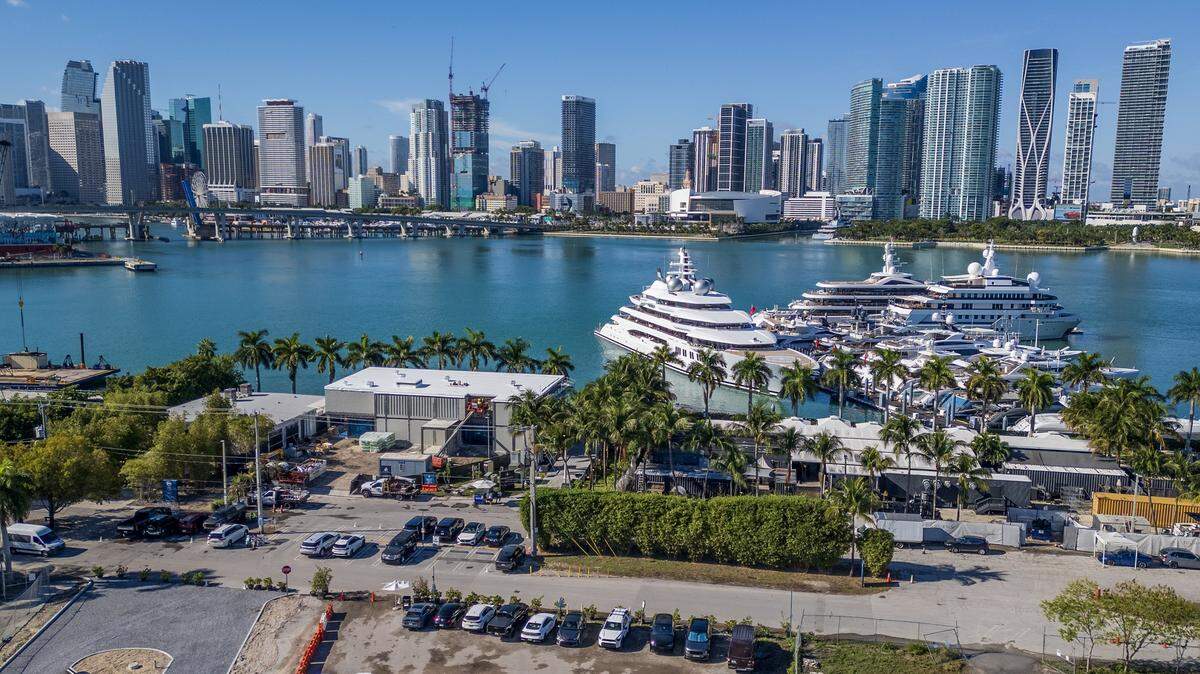
With an 11th-hour safeguard added to the deal, the Miami City Commission has approved the $29 million sale of a 3.2-acre piece of land on Watson Island, one of the largest tracts of undeveloped city-owned waterfront property, where developers plan to build luxury condos.
The commission approved the deal at its last meeting of the year, which was also the final meeting for Commissioner Joe Carollo and outgoing Mayor Francis Suarez.
The deal was approved in a 4-1 vote, with Commissioner Ralph Rosado voting no. Rosado had asked to defer the vote to the Jan. 22 meeting and for the city to conduct another independent appraisal on the land in the interim, and to also negotiate additional public benefits for the city. Under the current terms, the developers will pay the city a $9 million public benefits contribution, for a combined total of $38 million.
“This is a really important real estate deal,” Rosado implored his colleagues. “This is historic. And I want to make sure we’re on the right side of history on this.”
But none of the other four commissioners were willing to back him. The commission did, however, approve an additional safeguard that officials said would protect the city in a situation where the developers turn around and sell the land for a major profit.
Those terms, added at the behest of Commissioner Miguel Angel Gabela, stipulate that if the developers sell the land to a third party, they will need to pay the city 10% of that sale price, minus the $38 million the developers are paying the city now. So if the developers turn around and sell the land for $100 million, for example, the developers would owe the city $6.2 million, which is 10% of the $62 million difference in that scenario.
“There’s no question in my mind that we have made the right decision by voting for it,” Carollo said Thursday.
The sale initially went before the City Commission last month, but commissioners voted to defer it, saying they needed more information from the city administration. The proposed deal had also garnered controversy among residents, with some calling it a “giveaway,” especially in light of a recent appraisal that found the land overlooking Biscayne Bay could be worth between $257 million and $342 million, depending on the level of restrictions on development.
But both the city and the developer, BH3 Merrimac, have explained that an existing long-term lease between the city and the developers devalues the land significantly. The same appraisal that valued the land as high as $342 million also valued the lease at $28.9 million. Another appraisal valued it at $27 million. The deal approved Thursday involves the developers buying the city out of the lease, which has the effect of transferring ownership of the site to the developer.
The Miami Herald conducted an extensive analysis of the proposed land deal, including reviewing public records, speaking to city officials and interviewing outside experts. Two experts concurred with the city’s two independent appraisals, saying that a deal in the $29 million range appears reasonable given unusual underlying circumstances.
David Eyzenberg, president of Eyzenberg & Company, a ground lease and capital advisory firm with offices in New York and Miami, said that the initial lease struck over 20 years ago was “a very poorly written ground lease not in favor of the city.”
Eyzenberg, who reviewed the appraisals for the Herald, said the developers “already control the land for very little money” and that the $29 million price tag is “probably even a little bit more advantageous for the city, quite frankly. They just — they have a bad asset.”
City Manager Art Noriega expressed a similar sentiment in an interview this week.
“The city gave up a lot of financial opportunity when it signed this lease in 2001,” Noriega said. “ ... There are a lot of restrictions to the city’s ability to monetize this.”
The sale follows a ballot referendum that voters passed in November 2024 green-lighting the land sale for a to-be-determined price. The charter amendment stipulated that the sale price must be fair market value, for a minimum of $25 million.
This story was originally published December 11, 2025 at 1:57 PM.
.jpg)