
Miami commissioner: It’s not too late. City must pause Watson Island deal | Opinion
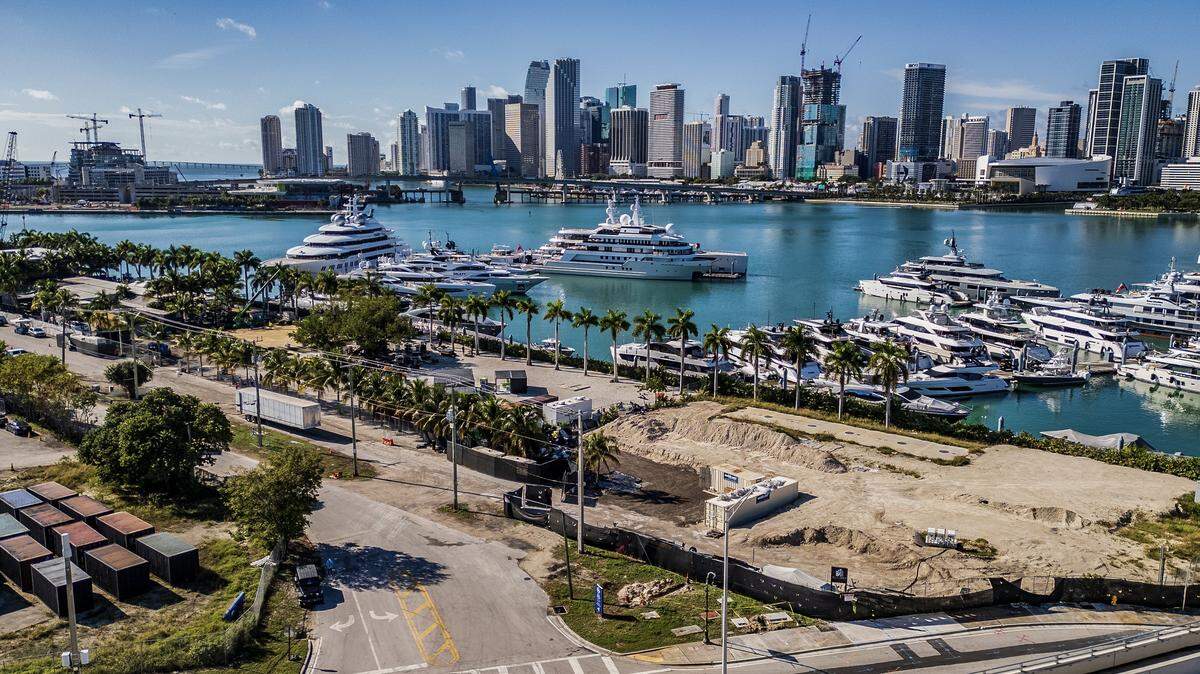
Miami grows because we welcome bold ideas and private investment. Development is essential to our city’s success. That is why I want to be clear from the start: My dissenting vote to the recent decision to sell city-owned land on Watson Island is not opposition to development, nor is it a critique of the developer involved.
The buyer is known for delivering strong projects, and this could very well become another one of them.
But when land is owned by the public, especially rare waterfront land, the city has a greater responsibility. Before we sell it forever, we must be certain we have done our due diligence and protected the interests of the people who own it: the residents of Miami.
Based on information from independent, professional and trusted sources including a commercial real estate expert who has been in the field since the ‘80s and has decades of public sector real estate experience, I do not believe that standard was met. Ahead of the documents of this deal being signed, I have placed a motion on the Jan. 8 commission agenda to reconsider the deal.
Conservative analysis indicates the city is leaving tens of millions of dollars on the table, even without speculative pricing or aggressive assumptions. More importantly, the valuation process failed to account for a basic reality: Waterfront land like Watson Island does not attract ordinary development. It attracts luxury, high-end brands and multi-million-dollar residential projects.
In that context, land value matters far less to the end buyer, because developers can, and routinely do, pass acquisition costs through the pricing of luxury units. Treating this site as interchangeable with other parcels ignores what makes it valuable in the first place and understates the city’s leverage in negotiations.
The structure of the deal compounds the issue. The buyer is the existing ground leaseholder, already in control of the site. That makes this a lopsided one-party negotiation, not a competitive one. And one-party negotiations almost always suppress value. The city was never truly testing what the land could command on the open market.
The existing ground lease is itself a valuable public asset. It generates long-term revenue, escalates over time and ultimately returns the land to the city. Yet the appraisal process collapses decades of income and reversionary ownership into a present-day figure driven by aggressive assumptions. Even in accepting those assumptions for analysis, no experienced real estate professional would treat that outcome as a sale price. In practice, it represents just a floor, a starting position, not a final valuation.
The agreement also includes what has been described as a “safeguard” for the city: a provision allowing the city to receive a small percentage (about 10%) if the property is flipped. In reality, this is not protection. It invites speculation by allowing a private party to capture most of the upside (almost 90% of the profit!), while the public watches from the sidelines. As the owner of such a valuable public asset, the city (aka the residents of Miami) should be entitled to the vast majority of the profit should a property flip occur.
There is also a matter of timing. In January, the city will have a new mayor and a newly appointed city manager. What is the rush to finalize this deal? Finalizing a permanent sale of public land in the final days of an outgoing administration, knowing new leadership is days away, undercuts the spirit of thoughtful, deliberate governance. Asking for a pause is not obstruction; it is common sense.
This is not an easy position to take. Challenging a major transaction publicly is politically uncomfortable. The odds are long, and the pressure to stay quiet is real. But leadership is not about choosing the easy fight. It is about protecting public assets, public money and public trust, even when doing so costs political capital.
That is the standard Miami’s residents deserve.
Miami has a reputation for land giveaways. That is why I am speaking directly to you, the people of Miami. When public assets are at stake and time is short, transparency matters.
Once this land is sold, it is gone permanently. Pausing now to ask hard questions is not anti-development. It is responsible stewardship. And Miami deserves nothing less.
Ralph Rosado is the commissioner for Miami’s District 4 and was the dissenting vote on the city’s recent sale of Watson Harbour. In 2024, city voters approved a ballot item that green-lighted the sale but stipulated it must be for at least $25 million.