
‘Kangaroo court’: Chaos at downtown Miami agency as director faces accusations
A downtown Miami agency has found itself in turmoil as it negotiates an exit package with its executive director following a public reprimand from a city commissioner that one board member likened to a “public assassination.”
Members of the Miami Downtown Development Authority (DDA) board gave executive director Christina Crespi until Wednesday to decide whether she wanted to resign her post in the face of accusations of poor performance by the agency’s chairman, Miami Commissioner Ralph Rosado. Crespi has served in the role since 2020. Rosado became chairman last year.
Crespi, who was presented with a separation agreement, has opted not to resign, according to her proposed revisions to the agreement, which attorney Robert Twombly sent the city Wednesday. Instead, she is proposing to go on paid administrative leave through Dec. 31 at her current salary of $275,000, plus benefits. After that, Crespi would enter into an “expert consultant agreement” at her current pay rate that would run through May 2027.
The proposed agreement also entails a lump sum payment that includes $75,000 for legal fees and other costs, and a 10% “completion bonus” of $27,500. The proposed terms stipulate that at an upcoming DDA meeting on June 17, “the Board shall state on the record that, following its review, no findings of wrongdoing have been made against Ms. Crespi, in text to be mutually agreed in advance.”
Crespi declined an interview request. In a statement to the Miami Herald, she said the “negative allegations are without merit and are false.”
The Miami City Attorney’s Office did not immediately respond to a request for comment on Crespi’s proposed settlement agreement.
The fallout brings attention to a public agency that doesn’t typically find itself in the spotlight. The Miami DDA, governed by a 15-member board, represents a special taxing district that encompasses Brickell, downtown and parts of Edgewater. The agency’s mission is to “grow, strengthen, and promote the economic development and quality of life of Downtown Miami’s vibrant neighborhoods.” The Miami DDA budget includes an estimated $12.8 million in property tax revenue for the current fiscal year.
Some downtown residents have been railing against the Miami DDA for more than a year, saying they’ve experienced overtaxation by an agency accused of frivolous spending, such as the $100,000 it spent on a UFC event last year and the year before. The agency is located on the 26th floor of the downtown Citigroup Center building.
James Torres, president of the Downtown Neighbors Alliance community group and perhaps the most vocal critic of the Miami DDA, said in an interview Thursday that “we want out of this double taxation, of this hostage tax, because we’re not receiving the return on investment for what we pay in.”
Rosado acknowledged those outside critiques during the Miami DDA’s May 27 board meeting.
“For an organization that has been besieged by external issues, the internal ones actually seem to be more numerous and more troubling,” he said.
Speaking to the board, Rosado aired out a laundry list of grievances against Crespi, alleging that she is frequently absent and had repeatedly accrued negative vacation time.
The agency also conducted a “leadership assessment” of Crespi, and Rosado said the results were “worrisome.” Rosado, who declined an interview request for this story, said the results included “distressing” comments from staff that “paint a picture of sheer dysfunction and low morale.”
“This is a public agency. It’s here to serve the public,” Rosado said at the May 27 meeting. “However, the executive director has been in negative vacation hours multiple times for nearly a decade, which is concerning as to the use of time and public funds.”
Rosado further alleged that in 2022, Crespi “cashed out” her vacation time, sending her into the negative.
“That was a cash payout with public funds,” Rosado said. “I truly believe this may be time theft and must now inform the proper authorities.”
In a statement shared with the Herald late Thursday evening, after this story was first published, Twombly described those issues as “a bookkeeping error the agency itself acknowledged and corrected” and said that Crespi was never found responsible for any wrongdoing. He added that Crespi had herself initiated an internal investigation into workplace culture at the DDA and that employees’ concerns involved a different manager.
In her own statement to the Herald, Crespi said it would “be inappropriate” to comment because “this matter is currently being addressed through the appropriate legal channels.” She added: “I remain committed to the important mission the Miami DDA serves, and I ask that the focus stay on where it belongs, on the vital work being done on behalf of the Downtown Miami community.”
‘Kangaroo court’
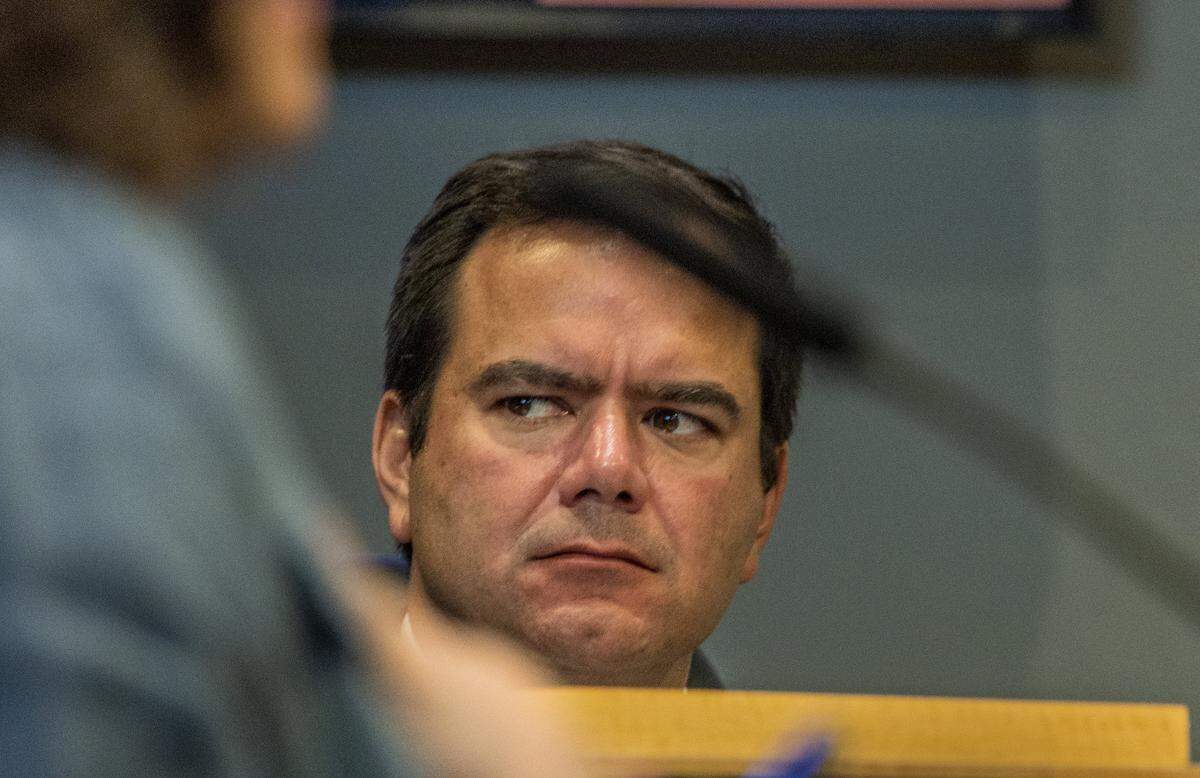
Rosado’s efforts were not well received. Board members said they felt blindsided — not only by the accusations against Crespi, but also by the format in which the grievances were being aired. Among the terms board members used to describe the situation were: “public assassination,” “traumatizing,” “lynching,” “witch hunt” and “kangaroo court.”
Rosado’s complaints against Crespi landed at the time of her annual performance review, which was set to take place over at least two meetings in May and June. Board members said they were emailed the results of Crespi’s leadership assessment days before the meeting in what felt like a “formality.”
Board member Patrick Goddard, who is the president and CEO of Brightline, suggested at the meeting that “we don’t start to air all of these issues unless they’re fully investigated.”
“It doesn’t sound like these issues have been fully investigated,” Goddard said. “So to come out and make allegations about someone without having fully investigated them and understanding whether they’re factual or not in a public forum is incredibly irresponsible.”
One board member asked Rosado what specifically triggered his public rebuke of Crespi.
Rosado said he has met individually with Crespi to discuss his concerns but noted that he’s not allowed to meet privately with board members under Florida’s Sunshine Law. He also said Miami DDA employees are “scared” but do not want to “vent in a way that gets to you all.”
Board member Gary Ressler pushed back on that.
“If the concerns are the employees, what message are we sending right now about how we treat our employees?” Ressler said.
Crespi said very little at the meeting, telling the board she was “very uncomfortable here.”
Board members said they were surprised to learn that Crespi had been given a “separation agreement” the day prior. But ultimately, they voted to give her until Wednesday to decide whether to resign.
The origins of the agreement are unclear. Assistant City Attorney Jihan Soliman, who is assigned to the DDA, declined to say whether it was Rosado or someone else who initiated the agreement.
“Our office does not comment nor answer questions regarding a matter that is still ongoing through an agency process,” Soliman said in an email to the Herald.
For Torres, the Downtown Neighbors Alliance president, last week’s explosive meeting felt more like a “Broadway show.” He said the underlying claims leveled by Rosado are ones he believes to be true.
“But we also fault Ralph Rosado,” Torres said, “who’s been the DDA chair for the last year.”
This story has been updated with additional details that Crespi’s attorney shared with the Herald post-publication.
This story was originally published June 4, 2026 at 3:06 PM.
.jpg)