
Is a bayfront Watson Island lot worth $342M? Why Miami may sell it for just $29M
Miami city administrators’ plan to sell 3.2 acres of prime public bayfront land to developers for $29 million erupted in controversy recently when appraisals appeared to suggest the vacant Watson Island property was worth much more on the open market — as much as $342 million.
The wide gap, and muddled explanations from administrators, fueled accusations that the city was giving away valuable public land and prompted confused city commissioners last month to delay a vote on the deal, now set for Thursday.
So what accounts for the disparity?
The Miami Herald reviewed public records, interviewed the developers and city officials, and consulted with independent experts, two of them outside Florida, to evaluate the appraisals and help explain how the city arrived at its sale figure. The city also issued a three-page memo with fuller explanations of the deal.
Bottom line: It’s complicated, but the $342 million valuation appears to be an unrealistic outlier. Meanwhile, two experts consulted by the Herald, concurring with the two independent appraisers the city relied on, said that a deal in the $29 million range appears reasonable given unusual underlying circumstances.
That’s largely because the city is handcuffed by a 99-year lease with developers for the site that was approved by Miami commissioners and voters 24 years ago for a massive hotel and commercial project that was never built. Because of the locked-in lease, the city says it does not fully own or control the land, and thus can’t sell it for its maximum open-market value.
A partnership of developers BH3 Management and Merrimac Ventures bought out the original developer and took over the lease for nearly 11 acres on Watson Island in 2023 to relaunch the long-stalled project.
They now want to buy a 3.2-acre piece of the property to make it easier to finance a long-planned hotel and condo tower on that site, as required by the original 2001 deal. Voters approved the sale in a referendum last year for a minimum price set at $25 million.
The city settled on its sale price — which represents the value of its share of the lease revenue for the 3.2 acres — after two independent appraisers came up with values of $27 million and $28.9 million. The minimum price of $25 million posed to voters in the 2024 referendum was based on an initial appraisal by the new developers.
The deal would void the lease on that lot, but the restrictions and requirements on what the developers can build on it are written into the property deed and can’t be altered without both a new referendum and City Commission approval.
Without those restrictions, the developers say, their own analysis concluded the 3.2 acres could sell for $70 million to $80 million. One independent expert consulted by the Herald put that value at $74 million.
But the original lease terms the city agreed to 24 years ago undervalued the land and now limit what the city can realize from the proposed new deal, one expert said.
“It was a very poorly written ground lease not in favor of the city,” said David Eyzenberg, president of Eyzenberg & Company, a ground lease and capital advisory firm with offices in New York and Miami.
Miami City Manager Art Noriega shared a similar sentiment Wednesday.
“The city gave up a lot of financial opportunity when it signed this lease in 2001,” he said in an interview. “ ... There are a lot of restrictions to the city’s ability to monetize this.”
What’s in it for the developers? And what’s in it for the city?
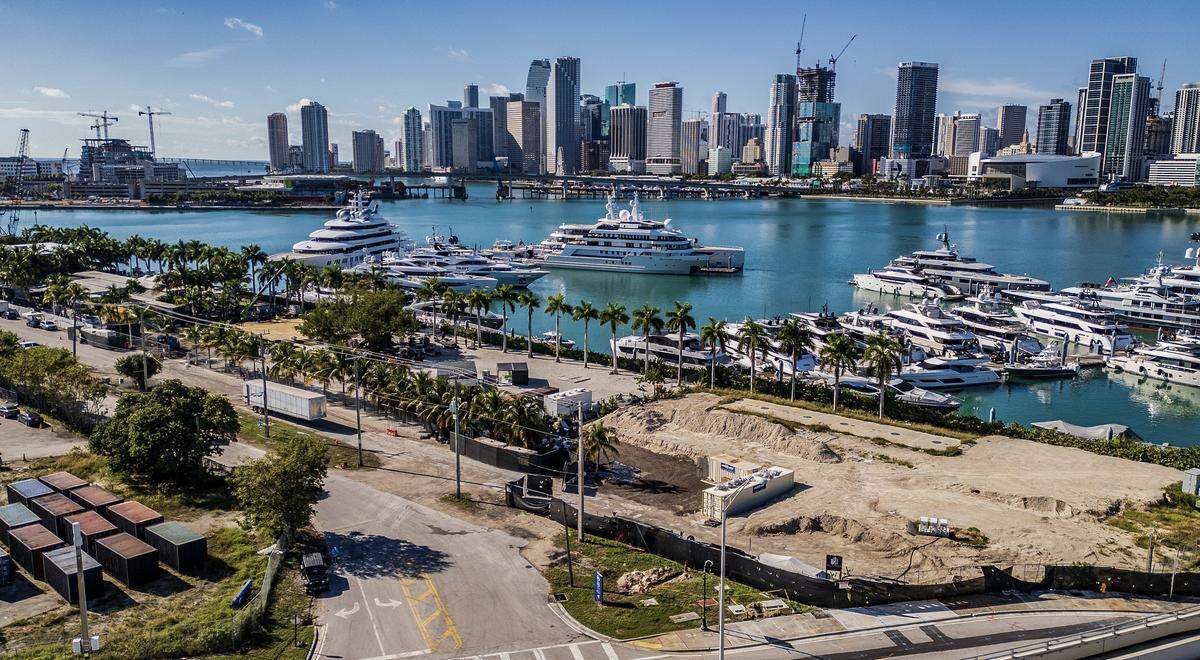
For more than 20 years, a developer tried, and utterly failed, to build a promised pair of upscale hotels and a massive retail complex on nearly 11 acres on Watson Island under the long-term lease deal with the city. The developer agreed to pay the city rent and a small percentage of hotel and retail revenues for 99 years.
Then, in 2023, after two decades of missed payments, blown deadlines and costly litigation, a new development team bought out Flagstone Property Group, the original developer, for an undisclosed amount to take over the lease. The city and the new developers seemed finally ready to move forward on a somewhat scaled-down version of the plan last month — until the appraisals raised questions over the dollar value.
The long-term lease agreement requires BH3 and Merrimac principals Gregory Freedman and Nitin Motwani to build two upscale hotels, an extensive retail and commercial complex, a parking garage and a public baywalk on the 11 acres. The original developer built only a required mega-yacht marina that’s in operation today.
That original agreement called for a tower with a hotel and no more than 105 condo-hotel units on a 3.2-acre portion of the site.
But those requirements were altered in a consequential way last year, at the developers’ request, when voters in a referendum approved changing the condo-hotel units to standard condos. The vote also allows the developers to buy their way out of the lease with the city for the 3.2 acres, which means they would own the land outright.
The lease and its restrictions and requirements remain in force for the other 8 acres, where the second hotel and the commercial complex would rise.
The sale would carry benefits for both the developers and the city.
Owning the land under the tower, the developers say, will make it easier for them to get financing and sell the condos for full market price, making the project economically viable. That’s in part because the lease arrangement would essentially lower the value of the condos and what the developer can price them at, since the land under them wouldn’t be included in what condo owners would buy if the land lease remained.
For taxpayers, the sale would mean substantially higher property tax revenues. That’s because the planned condos would then be appraised for tax purposes to their full value, land included. According to the city’s new memo, that additional tax revenue generated over 99 years amounts to $2.3 billion.
The 2024 voter-approved deal includes additional benefits to the city to be covered by the developers: $9 million for an affordable housing fund; a longer baywalk that will now extend to city-owned property next door, plus maintenance for the full life of the deal; and a new $3 million seawall along that portion of city land.
What do the appraisals say? Why do they differ so much?
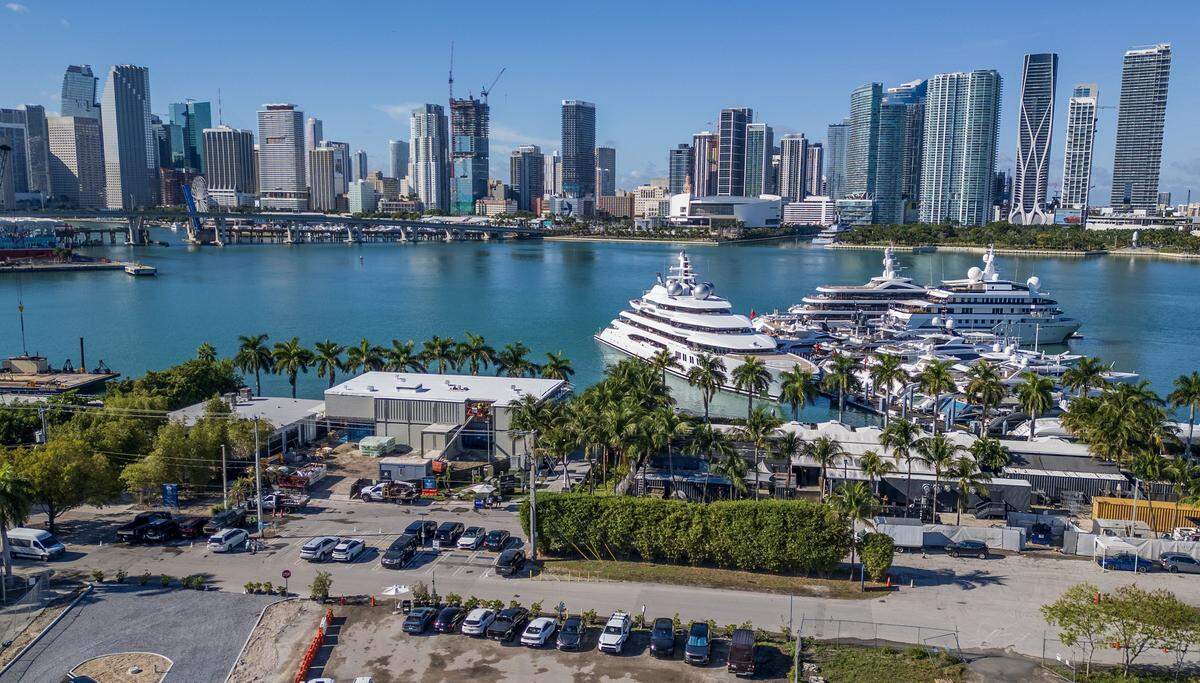
Two independent appraisers each came up with a widely varying range of values for the 3.2 acres based on different considerations and methodologies.
“This is not a perfect science,” one expert consulted by the Herald said.
Each determined three values for the land: 1) the value of the property with no restrictions about what could be built — for instance, with no lease or deed restrictions; 2) the value of the property with some restrictions; and 3) the value of the existing lease with its restrictions and requirements.
One appraisal found the following:
- Unrestricted value: $342.7 million
- Restricted value: $257 million
- Leased fee value: $28.9 million
The other appraisal arrived at different figures:
- Unrestricted value: $110 million
- Restricted value: $11 million
- Leasehold value: $27 million
Because the Watson Island property does come with certain restrictions, including zoning rules, the unrestricted value is more a theoretical number in this case. BH3 Merrimac dismisses the $342 million valuation as a clear and unrealistic “outlier.”
Jeffrey Fisher, founder of the Center for Real Estate Studies at Indiana University, pointed out that the two appraisers used different “comparables” — other resorts similar to what the developer is looking to build on Watson Island — and that they had different methods for determining the value of the land with the given restrictions.
Fisher said the value of the lease is a more straightforward calculation based on the projection of future rent payments, which is why the two appraisals were more closely aligned on that figure.
What’s the deal with the lease on the site?
The 86-acre Watson Island, bisected by the MacArthur Causeway, was created in 1931 by the state of Florida from fill produced by the deepening of the Port of Miami’s turning basin and deeded to the city. Residents wanted a park, but the city has tried to monetize the island for decades, prompting frequent public disputes over its use.
In 2001, voters overwhelmingly approved a 99-year lease deal between the city and the relatively inexperienced Flagstone to develop an 11-acre site on the south side of Watson Island, as well as a mega-yacht marina alongside it.
In the aftermath of the Sept. 11 attacks, an economic recession and a three-year lawsuit from Venetian Island residents, Flagstone was unable to raise financing and fell behind significantly on rent payments to the city, which granted extension after extension.
The marina did open in 2016, but Flagstone never broke ground on other parts of the project.
In 2017, the city terminated the lease, but Flagstone sued for $122 million and won. The city settled for $20 million — money for which taxpayers got nothing in return — and Flagstone retained control of the lease until it sold out to BH3 and Merrimac in 2023 for an undisclosed amount.
The 2024 referendum also triggered a reset on the clock on the lease from the remaining 77 years of life back to the full 99 years, to start running again when the planned towers begin to rise. The developers already pay a base rent that’s set to increase significantly after the start of vertical construction work. That longer term makes it easier for the new developers to finance the project, while the city will receive full rent payments and a 1% share of commercial revenue for a longer period of time.
Why do city administrators say the lease makes the land less valuable?
Because of the long-term lease, the city doesn’t legally own the land outright. What it owns, in effect, is its share of the lease and its rent revenue. Because the land is “encumbered” by the lease, the city cannot sell the land for maximum value on the open market, where it could fetch a higher price.
By purchasing the city’s lease interest, the developer will own the 3.2 acres outright but will still be subject to the requirements and restrictions that were approved by voters, which have been permanently baked into the property deed for the full 11 acres. So the developer also could not turn around and sell the land for maximum open-market value.
In the recent memo, the city administration explained that “the City is selling only what it owns — the right to collect rent under the existing lease for the next 99 years.”
Eyzenberg, the ground lease expert with offices in New York and Miami who reviewed the case for the Herald, said that if there was no existing lease — or if the base rent from the developer to the city was significantly higher — it would be reasonable for the city to ask for more than $29 million.
But based on an analysis of the city’s projected rent revenue over the lifetime of the lease, Eyzenberg said that original deal undervalued the land significantly and imposed less rent than it could have.
That means the developers “already control the land for very little money,” he said.
Given that circumstance, Eyzenberg concluded, the $29 million price tag that the city is looking to approve is “probably even a little bit more advantageous for the city, quite frankly. They just — they have a bad asset.”
How does the lease buyout work?
If the deal is approved Thursday, the developer would buy its way out of the lease with the city, and the lease would be nullified. Ownership of the land would transfer from the city to IG Luxury, a subsidiary of the developer.
Because the state gave the land to the city but retained certain rights, it will earn a payoff as well. The city will pay the state $4 million if the deal goes through.
However, the restrictions and requirements on what the developers can build on the site — a single tower with hotel rooms and condos — still stand. That’s because they are written into the land deed and can’t be altered without city and voter approval.
Fisher, the Indiana University real estate professor, said the proposed $29 million sale price “seems reasonable given the estimates” of the value of the lease.
Fisher said, given deed restrictions on the land that mirror those in the lease, it makes sense for the city to sell the land based on the lease value rather than the overall land value — even though the lease will be nullified as a result of the sale.
Can the city undo the lease?
The city could, in theory, seek to buy out BH3 and Merrimac, void the lease, and try to sell the 3.2 acres on the open market. But the cost of buying out the new developers, who say they have already laid out many millions of dollars to Flagstone for the lease and to install utilities on the 11 acres, and who would also need to be compensated for lost potential revenue from the lease agreement, likely makes that unfeasible.
“Their terms are so favorable now that, if I was them, I wouldn’t sell, unless it was an incredible offer to buy them out of the lease,” Noriega said Wednesday. “And I don’t foresee that ever happening because the lease terms they received 20-plus years ago are really favorable to them.
“Those were the market conditions at the time, right? It’s not being critical of the administration that entered into the deal, but the economics of what was available to the city then versus now are dramatically different. The real estate market exponentially grew since then,” he added.
How much would the land be worth with no deed restrictions? How much does the developer stand to profit on the condo and hotel tower?
Peter Zalewski, an independent Miami condo expert, conducted an analysis of the projected revenue the developer could theoretically make under existing zoning regulations and with no deed or lease restrictions.
Zalewski said that, according to the Miami 21 zoning rules already in place, the developer could be allowed to build up to 150 condo units per acre, for a total of 480 units on the 3.2-acre piece of land. He also calculated what he said was a conservative estimated asking price of $2.2 million per condo unit, based on property sales over the past 12 months. Under his analysis, the developers could net over $1 billion in revenue and over $300 million in profit if they sell out every unit.
Assuming development costs are equal to 70% of the revenue, and that the land accounts for at least 10% of the development costs, Zalewski arrived at a $74 million valuation for the 3.2-acre property “on a very conservative basis.”
Because the developer is restricted to 105 condos, Zalewski said he’d need to know the square footage of those units to make a calculation of the land under the restrictions. He noted that fewer units likely mean larger square footage per unit.
Regardless of whether the developer is building hundreds of units or just 105, Zalewski said: “I think the $29 million price tag for this piece of dirt is obnoxiously low, given the current market.”
The developers said their own appraisal, which found the land without lease restrictions to be worth between $70 million and $80 million, broadly agrees with Zalewski’s valuation.
What happens next?
City commissioners are expected to take a vote on the sale at a 9 a.m. meeting Thursday at Miami City Hall. There is only one vote required.
To move forward, the deal needs approval from four of the five commissioners.
Members of the public can submit an online form, or sign up in person on Thursday morning, to speak at the meeting and address commissioners. The Watson Island land sale is item PH. 12 on the agenda.
The vote takes place two days after Miami’s runoff election. On Tuesday, voters elected a new mayor, Eileen Higgins, and one new commissioner, Rolando Escalona. It will be the last City Commission meeting for Commissioner Joe Carollo, who is termed out, and potentially the last one for Noriega, the city manager since 2020, since Higgins has said she intends to replace him early next year.
This story was originally published December 10, 2025 at 6:50 PM.
.jpg)