
Miami’s forgotten ancient past is hiding beneath a Joe & the Juice. Yes, really
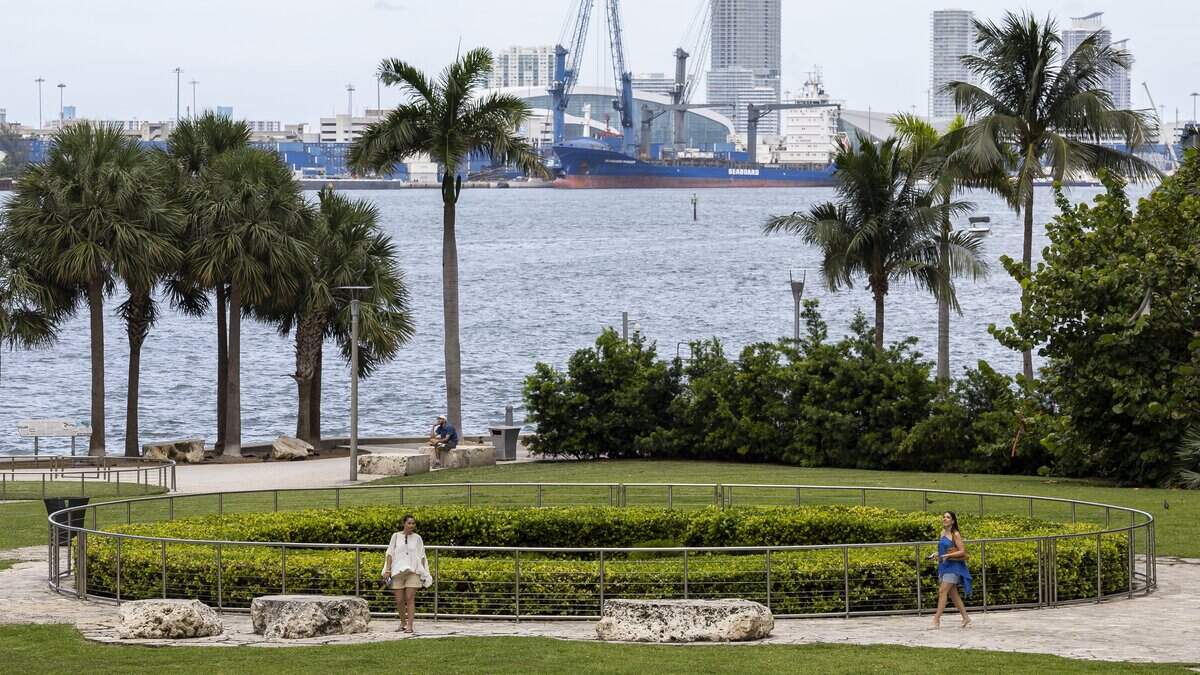
Stand on the Brickell Bridge for a few moments and look to the east, where the Miami River meets Biscayne Bay. Then turn west, just past the Hyatt Regency and Knight Center complex.
Erase from your mind everything but the slowly flowing water — the towers, the cars, the construction cranes, the bridge itself — and imagine this instead: on both river banks, rows of round huts, imposing ceremonial structures, burial mounds, dugout canoes in the river, and a few thousand people going about their lives.

Some 2,000 years ago, just as Christianity was first emerging halfway around the world, this spot was the thriving hub for the indigenous Tequesta people, whose reach extended from what is today Palm Beach County south to the top of the Florida Keys and deep into the Everglades.
The evidence of the more than 5,000-year habitation by the Tequesta and their enigmatic Archaic predecessors is everywhere around you, but it’s mostly invisible.
In downtown Miami, the contours of a prehistoric Tequesta village and burial site lie entombed under a Whole Foods and a Joe & the Juice.
At the Deering Estate in Palmetto Bay, where you might have attended a wedding or a nature walk, the oldest known site of human habitation in Miami-Dade — more than 10,000 years old — sits off the trails deep in the park’s wooded nature preserve. It’s fragile and off-limits to visitors.
At the Hard Rock Stadium in Miami Gardens, it’s safe to say very few of the fans flocking to World Cup games this summer will be aware of Honey Hill, a significant Tequesta settlement and burial site that lies to the side of the parking lots. Though protected, the site remains unmarked and mostly forgotten.
READ MORE: Is Hard Rock Stadium on a Native American burial ground?
The modern Miami metropolis was built over the ruins of an earlier civilization. Crushed and buried beneath the skyscrapers, the parking garages, the streets and sidewalks of downtown Miami and Brickell lie the carved limestone building foundations, the tools and shards of pottery, and the bones and burial sites of Miami’s first human inhabitants.
It is, historian Andrew Frank has written, “an ancient place that history has forgotten.”
In the last few years, extensive and surprisingly well-preserved finds in Brickell and downtown Miami — uncovered by demolition for redevelopment — have raised new public awareness and prompted public demands for greater recognition, preservation and exhibition of that history.
The finds have also underscored the need for respectful handling and protection of ancient human remains, a complex and sensitive process overseen by the state and Florida’s modern tribal organizations in collaboration with developers and their archaeological consultants.
READ MORE: Miami construction projects keep turning up ancient bones. What happens to them?
But how much preservation or public recognition will actually happen is up in the air.
The Tequesta and their predecessors left no records, but documented finds are scattered widely, from the beaches and parks of Key Biscayne, to the Little River in El Portal, the hardwood hammocks of South Miami-Dade, and in the Everglades and Big Cypress, providing a map and timeline of their presence that is only now coming into fuller focus.
There are so many of those sites that in many places all it takes is the casual turn of a garden shovel, a utility excavation or a building demolition to bring vestiges of that vanished indigenous Miami back into the light.
Sometimes, the effects of a find are dramatic: The foundation holes of a large ceremonial Tequesta structure, uncovered after the demolition of an apartment building at the mouth of the river in 1998, led to a national outcry and creation of the Miami Circle Park, today the one prominent relic of the long Tequesta presence in South Florida.
But more often than not, what does emerge has been neglected, destroyed or shoved back out of sight and out of the public mind, Frank and others note.
The result, Frank says, is a state of “historic amnesia” where few of Miami’s modern-day residents know about the ancient remnants of history and civilization that surround them.
READ MORE: Miami’s ancient past is hiding in plain sight. Here are 7 places to find it
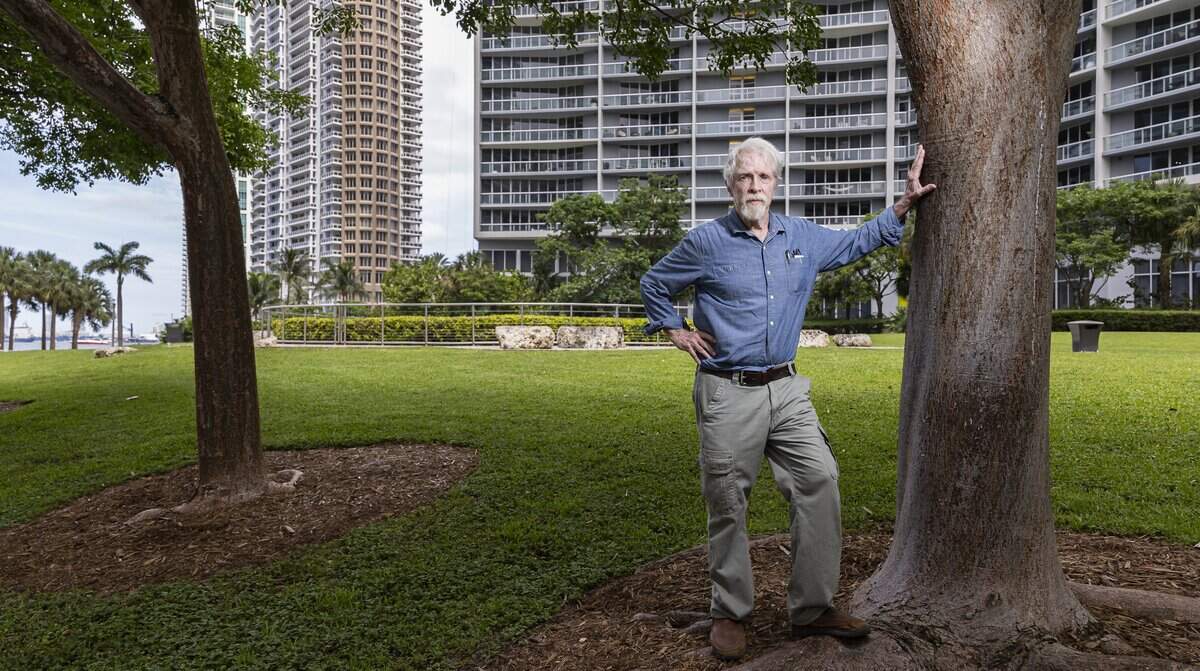
“It’s everywhere — underneath the streets, under the sidewalks,” said veteran Miami archaeologist Bob Carr, who first dug on the banks of the Miami River as a curious teenage amateur in the 1960s and who later excavated the Miami Circle site. “We are just completely unconscious of this history below our feet.”
The fact that scientific excavations take place and some remnants are saved is thanks to the nation’s first comprehensive local archaeological preservation laws, approved by Miami and Miami-Dade County in the 1980s. But critics say recent finds have exposed gaps in the regulations and officials’ reluctance to fully wield their preservation powers.
.JPG "IMG_MIA_Tequesta_Dig_Sit_3_1_VEODNDR3_L806242177 (1).JPG")
The city has required that developer Related Group, whose high-rise projects have led to some of the most important recent finds, carefully excavate and document the sites and prepare plans for exhibitions along a new riverwalk, but those have been slow in coming beyond conceptual renderings.
Building construction, meanwhile, has progressed rapidly, forever erasing evidence such as holes for wooden building support posts in the limestone bedrock that outlined the footprint of an extensive section of the larger Tequesta village.
But the finds, though not yet fully analyzed or studied, have already confirmed what Carr and other experts long believed: that, contrary to myths and popular beliefs portraying a primitive, nomadic people scratching out a bare existence, the Tequesta settlement along the Miami River was a complex town with rich layers of history, trade and culture.
“We are now realizing, as we keep going up the river and find more and more, this is evidence of an expansive civilization,” said Frank, a professor at Florida State and author of a history of pre-modern Miami. “The more we dig, the more we are going to find.”
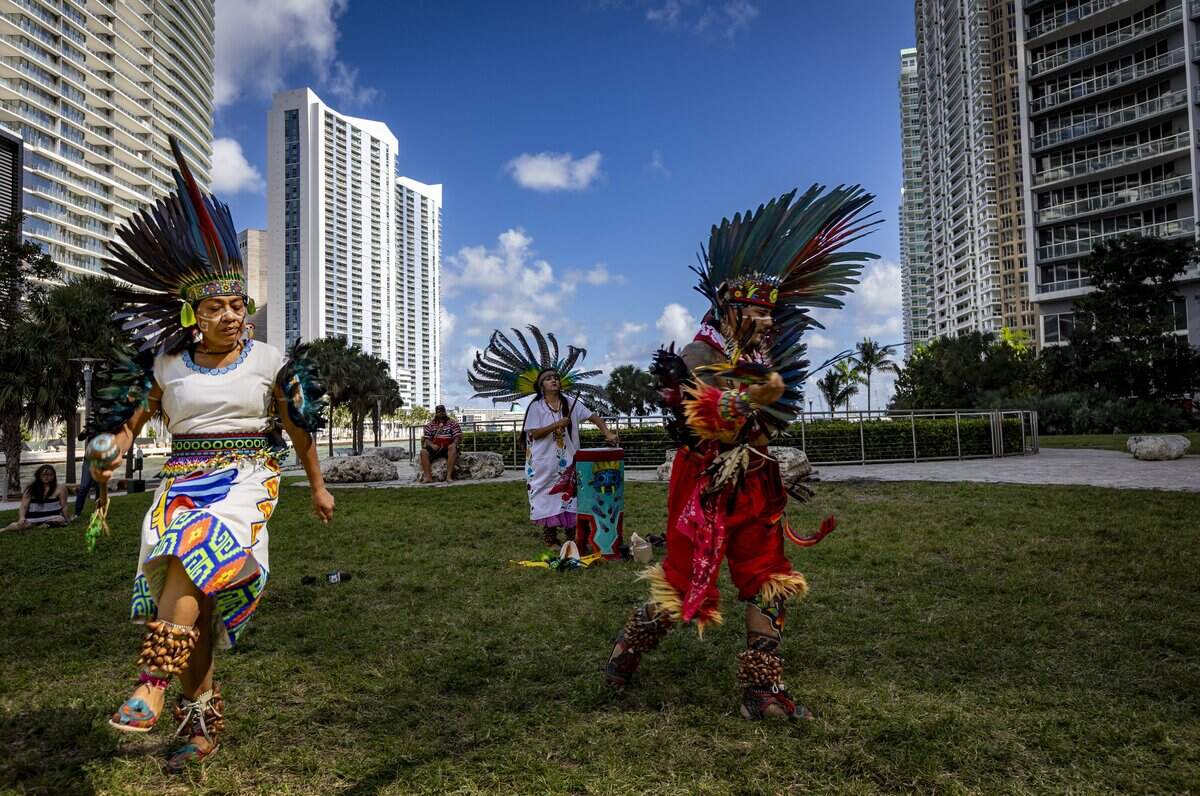
Members of the Seminole and Miccosukee tribes, the successors to Miami’s ancient people, say preserving and talking about the heritage of the Tequesta and their forebears is vitally important not just to Native Americans, but also to those who live in South Florida today.
That legacy lives on, said Tina Osceola, historic preservation officer and senior director of operations for the Seminole Tribe of Florida. It serves as a reminder that people thrived here in close connection to the natural environment long before the arrival of European settlers, and that South Floridians of today share a place and a common humanity with their predecessors, she said.
“It’s a fight to make sure we’re not erased,” Osceola said. “Florida is full of people who are not from here. We focus so much of our cultural energy on telling people that the land they’re walking on has a history. It teaches a human value that never should be lost.”
Buried bones and stolen skulls
For a long time, little was known about the Tequesta beyond spotty accounts by the Spanish invaders who established a fitful dominion over Florida in the early 16th century and built a mission at the Miami River in 1567 to convert the natives to Christianity. By then, archaeologists have concluded, the Tequesta settlement was likely past its peak and had been in a long decline, though the reasons are unknown.
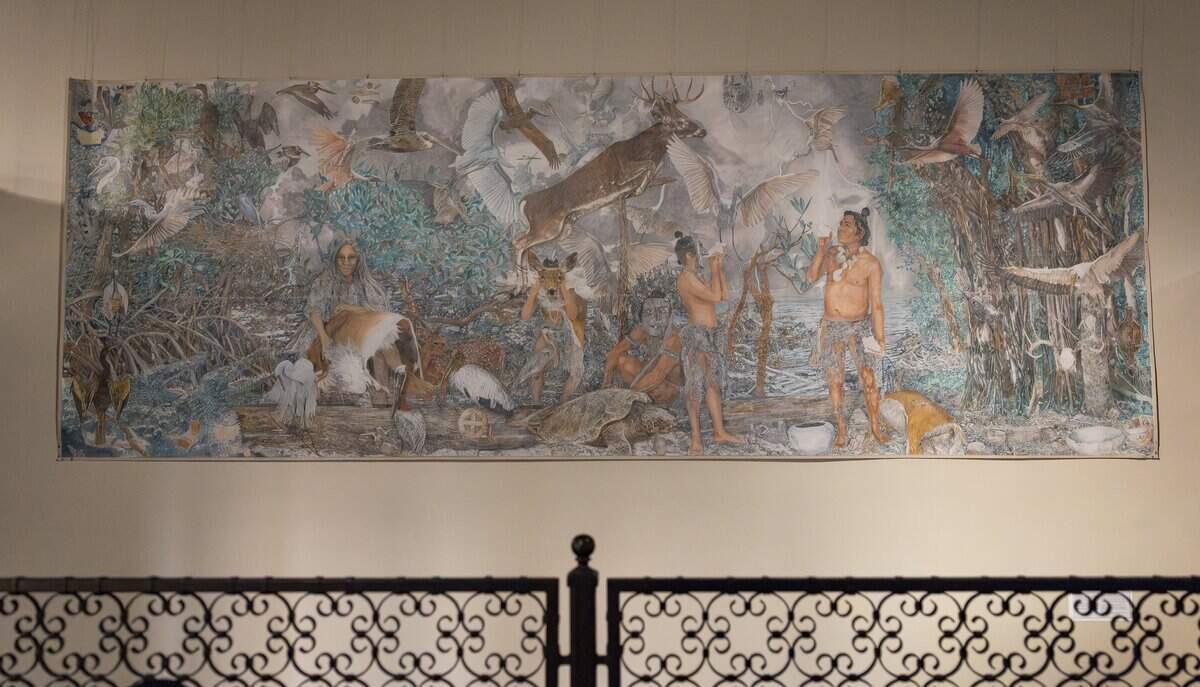
Largely peaceful, the Tequesta — named by the Spanish after one of their chiefs — had no agriculture but thrived on a diet of seafood caught in the bay, the river and in the Everglades, where they dug shallow canals for passage of their canoes and established camps on tree islands, likely seasonal, where they hunted deer and boar.
The Tequesta also had smaller, more permanent settlements in many places that provided access to fresh water or the bay, including the Little River in present-day El Portal, at what is now Arch Creek Park in North Miami, and in Surfside.
“Wherever there is a river or a creek, there are going to be sites,” Carr said.
The Tequesta were expert wood carvers and produced finely decorated pottery, personal decorations, and tools made from shark teeth, conch shells and animal bones. They had a distinct hierarchy of chiefs and family clans and formal burial rites.
They maintained trade and relations, at times testy, with bordering indigenous groups, including the more numerous and powerful Calusa to the west and, near Belle Glade and Lake Okeechobee, the Mayaimi people from whom the Miami name — meaning sweet water or big water — was eventually derived.
When the Spanish settlers decamped for Cuba in 1763 after ceding Florida to the English, the few surviving Tequesta, their numbers decimated by 200 years of captivity and slavery, conflict and ill treatment, are believed to have departed with them.
There’s growing evidence, however, that some Tequesta stragglers may have stayed behind, or that some eventually returned from Cuba, joining other indigenous people in Florida. Those survivors eventually merged with Native American groups migrating south in the 1700s and 1800s to escape conflict with other tribes and subjugation by European and U.S. colonists, like the Muscogee Creek from Georgia and Alabama who, joined by escaped Black slaves, gave rise to the Seminole and Miccosukee of Florida tribes.
“They were joining with people who have been there forever,” Frank said of the Creek. “Florida never completely emptied of indigenous people.”
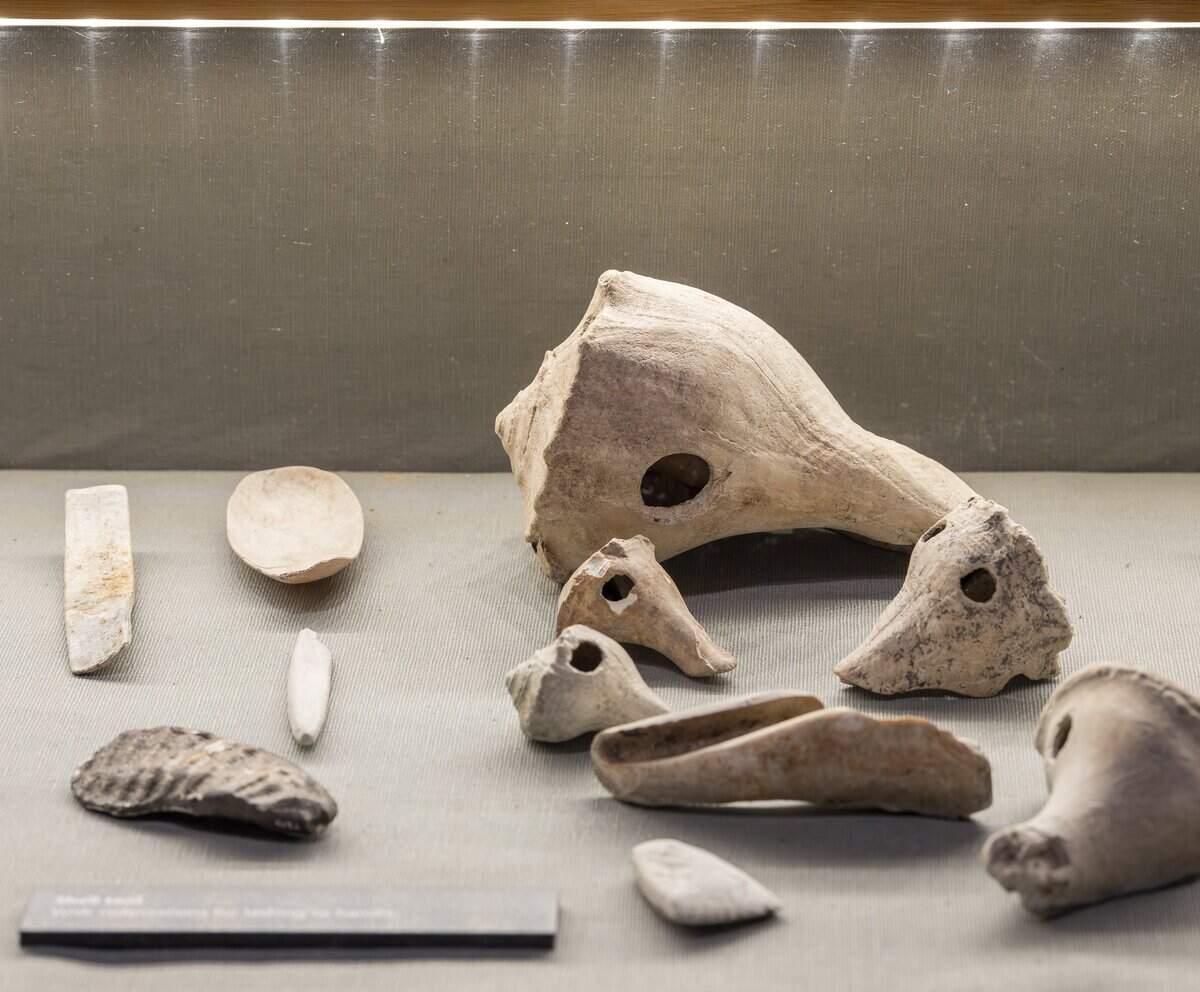
The Tequesta left conspicuous signs of their settlement across South Florida, including as many as a half-dozen large discard piles and burial mounds at the mouth of the Miami River, and others in what is today Surfside, the Little River in El Portal and at the preserved Madden’s Hammock in Miami Lakes. There were around 15 in total, Carr said. Only four remain.
Honey Hill, at the Hard Rock Stadium site, is another prominent relic. The highest point in Miami-Dade County, it once overlooked the eastern Everglades and yielded extensive evidence not just of long Tequesta occupation, but also of subsequent use by Seminole Indian successors in the 19th century.
The arrival in Miami of English and American settlers in the mid-1800s established what is by now an all-too-familiar pattern. The mounds were haphazardly but extensively destroyed, erased by succeeding waves of indifferent newcomers, flattened and buried by construction, and ransacked by roving bands of boys, treasure hunters and collectors, as virtually all visible traces of the Tequesta were discarded and erased.
“The legendary, and largely self anointed, pioneers of the late nineteenth and early twentieth centuries built their modern civilization by ignoring and burying the ancient past,” historian Frank writes in his book “Before the Pioneers: Indians, Settlers, Slaves, and the Founding of Miami.”
The Brickell family — whose name would later inspire the name of the neighborhood — built their estate and trading post at the river’s mouth atop one big burial mound. In the 1890s, Henry Flagler’s crews leveled a massive burial mound to build his Royal Palm hotel across the river, selling skulls as souvenirs and dumping the rest of the human remains into a sinkhole, never since found.
“It was blocking the views of the bay, so they just destroyed it,” archaeologist Carr said in an interview. In his book “Digging Miami,” Carr calls its destruction “the most staggering loss.”
That these were evidence of a long-vanished people was not lost on the pioneers, and some curious amateurs logged and excavated sites, though careless handling of the finds meant materials were often lost, damaged or destroyed.
Everglades surveyors in 1847 first described a mysterious island mound, then a second one near the Miami River, Carr writes in “Digging Miami,” but did not report the finds to scholars. In 1876, famed horticulturist Henry Perrine dug at the Charles Deering Estate in South Miami-Dade, site of the earliest find of human habitation in the area, now known to date back at least 10,000 years. He found skulls and bones of adults and children buried face down. He kept two skulls but lost them.
In 1925, a burial mound in the village of El Portal became the first Native American site to be intentionally preserved, though it wasn’t the result of government or scientific action. Instead, the developer of the wooded Sherwood Forest section, recognizing its value, split Northeast 85th Street in two, making a circle around the mound. By then, the mound had been looted, but it remains a protected and treasured neighborhood spot to this day, marked with a plaque.
Systematic study did not come until the 1930s, when 16-year-old John Goggin began formally surveying and excavating sites from Snapper Creek to Surfside, in the Keys and the Glades as part of a program at Yale. He is credited as the first and most significant contributor to South Florida archaeology of the time, classifying materials, recording 49 sites across Miami-Dade and making the first outline of a chronology of indigenous habitation.
In 1934, a Smithsonian Institution excavation removed scores of human skeletons from a massive burial and settlement site on Indian Creek in Surfside that were subsequently reportedly stolen from the Opa-locka train station while awaiting transportation to Washington, never to be seen again.
Other skulls and long bones uncovered at the site, which Carr says was among the most important in Miami-Dade, were destroyed by a gang of marauding boys. The mound, which had been bulldozed but painstakingly reconstructed, was eventually destroyed again for residential construction. Most of the materials recovered from the site remain at the Smithsonian.
A teenage archaeology enthusiast turns pro
After Goggin left Miami to join the faculty at the University of Florida in 1948, very little happened archaeologically in South Florida for the next 25 years, save for some amateur efforts that succeeded largely in damaging or destroying sites, said Traci Ardren, an anthropological archaeologist at the University of Miami. Given a dearth of exciting finds or extensive scholarship, the profession had largely written off the region as relatively insignificant, she said.
That began to shift only in the 1970s, following passage of the National Historic Preservation Act in 1966 and Florida’s Historic Resources Act the following year, which helped ignite public and professional interest in exploration of Miami’s neglected past. But it was the passage in the early 1980s of the nation’s first comprehensive archaeological preservation laws in Miami-Dade County and the city of Miami that set relatively strict requirements for excavation and prompted a series of new and often remarkable finds.
And it was Carr who ended up leading many of them.
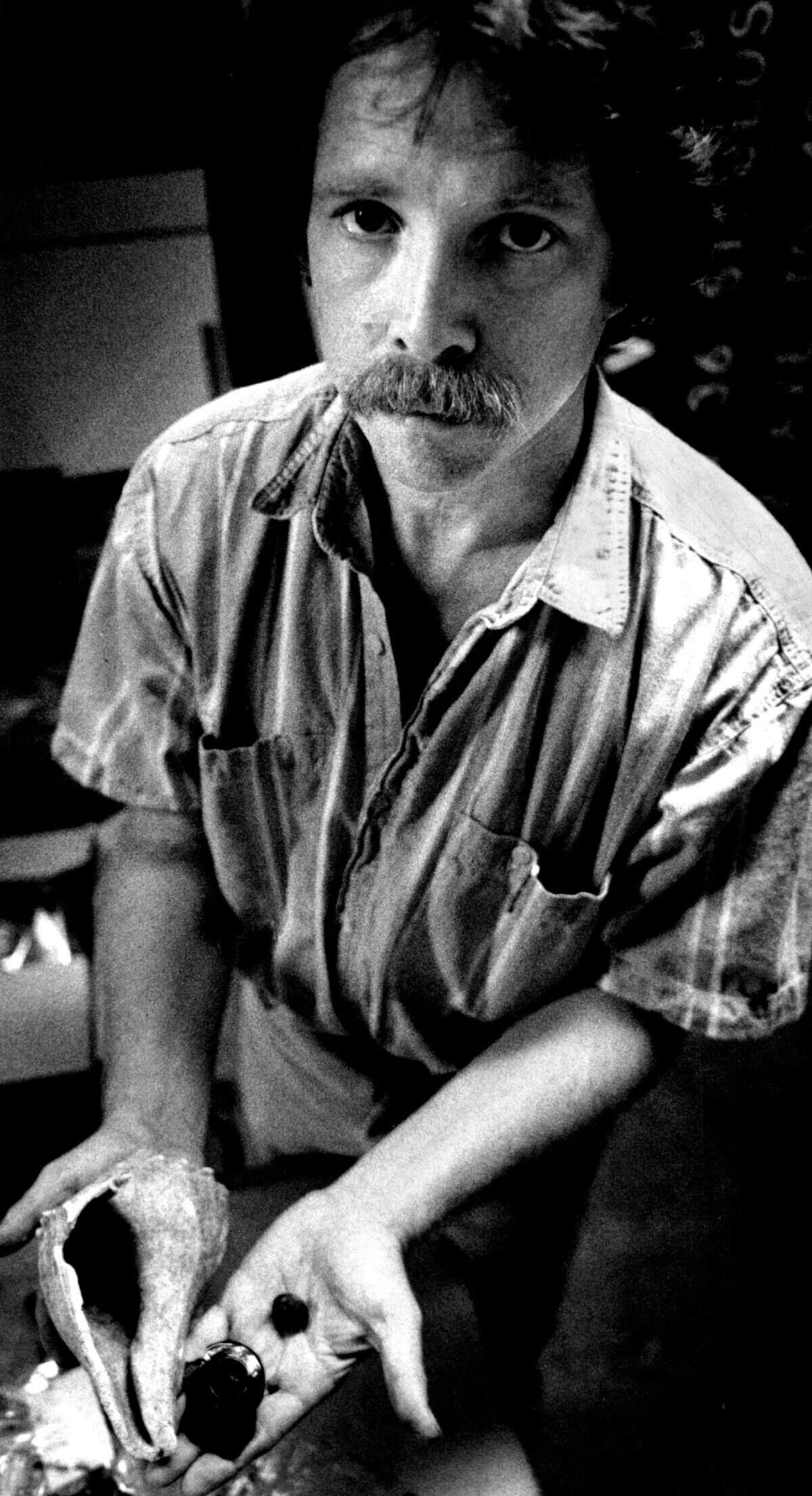
He had carried his teenage curiosity into a professional career. At 13, he joined an archaeology club at the Miami Science Museum and began exploring the river banks, getting permission to dig at the Brickell estate in the early 1960s after the family home was demolished, finding remnants of both indigenous, military and pioneer life that he donated to Miami’s historical museum.
“I feel this is a mission, to give a voice to the first people, to the indigenous people,” Carr said. “Unintentionally in our county, we have destroyed so much of that legacy.”
As a graduate student at FSU in the mid-1970s, Carr began working for the state division of historical resources, a job that soon led to the creation of Miami-Dade’s first protected archaeological site, at Arch Creek.
In the early 1970s, neighbors in North Miami rallied to save a wooded area around Arch Creek, a natural 40-foot-long stone bridge over a freshwater stream that had been a popular tourist attraction, a small town and an informal historic landmark. The site was known to have been a Native American settlement and preserved a stretch of the first road, a military trail, to connect Miami and Fort Lauderdale.
The site was occupied by a trailer park that the Chrysler Corp. planned to turn into an auto dealership, but residents wanted the state to buy the property and turn it into a park. The state dispatched Carr, who made a series of sample digs. That was enough to provide needed proof that it had been a significant Tequesta settlement, and the state approved the purchase in 1973 for $1.23 million.
Carr says the site was never fully excavated but that construction of trailer park pads had destroyed much of what the Tequesta left behind. Today it’s managed by the county, which provides tours and has a small museum on site.
Knight Center construction reveals burial site
The next year brought an even more significant excavation, the first comprehensive project in downtown Miami using modern archaeological methods, to begin filling in a picture of indigenous life that exceeded anything anyone had known previously.
The chance came from the demolition of the old Granada Apartment Hotel on the north bank of the river for construction of the new Knight Center and Hyatt hotel complex, on a property that Goggin had cited in 1952 as a Tequesta burial site.
A state archaeological team conducted a years-long excavation that unearthed an extensive trove of shell tools, pottery, animal bones and other evidence of the breadth and complexity of Tequesta society. The site was buried again under the Knight complex, although the city, which owns the property, required the developer to preserve an as-yet unexplored area under the hotel’s elevated pool deck.
Much else, however, was destroyed before the new county laws were enacted, Carr says. The Granada cemetery and midden, a discard mound, extended to some 25 acres originally. A crane operator told him he dug up several deep shell-lined pits, but those were destroyed during construction of an office tower and never investigated, Carr said.
By then, Carr had gone to work for Miami-Dade as county archaeologist. Starting in 1978, he conducted a far-reaching survey that documented some 350 archaeological sites across the county, both historic and prehistoric. Helicopter flyovers of Big Cypress National Preserve identified remote indigenous mounds, to this day largely unexplored.
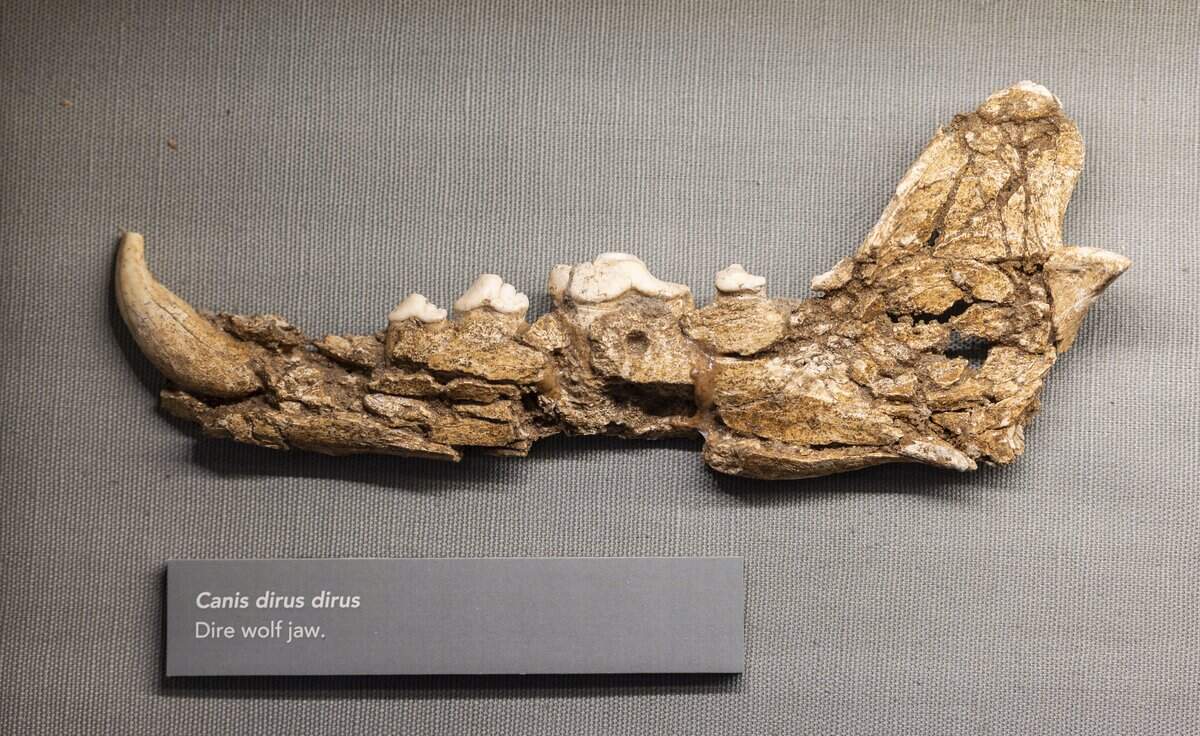
Then, in 1979, an amateur couple who had been looking for fossilized wood for knife handles at the Deering Estate led to one of the most startling discoveries of all: an Ice Age fossil deposit with thousands of bones of extinct animals such as mammoths, dire wolves and saber-toothed cats, along with later artifacts, human teeth and bones, traces of hearths and other evidence of habitation by Paleo-Indians and Late Archaic people dating back more than 10,000 years.
The site, which predates creation of the Everglades and harkens back to a period when the area was a grassland savanna, remains to this day the earliest known site of human habitation in Miami-Dade, and much of its contents are preserved. Though it had been looted by kids, most of the material was eventually recovered.
The work by Carr set the stage for the city of Miami and the county, which acquired the estate, to approve the nation’s first comprehensive archaeological preservation ordinances in the early 1980s. The regulations require developers and owners of property seeking building or digging permits within designated archaeological zones to conduct scientific studies for historic or prehistoric materials in the ground, then to finance excavation and recovery if enough of significance is found.
The regulations have produced numerous significant discoveries, along with some controversies.
Typically, finds are not publicized before they’re once again buried under new construction, though reports are filed with public authorities. And while ordinances give historic preservation officials the ability to designate properties as protected archaeological sites, they have until recently been loath to fully exercise those powers when developers’ plans stand in the way.
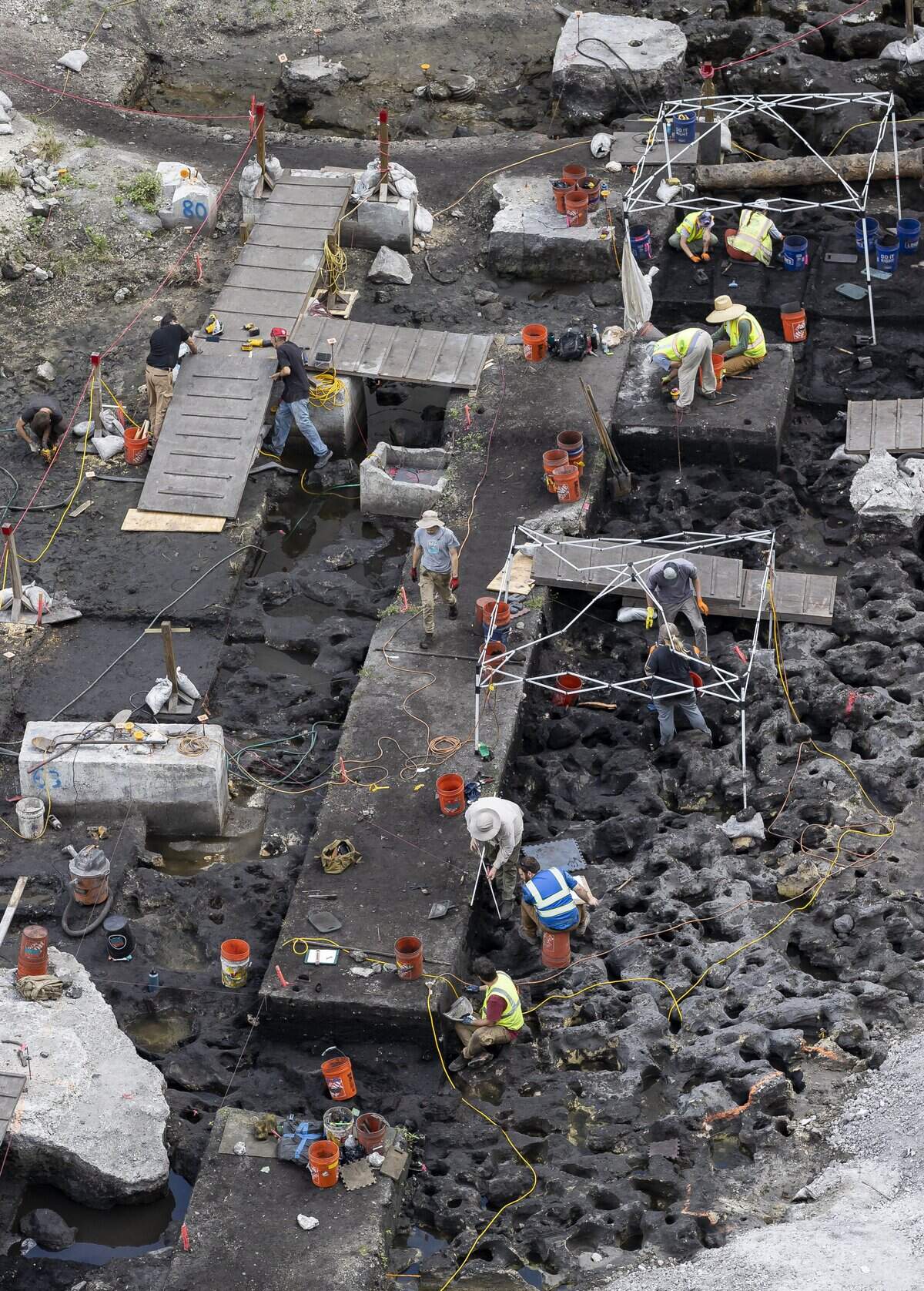
Given the way the laws work, Carr and other experts note, while development erases the prehistoric discoveries, it’s also become the main way that sites are discovered and explored.
“It’s like the archaeology trails behind the developer, rather than people setting out to explore the ancient city that was there,” said Ryan Wheeler, the former chief archaeologist for the state of Florida, now director of the Robert S. Peabody Institute of Archaeology in Massachusetts. “So you wind up with all these patchwork discoveries following the developers. Their projects are destroying these sites, which is the nature of both development and archaeology.”
Still, the experts say, the result of the laws has been significant advancements in knowledge and perception of the Tequesta and their predecessors, and the preservation of at least a portion of some significant sites. Had the county relied on state law only, Carr estimates that only a small percent of finds prompted by local ordinances would have been made or investigated.
“Things are definitely better than they were,” Carr said. “Public policy is constantly evolving, and finding the balance between preservation and development is an edgy reality. This is just something that is an ongoing process.”
Some sites are ‘lost forever’
The list of sites in the heart of Miami that have been found, only to be lost again, is at the same time discouraging and startling.
For instance, just past the south fork of the Miami River, where the Everglades once began before large-scale draining and filling for development took place, remnants of a large indigenous village, a canoe trail and burial ground dating back as early as 1500 B.C. were found on Flagami Island. The spit of land was partially destroyed by construction of State Road 836 in 1969 and fully erased by the demolition of homes for warehouse construction in 1981.
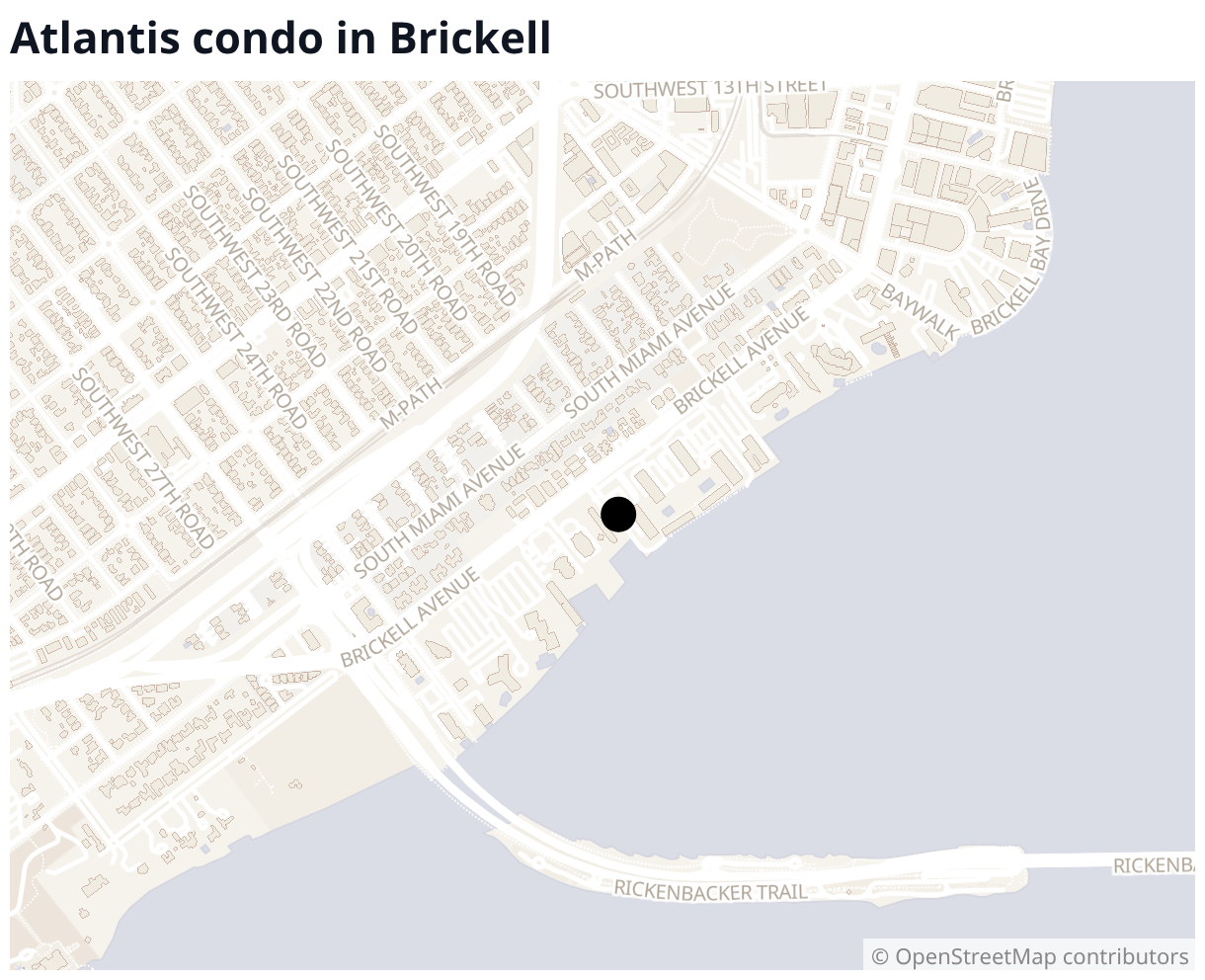
Around the same time, excavation in preparation for construction of the Atlantis condo tower on Brickell Avenue unearthed graves, sea turtle and fish remains, and prehistoric pottery and shells from what may be the oldest indigenous site in the city, with carbon dating it to 1,000 to 1,200 B.C. Similar finds were subsequently made on adjacent lots, erased by construction and unmarked and unmapped.
The first evidence of a prehistoric Tequesta structure was uncovered, also in 1981, on the first site to undergo archaeological analysis under the new county ordinance. Construction of a Holiday Inn in Brickell led to the discovery of a pattern of postholes in the limestone bedrock for building foundations, but it attracted little to no public notice.
Prehistoric human remains were later discovered at the adjacent Brickell Park, site of the Brickell family crypt, stopping a deal by the city to sell to developers, although the park to this day bears no historic markers about either the ancient find or the Brickells.
At about the same time, when the hotel was torn down in 2005 for construction of the Icon complex, the required excavation uncovered hundreds of additional postholes, but the find again attracted little notice and, following what by then was routine practice, the city allowed developer Related Group to build over them and demanded no preservation, exhibitions or even markers.
“It provided only a glimpse of Tequesta culture,” Carr wrote in “Digging Miami.” “Lost forever was the fabric of an entire Native American group that had reigned over a world of estuaries and creeks for thousands of years.”
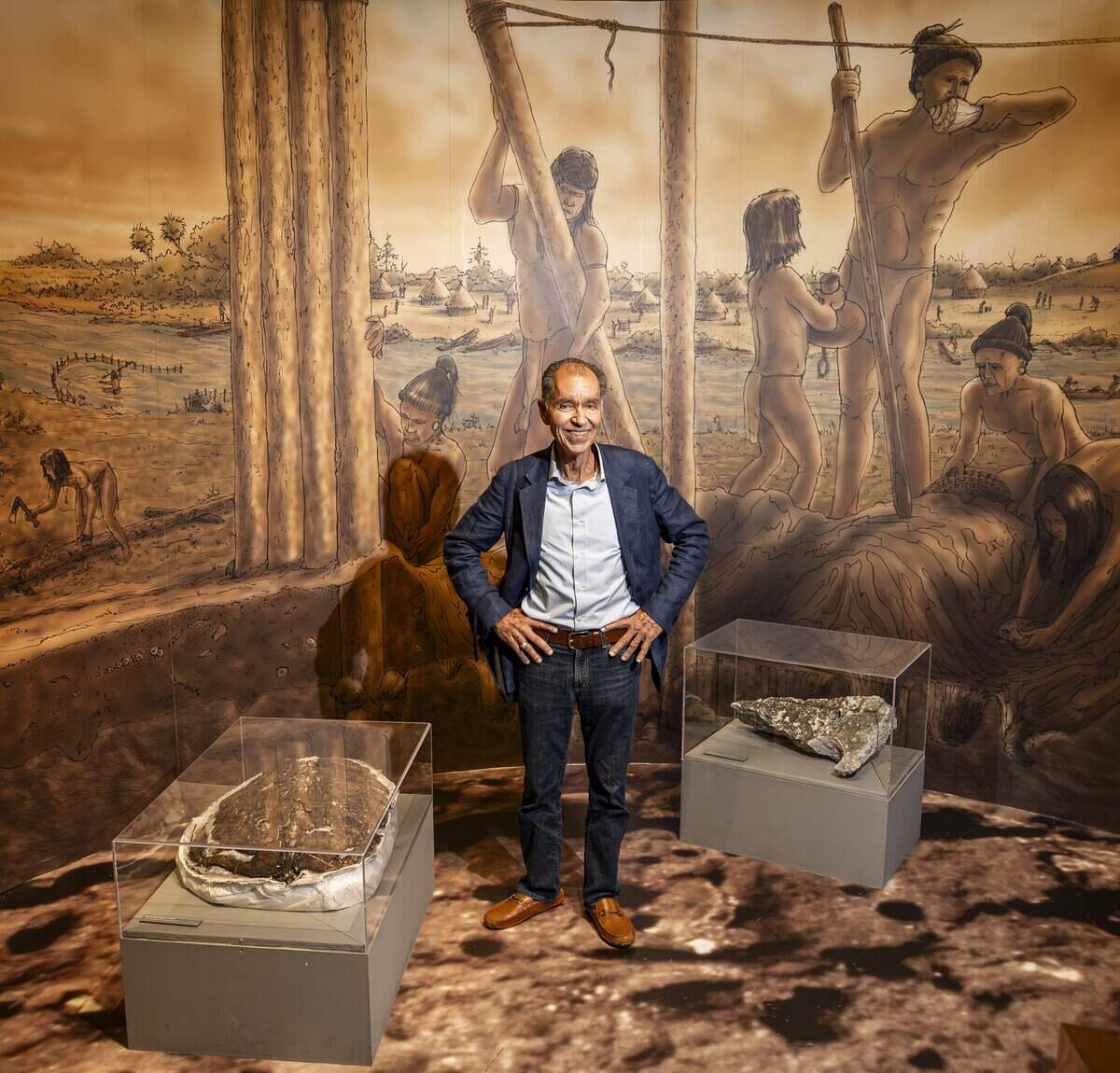
The Miami Circle has been a notable exception, one that some advocates attribute in part to the international furor prompted by its discovery and a developer’s plan to obliterate it with a condo tower, and the state’s willingness to intervene and purchase the site for $26.7 million — a price that in hindsight was a bargain.
It has been one of the few local finds to become the subject of scholarly publication, backed by Wheeler. Based on carbon dating and artifacts, detritus and animal remains found at the site, Carr and others concluded the circle had likely been the foundation for a wooden ceremonial building dating back around 2,000 years.
READ MORE: How the Miami Circle, a 2,000-year-old site in Brickell, was found and saved
Fifteen years later, on the opposite bank of the river, Carr — by then working for his own Archaeological and Historical Conservancy — was hired by developers of the Met Miami high-rise complex to conduct the required archaeological review and made yet another momentous and complementary find.
Carr and his crews were digging under what had for decades been a parking lot laid over the site of Flagler’s Royal Palm Hotel, demolished in 1930. He found three layers of Miami history — not just remnants of the hotel, but vestiges of the U.S. military presence and well-preserved evidence of the extent and intricacy of the Tequesta town.
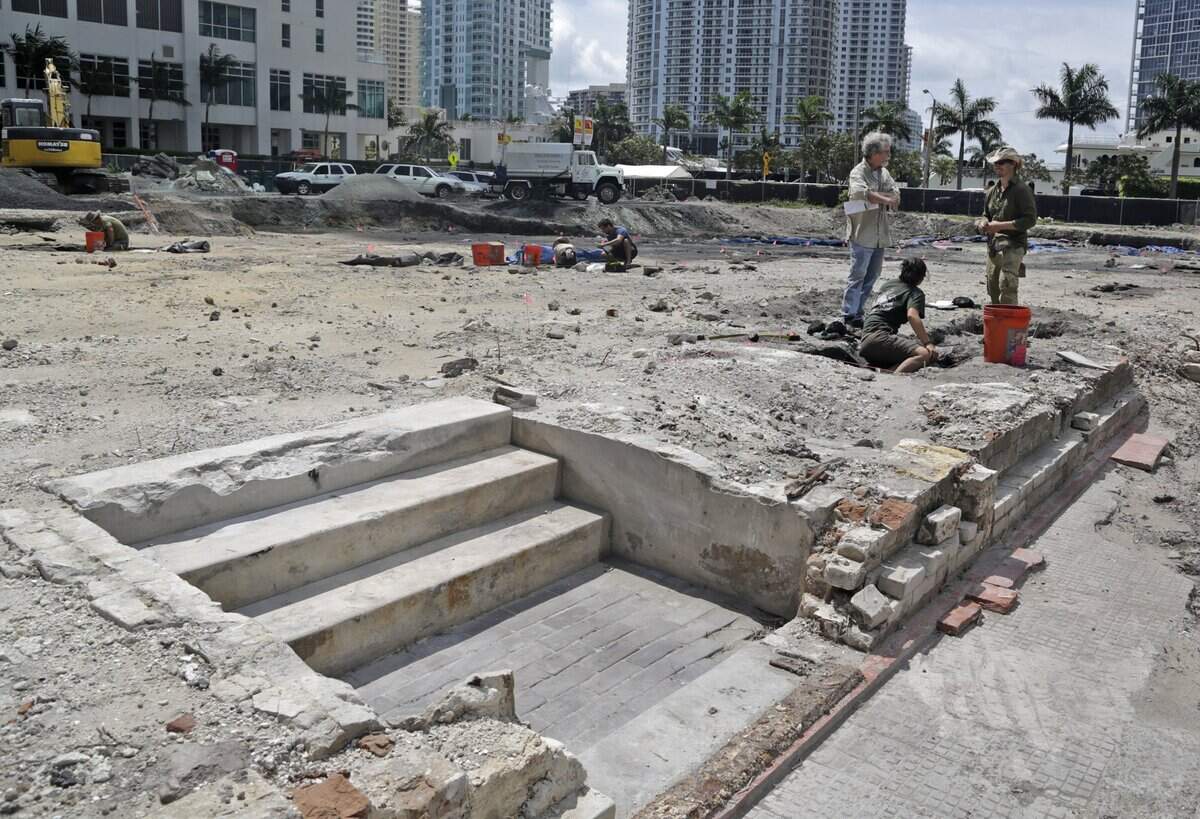
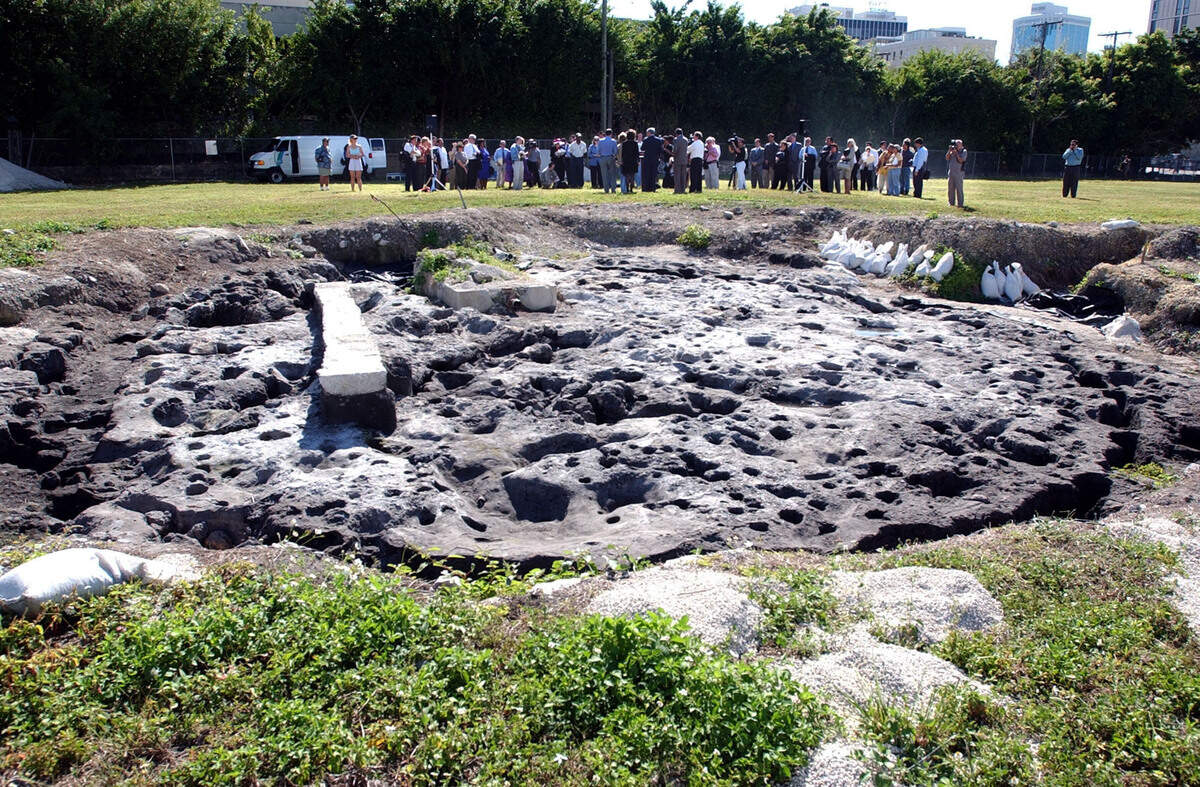
This time, it was several smaller circles and lines of postholes that Carr concluded once supported wood houses and walkways, along with extensive human remains and vestiges of Tequesta habitation — possibly what remained of the mound taken down by Flagler’s crews.
The cemetery site, the largest associated with the Tequesta, encompassed five sinkholes, which were used for burials because the prehistoric Indians lacked tools strong enough to make large holes in the bedrock, and contained the remains of several hundred individuals who lived between 400 A.D. and 1200 A.D., Carr concluded.
News reports of the finds provoked another outcry and demands for preservation. When the developers resisted proposals from the city for preservation, then-City Commissioner Marc Sarnoff persuaded them to enter mediation, resulting in a court-approved plan that called for preservation of two of the circles and a small museum in their new building, to be managed by what’s now the Museum of Miami, to exhibit the relics and other artifacts behind glass.
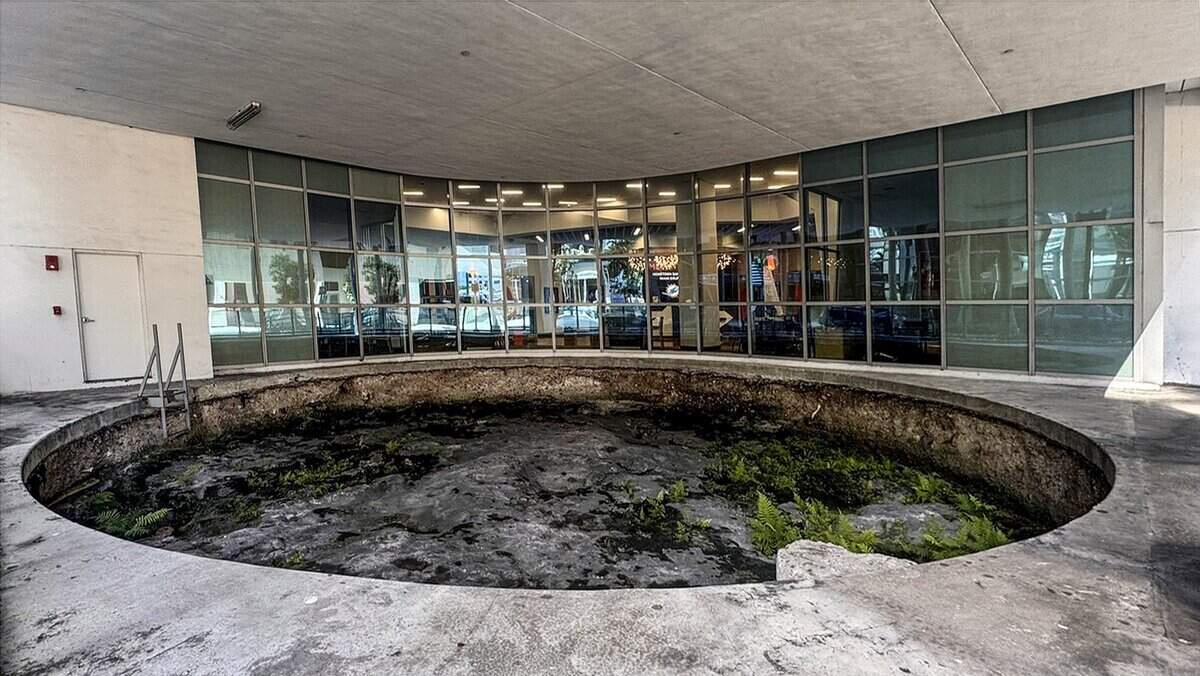
But the developer, MDM Group, for years failed to open the museum or adequately exhibit the finds, putting one circle in an inaccessible interior space, and another in an exposed open corner of the building with no protection and no signage. On a recent afternoon, the circle, behind a low wall along the sidewalk, was littered with trash.
Preservationists went back to court to enforce the settlement, and Museum of Miami officials this month said they are close to signing an agreement with the developers following “multiple rounds of proposals and revisions.”

Little public awareness of new finds
That renewed battle was simmering when news broke in early 2023 of yet another major find, this one on a development site across Brickell Avenue from the Miami Circle. Carr, working for the Related Group, filed reports with the city indicating extensive and unusually well-preserved finds, several thousands of years old, under a thin layer of soil following the demolition of the old U.S. Customs building.
The excavation, which experts say proved the Tequesta village extended along the river’s south bank, had been quietly going on for nearly two years. But few knew about its significance, including the city’s historic preservation board, which has oversight over the dig, until independent archaeologists, including UM’s Ardren, disseminated Carr’s reports, a public record.
After yet another public outcry and initially strong resistance from Related, the preservation board declared a portion of the property, where the developer planned three hotel and residential towers, a protected archaeological site. In a compromise, the city allowed previously permitted construction of the first two towers to proceed once excavation had been completed, while retaining jurisdiction over what happens at the third lot, site of the Capital Grille, slated for future demolition.
In return, Related agreed to exhibit some of the finds and erect markers along a planned riverwalk segment along their property and other unspecified features highlighting the Tequesta past at the site. New excavation will occur once the remaining office building on Brickell is torn down, and experts believe it will uncover extensive additional prehistoric material. Related has not announced a date for the demolition.
Even as the compromise was being hammered out, Carr made another significant find on a separate Related project site between the bay and Brickell Avenue. It was an even older Late Archaic cemetery, dating back some 3,500 years, and probably part of the earlier burial sites found years before at the adjacent Atlantis and Santa Maria condo tower sites.
The discovery suggests that the presence of the Late Archaic people in Miami was perhaps more extensive than once thought, but they remain an abiding mystery.
“Where were the people living who were using this burial site? There is no mound there, but they are cemeteries on land set aside for the purpose,” Ardren said.
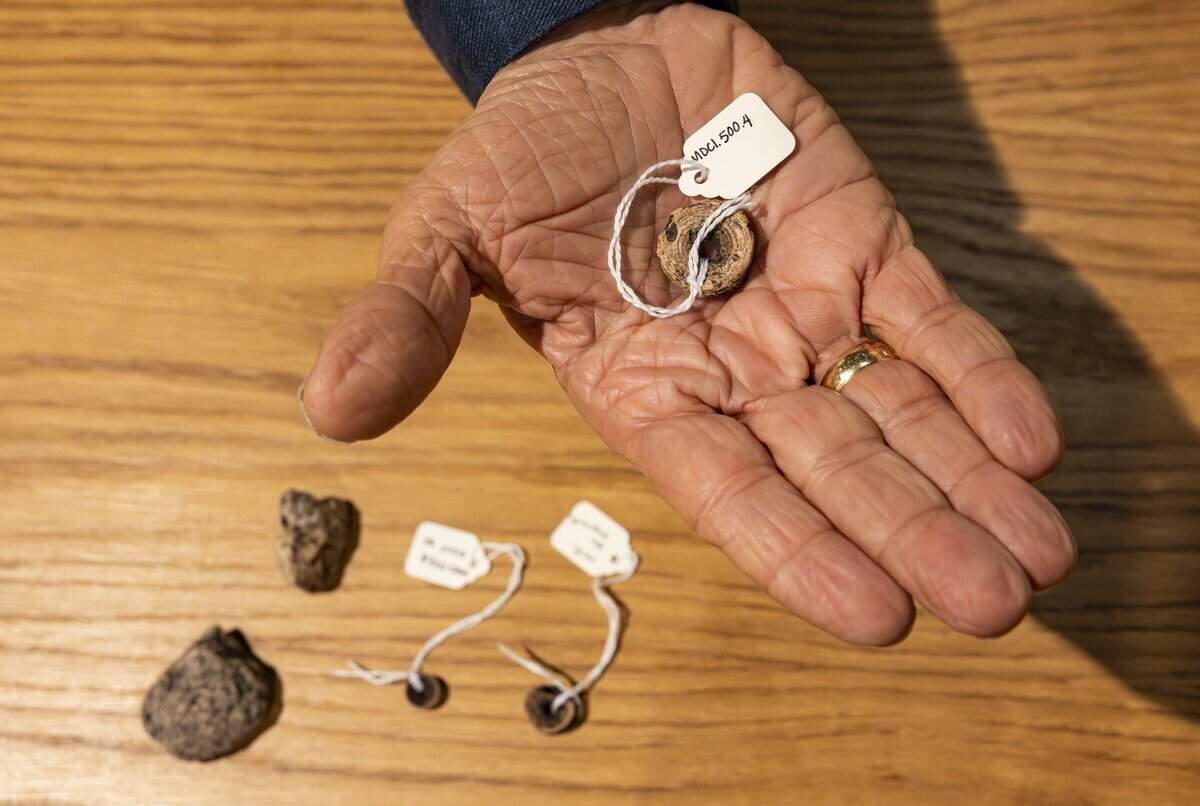
Related notes it has spent tens of millions of dollars on painstakingly scientific excavations and has hewed to the letter and spirit of local laws.
“The Related Group is unwavering in its commitment to protecting, preserving, and honoring the historical and archaeological heritage that forms the foundation of great cities like Miami,” the company said in a statement. “We meet and exceed all applicable local, state, and federal requirements, engage leading experts, and invest deeply to ensure that archaeological resources are protected, studied, and preserved for future generations.”
Ardren and other preservation advocates say the recent finds underscore gaps in preservation laws, the limited appetite for public officials to publicize them and to make developers alter projects, and the lack of resources to exhibit, store and study the massive yields produced by the excavations.
The Museum of Miami, formerly HistoryMiami, is the designated depository for many of the recovered materials, but it’s short of funding and storage capacity to handle it all. Its permanent exhibit on the Tequesta, centered around the Miami Circle, is captivating, but the museum can show only a miniscule fraction of its holdings.
The museum also pulled out five years ago from a deal with the state to manage the Circle site, where the foundation holes are buried for protection and vague plans for exhibits never materialized. Today, two of the four interpretive signs on the site, the only indication of what lies beneath, are faded to illegibility.
Some preservationists and activists say both public officials and developers have downplayed finds to avoid a repetition of the public campaign to save the Miami Circle and the Met Miami elements. Some also acknowledge that today’s far higher real estate values mean governments can no longer afford the purchase of development sites or the risk of a court ordering compensation for a developer forced to significantly scale back a project.
‘A modern city that doesn’t understand its origin’
The recent discoveries have also exposed another problem: The preservation and study of recovered materials lags well behind the rapid pace of development. There is so much material recovered that no one knows what to do with it.
Under local preservation laws, the finds must be carefully catalogued and stored, but only the most significant pieces stand a chance of getting analyzed. The hundreds of thousands of bits and pieces that constitute the finds from the Related river projects, for instance, sit in bags and boxes in vacant offices in the Capital Grille building, and the developer has rebuffed requests from preservationists to fund a center for their study.
Miami is not unique, Wheeler and other experts say. Developers’ interest and responsibility ends once they’re cleared to start construction, and uncounted troves of material across the state languish in storage, some in private hands. No one knows exactly what’s out there or what it amounts to.
“That’s a huge issue,” Wheeler said. “Where do these collections wind up? We often don’t know. It’s frightening. But no one wants to invest in long-term curation facilities.”
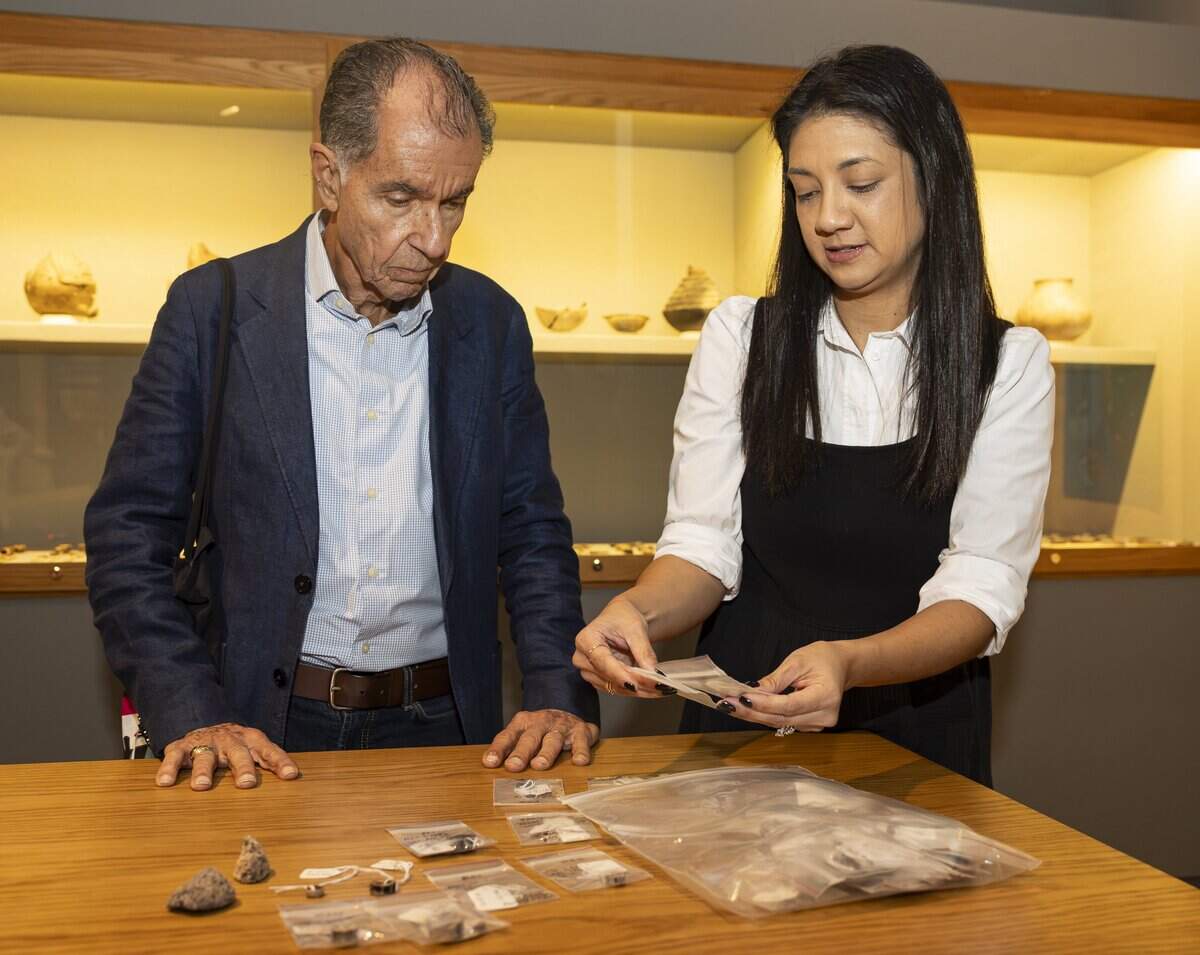
Those shortcomings reflect to a great degree how little Miami’s business and political leadership has valued indigenous sites, Wheeler and archaeologists say. The lack of identifiable sites and publicity also means that public engagement is often lacking as well — but that quickly changes when news or information about a discovery reaches people.
The simplest solution, Wheeler proposes, is that laws be strengthened to require developers to integrate prehistoric sites and finds into the architectural plans for new buildings, and not just shunt things off to museums or warehouses.
“Here is a modern city that doesn’t understand its origin 5,000 years ago,” Wheeler said. “So many people in Miami or South Florida I think are really interested. We should be creating those opportunities to create that sense of place. We could be putting it in a building that people live in. What was here before? This all didn’t just spring out of the ground.”
But time is running short. One thing few will dispute: The massive redevelopment of downtown Miami, Brickell and surrounding neighborhoods now underway provides what’s likely the last chance to assess and save what’s left of our ancient past.
“It’s astonishing. These places have survived up until now,” Wheeler said. “The amazing thing is these sites survived the original construction of Miami. They survived the ‘60s and the ‘80s. But when they build these new buildings, there is nothing left. The archaeology that’s being done now, that’s it. There is no more.”