Hey, Curious305: Is Hard Rock Stadium on a Native American burial ground?
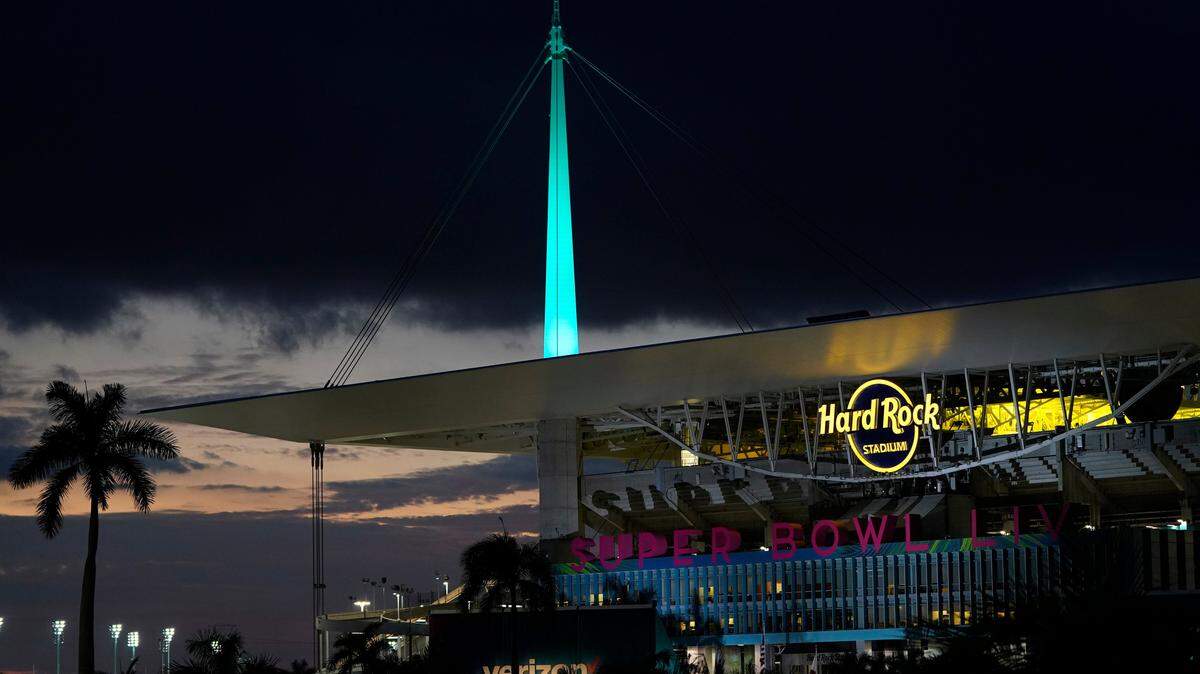
Editor’s Note: This article was inspired by a question submitted from Miami Herald reader Rolando Vinas through Curious305, our community-powered reporting series that solicits questions from readers about Miami-Dade, Broward, the Florida Keys and the rest of the Sunshine State. Submit your question here or scroll down to fill out our form.
Hey, Curious305: Is Hard Rock Stadium, formerly known as Joe Robbie Stadium, built over a Native American burial ground? The urban legend goes that ever since the stadium was erected, the Dolphins have never won a championship game nor gone to the Super Bowl. Was it built over sacred ground?
South Florida is always under construction. And sometimes, crews dig up history.
That’s what happened during the development of the Miami Dolphins’ stadium in Miami Gardens.
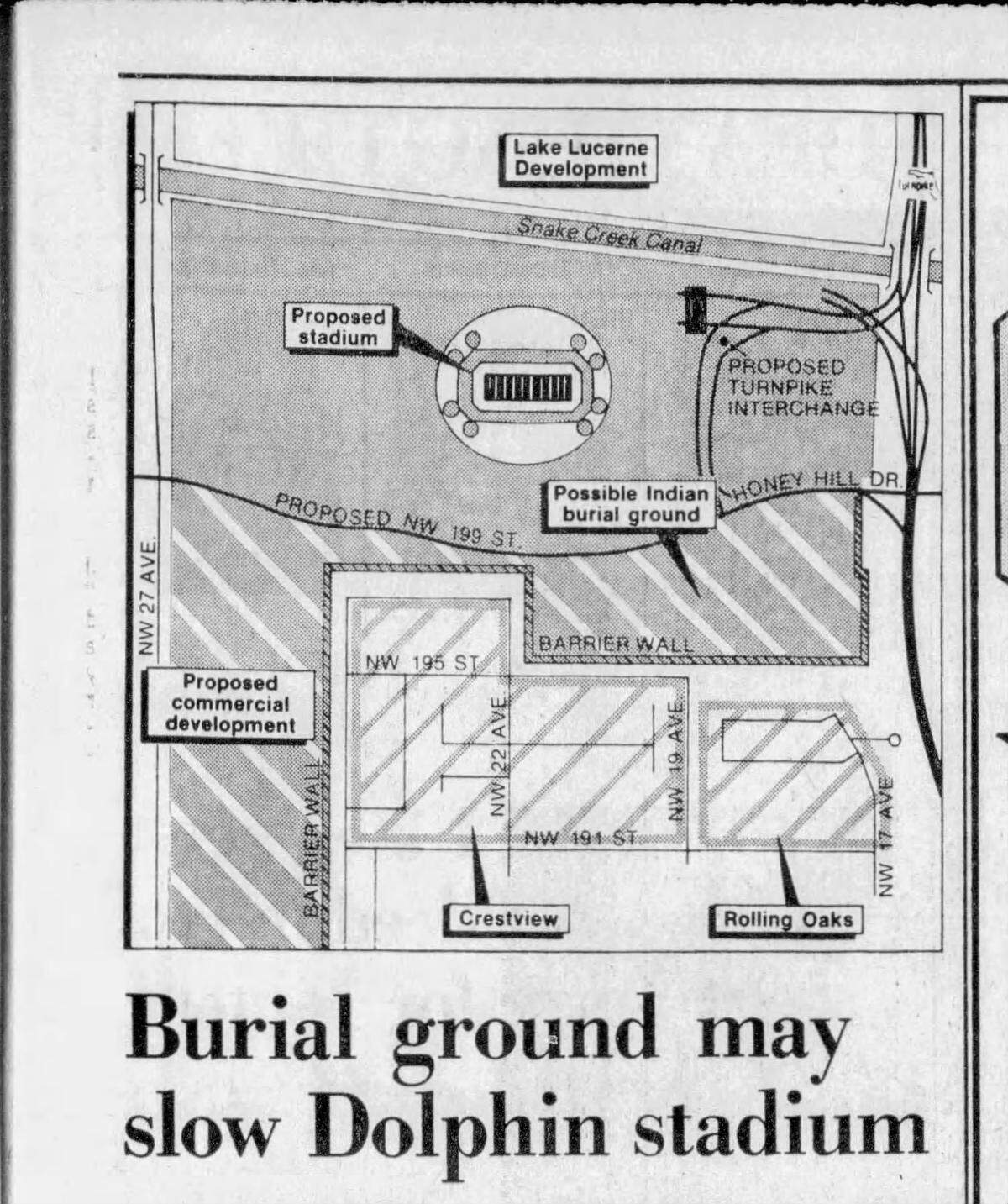
Human remains and artifacts dating back to about 800 A.D. were found on two acres of land southeast of where the football stadium was to be built, according to a 1985 Miami Herald article. The buried relics were in an area set aside for parking and possible office development. The stadium opened in 1987.
“It’s probably one of the 10 most significant sites in Miami-Dade County because it had a critical location,” Robert Carr said this week. He is the executive director for Archaeological and Historical Conservancy, a not-for-profit organization dedicated to investigating and preserving archaeological and historical sites across Florida, the Bahamas and Cuba. He was also Miami-Dade’s first archaeologist and later was historic preservation director.
The site, called Honey Hill because of its elevation, “overlooked what at that time was the Eastern Everglades. ... And so the native people had this strategic location where they could access into the Everglades and then by going eastward on some of the waterways that came up to Honey Hill, they were able to make their way all the way to Biscayne Bay,” Carr said. “So for that reason, because of its elevation and its location, it was a very important site.”
He added: “People need to realize that this is an important cultural landmark in the history and prehistory of Miami-Dade County.”
Officials knew about Honey Hill years before the stadium’s construction, said Miami-Dade County Archaeologist Jeff Ransom. A Yale University archaeologist first looked at the site in 1949 and the state of Florida recorded the site in a 1975 survey, he said. In 1982, the county designated Honey Hill as a historic site. In 1985, archaeologists were sent to check if the stadium and Northwest 199th Street construction would affect Honey Hill.
What type of artifacts were found at Honey Hill?
The artifacts found at Honey Hill chronicle “nearly 5,000 years of human habitation, including evidence of a Tequesta village and Seminole camp,” according to an exhibit at HistoryMiami. The site is also one of the most significant military sites in the eastern Everglades, according to Carr’s 2012 book “Digging Miami,” which explores the archaeology history of South Florida.
Relics found at Honey Hill include fruit seeds, ornaments, arrowheads, musket balls and the broken shards of a glass flask decorated with a portrait of U.S. President Zachary Taylor, according to Carr’s book.
Archaeologists determined some artifacts were from the Tequesta, one of the first Native American tribes to settle in South Florida. The Tequesta tribe lived in the region until the mid-1700s. Other artifacts, including copper arrowheads, were made by Seminoles living on the site in the mid-19th century.
While crews excavated by hand artifacts that would have been affected by the parking lot’s construction, a “major part of the site” was preserved and is still there, surrounded by the stadium’s parking lots, Carr said.
“It’s the only green space left there,” Carr said.
Can you visit Honey Hill? Where are the artifacts?
The historic site is now known as Chittohatchee Park at Honey Hill, 1880 NW 199 St. in Miami Gardens. Ransom said people can only visit the public park with a tour. To learn more about the park and to check for free tour availability, call 305-375-4958.
Honey Hill is not the first time artifacts have been found in South Florida. Our land is ripe with history.
Some well-known discoveries include the Miami Circle at Brickell Point, which was designated a National Historic Landmark in 2009, and the Cutler Fossil site on the grounds of the Deering Estate. Most recently, in 2021, possible Tequesta artifacts were found during a parking garage demolition in Brickell.
Carr thinks there are more sites — “time capsules” of Miami-Dade’s history — to be found. Of the sites found so far, some give more access to visitors than others, like the site at Arch Creek Park in North Miami.
So, where are the Hard Rock Stadium area artifacts now?
The excavated artifacts were sent to HistoryMiami, the official repository for archaeological materials collected by Miami-Dade County. Some of the relics are on display at the HistoryMiami museum, 101 W. Flagler St., as part of “It’s a Miami Thing: Highlights from Our Collection” exhibit celebrating Miami’s 125th anniversary of incorporation. The exhibit will run through March 27.
But, wait, does this mean the myth about the Dolphins being cursed is true? We’ll let you decide.
This story was originally published February 9, 2022 at 6:00 AM.