
Miami’s election date change ‘could create chaos,’ appellate court says
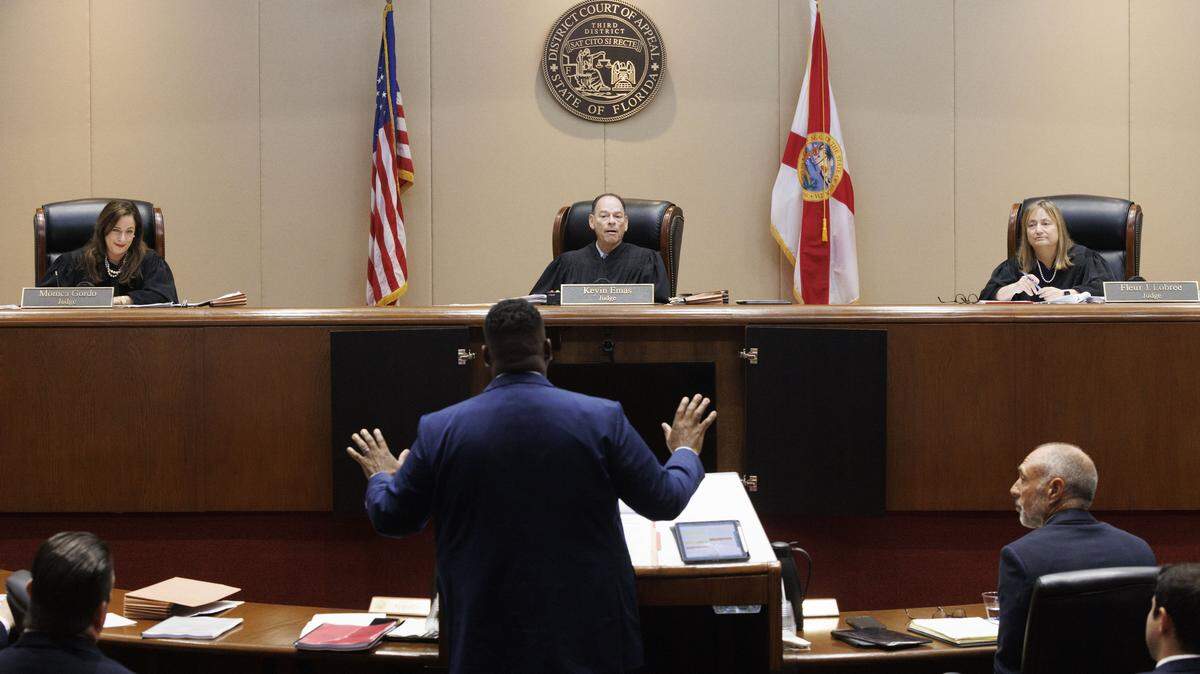
As a Miami mayoral candidate’s lawsuit against the city advances, Florida’s Third District Court of Appeal appeared skeptical of the city’s justification for postponing the November 2025 election to 2026 without voter approval.
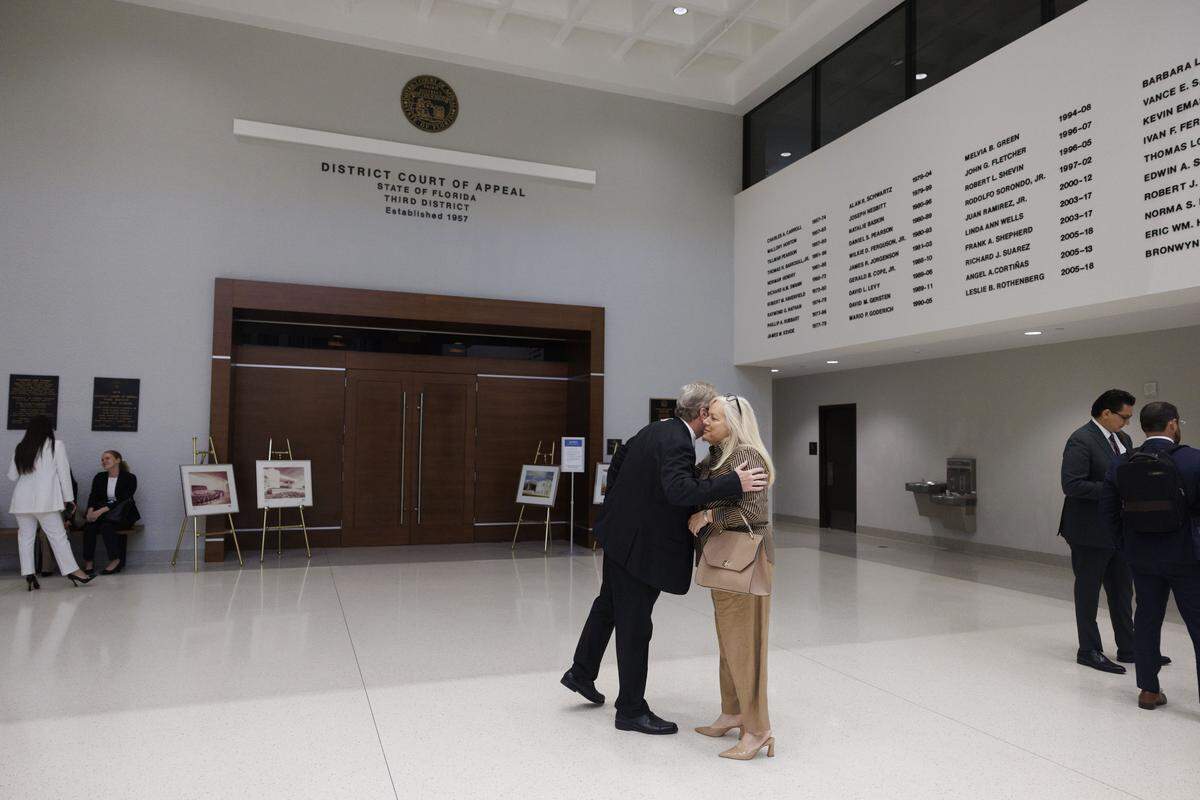
A three-judge panel heard oral arguments Tuesday morning in the lawsuit that mayoral candidate and former city manager Emilio González filed last month after the Miami City Commission voted 3-2 to postpone the election to 2026 via ordinance, rather than through a ballot referendum.
The judges pushed back against the city throughout Tuesday’s hearing, appearing to indicate that they are leaning in the same direction as Miami-Dade Circuit Court Judge Valerie Manno Schurr, who ruled last week that the ordinance the city passed was unlawful and unconstitutional. The city quickly appealed Manno Schurr’s ruling.
The city’s charter states that elections “shall be held on the first Tuesday after the first Monday in November in odd-numbered years.” Changes to Miami’s charter require voter approval via ballot referendum — a process that the city circumvented by passing an ordinance that not only postponed the election but also gave the city’s current elected officials an extra year in office. The question of whether the city acted legally by doing so is at the crux of González’s case.
The city has argued that by passing an ordinance, it technically changed the city code — not the charter.
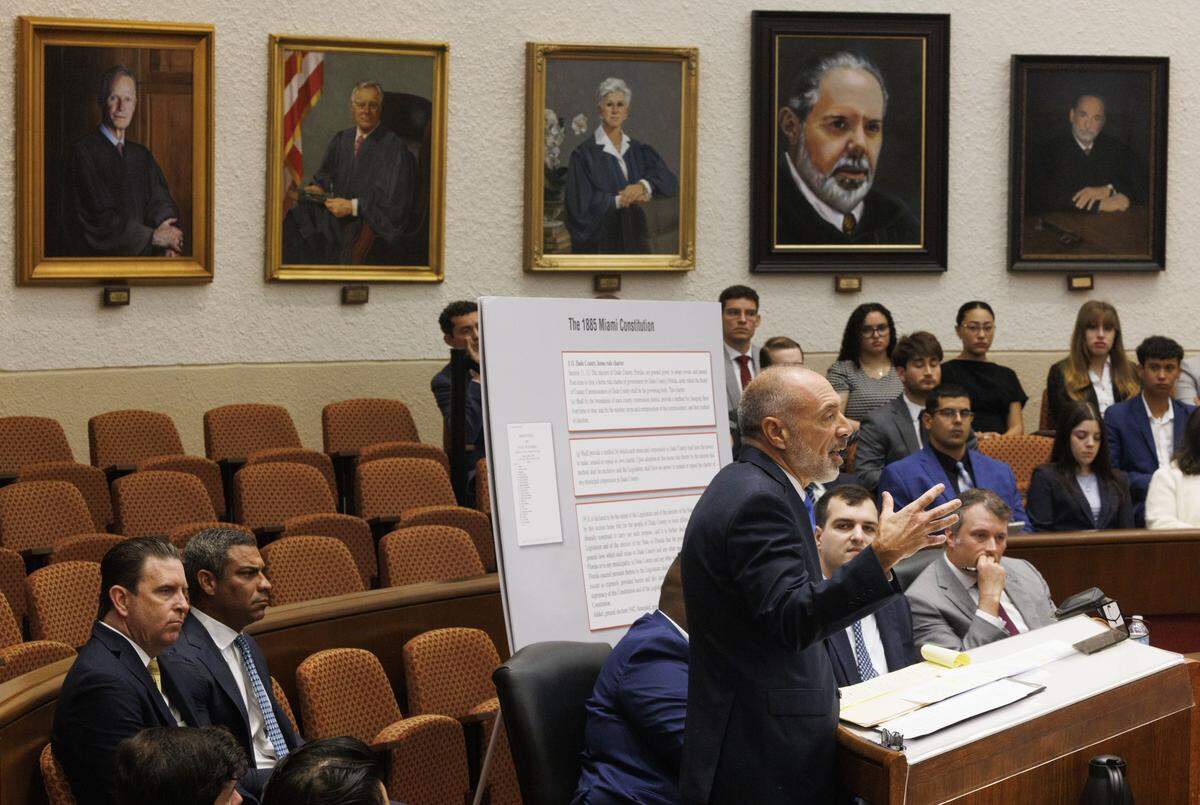
At Tuesday’s hearing, Dwayne Robinson, an attorney for the city, held up a printed copy of the city charter in each hand — one version from a week before the city voted on the ordinance and one version from after.
“There is no change,” Robinson said. “There is no amendment. There wasn’t a repeal. There was nothing.”
In other words, the city charter continues to state that elections take place in odd years. The new ordinance, however, directly conflicts with that, stating that elections are to take place in even years, with the next election taking place in November 2026.
González’s attorney, Alan Lawson, called the city’s argument a “semantic sleight of hand.” He loosely quoted Abraham Lincoln, saying that “calling a tail a leg doesn’t make it so.”
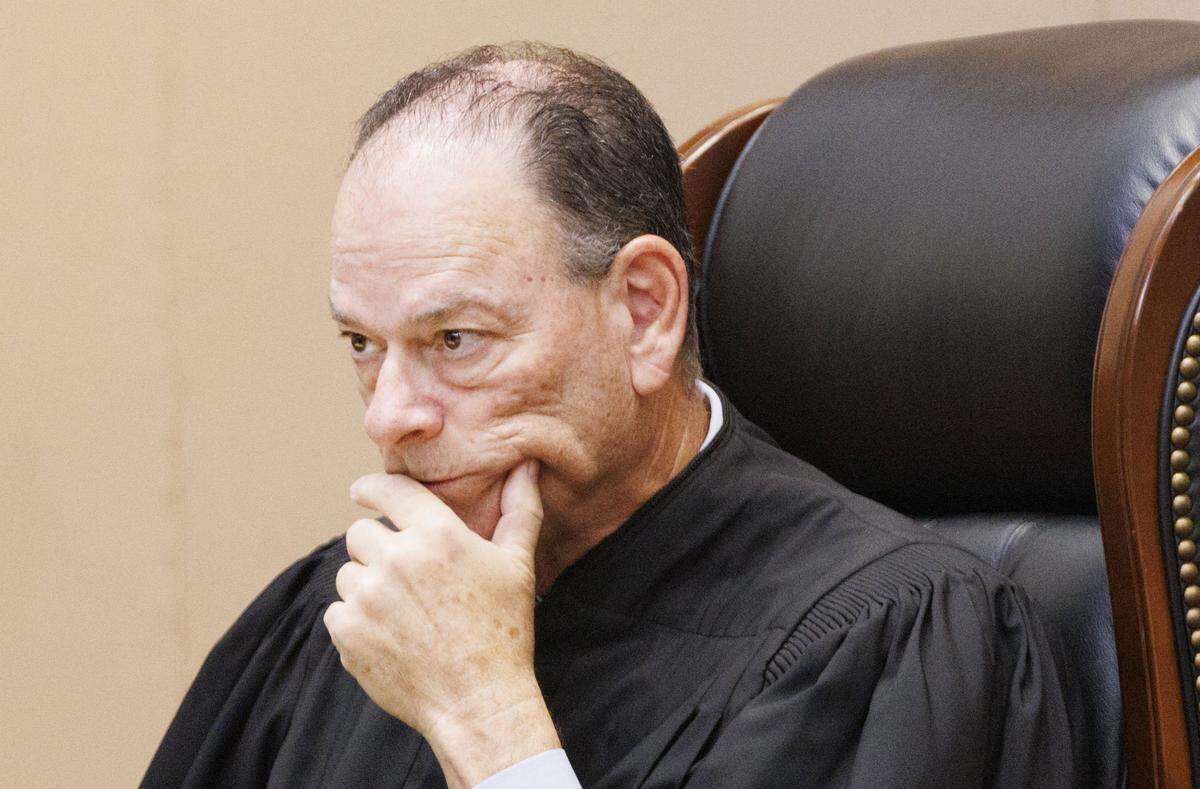
Judge Kevin Emas said Tuesday that if the city prevails, it would be left with a city code and a city charter “that attempt to coexist but cannot.”
“Which could create chaos,” Emas said, adding that it puts the county’s elections supervisor in the position of deciding which to follow — a charter that states elections are to take place in odd years, or a code saying the opposite.
“That would be problematic, would it not?” Emas said.
The judges did not rule on the matter Tuesday but are expected to do so quickly. The parties have said they need a final decision by Friday, Aug. 8.
Is a charter a ‘magic document’?
In justifying passing the ordinance, the city has relied on three Florida statutes that it says allow a municipality to move from odd- to even-year elections, changing the terms of office, without voter approval. In a sense, the city has put itself in a position of arguing against its own interests by maintaining that the state statutes trump local rules.
But González’s lawyers have argued that Miami-Dade County’s Home Rule authority, which is codified in the Florida Constitution, prevails when it conflicts with general law. And according to the Miami-Dade County Home Rule Charter, municipalities in Miami-Dade County “shall” amend their charter when such changes are submitted to voters.
Miami-Dade County agrees with González. Assistant county attorney Michael Valdes argued Tuesday that the county charter “is our Constitution.”
“We want to protect the unique status the Home Rule amendment provides to Miami-Dade County. It doesn’t exist anywhere else in the state,” Valdes said.
González has accused the city of acting undemocratically, comparing its actions to those carried out by “regimes in Venezuela, Nicaragua, Bolivia, or Cuba — the very places so many of Miami’s people come from.”
But in a brief last week, the city said “such inflammatory hyperbole and political rhetoric are puzzling” because “an ordinance is an example of representative democracy.” In other words, voters elected city commissioners to make decisions on their behalf.
If residents take issue with the ordinance, Robinson, the city’s attorney, suggested that they vote out the people who supported it or petition for a ballot referendum of their own. He said there are other instances where charter changes are allowed via ordinance.
“This idea that the charter is some sort of magic document that cannot be altered unless there’s a referendum — it’s not only contrary to common sense. It’s contrary to the charter itself,” Robinson said.
What about lifetime term limits?
With the general election date still up in the air, the Miami City Commission has called for a special election in November, where voters will decide on several ballot referendums.
One of those ballot questions is a proposal to create lifetime term limits for elected officials — restricting them to two terms as mayor and two terms as commissioner for their entire lifetime.
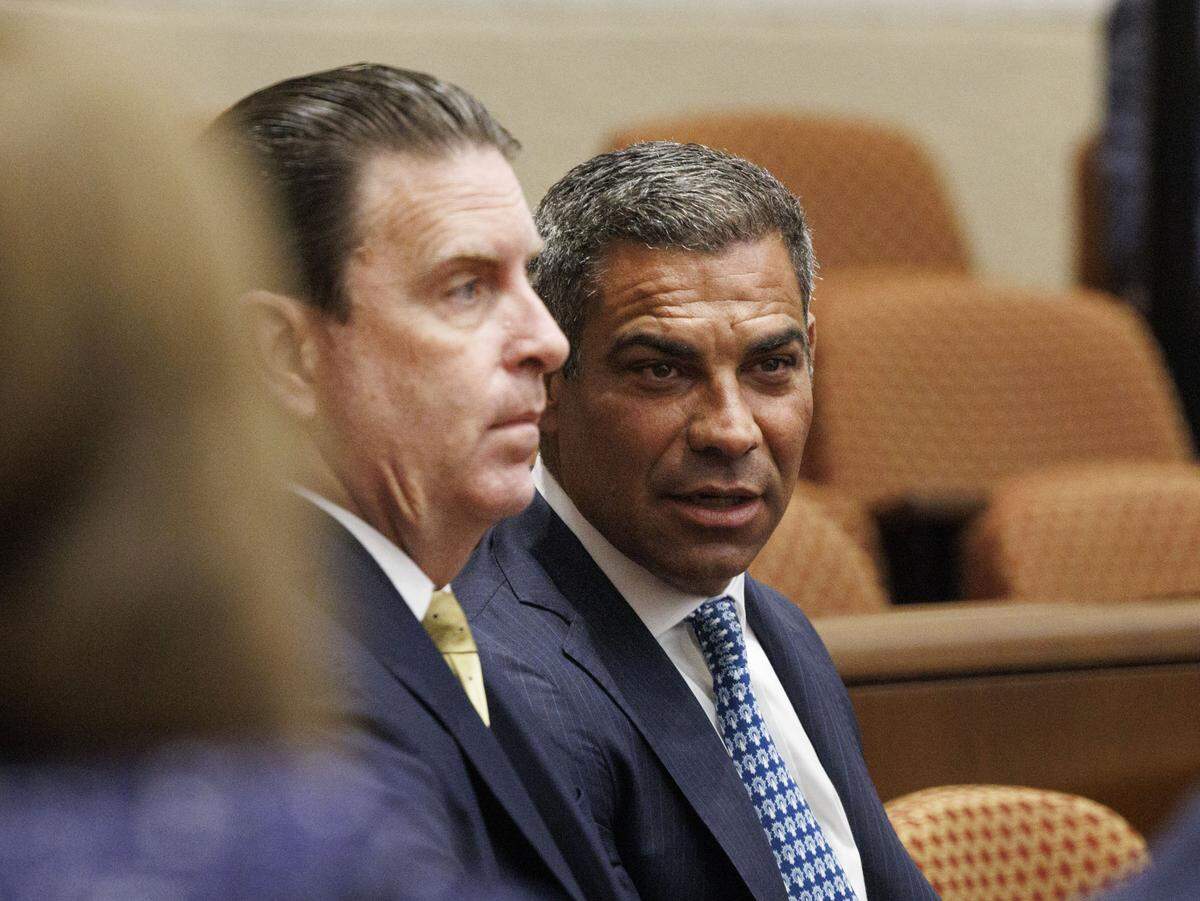
Commissioner Damian Pardo, who sponsored both the lifetime term limits proposal and the ordinance postponing the election, argued that moving the election to 2026 “cures” an issue with the term limits proposal.
That’s because the term limits proposal could directly affect some of the candidates who are planning to run for elected office in the city and expected to be on the November 2025 ballot.
That includes Frank Carollo, the younger brother of Commissioner Joe Carollo. Earlier this year, Frank Carollo filed to run to succeed his brother as the District 3 commissioner — a seat that Frank Carollo previously held for two consecutive four-year terms.
That means that if the election happens in November, Frank Carollo will be on the same ballot as a ballot question that could bar him from office.
Standing outside the courthouse Tuesday, Frank Carollo said he is taking it “one step at a time.” He declined to say if he has been coordinating with his brother, who opposes the election date change.
“The citizens need to have the right to vote, as per our city charter,” Frank Carollo said. “And they should have the right to vote for a city commissioner and mayor this November of 2025.”
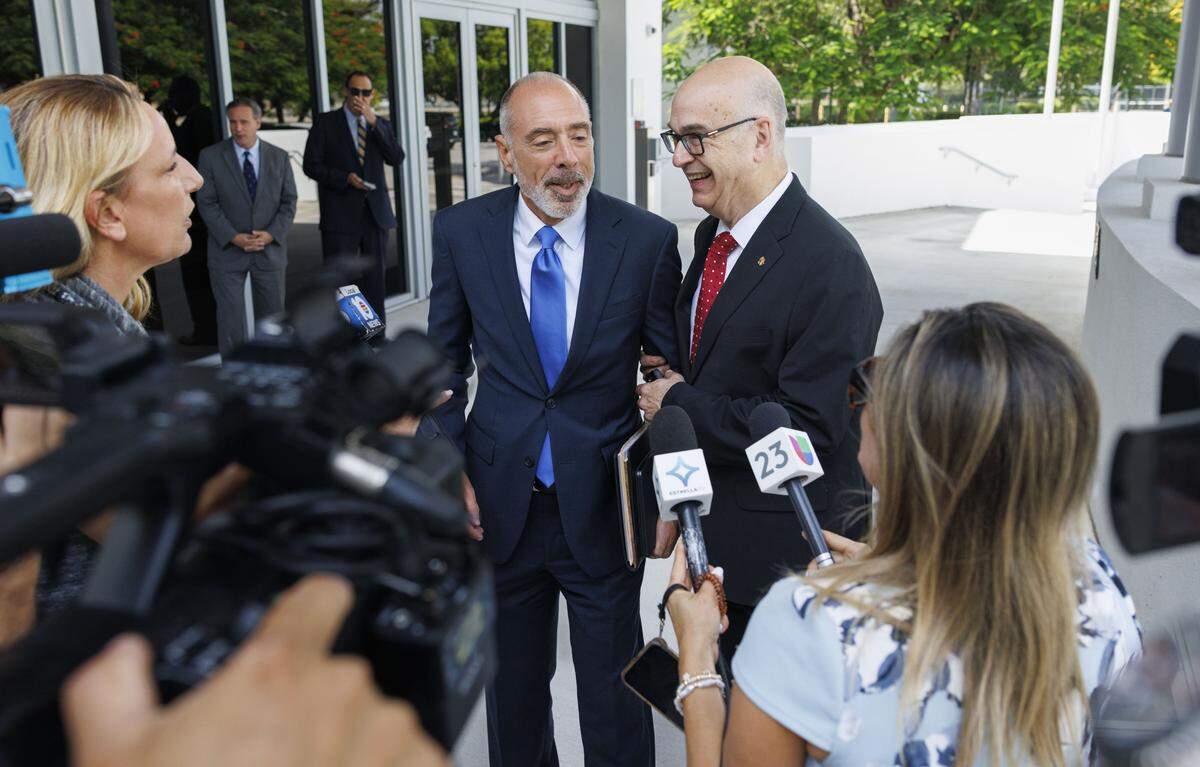
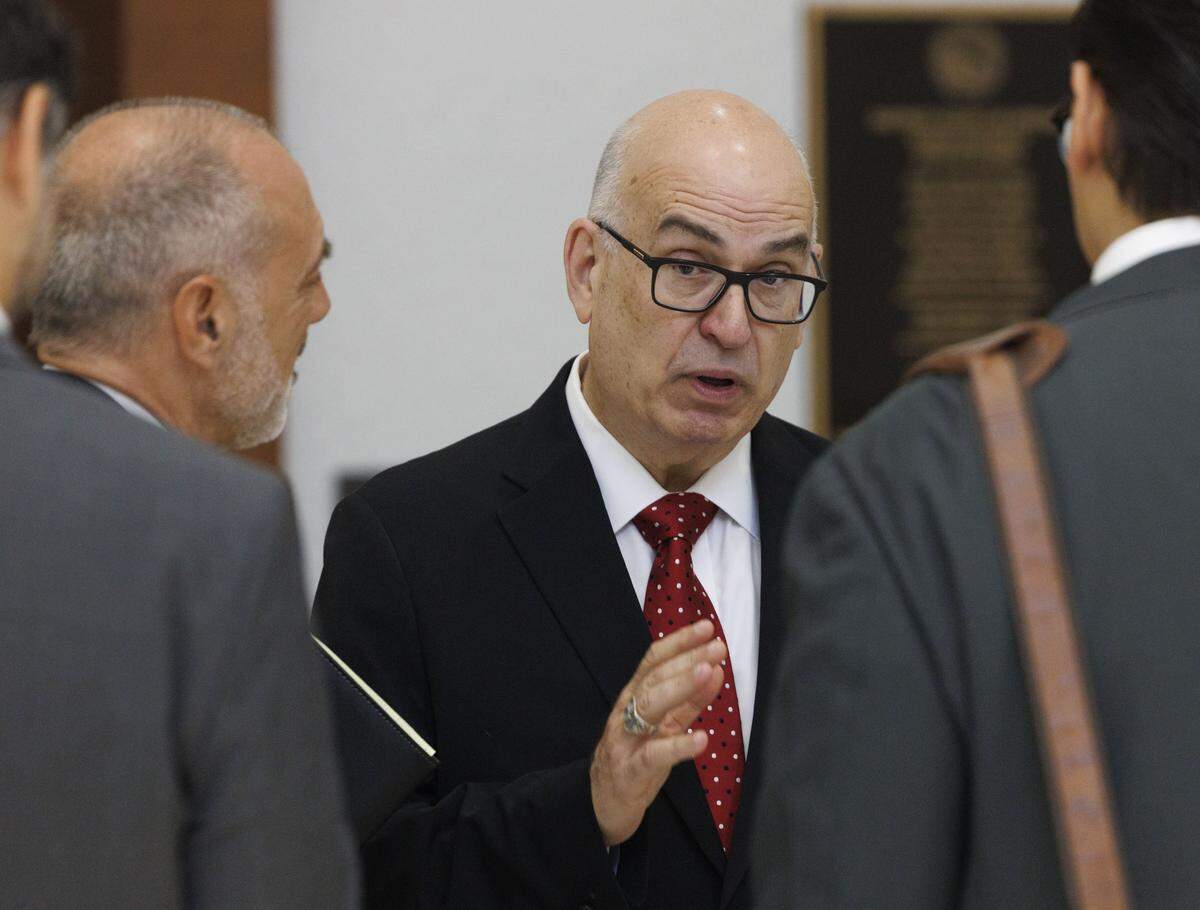
Speaking to reporters after the hearing, González said the lawsuit is “a very historic case” that could have a ripple effect across the state.
“This isn’t about semantics,” González said. “This is about voting. This is about democracy. And the fact that we’re here speaks legions about how our voters are being disenfranchised.”
This story was originally published July 29, 2025 at 2:43 PM.
.jpg)