
Are advertisements coming to a Miami construction site near you?
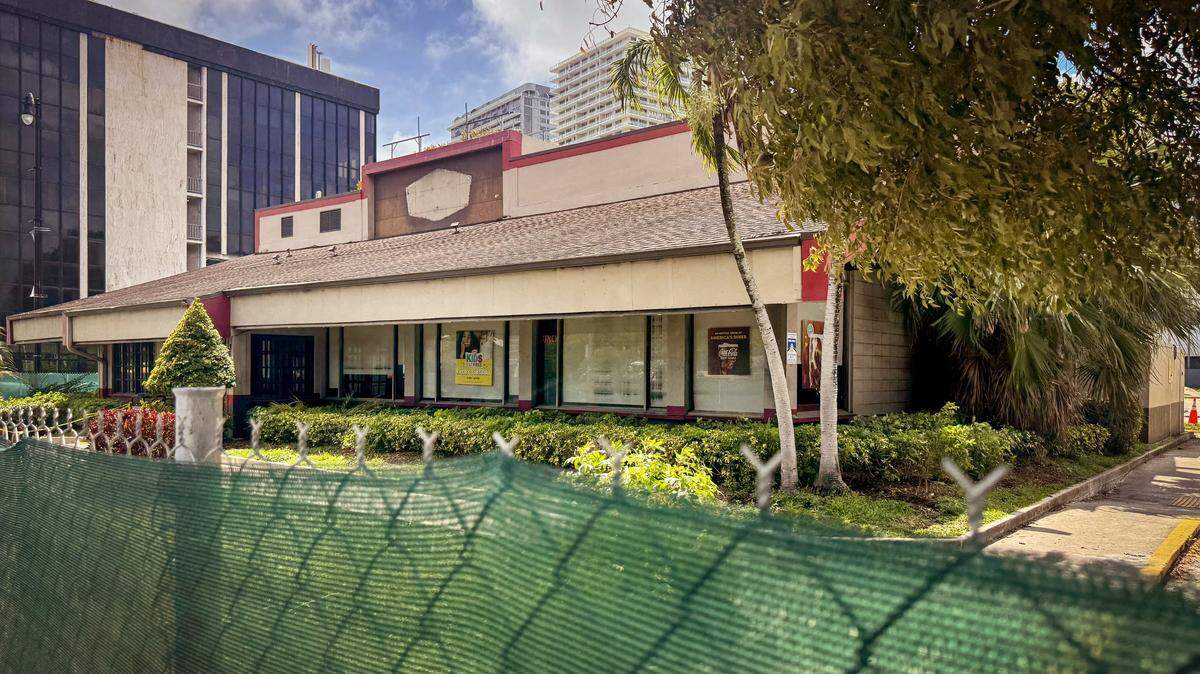
To address the “visual blight” of construction site fencing and the graffiti it can attract, Miami city officials are considering a solution that could double as a new revenue stream: advertisements.
Later this month, the Miami City Commission will consider a proposal to launch a one-year pilot program to allow advertisements on fencing at construction sites within the urban core that have active building permits. The signs could be no bigger than 8 feet tall and must be static — not illuminated or digital, except for solar-powered illumination.
According to the proposal, each construction site could have multiple advertisements, but just one per side around the site. The text copy of the sign could take up a maximum of 15% of the side, and the remainder of the ad could take up no more than 75% of the entire side face.
The applicants would need to pay the city a $10,000 “qualification fee” that would be refunded if the applicant fails to qualify, as well as a nonrefundable $500 fee for processing and reviewing the application. The pilot program also has a component that requires the advertiser to share a portion of its revenue with the city.
The city would have the right to revoke the sign permit at any time and for any reason if the applicant, building site or any other involved party violates any terms or sections of the city’s zoning code.
During the pilot period, just one company — Del Mastro Outdoor, LLC — would be the only designated “applicant,” according to the legislation. Commissioner Miguel Angel Gabela, who is co-sponsoring the proposal, told the Miami Herald a lobbyist for the company had approached his office about the pilot program.
Gabela said that while “we don’t need more advertising” in the city, ads would be less of an “eyesore” than the alternative of unsightly construction sites and graffiti.
One group, the nonprofit Scenic America, has openly opposed the legislation, calling it a “misguided approach that would not deter graffiti but would introduce a new form of billboard advertising into some of the city’s most visible and heavily traveled areas.”
“Billboards do not improve community character or reduce visual clutter,” Scenic America said in an online post. “They add to it.”
Commissioner Ralph Rosado is co-sponsoring the item with Gabela. His office provided the Herald with photos of graffiti-tagged construction site fencing in the city.
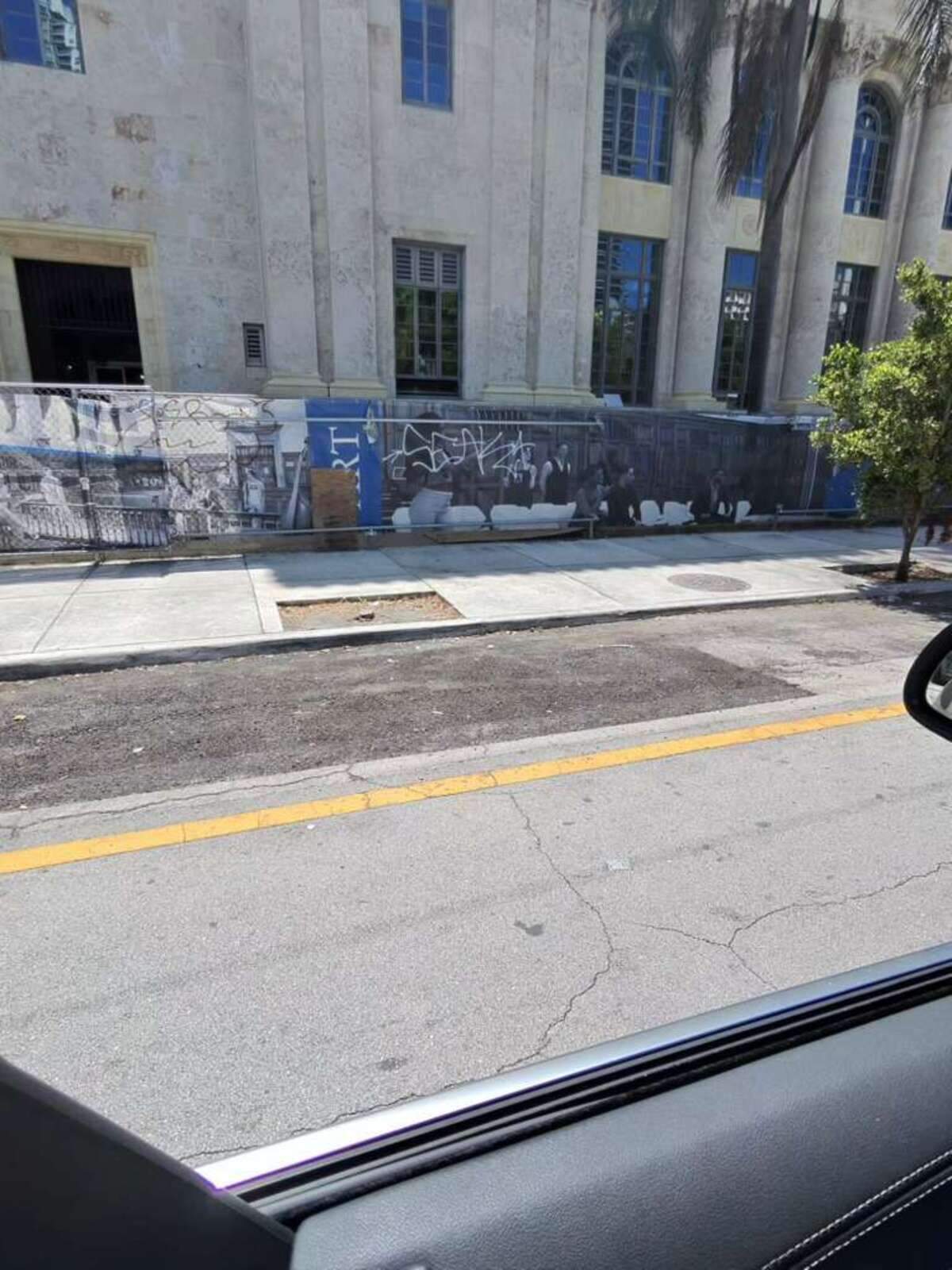
“These fences are typically tagged within days of being installed,” Rosado said in a statement. “The current responses to graffiti are either (1) painting over it with green paint, which never matches the original mesh and creates an eyesore, or (2) repeatedly replacing the damaged mesh.”
Rosado said the issue came to his attention when a construction fence was installed near his home last year.
“It was tagged almost immediately, and the mesh eventually tore in the wind and possibly created a potential ADA hazard,” Rosado said.
The item is slated to go to the City Commission at the July 23 meeting. If approved then, the pilot program would need to pass a second vote to go into effect.
Rosado said he plans to propose an amendment that would make it so that any revenue generated would be directed to improvements specifically within the city’s urban core. Rosado said that change would exclude his District 4 from receiving the proceeds.
Rosado also said he’d be open to “limiting any advertising to a defined period should a project experience construction or financing delays.”
.jpg)