
A village on the bay? Miami voters to decide on $2 billion projects for Watson Island
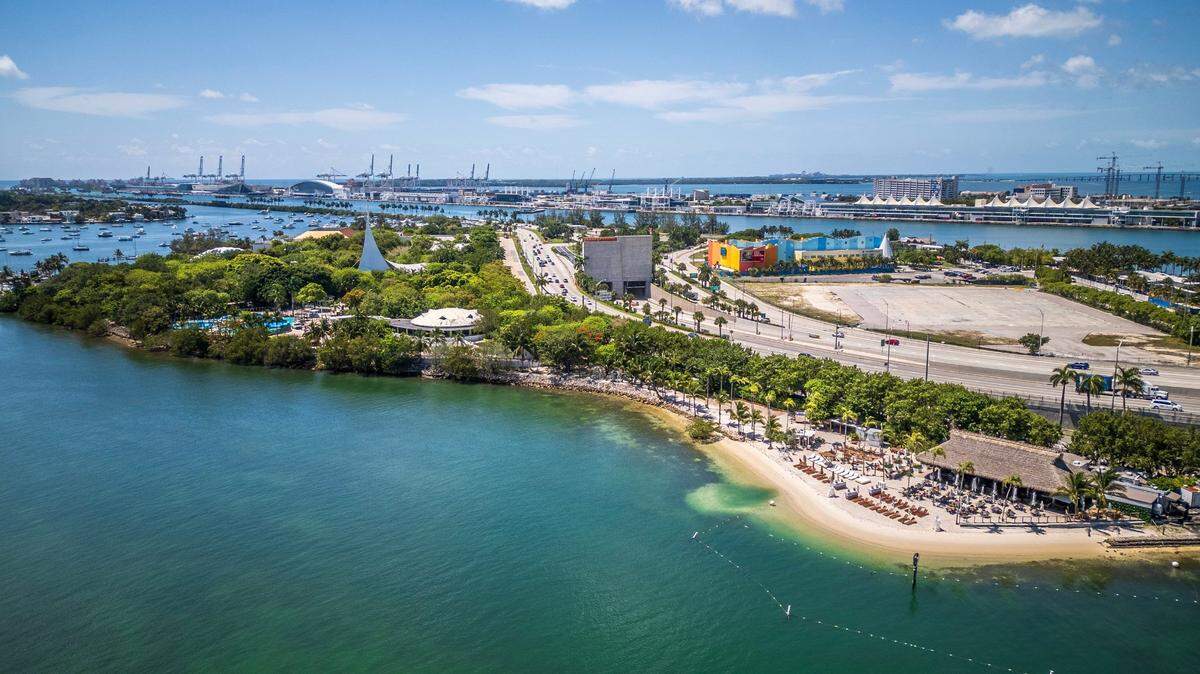
A city-owned Miami island that has languished as a graveyard of ambitious redevelopment ideas for more than two decades could now become a bayfront destination with 40-story luxury condo towers, new hotels and a 13-acre public park.
Next month, city of Miami voters will decide the fate of Watson Island, which could transform from a largely vacant tract of land into a 30-acre village on the water. That’s the vision of two developers who are seeking voter approval in two separate November ballot referendums to redevelop and purchase portions of the city-owned prime real estate in a proposed $2 billion transformation.
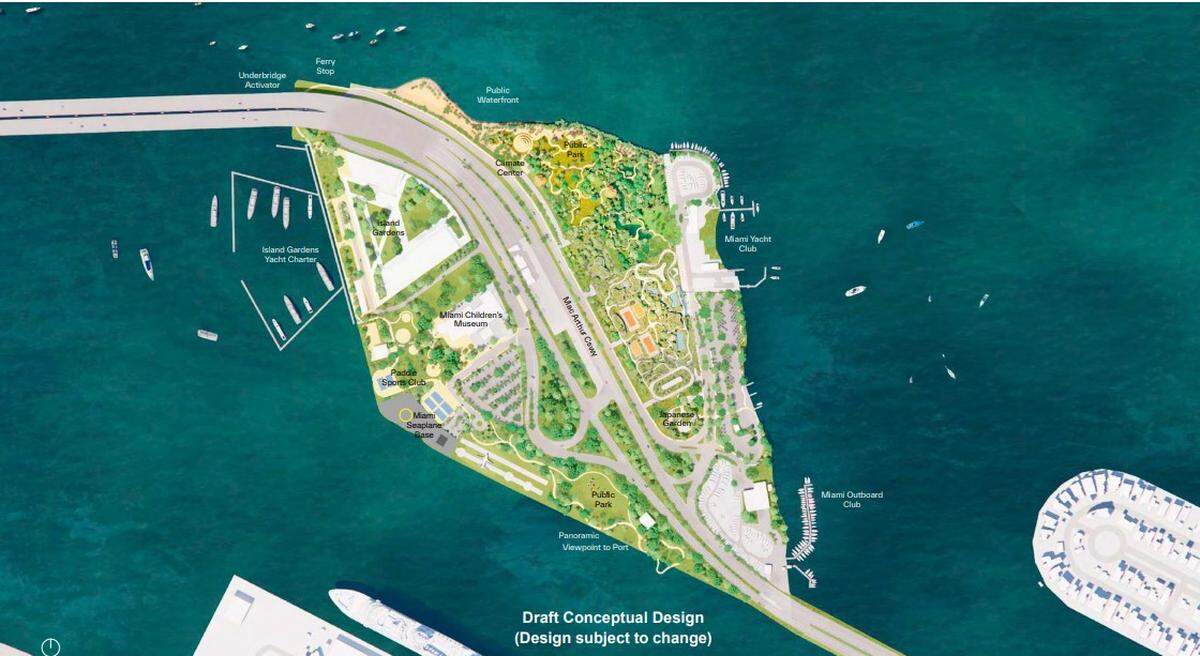
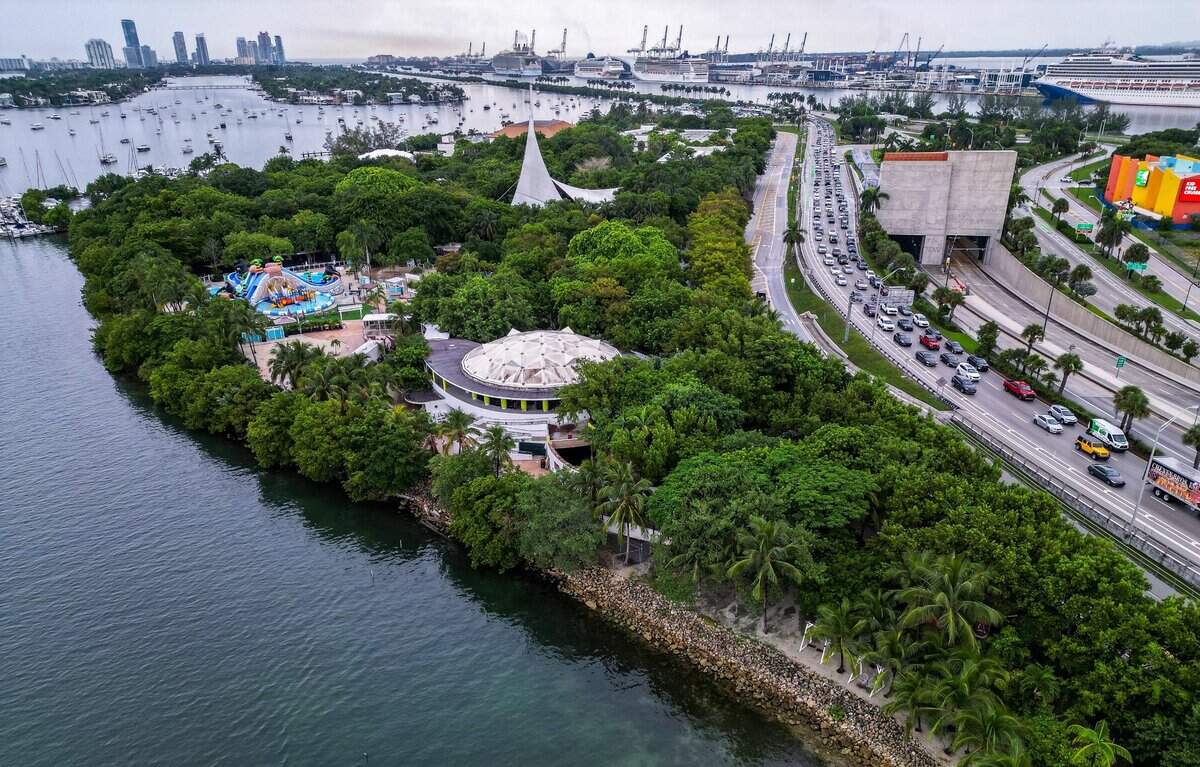
On the south side of the island, which is bisected by the MacArthur Causeway, Fort Lauderdale-based development firms BH3 and Merrimac Ventures envision condos, two hotels, shops, restaurants and offices replacing the sliver of land steps from the Miami Children’s Museum at 980 MacArthur Causeway. (The museum would not be impacted by the development.) That proposal is on the ballot as Miami Referendum 3.
On the island’s north side, at the Jungle Island site at 1111 Parrot Jungle Trail, ESJ Capital Partners and development firm Terra, doing business as Ecoresiliency Miami, want to turn the tropical theme park into space for two condominiums fronted by a massive public park. A baywalk running under the causeway would connect one end of the island to the other. And Ecoresiliency would convert 13 acres of city-owned land into a waterfront park that would be free to the public. ESJ currently has a lease for that portion of land but would turn it over to the city under the proposal, which is listed under Miami Referendum 2.
Both proposals include selling a portion of city-owned land. BH3 and Merrimac Ventures would purchase 3.2 acres from the city, and Ecoresiliency would purchase 5.4 acres for $135 million. The city is still appraising the land value for the 3.2 acres BH3 and Merrimac Ventures would purchase, but the ballot question states the minimum sale price would be $25 million.
The developers have also agreed to contribute a combined $24 million to the city of Miami, as well as provide the city $2 million a year for park maintenance.
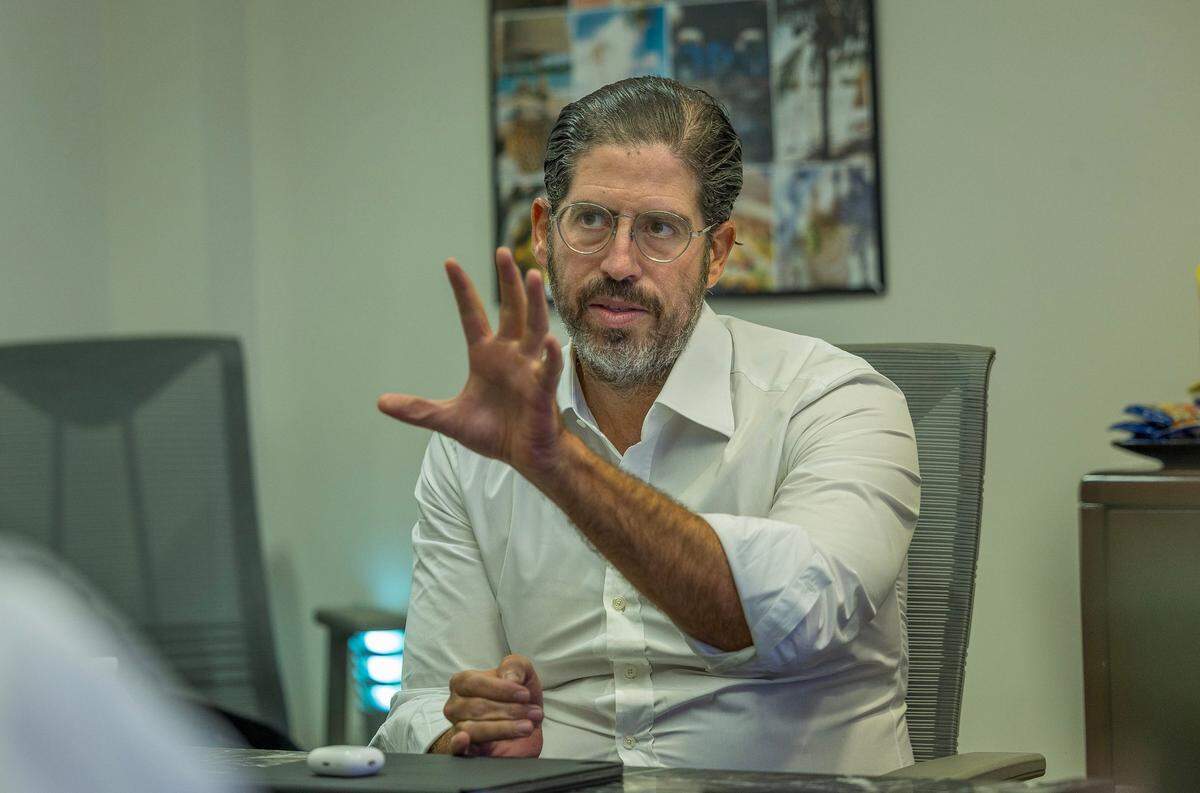
“The needle that’s being thread here is two different projects, two different referendum items, but what happens here is one plus one equals three. The sum is greater than the parts. It creates a better Watson Island,” said Greg Freedman, co-CEO of BH3.
This is yet another attempt to redevelop the man-made island in Biscayne Bay. In 2001, developer Mehmet Bayraktar won a bid to build a marina, hotel and shops adjacent to the Miami Children’s Museum. The plan stalled and later died.
The same fate met ESJ Capital Partners’ eco-adventure proposal for Jungle Island. In 2021, the firm gained approval for a 300-room hotel, zip-line course and waterslides. But ESJ Capital Partners never moved forward with the project.
The development teams behind the two latest proposals say they’re different because they’re committed to bringing their projects to life.
Each team would bring years of experience to the projects. Nitin Motwani, managing partner of Merrimac Ventures, was responsible for creating the second largest urban core development in the country — Miami Worldcenter in downtown Miami. Terra has built high-end luxury towers from Miami Beach to Coconut Grove, including Grove at Grand Bay and Mr. C Residences.
READ MORE: Exclusive: Miami developers reviving long-stalled plan for hotels on Watson Island
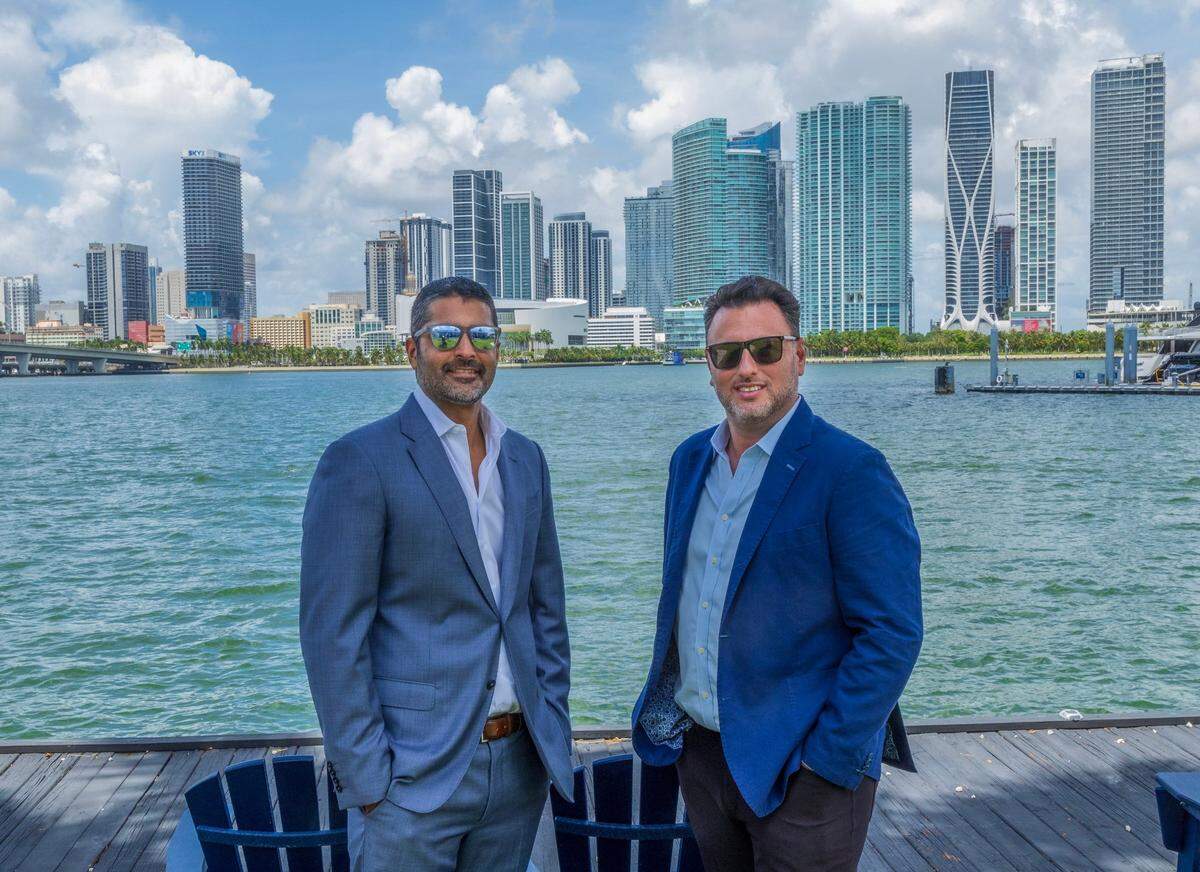
Both proposed Watson Island projects include high-end housing. Bordering the Miami Children’s Museum, BH3 and Merrimac Ventures want to create Watson Harbour, a development that would have two towers — one that’s slated to be about 40 stories tall that would include up to 105 condos and 150 hotel rooms, as well as a standalone “lifestyle hotel” that will be approximately 30 stories high with upwards of 350 rooms, according to the development team. During a meeting with the Miami Herald Editorial Board, Motwani confirmed that the condo units would be luxury housing, defined as homes over the $1 million mark.
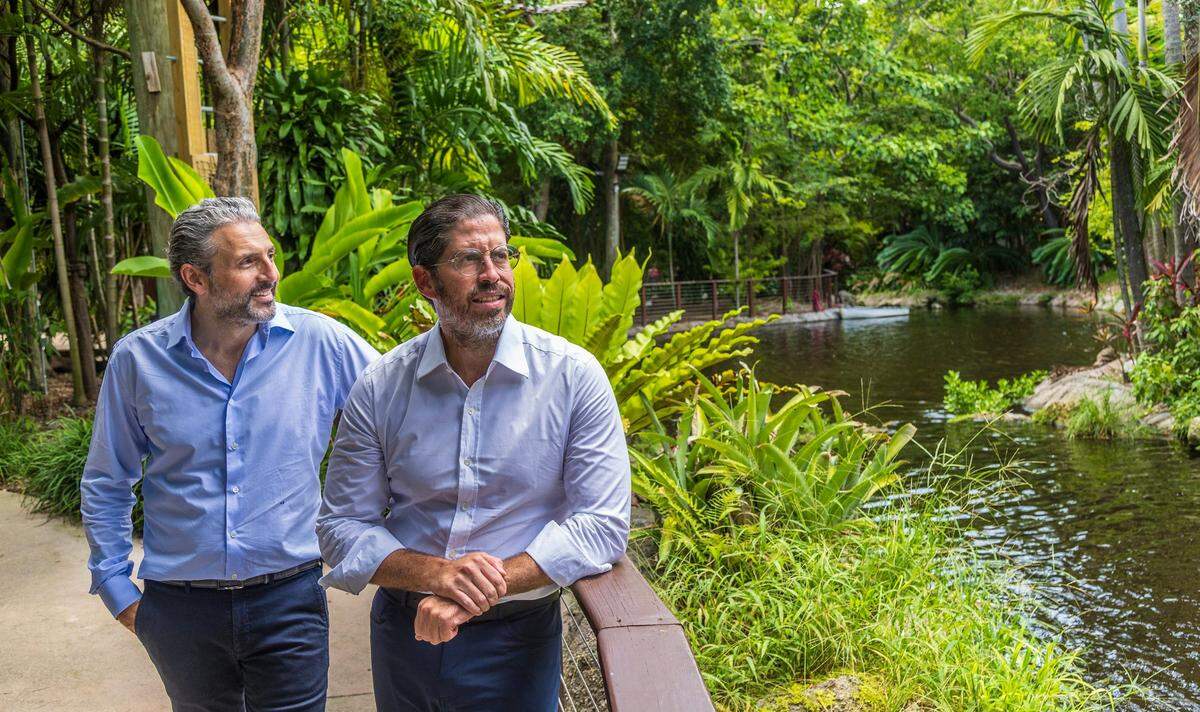
Across the island, David Martin, president and CEO of Terra, wants to build two approximately 40-story high-rises. He would evenly split about 500 to 600 residences between the two. Martin declined multiple requests to specify the price range of those units.
Real estate analyst Ana Bozovic, who has no personal knowledge of the project plans, told the Herald that luxury micro-units, studios spanning about 400 square feet, could reasonably start at $520,000 on Watson Island. A 2,500-square-foot residence could start at about $3.75 million, she said.
New residences on the water come at a premium at this location. Just take a look at the nearby Venetian Islands for comparison. The newest building, Grand Venetian, debuted in 2001, and the average size of a condo on the Venetian Islands spans about 1,400 square feet. Among the 47 sales closed in 2024, the islands have a median sales price of $950,000.
“The location is so prime. It is between downtown Miami and Miami Beach. You can get to Brickell quickly, downtown quickly, and it’s waterfront,” Bozovic said.
Under the proposals, Watson Island, just like its neighbors Hibiscus, Palm and Star islands, would be home for the wealthy.
Still, under the land purchase agreements, both teams offered to donate funding for affordable housing to be built elsewhere in the city of Miami, up to the discretion of city commissioners. Ecoresiliency would be required to give a $15 million contribution, while BH3 and Merrimac would put up $9 million.
One village, two proposals
The pair of proposals set out to transform Watson Island into a destination, but in different ways.
Watson Harbour — the project proposed for the south side of the island listed under Referendum 3 — would include an office building with enough room for five company offices. Shops and restaurants would adorn the waterfront, as well as the hotels and condo units. If everything goes to plan, Freedman, the co-CEO of BH3, said his team would begin the permitting process in early 2025 and break ground in 2026.
Under the Ecoresiliency project on the north side of the island, the proposal covered by Referendum 2, Jungle Island would essentially become a public park — picture the bayfront Margaret Pace Park in Edgewater or Maurice A. Ferré Park in downtown Miami. The condo towers would occupy 5 acres of the 18-acre site, and the rest would be transformed into a public park. The 1.2-acre Ichimura Miami Japanese Garden, tucked away behind Jungle Island’s parking garage, would be folded into the new park and independently run by the existing Miami Friends of the Japanese Garden.
The Ecoresiliency project would be built in two phases, one for each condominium. Each high-rise would take about three years to build out. Jungle Island would remain open until permits and construction began for the first phase. The remaining animals on site — many of which have already been transported to sanctuaries across the state since 2018 — would also be moved to sanctuaries.
The plan for Jungle Island returns the land to its original vision as a place intended to have public access, said Robin Bachin, a University of Miami history professor. Created in the 20th century from dredging and landfill, the city of Miami deeded the property as public land. It lived many lives. In the 1930s, it became the staging grounds for the Goodyear blimp. Seaplanes would later fly off and land there through the early 2000s. It was a way to tour the city by air and attract investment and newcomers. However, the intention was always to have some level of free public access on the island.
Still, Bachin said she’s cautious about building so close to the water’s edge, given the climate change implications, and also the fact that the condos will not include affordable or workforce housing. “The two key issues are resiliency and equity, and how is this development going to be able to contribute to both of those,” she said.
The two development firms say they’ve thought about resiliency. For example, BH3 and Merrimac have committed to extend the seawall beyond their property and onto city-owned land to the south. A spokesperson for the firms said they’ll cover the full costs but did not have a set amount yet for how much the projects would cost. The seawall improvements would create over 200 feet of additional waterfront space.
Terra said it has a multi-layered resiliency plan for its side of the island. It includes the creation of oyster habitats underwater and along the shoreline to improve water quality, reutilization of gray water — clean waste water from sinks and washing machines — and flood mitigation, including stormwater storage.
.JPG "MIA_214WatsonIsland00NEWPPP (1).JPG")
The Miami City Commission has been generally in support of the Watson Island redevelopment, with the $24 million public benefits contribution being a helpful sweetener.
Miami City Commission Chairwoman Christine King said she would not have supported a project that only benefited the wealthy. That’s why she’s happy that a portion — if not all — of the public benefits component will go toward building affordable housing in the city. However, King said it wasn’t practical to build affordable housing on the island itself.
“It’s very difficult to have affordable housing and multimillion-dollar condos” in the same place, King said.
Commissioner Joe Carollo agreed, saying that while “it might sound politically nice” to advocate for affordable housing on Watson Island, it’s not financially wise.
“You cannot put affordable housing in your most expensive land,” Carollo said. “It doesn’t make sense. Why doesn’t it make sense? Because while construction costs are the same, your land prices are much, much higher in more expensive land. And that land there would probably be the most expensive land in the whole city of Miami.”
Community reaction
Nearby residents have mixed opinions on the potential future of Watson Island. Hibiscus Island homeowner Ibrahim Al-Rashid said he sees the positive: a nearby attraction for him, his wife and three kids.
“It’s not a good thing from a traffic standpoint, and I do enjoy easy access on the Palm/Hibiscus artery. But there’s always something going on in the MacArthur Causeway,” said Al-Rashid, who called Watson Island “a prime piece of real estate.”
“You look to the right and left, and it’s dilapidated. From a development perspective, I am very much for it. I am generally looking forward to that landscape change.”
Residents of the Venetian Islands, which are in the same man-made Biscayne Bay archipelago as Watson Island, seemed overall supportive of the redevelopment plan during a recent community meeting on the matter.
A common concern, however, was the anticipated increase in traffic to the area with the addition of high-rise condos and hotels. While the developers presented studies that showed traffic would be lower than it would have been under previous redevelopment proposals for the island, the residents weren’t totally convinced.
“I think if you add all these people driving cars, I just cannot imagine that this is not going to be a tremendous increase in traffic,” one member of the Venetian Way Neighborhood Alliance said at the meeting.
Long way to go
The ballot questions’ passage would mark the start of what would likely be a lengthy process of planning and zoning approvals, as well as decisions about divvying up the multimillion-dollar public benefits contribution from the developers.
The city won’t decide on how to spend the combined $24 million until after the ballot questions are approved. All commissioners agree that the money should be spent on affordable housing, while Commissioner Damian Pardo — whose District 2 includes Watson Island — wants a portion of it to go toward infrastructure needs focused on resiliency, such as flooding and stormwater management, either on the island or the mainland.
“It doesn’t do a lot of good if you’re living in an affordable housing complex, but you’re wading through water and you can’t get to work and your car is inundated,” Pardo said.
Carollo said he’s open to spending the money on resiliency needs but that affordable housing in neighborhoods like Allapattah, Little Havana, Liberty City and Overtown should be a priority.
Pardo didn’t specify what portion of the $24 million should be spent on infrastructure needs but said one option is for the five commissioners to divide the money equally among their districts. However, he said he won’t let disputes over how to spend the funding get in the way of finalizing the projects.
“I’m fully open to compromising, and for me, nothing is going to hinder the transaction,” Pardo said.
King said there will be further decisions to make, even if the referendums pass.
“That cake isn’t baked just yet,” she said.
This story was originally published October 25, 2024 at 10:31 AM.

.jpg)