The 44 Percent: gun control, Miami Beach teen accepted to all Ivies & LaToya Ratlieff
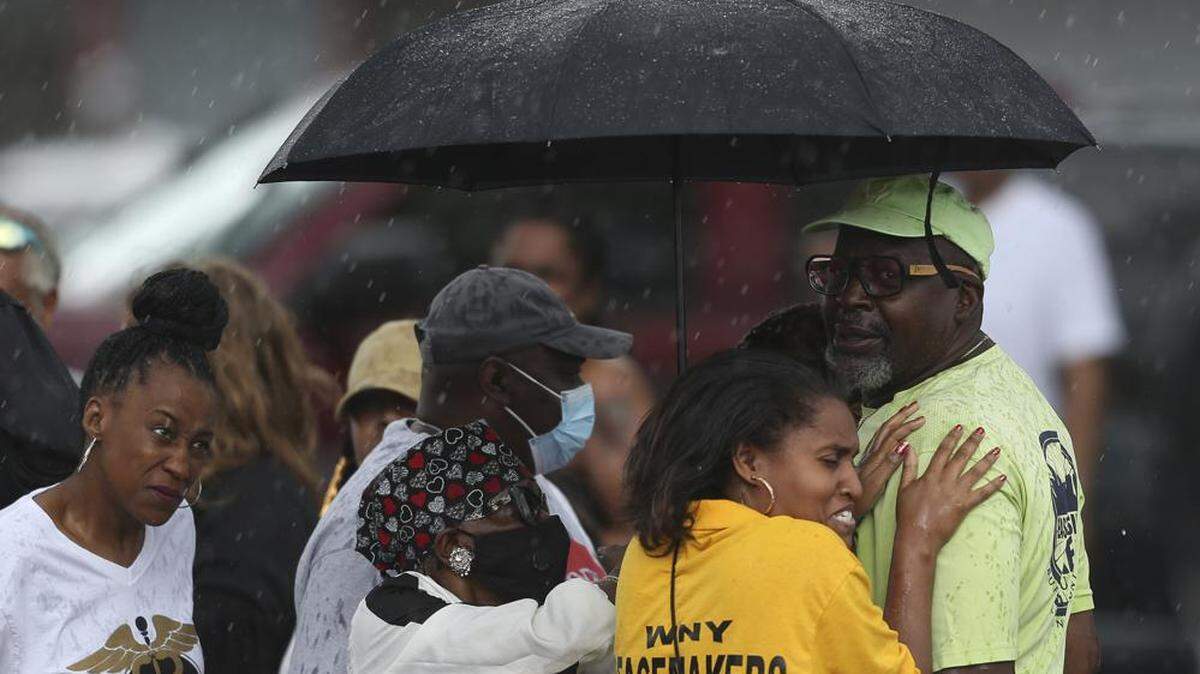
When will this stop?
Parkland was four years ago. Sandy Hook was nearly 10 years ago. Virginia Tech was 15 years ago.
Between 1998 and 2019, the United States had 101 mass shootings that resulted in four or more deaths, the highest total for developed countries, according to the New York Times. The next five countries — France, Germany, Canada, Finland and Belgium — had a combined 22 during that span.
Something is clearly not working.
Research continues to show that loose gun laws breed more gun violence. But outside of a few locations, the U.S. doesn’t seem interested in tackling the problem.
Kids shouldn’t be afraid to go to school. Families shouldn’t be afraid to go to the grocery store, let alone a hospital.
This is not normal. And just because it has become the status quo, doesn’t mean we have to accept it. I’m tired of waking up and seeing men, women and children slaughtered. That does something to your spirit. We need change now before it’s too late.
INSIDE THE 305
‘The Haitian story is the Black story.’ Haiti through the eyes of Haitian Americans:
The past 10 months have been difficult for Haitians.
First, it was the assassination of President Jovenel Moïse. Then came a 7.2 magnitude earthquake that killed more than 2,200 people. Finally, in September, thousands of Haitians trying to enter the U.S. spent weeks underneath a Texas highway, a controversy exacerbated by an image of a Border Patrol agent on horseback seemingly whipping the Black migrants hit the Internet.
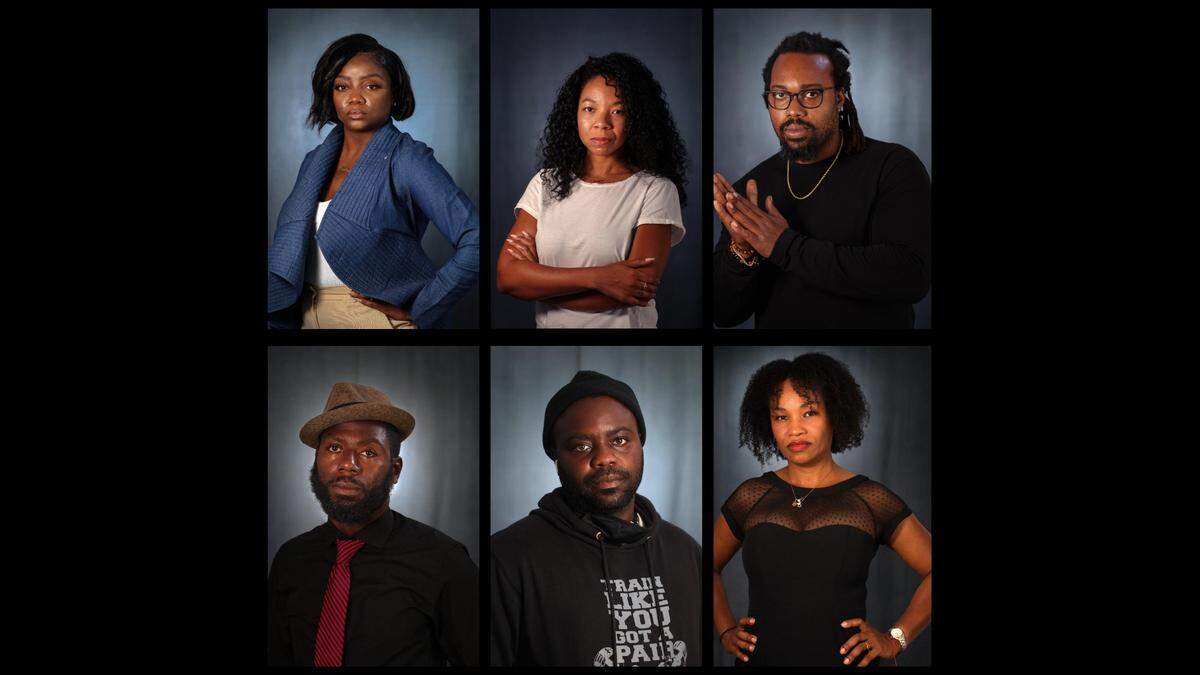
With that in mind, and spurred by the New York Times’ recent dive into how Haiti was strong-armed by foreign powers ever since becoming the first and only Black nation to ousts its enslavers, I wanted to know how Haitian-Americans viewed independence. Through interviews with nine different individuals, they recounted how the future of Haiti ultimately relies on the importance of acknowledging its past.
“Haiti always offers the world a model of something,” said Gepsie Metellus, executive director of Sant La, which provides an array of services to South Florida’s Haitian community. She later listed numerous areas — including independence, environment, healthcare and education — that showcased both Haiti’s successes and failures. “Every measure of human well-being, Haiti offers the world an opportunity to have a conversation around who we want to be and, more importantly, how these issues affect us.”
‘Surreal’: Miami Beach High grad accepted to all eight Ivies. Credits speech & debate team:
Ok Black excellence!
Miami Beach Senior High grad Ashley Adirika was accepted to all eight Ivy League schools, ultimately deciding to attend Harvard. For context: the likelihood of getting into just one Ivy League school is roughly 3 to 8%, according to the Herald’s Sommer Brugal.
“It was surreal,” Ashley, 17, told the Herald. “It felt amazing to know the work that I put into my educational journey was paying off and to see [colleges] recognize that.”
The acceptances were the exclamation mark on a high school career for the ages: Adirika was student body president, a member of Miami Beach High’s debate team, a Miami-Dade Silver Knight Award winner in speech and the founder of Our Story Our Worth, an organization that mentors female students of color.
Oh, and did I mention that Harvard acceptance came with a full ride? Talk about legendary.
OUTSIDE THE 305
Two years after being shot in face by rubber bullet, protester sues Fort Lauderdale police:
LaToya Ratlieff had no idea that attending a demonstration following George Floyd’s 2020 murder would change her life forever.
But that’s exactly what happened when Fort Lauderdale police officer Eliezer Ramos shot a rubber bullet into a cloud of tear gas on May 31, 2020. The projectile hit Ratlieff in the face, fracturing her eye socket.
Nearly two years later, Ratlieff has filed a federal civil rights lawsuit against the City of Fort Lauderdale, its police department, Ramos and several other officers.
“After two years of waiting, hoping, and asking, Fort Lauderdale has done little to ensure that what happened to me won’t happen to someone else,” Ratlieff told the Herald after the lawsuit was filed Tuesday. “I now see that the only way to force reform is to hold them accountable in a court of law.”
The Herald’s Sarah Blaskey, who helped compile a timeline of the events in wake of Ratlieff’s injuries, has more:
The hard projectile, which struck Ratlieff just above the right eye, caused “serious and permanent eye damage, neurological injuries, and other directly attributable physical and emotional injuries,” according to the complaint. The 36-page court filing also accuses police internal affairs investigators of using a sham investigation into improper use of force to embarrass and intimidate Ratlieff. She said during one interview the investigator told her that the officer who shot her was a “good guy.”
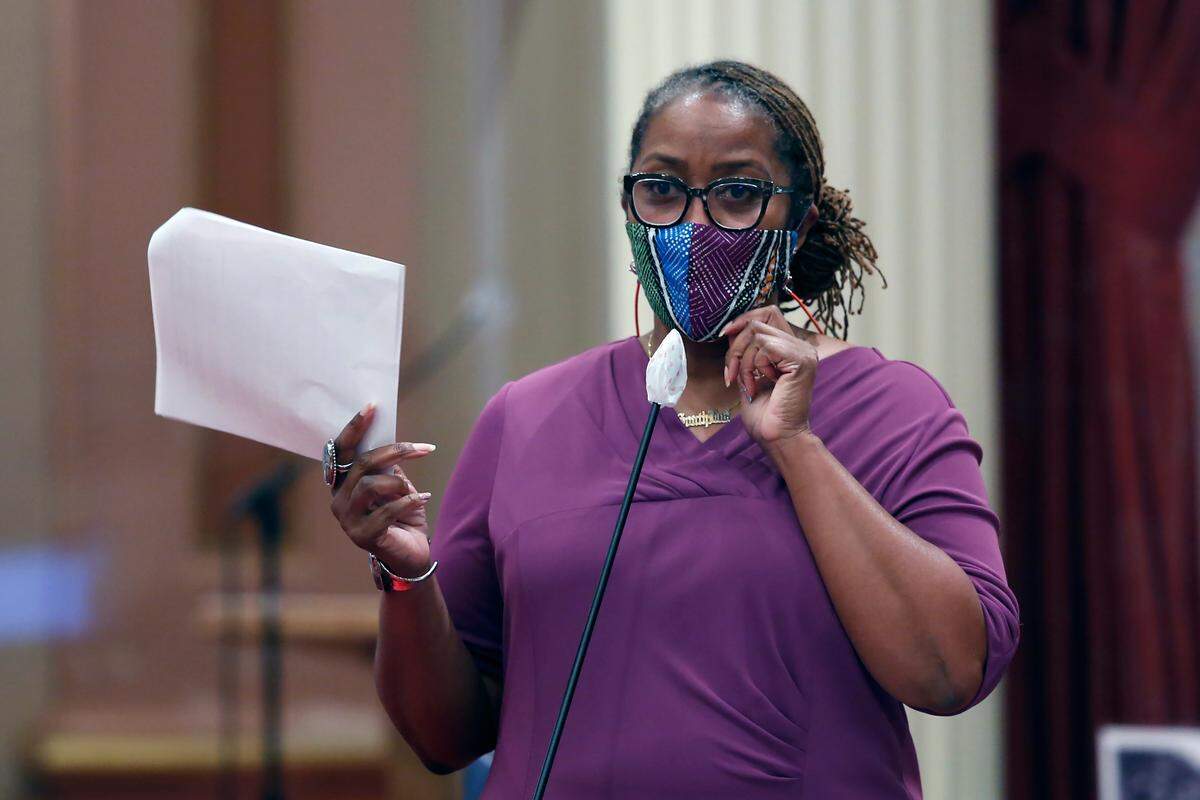
Black Americans deserve ‘comprehensive reparations,’ according to California task force report:
Surprise, surprise: a 500-page report linked America’s racial wealth gap to slavery, Jim Crow, redlining and other discriminatory policies.
“Segregation, racial terror, harmful racist neglect, and other atrocities in nearly every sector of civil society have inflicted harms, which cascade over a lifetime and compound over generations,” the report said.
Delivered on behalf of California’s inaugural reparations task force, the report “called for the creation of a government office to address past harms and potential future ones, and help eligible Black Californians through a reparations program,” according to the Washington Post. The study did stop short of issuing a price tag on the reparations, something that’s expected in an upcoming report by the task force.
The June 1 report touched on California’s passage and enforcement of a fugitive slave law, which mandated enslaved people be handed over to their owners despite being a free state, the presence of “sundown towns,” or communities that banned Black Americans from even being there after sunset, as well as Los Angeles police officers and district attorneys who had connections to the Ku Klux Klan.
“I’m hoping that this report is used as an education tool and an organizing tool, educating the state of California and the United States at-large about the harms against the African American community and the contributions of the African American community in the United States,” said Kamilah Moore, chair of the task force. “This report is documenting the full corpus of evidence around the harms against the African American community, which will substantiate the claims for reparations in the final report.”
HIGH CULTURE
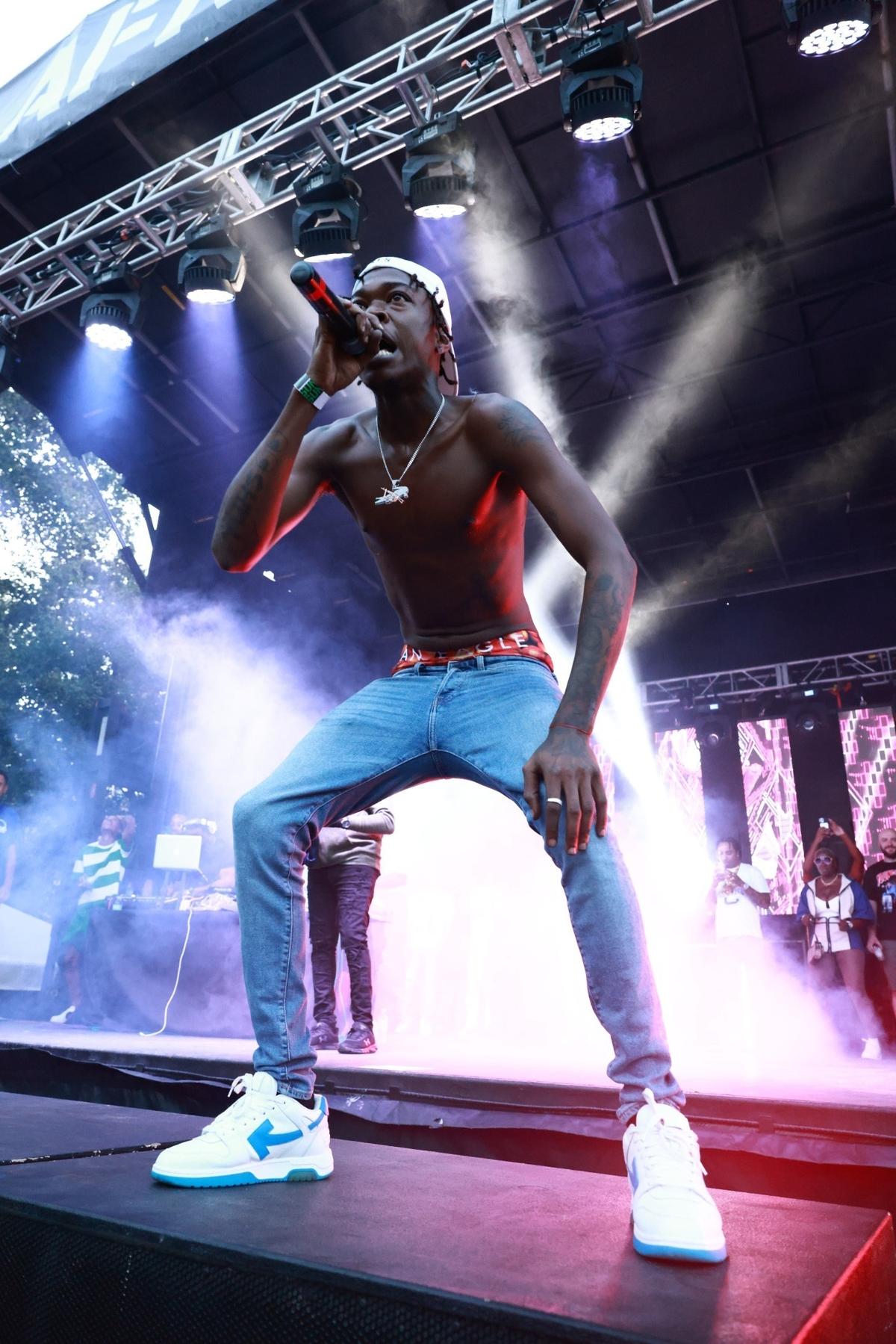
‘I’m the greatest.’ Skillibeng wants to end 2022 with a bang after first American show:
If you’ve been to any good bar or club in Miami during the past year, there’s no doubt you’ve heard Skillibeng’s “Crocodile Teeth.”
What you probably didn’t know is that prior to last month the Jamaican dancehall star had yet to perform in the United States. That changed when Skillibeng took the stage at Planet AFROPUNK: Miami. I sat down with the 25-year-old after his closing set and discussed what’s next for him after finally getting the chance to tour in the States.
Where does “The 44 Percent” name come from? Click here to find out how Miami history influenced the newsletter’s title.