Two years after being shot in face by rubber bullet, protester sues Fort Lauderdale police
Two years ago, almost to the day, Fort Lauderdale police officer Eliezer Ramos raised a weapon, took aim through a cloud of tear gas and shot LaToya Ratlieff with a so-called rubber bullet, fracturing her eye socket.
Ratlieff had been peacefully demonstrating in downtown Fort Lauderdale on May 31, 2020, in the wake of the killing of George Floyd in Minneapolis. She did nothing violent or aggressive when she was shot, a timeline compiled by the Miami Herald showed.
Now, she is suing.
On Tuesday, Ratlieff filed a federal civil rights lawsuit against the City of Fort Lauderdale, the Fort Lauderdale Police Department, Ramos and several other officers.
The hard projectile, which struck Ratlieff just above the right eye, caused “serious and permanent eye damage, neurological injuries, and other directly attributable physical and emotional injuries,” according to the complaint. The 36-page court filing also accuses police internal affairs investigators of using a sham investigation into improper use of force to embarrass and intimidate Ratlieff. She said during one interview the investigator told her that the officer who shot her was a “good guy.”
While then-police chief Rick Maglione was relieved of his post amid criticism for how he handled the event, Ramos was cleared of accusations of misconduct.
“After two years of waiting, hoping, and asking, Fort Lauderdale has done little to ensure that what happened to me won’t happen to someone else,” Ratlieff told the Herald after the lawsuit was filed. “I now see that the only way to force reform is to hold them accountable in a court of law.”
Ratlieff is jointly represented by civil rights attorneys Michael T. Davis and Ben Kuehne of Kuehne Davis law and personal injury attorney Stuart Ratzan of Ratzan Weissman & Boldt.
In addition to suing over violations of the First, Fourth and 14th amendments, the lawsuit accuses officers of battery for both the use of tear gas and impact projectiles as well as negligence in the use of impact weapons.
The City of Fort Lauderdale and the police department declined to comment on pending litigation.
As protest wound down
Ratlieff was shot at the end of the day on May 31, 2020, as she and other protesters were preparing to head home. The march to the police headquarters in Fort Lauderdale earlier in the day was intended to bring awareness to issues surrounding the death of George Floyd and organizers had been clear — no violence. Trained volunteer marshals were on scene to deescalate tensions.
The march went off as planned with no problems. As the organizers officially closed the event, the crowd of several thousand splintered into smaller groups. Most headed for cars parked nearby.
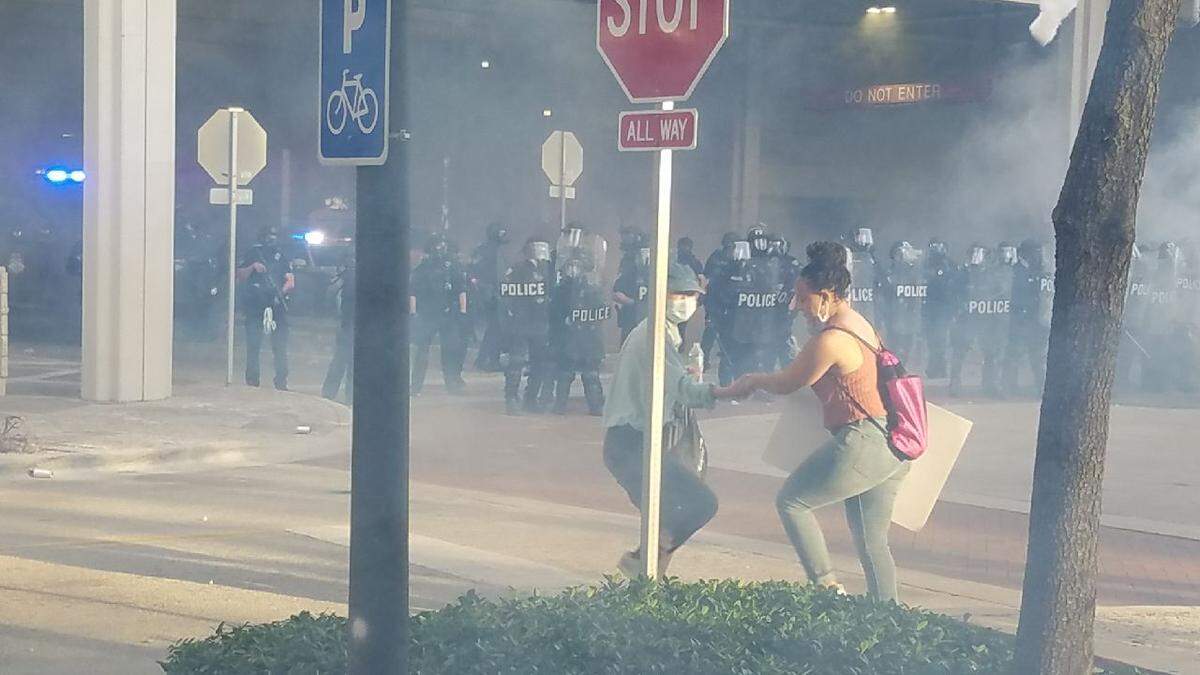
The trouble started when a small group of protesters noticed officers lined up in a nearby parking garage and stopped to chant and hold up signs. Officer Steven Pohorence, who had a history of use-of-force incidents, walked out into the crowd and shoved a woman who was kneeling.
Protesters pelted Pohorence with water bottles in retaliation.
Officers responded with tear gas and rubber bullets.
Pohorence was charged with misdemeanor battery. He pleaded not guilty and the trial is scheduled for August.
Body camera footage showed officers shooting at protesters, sometimes exchanging wisecracks among each other. No dispersal warning was given, a requirement before deploying “less lethal” munitions and chemical agents for crowd control, according to the lawsuit.
Ratlieff was walking back to her car when she saw the group of agitated protesters and said she attempted to help restore the peace in moments between volleys of tear gas and rubber bullets. Videos show her encouraging protesters to kneel to show the officers in SWAT gear that they meant no harm. She knelt with them, holding a sign that read: “Stop killing us.”
The complaint states the police “unlawfully” used impact munitions and chemical agents as part of an effort to impede constitutionally protected rights and was “maliciously and sadistically done to harm and injure those gathered, including the plaintiff.”
As Ratlieff stumbled away, choking on gas, Ramos shot a two-inch hard projectile from less than 30 feet away. It struck her in the forehead. She collapsed in a puddle of blood.
Ramos later told investigators that he did not intend to strike Ratlieff. He said he was aiming at a protester behind Ratlieff who had been throwing tear gas canisters back at the line of police officers in riot gear. Ramos was cleared in an internal investigation into whether there had been misconduct. But in her complaint, Ratlieff accused Ramos of negligence, battery and violations of her constitutional rights, saying he could have killed her or someone else.
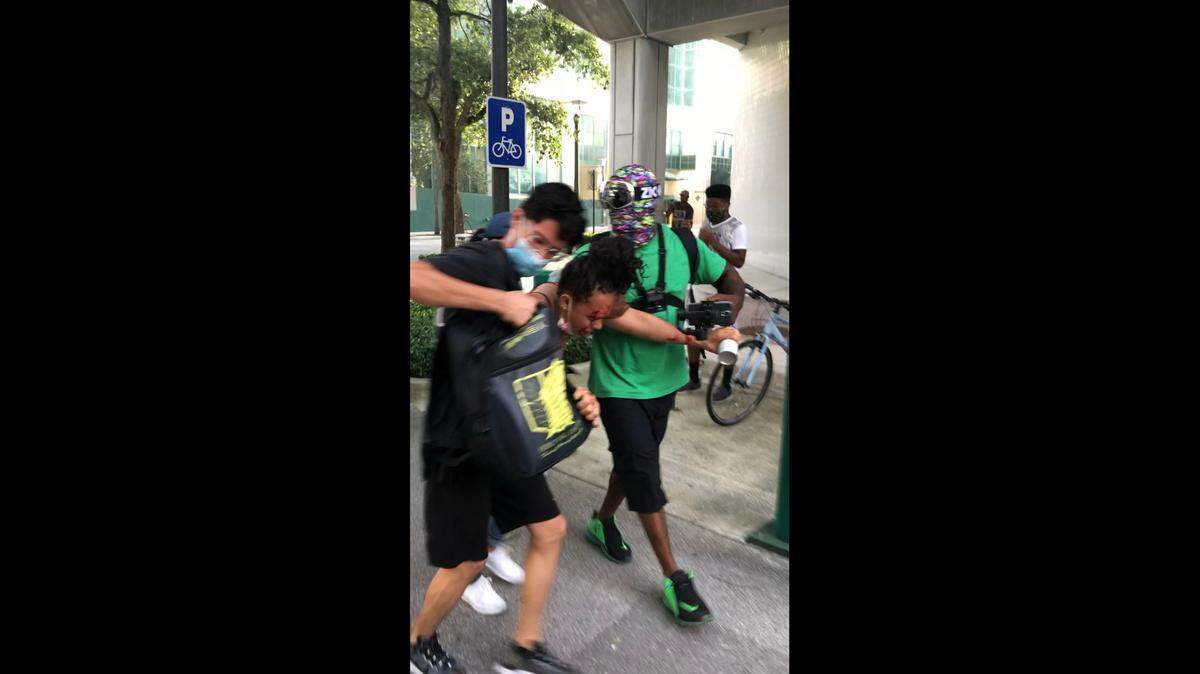
“Ramos deployed munitions in a manner that created a substantial risk of causing death or serious bodily harm,” the lawsuit states. “Ramos intentionally fired direct impact rounds into crowds of peaceful demonstrators knowing they had been tear gassed and were frantically trying to escape the cloud of tear gas.”
The complaint also names Fort Lauderdale police detective Steve Smith and sergeants Herns Eugene and Paul Cristafaro for allegedly ordering the unlawful use of tear gas and impact projectiles, as well as officers Steve Greenlaw, Avery Figueras and three John Does for allegedly shooting at protesters without warning or a dispersal order.
“I realize that justice is not possible for me. Justice would be Eliezer Ramos having never shot me in the face,” Ratlieff said. “What I now seek is accountability in the hope that it will propel justice for others in future encounters with this police department.”
This story was originally published June 2, 2022 at 12:00 AM.