
What the proposed Inter Miami stadium deal says about team name and rent
Before Melreese golf course can be turned into Miami Freedom Park, Inter Miami’s owners have to first sign leases to rent the land that also cover issues such as the team’s name and employee wages.
Four legal documents totaling more than 500 pages shed light on the details of a proposed 99-year lease agreement that is nearly three years in the making. The documents, obtained by the Miami Herald, show that the minimum rent team owners would pay the city has not changed since the proposal debuted in 2018. There are requirements for the team to play in the stadium for at least 30 years, and the soccer club must have “Miami” in the name for as long as the deal is in place.
The paperwork outlines schedules for payments to the city — including a cut from stadium naming rights — construction timelines and a minimum living wage for workers at the $1 billion redevelopment.
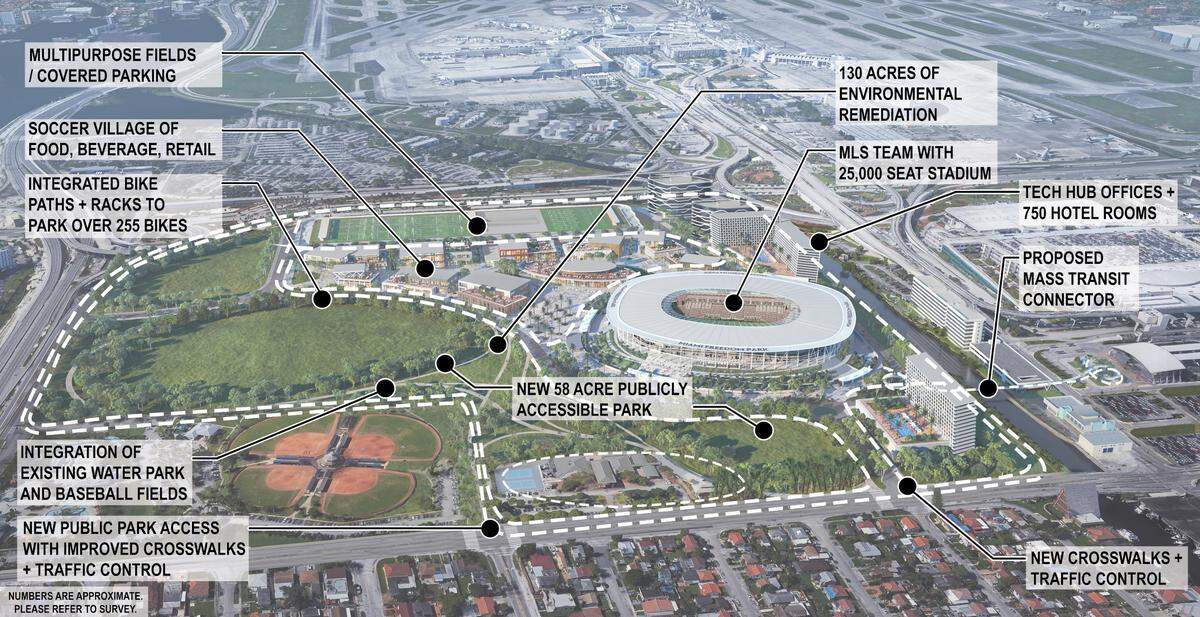
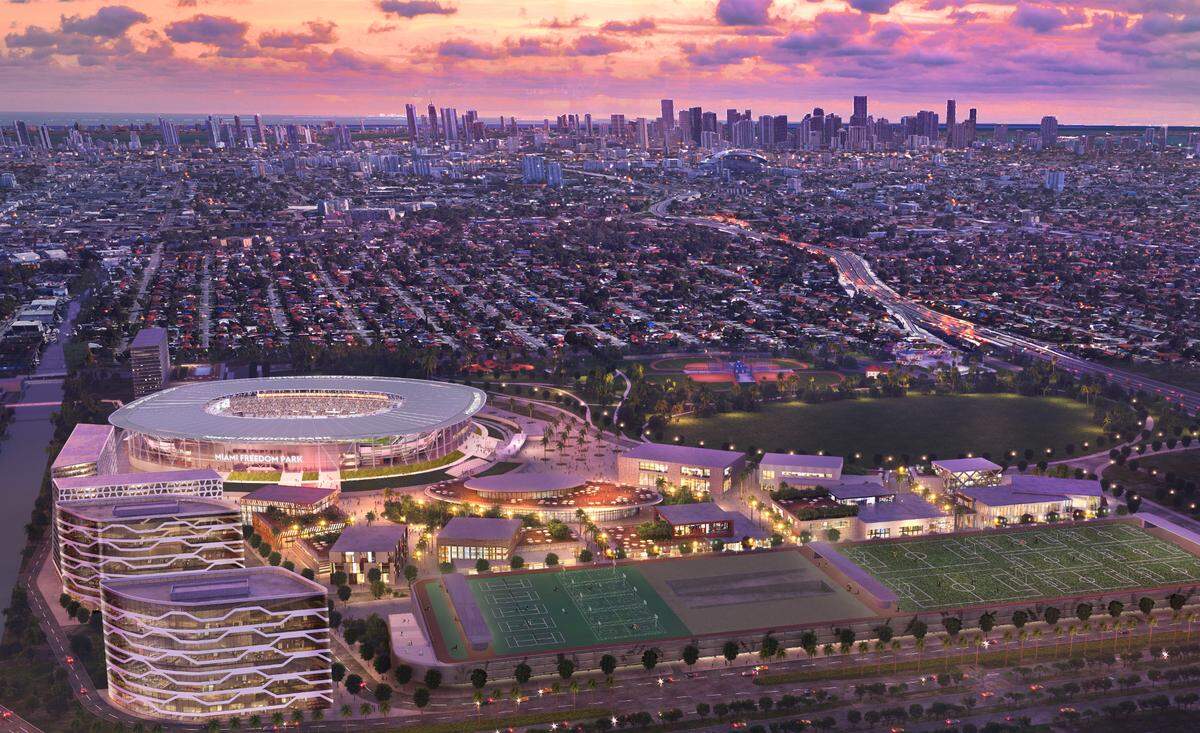
It’s all part of a proposal that could transform 131 acres of publicly owned land next to Miami International Airport, currently the city of Miami’s only municipal golf course, into a sprawling campus featuring hotel rooms, a shopping center, an office park and a 25,000-seat stadium. Team owners have pledged to privately finance the project.
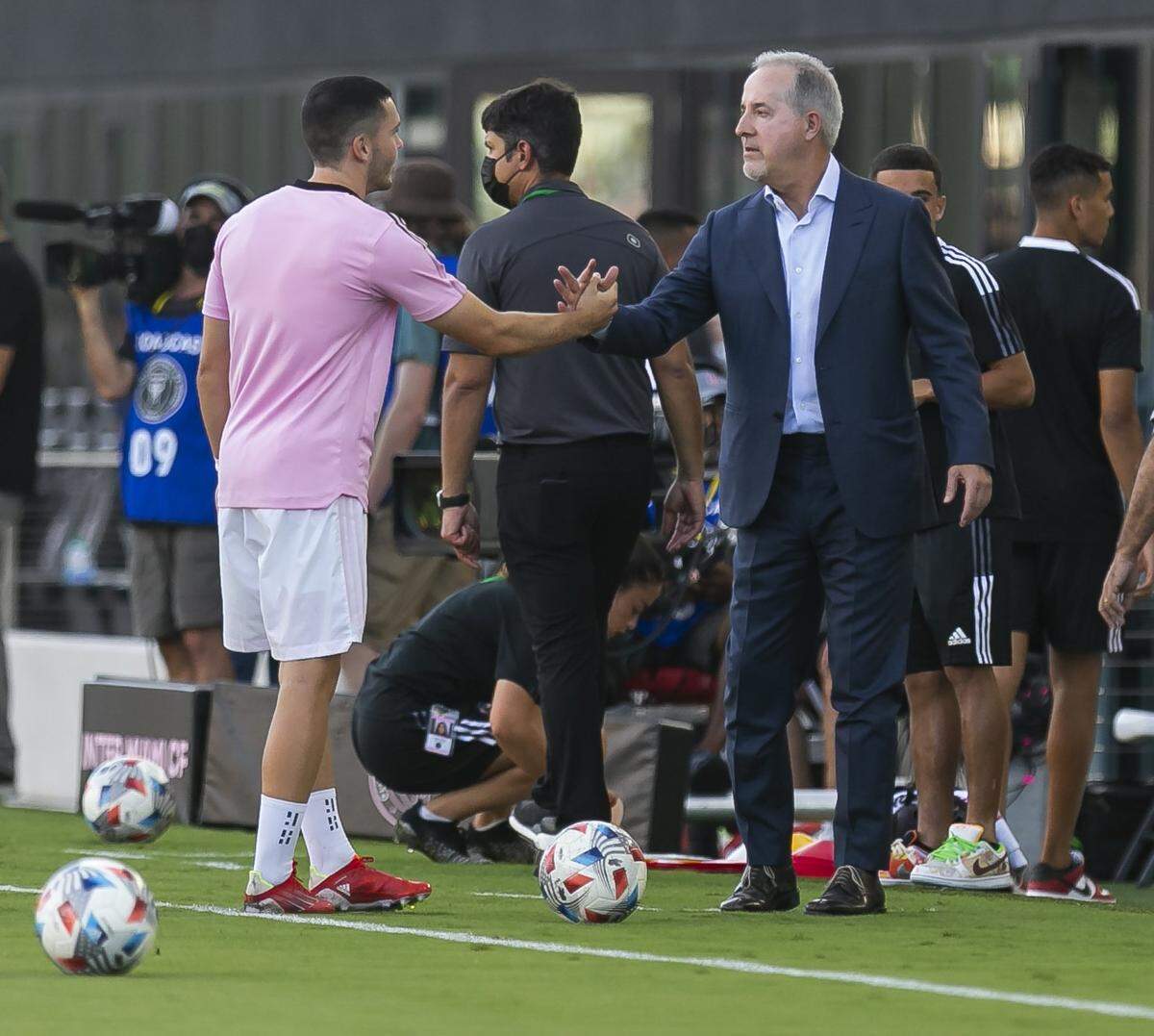
The mega development would host David Beckham’s Major League Soccer franchise. Voters in 2018 authorized the city to negotiate the no-bid lease with Beckham’s main partners, Jose and Jorge Mas, brothers who run construction firm MasTec.
“The deal is in full compliance with the requirements of the referendum,” said Miami Mayor Francis Suarez, a proponent of the project since it was first proposed in 2018. “It is, in my opinion, a uniquely good deal for the residents of Miami.”
Richard Perez, an attorney for Holland & Knight who represents Inter Miami’s owners, said he looks forward to presenting the details of the agreements to commissioners and taxpayers.
“We have worked very hard on the agreements to ensure that promises made will be promises kept,” Perez said.
City Manager Art Noriega, Miami City Hall’s top decision-maker and a member of the city’s negotiating team, declined to comment.
The commission vote on the deal has not yet been scheduled, and commissioners could push the Mas family and Beckham to agree to more favorable terms before a vote.
The documents also cover complex issues on environmental remediation and the potential impact to traffic.
Here are four key issues covered in the proposed deal for Miami Freedom Park.
Stadium naming rights and home games
Under the proposed agreement, the city would receive 5% of proceeds from the sale of the stadium’s naming rights that exceed $8 million, a provision negotiated by the city that was not discussed in detail in 2018.
For 30 years, Inter Miami would be required to play all home games at the stadium, with few exceptions. Currently, Inter Miami plays at DRV PNK Stadium in Fort Lauderdale. If the new stadium were to be completed more than halfway through the team’s home schedule, the team wouldn’t be required to play matches in Miami until the following season. Other exceptions: if the stadium were in poor condition due to a storm, or if it was occupied by the government during an emergency. The city could also grant the team permission to play home games elsewhere on a case-by-case basis.
The documents detail how much Inter Miami would owe the city if they choose to relocate: $20 million if it’s within the first five years, decreasing incrementally to $3 million after 25 years.
The proposed terms also require the team to always have “Miami” in its name for as long as the lease is in effect.

Minimum $3.5 million rent and timeline
The minimum base rent for the lease of land to build a roughly 12-acre stadium and 61-acre retail, hotel and office park campus remains about $3.5 million, the same figure provided when the project first debuted in the summer of 2018.
Rent payments would not begin immediately after the lease is signed, though the Mas family would immediately owe a security deposit of about $3.5 million. The first rent payments would be due only once zoning approvals are final and cannot be appealed, or after the current golf course operator, the De Lucca family, vacates the land, whichever comes later. Then, during construction, the soccer team’s owners would pay $500,000 in annual rent.
If the zoning is approved, the team would have to begin remediating the contamination in the arsenic-laced soil under Melreese within two years. First, they will need remediation plans approved by the county’s Department of Environmental Resources Management, which is anticipated to take eight to 12 months.
The proposed contract prioritizes the construction of the stadium, 58-acre public park, parking structure and rooftop soccer fields, which all need to be complete within four years of the zoning approval.
Once the city allowed the stadium to be occupied, the rent would increase. For the stadium portion, team owners would have to pay about $588,000 a year. For the commercial portion with retail, a hotel and office park, the team owners would each year pay about $2.9 million or 5% of all gross revenues, whichever is greater. Those figures could increase between 2% and 4% each year, depending on the consumer price index.
Money for public areas
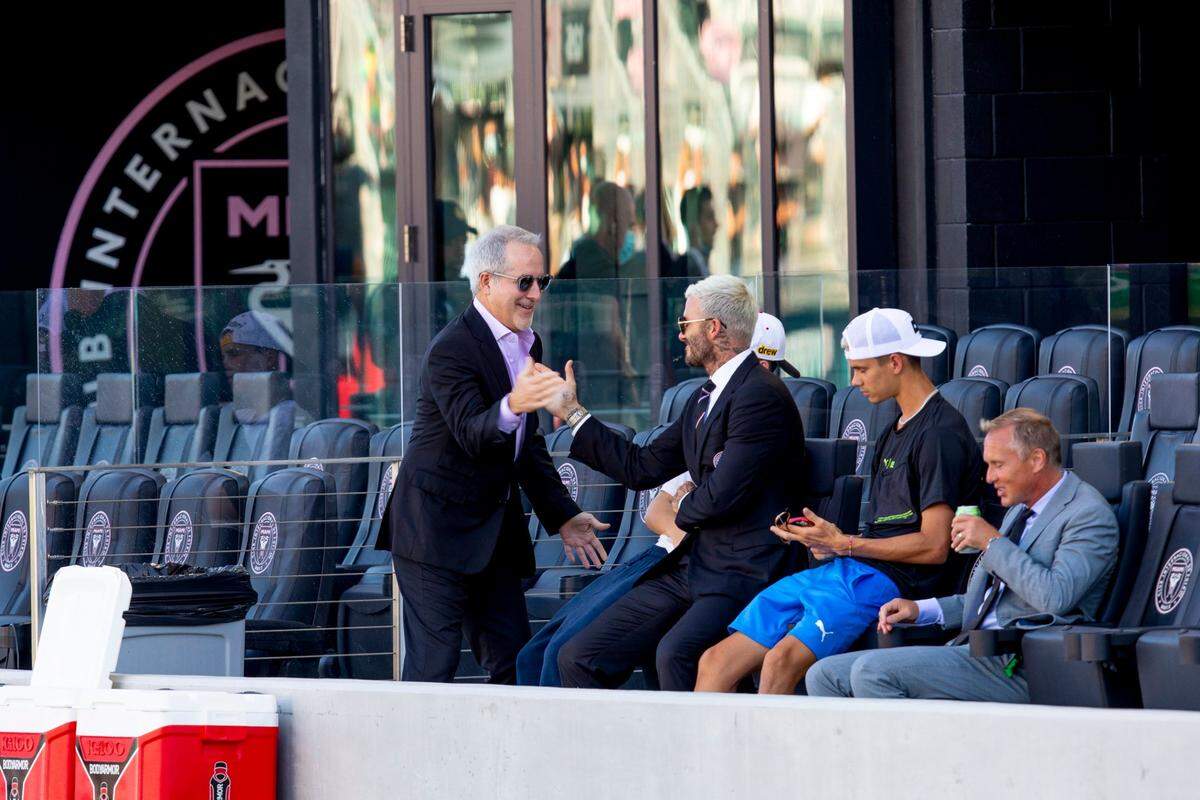
The proposal calls for Inter Miami to pay the city $20 million for improvements to the 58-acre public park in two installments. Half would be due when the city issues a building permit for the stadium. The second half would be due either when the stadium is cleared for occupation or, at the latest, four years after zoning approval. The same timeline would apply to $5 million set aside for the city’s Baywalk-Riverwalk project, a public waterfront promenade that was approved decades ago but is still only partially complete.
These dollars are non-refundable under the agreement unless the city breaches the lease agreement.
Living wage
In 2018, Commissioner Ken Russell’s swing vote led to a referendum where voters authorized the no-bid lease negotiations with the Mas brothers and their partners. He voted in favor after extracting a commitment from the team to pay a minimum living wage to workers on the development.
The negotiated terms show that there is a living wage planned for workers at the complex, but it’s not simply a minimum of $15 an hour for all employees.
Under the proposal, the $15 per hour rate would be phased in for each commercial tenant on a sliding scale over four years so that businesses would start by paying $11 an hour and increase a dollar a year until reaching $15. Also, the minimum wage rate for employees with health benefits would be $13.19 an hour, with the employer putting $1.81 per hour toward those health benefits. The minimum wage for those without health benefits would be $15 per hour.
More to come
Inter Miami’s owners might have no margin for error on the City Commission — they need approval from four of five commissioners, and one commissioner, Manolo Reyes, has repeatedly pledged to vote “no.” Even if the lease documents clear the commission, Inter Miami would still need commissioners to okay upzoning approvals for the stadium and commercial development on land that is currently zoned for a park. It appears some aspects of the deal, including the plan to replace rezoned parkland, would be addressed in more detail during the zoning process rather than in the lease package.
The fine print in this deal matters. The Herald will be taking a close look at the complex legal language in the documents in the coming days.
This story was originally published January 8, 2022 at 8:00 AM.