‘A history of broken promises’: Miami remains separate and unequal for Black residents
READ MORE
Separate and unequal
An extensive review of data and interviews with key players show that nearly 125 years after MIami’s incorporation, Miami-Dade’s Black population remains broadly on the outs — separate and unequal. This series explores the historical, legal and cultural causes; ongoing impacts and potential solutions.
Expand All
Right at the start, and even before, Miami was built on Black labor.
When industrialist Henry Flagler needed workers to build his railroad and his luxurious Royal Palm Hotel on the banks of the Miami River, he turned to Bahamian immigrants and Black migrants from Georgia and other points north. When he wanted to incorporate the city, 162 of the 367 voters his company rounded up were Black.
But when it came to sharing the bounty from the booming Magic City they helped create, Black Miamians were shoved aside, relegated first to tents in a work camp and later shacks crammed into the unpaved streets of Colored Town, on the wrong side of Flagler’s railroad tracks.
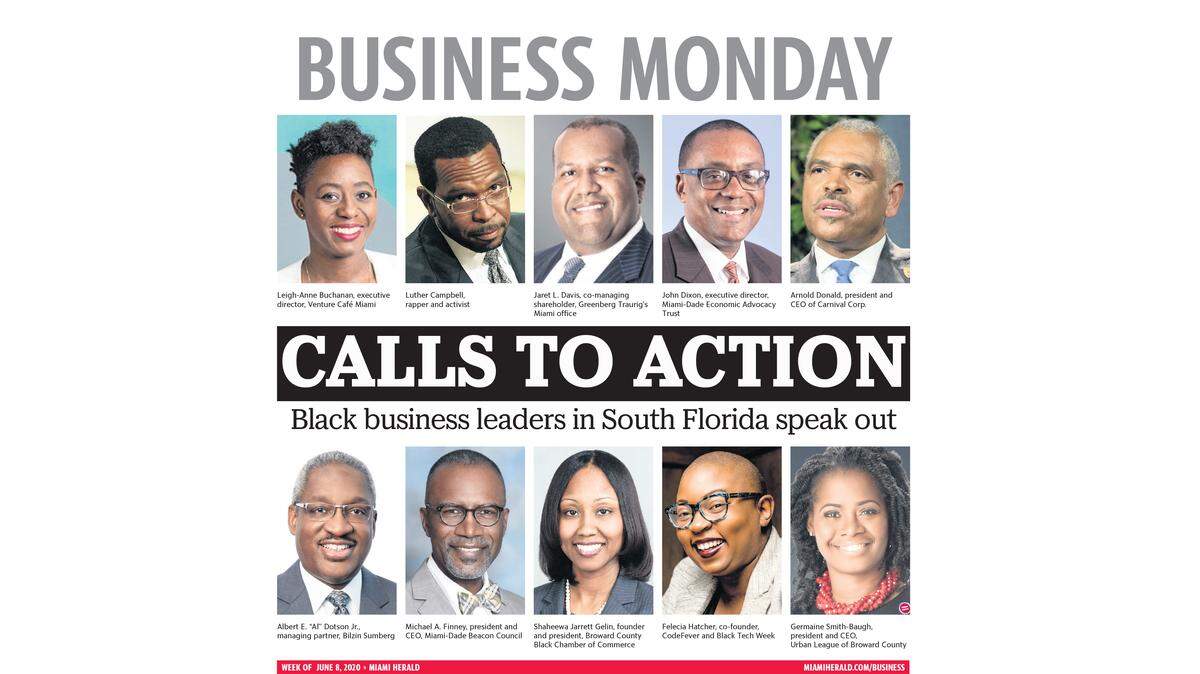
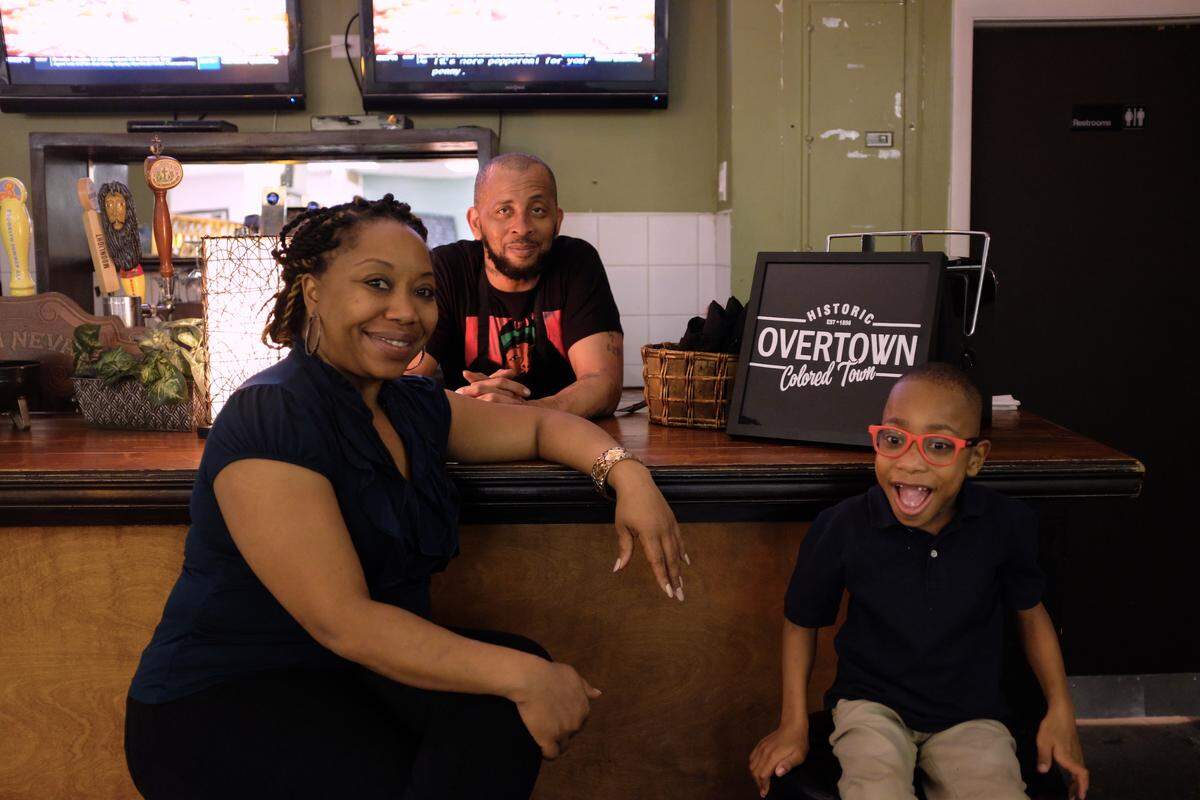
Since then, many things have changed: For one, a small Black elite class has emerged, and some major Miami law firms, corporations and business groups are now headed by Black executives and managers. A Black middle class has established a firm foothold in 17-year-old Miami Gardens, Florida’s largest Black-majority city. Pre-COVID, Overtown was enjoying a food-driven reawakening, driven in part by the promised opening of Red Rooster by New York uberchef Marcus Samuelsson and the well-publicized success of locally owned Lil Greenhouse Grill.
But so much else has not changed.
Today, 124 years after Miami’s incorporation, after decades of systematic and often violent exclusion, and decades after the peak of the Civil Rights movement, Miami-Dade’s Black population remains, by most meaningful measures, broadly on the outs — separate and unequal.
Legally enforced Jim Crow segregation ended in the 1960s, and with it legal and de facto limits on where Black people could live and own property or what kinds of jobs they could do. But an examination of current and historic data from the U.S. Census Bureau, independent reports and scholarly research shows its impact in Miami-Dade County stubbornly lives on.
Stark disparities endure — and in some cases are now widening — between Blacks and Miami-Dade’s white and Hispanic majority in measures of income, poverty, schooling, home-ownership and employment.
To pick just a few salient points: The median income for Black households in Miami-Dade in 2018 was $38,015, compared with $56,527 for households identifying as white, including white Hispanics. Nearly a quarter of Miami’s Black population is impoverished, compared with the county-wide rate of 16%. And according to data compiled by the New York Times, Blacks in Miami-Dade now have a COVID infection rate that’s about 25% higher than that for either whites or Hispanics.
And while more than 50% of white, non-Hispanic residents have at least a Bachelor’s degree, only about 18% of Black residents do. The rate for Miami-Dade is about one in three.
Those gaps, say historians, social scientists, activists and longtime residents, are a consequence of longstanding, race-based disadvantages, policies and practices that effectively curtail business and employment opportunities and sharply limit home-ownership — the keys to building assets and attaining economic prosperity — for Black Miamians.
To be sure, living conditions for Miami-Dade’s Black residents have in many ways improved as the overall county economy has grown. Yet Black Miamians continue to fall farther behind, because income and other measures of prosperity have increased even more for the white and Hispanic majority.
In 1989, the median Black family in Miami-Dade was making about $22,500 a year. By 2018, that figure had climbed 87% to $42,081. But over the same period, incomes for Hispanic families climbed 105% to $56,062. And for non-Hispanic white families, the figure climbed 213% to $108,205.
Or take housing.
In 1970, 39% of the county’s black population owned a home. By 2000, that had improved to more than 48%. After the 2001 recession, that figure slipped back to 46%, according to an analysis by Florida International University.
The housing boom brought a slight increase, but fallout from the 2008 financial crisis, combined with rising housing costs, began to take a toll. By 2018, the figure had fallen back to 42% for Black households, versus 50% for non-Hispanic whites and 65% for whites.
There is substantial racial and ethnic disparity among those who experience homelessness in Miami-Dade. While 18% of the general population is Black, 57% of all persons experiencing homelessness are Black, a 2019 study by the Miami-Dade Homeless Trust found.
Black residents have also been hurt disproportionately by the COVID-19 pandemic and its subsequent economic fallout. In addition to their outsized caseload, unemployment among Black workers nationwide stands at more than 14%, while for white and Hispanic workers it has fallen below 10%. Experts say those national figures are, at a minimum, the base for the Miami area.
PROMISES FORGOTTEN
It wasn’t supposed to unfold this way.
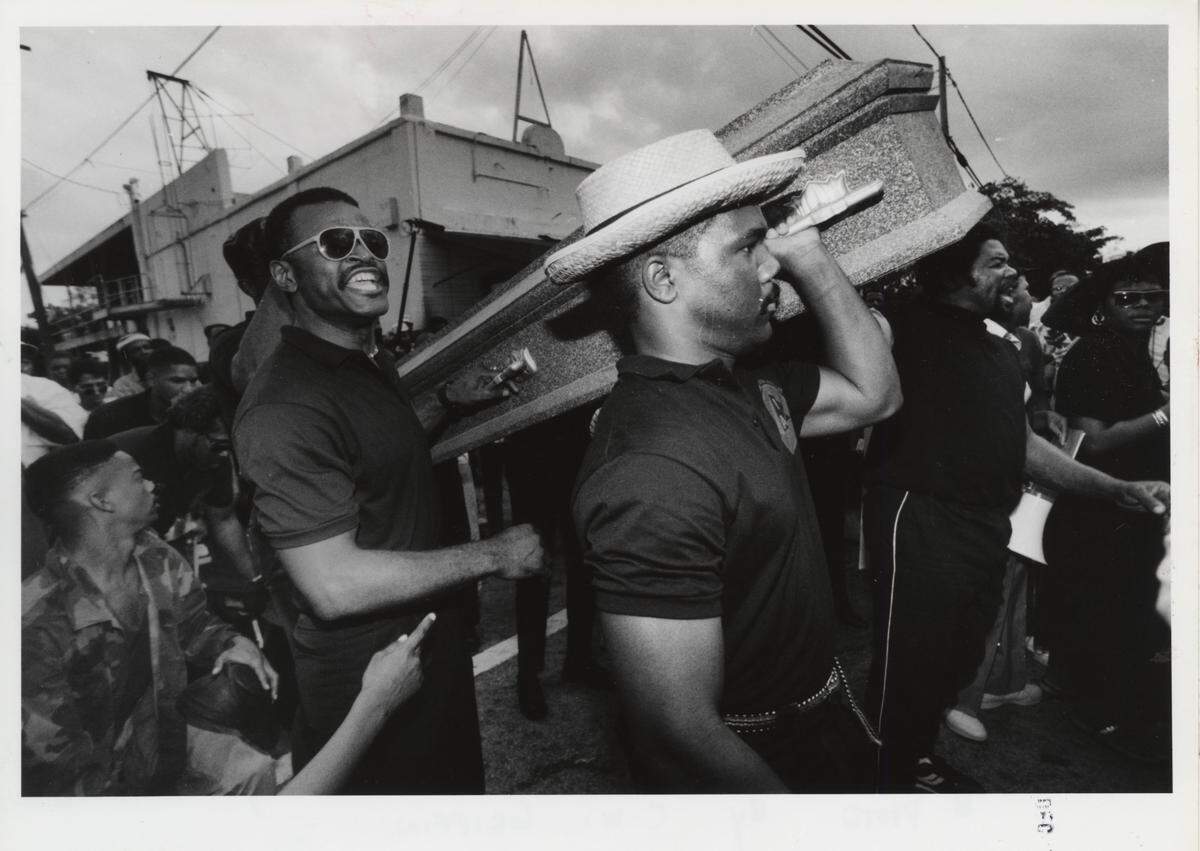
After riots and demonstrations in the 1980s and a Black-led tourism boycott in the early 1990s, Miami-Dade’s business establishment and elected officials pledged to do everything possible to close the county’s racial gaps. A county agency, Metro Miami Action Plan, was created to advocate for Black empowerment by boosting Black home-ownership and Black business development. The hospitality industry promised to increase Black employment, especially in managerial ranks. Targets were set for county contracts to Black-owned businesses.
But critics say those promises have been largely forgotten.
Though millions of dollars did get spent on economic development and construction of affordable housing in Black neighborhoods, it was insufficient to overcome the effects of decades of rampant discrimination and public and private disinvestment. A Black-owned convention hotel was built in Miami Beach with public financing, but the developer sold it to an investment group and left town after years of feuding with the city.
No long-term monitoring or enforcement of hospitality industry employment was set up. Black employment in that industry, once a mainstay of Black working-class jobs, fell to 11.5% in 2015, the most recent year for which industry-level employment data by race is available.
A federal court struck down the contracting set-asides. Black-owned businesses now receive a minuscule percentage of county procurement contracts, reports show.
Many of the programs specifically targeting Black economic empowerment no longer exist or have been whittled back significantly. Critics complain those that still exist are underfunded and mostly ineffectual in turning the economic tide for Black residents.
MMAP has been pared back significantly by the county. Its small pot of economic-development money was given to the Beacon Council, while the agency’s overall budget has been cut to a level critics say doesn’t begin to meet needs. Now most of the assistance to first-time home-buyers from its obscure successor agency, the Miami-Dade Economic Advocacy Trust, goes to Hispanic residents. Critics contend the agency has little clout or presence in the community.
They also say private industry, meanwhile, has not done nearly enough to provide opportunities, recruiting or mentoring for young Black Miamians, who continue leaving the county in droves.
For many in the Black community, the result is a growing sense of frustration and disenchantment.
“This county has had a history of broken promises to our communities to change and address these systemic problems,” said Darryl Holsendolph, first vice president of Miami-Dade’s NAACP chapter and owner of an events business that supplies vending to pro and collegiate sports events, including the annual Orange Bowl.
“It was never desired for us to be successful. We’re, like, invisible. We’re not in your boardroom. We don’t own many of the projects being developed. If you look at the infrastructure in the Black community, it’s not there. When opportunities come, we’re the last to know. The things we have advocated and fought for have all gone and disappeared. Anything that worked, they stopped doing.”
Like others, Holsendolph hopes the national upheaval over the killing by police of George Floyd in Minneapolis and the participation in protests in Miami by young people of all races and ethnic groups signals a new recognition among the county’s white and Hispanic majority that old racial disparities must be righted. In the weeks of demonstrations that followed protests, some young Hispanics made a point of addressing a long-taboo subject — widespread, casual racism among their peers and parents.
The anger among many young Blacks also served as a rejoinder to the older generations that have grown complacent or have just tried to get along, Holsendolph said.
“Some of the young folks were saying, ‘What you’ve been doing ain’t working,’ ” he said. “For years, I had to bite my tongue. I tempered what I said. But it’s so bad now, I have to fight for my sons and my children’s children. Enough is enough.”
STILL SEGREGATED
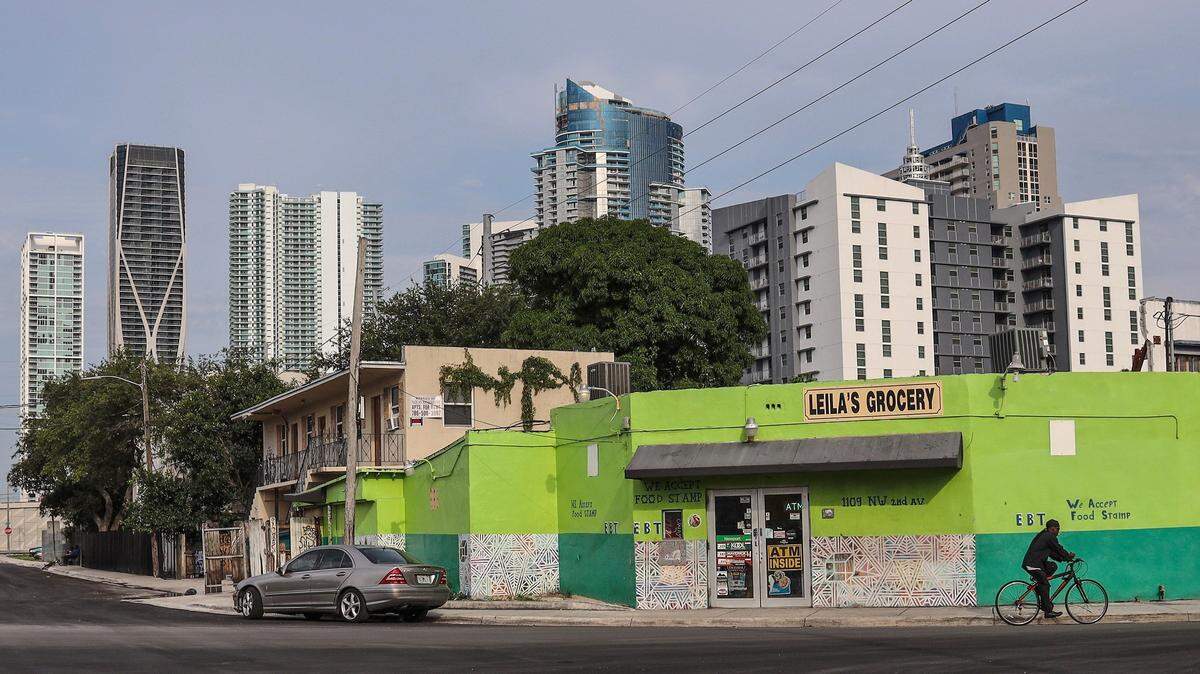
The disparities are underpinned by residential patterns across the county. Neighborhoods remain heavily marked by racial separation, even as gentrification increasingly evicts African American residents and the descendants of Bahamian immigrants from historic, once-vibrant Black communities like West Coconut Grove, Overtown and Liberty City.
With some exceptions, mostly Black neighborhoods in Miami-Dade are typically places of concentrated poverty and unemployment, said Ned Murray, associate director of the Jorge M. Perez Metropolitan Center at Florida International University. The center creates an economic scorecard for the county covering 17 majority-Black areas.
“The pockets of poverty are more concentrated. In some of these communities things were getting better, and then the recession hit,” Murray said, referring to the 2008 bust. “ They were completely left out of the recovery. Now in some ways they’re much worse off.”
Miami has also long ranked among the most segregated U.S. cities. Miami-Dade is by far the most segregated county in Florida, according to commonly used measures, and the Miami-South Florida metro ranks as the 32nd most segregated in the country, well ahead of Old South cities like Atlanta, Memphis and Savannah as well as Washington, D.C.
Politically, too, Black Miami-Dade residents remain largely on the margins of an increasing Hispanic dominance, virtually ensuring that their prospects of pushing through sweeping changes remain low. It’s the only major Southern metro never to have elected a Black mayor in the wake of the civil rights movement.
From Atlanta to Washington, D.C., Black mayors, elected often in alliance with white liberal voters, have taken on the mission of closing racial gaps. Black mayors have played essential roles in other cities in building a Black business and professional class by securing meaningful participation in public contracting and employment, backing creation of Black professional networks and promoting ownership of homes and commercial property.
That has not happened in Miami-Dade, where Blacks are just under 18% of the population, or 427,194 people, according to 2018 Census estimates. White non-Hispanics account for a 13% sliver. That makes it nearly impossible to elect Black candidates to countywide office, even with some white and Hispanic support. All mayors in the city of Miami and at the county level have been Cuban-American since 1985 and 1996, respectively, for example.
The Black politician who came closest to becoming county mayor was Arthur Teele, who enjoyed crossover appeal as a Republican who had served in the Reagan administration. He made it to a runoff in 1996 but was defeated by Cuban American Alex Penelas. Since Teele, no Black candidate has managed a credible run for either mayor’s seat.
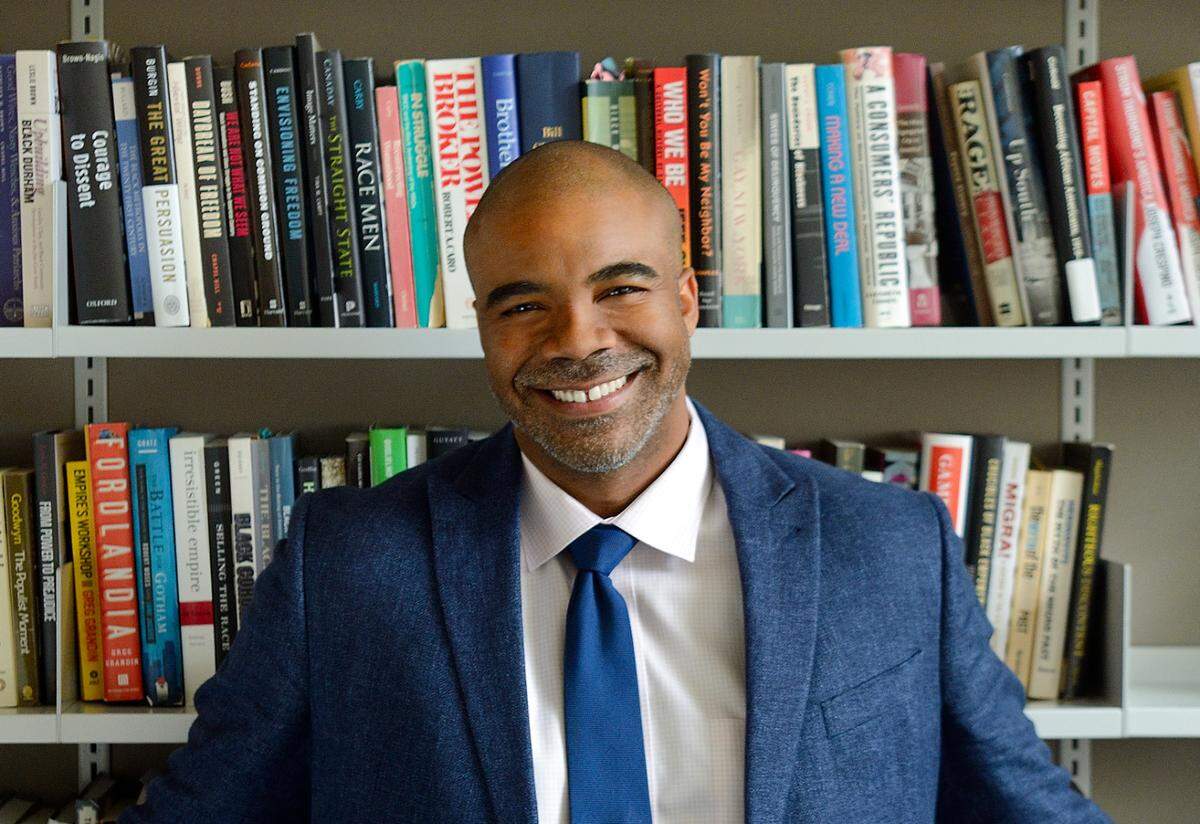
“It’s very telling that Miami is a place that experienced the civil rights movement and experienced desegregation,” said N.D.B. Connolly, a prominent Black historian at Johns Hopkins University who grew up in Miramar. “What they did not experience is the rise of a Black political class. That was denied Black Miami.”
Across Miami-Dade, Connolly and many others note, that lack of clout is compounded by a prevalent racism encountered on a regular basis, not just in policing and the justice system, but in everyday encounters outside Black enclaves.
Connolly, author of a groundbreaking book on the persistence of Jim Crow in Miami, “A World More Concrete,” momentarily abandons scholarly language in an interview, calling the city one of the most “belligerently racist places I’ve ever been in.” He cites “petty things” like getting cut off in line at a coffee bar in Aventura Mall or made to wait inordinately long for a table at Lincoln Road restaurants. Or, upon walking into a store, getting alternately ignored or questioned about whether he can afford certain items.
“Big-picture” concerns, he said, extend from “aggressive” speed traps by police targeting Black areas and “the lack of Black cultural institutions and attendant philanthropic networks to support Black Studies beyond a few anemic university programs.”
BLACK EXODUS
One lasting consequence of that hostile environment is a persistent “brain drain” of young Black college grads and other high achievers, who for years have been leaving Miami-Dade. Many of those who stay behind — typically the less well educated — find it hard to get a job in a market where preference is given to Spanish speakers.
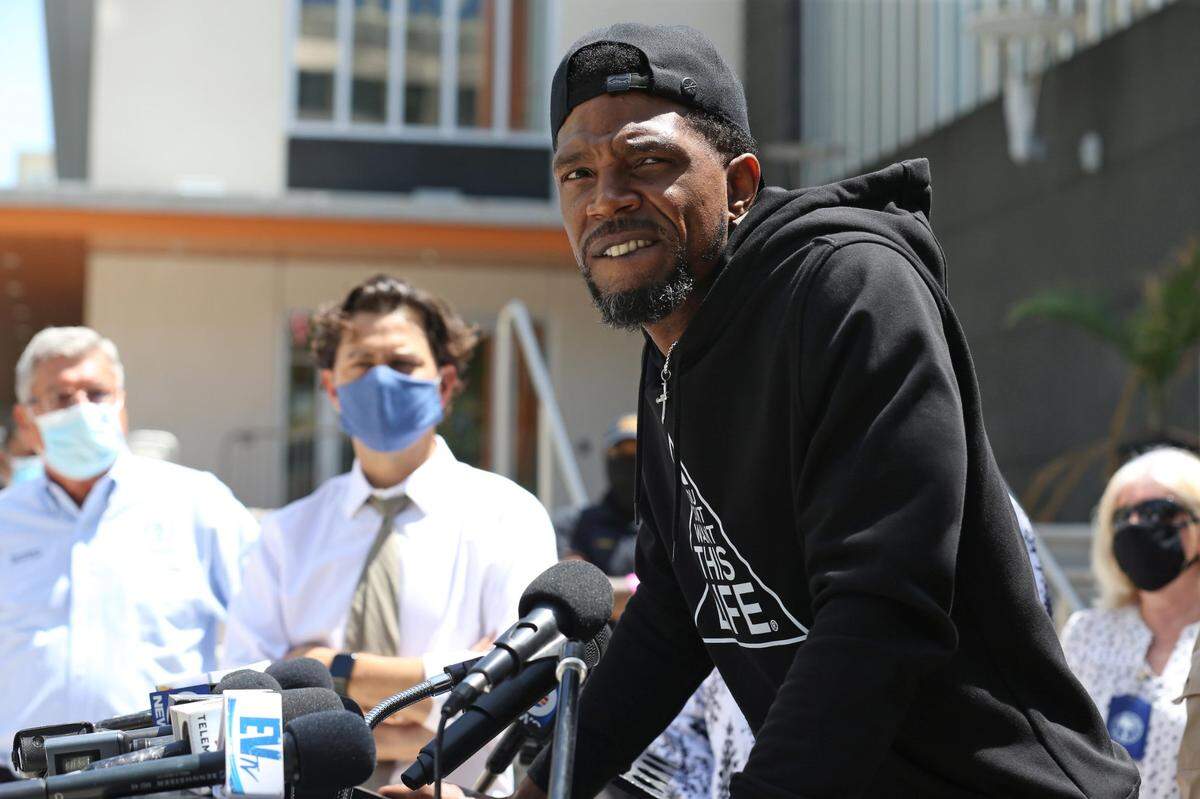
“It’s to the point where you almost have to be able to speak Spanish to get a job in Miami,” said Miami Heat veteran and Miami native Udonis Haslem. “That’s tough because a lot of people born and raised in Miami don’t have the skills.”
In a more recent twist, Black residents say, middle-class African American families and retiring professionals who are convinced their prospects at home won’t improve are joining an exodus to Broward County’s friendlier, more affordable suburbs or moving closer to their kids in Atlanta or D.C.
Miami-Dade’s northern neighbor is widely seen as far more welcoming to Black people. Broward has more Black residents, 540,636 at last count, than Miami, and they represent a larger, 31% share of the county population of just under two million. Median household income for Black residents is higher in Broward than in Miami-Dade, at $46,787. Meanwhile, the Broward mayor’s seat, selected by the county commission, is currently occupied by Dale V.C Holness, who is Black.
“Broward seems to be more of a cultural fit,” said Fabiola Fleuranvil, a Haitian-American entrepreneur who was born in Miami, grew up in North Miami and has been involved in efforts by Miami-Dade’s Beacon Council to slow the local brain drain. “It matters when your county officials at the very top look like you. Representation matters.”
Fleuranvil and her family are a case in point: She returned to Miami after a post-college stint in Atlanta, where she said she was able to start a marketing and public relations firm that now has 10 employees thanks to an extensive and supportive Black business climate.
Back in Miami, though, she has been frustrated by the near-total absence of Black social and business networks. Fleuranvil got into small-scale real estate development in Miami but found it difficult to compete with foreign cash buyers. She has instead found her niche in a development project in majority-black Detroit.
“The access, the people that I meet to facilitate that, the financing — Detroit offered that,” she said. “This community keeps you sometimes from doing that here.”
Now she and her parents are under pressure from her two sisters, both of whom have settled in Atlanta, to join them, and she’s considering it.
“ ’What are you doing in Miami?’ That’s what everyone says to me,” Fleuranvil, who is 38, said. “When you grow up in Miami, the optics of it are, you can’t be Black and successful here. In Miami you get lost. I’ve seen a lot of black professionals leave the state. A lot of them were from here. There was not enough to keep them here.”
While Miami-Dade’s Black population is still growing in numbers, that’s all because of recent immigration, principally from Haiti and Jamaica. Miami, in fact, has the second-largest concentration of Afro-Caribbean and West Indian people in the country outside of New York City, according to “The Color of Wealth in Miami,” a recent study led by Ohio State University. But the Black segment has dropped as a percentage of the overall population, from nearly one in five residents in 2010 to about one in six in 2018, because the Hispanic population has grown faster.
Miami-Dade’s U.S.-born African American population has wilted to such a degree, some note, that during the recent protests over Floyd’s killing, there was little overt reaction in Overtown or Liberty City. The neighborhoods were once tinderboxes that saw riots and uprisings following repeated incidents of police brutality through the 1980s.
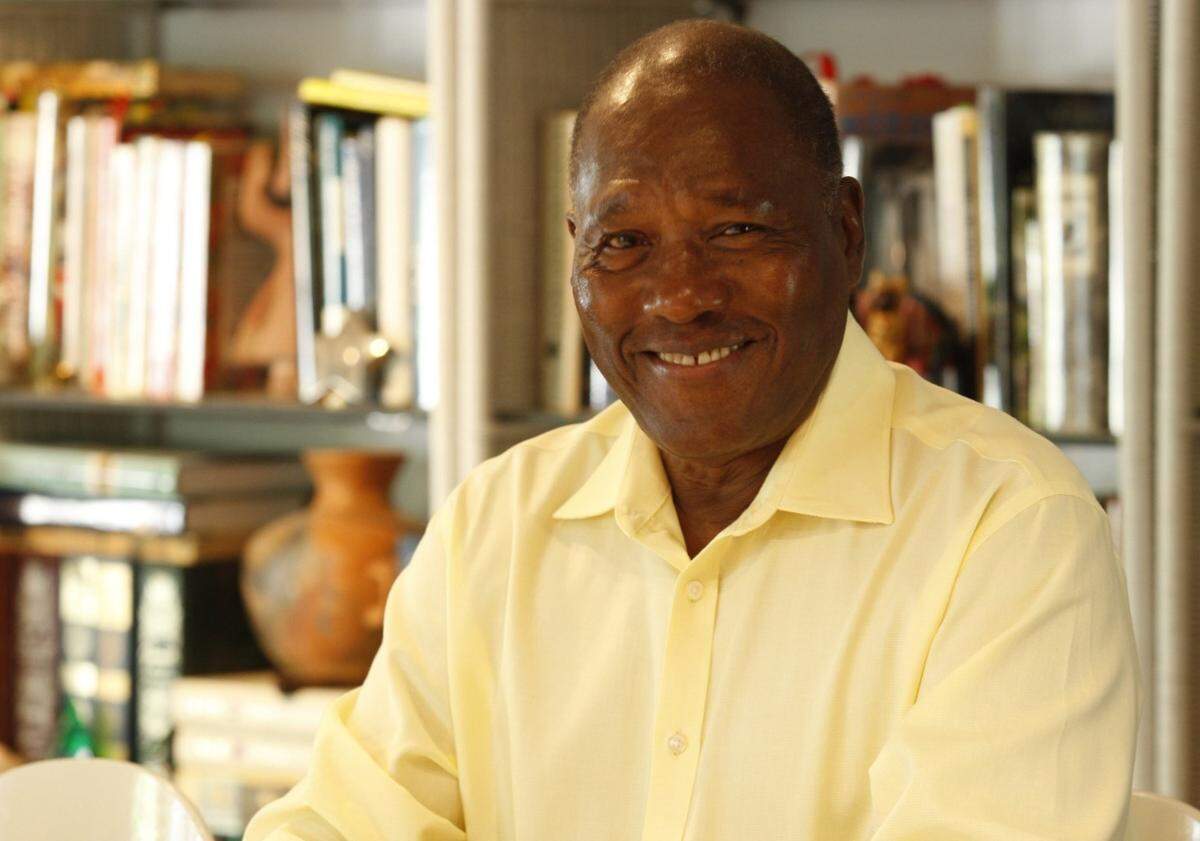
“It’s like a gradual deflation of a balloon,” said historian Marvin Dunn, retired FIU professor and author of the landmark “Black Miami in the Twentieth Century.” “When you look around, there is not a lot left.”
To veterans of the struggle for Black advancement in Miami-Dade, too many in the county have for too long denied the reality behind the persisting inequities.
“It’s because of racism; of course it is,” said H.T. Smith, a Black attorney and activist who helped lead the tourism boycott 30 years ago. “Miami does not embrace Black people. They’re only tolerated. You go to Atlanta, Houston, New York, D.C., and there are Black professionals, civic and business organizations. There is nothing like that here in Miami.
“We need to have radical candor, a baseline of fact, and only then can we begin to transform this divided Miami into a Miami of tomorrow,” Smith said.
HISPANIC FACTOR
In Miami, the racial picture has been hugely complicated by an inversion unique in America: The overwhelming majority of the population of 2.7 million is made up of white Hispanics, many of them foreign-born. They also are the dominant force in politics, employment and policing, among other areas.
Many Black leaders contend it’s an ironic twist that members of that Hispanic majority qualify for affirmative-action advantages for minorities in public contracting, helping building Hispanic firms and employment.
Barely 2% of the money for county procurement contracts goes to local Black-owned companies, said James Wright, a member of the Economic Development Action Committee at MDEAT, the successor agency to MMAP.
One big reason for the tiny figure, the NAACP’s Holsendolph said, is that the county now assigns most procurement contracts to firms outside Miami-Dade, arguing the local small businesses don’t have the capabilities to meet requirements. While Hispanic-owned firms fare just a little better, he said, Black-owned small businesses have fallen to the bottom of the barrel in the competition for county contracts.
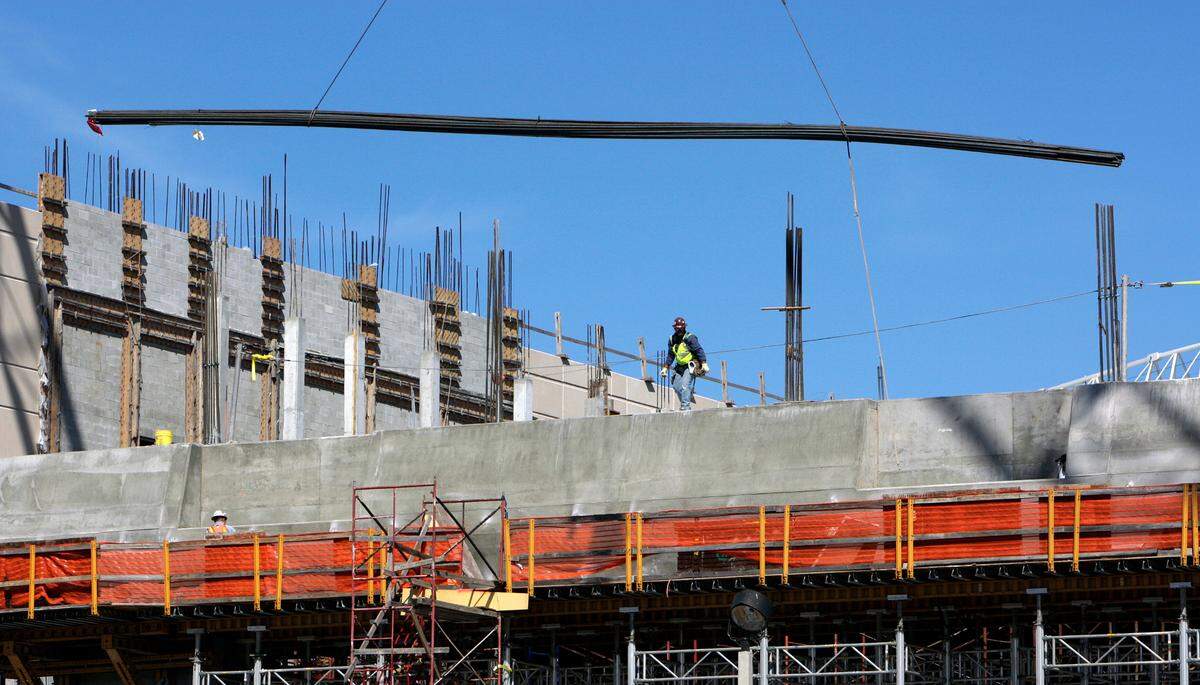
What the county should be doing instead, he said, is what many other cities have done to build up their minority-owned businesses — require that contractors hire local firms so they can build the necessary skills and experience to compete successfully on their own.
“It’s a mindset change that’s required,” said Holsendolph, who was just named to head a new county task force that will provide recommendations to the Miami-Dade Commission on the issue. “Do the things that will allow us to build that capacity.”
MDEAT itself comes under fire from Holsendolph and has been a target of sustained criticism by the Miami Times. Under an overhaul around 2009, the agency broadened its home-ownership assistance program beyond its original focus on Black county residents, in part to avoid running afoul of anti-discrimination laws. As a result, 73% of its assistance between 2014 and 2019, or $8.1 million in help with down payments and closing costs, went to Hispanic county residents, compared to $2.3 million for Black home-buyers.
James Bunyan, chair of MDEAT’s Housing Action Committee, emphasizes the county has little control over who gets the assistance under current rules. That’s because applicants are referred to the program by banks where home-buyers go for mortgage loans.
One of MDEAT’s tasks is to monitor economic conditions and the effectiveness of county programs in Black communities; some critics say it has stinted on that mission. A report card on 17 neighborhoods or target areas has not been updated since 2018, based on 2016, the latest data then available. Even though it’s labeled as an “annual” report on the agency website, MDEAT says it’s actually issued every two years, with the next one, for 2020, not due until 2021.
The agency has a $4.8 million budget, most of which goes to home-buyer assistance, administrative costs and and a juvenile-justice program. It’s also supposed to conduct a major study every 10 years of race-based social and economic disparities across the county, but the last comprehensive one was done in 2007. The agency did issue a report in 2011 that analyzed incomes, schooling and market conditions in commission districts that are majority or significantly Black; the study did not broadly compare gaps across racial or ethnic groups countywide as the 2007 report did, and because of that can’t be used to determine trends over time.
The county commission relieved the agency of the obligation a year ago after MDEAT administrators said they didn’t have the nearly $500,000 to pay a consultant to do it. Some commissioners have asked for a disparities study every two years, but the county has yet to commit to that. Fleuranvil, who is an outside spokeswoman for MDEAT, said the agency intends to resuscitate the disparity study, which is included in the county’s proposed budget for next fiscal year.
Although the county has other programs to promote home-ownership, to many critics MDEAT’s shifts in emphasis is just one more example of how public officials and the private sector have failed Black Miamians.
“We have been the third minority in this community behind white folk and behind Hispanic folk, and then there’s Black people,” said Bill Diggs, president of Broward Health Alliance and former head of the Black-focused Miami-Dade Chamber of Commerce. “And so, needless to say, we’re not getting our fair share.”
The arrival of tens of thousands of Cuban exiles in the 1960s happened just as doors were starting to open for Blacks in Miami-Dade after decades of civil rights struggle. It’s long been a subject of dispute whether exiles directly displaced Black Miamians from the hotel and service jobs they had long occupied, though the lack of employment in the local hospitality industry was a leading driver of the tourism boycott.
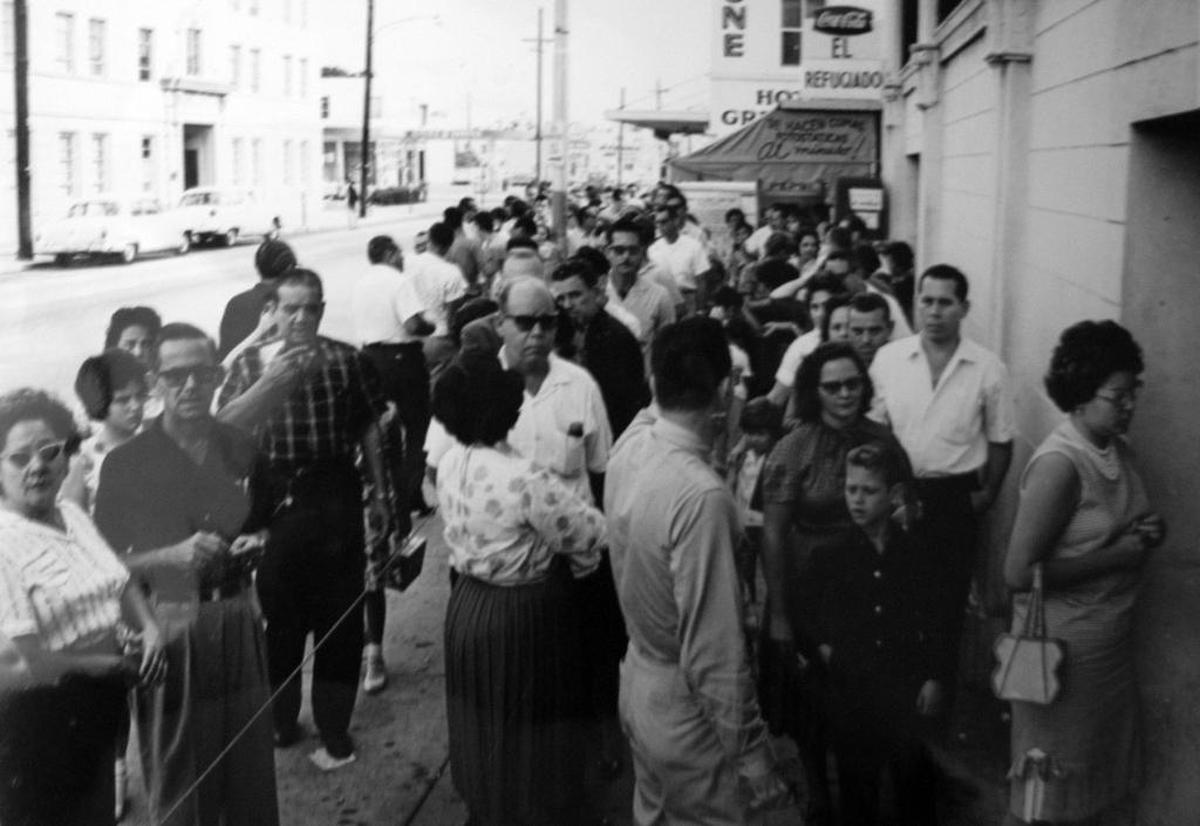
What’s indisputable is that Cuban exiles, joined by subsequent waves of Cuban migration and immigrants from Nicaragua, Colombia and other Latin American countries, built an insular enclave economy that, as it thrived and expanded, left little room for Miami’s Black population to move into Miami-Dade’s economic mainstream, experts say. That trend was only accentuated after Hurricane Andrew in 1992 prompted a large chunk of the county’s white non-Hispanic middle class to relocate to Broward.
Invested in its own survival and advancement, the Cuban and Hispanic majority spared little recognition for the historic disadvantages of Black Miamians and scant interest in ensuring they shared equally in business or politics, some experts say. Dunn, in his 1996 book, argues that Black residents did in fact benefit as the county economy grew dramatically, but by no means equitably.
“As the white population left the area, that place was taken over by Cuban and other Latin entrepreneurs,” said Alejandro Portes, a sociologist now at University of Miami who is regarded as the leading expert on the Cuban enclave and its role in the city’s transformation. “By and large there is a clear preference by the Cuban-American entrepreneurial class to hire people like themselves. In finance and banking, in real estate and construction and tourism, the African American population was marginalized.”
H.T. Smith put it in punchier fashion: “Right about when blacks were saying, “Now this is our time,” now we have a flood of Cuban exiles come in. We’ve waited since Miami was founded. We looked up and Cubans had jumped the line.”
Cuban exiles were also the beneficiaries of a generous federal assistance program. Congress and Democratic and Republican administrations, eager to showcase the advantages of the U.S. capitalism system over Cuba’s Communist system, poured millions into refugee aid, small business loans and other support for exiles. Because many exiles came from the island’s skilled, educated class, they had built-in networks poised to take advantage of the federal support, which helped them set up and expand businesses in a matter of a few years.
According to historic accounts cited in the Color of Wealth report, the federal Cuban refugee program invested nearly $4 billion in resettlement, job training, housing and education programs from the 1960s through 1996.
That kind of targeted assistance was not made available to Black people, or to Haitian refugees who arrived after the first waves of Cuban exiles, historians note.
“Miami was an outpost for winning the Cold War,” Connolly said. “Federal investments went into small business and into welfare policy that provided advantages to Cuban migrants at several different levels. The privileging of certain populations set the table for vast inequities.”
That’s not to say Cuban exiles and other Hispanic immigrants didn’t confront a wall of anti-immigrant bigotry from many in Miami, including parts of the Southern business and political establishment that controlled the city.
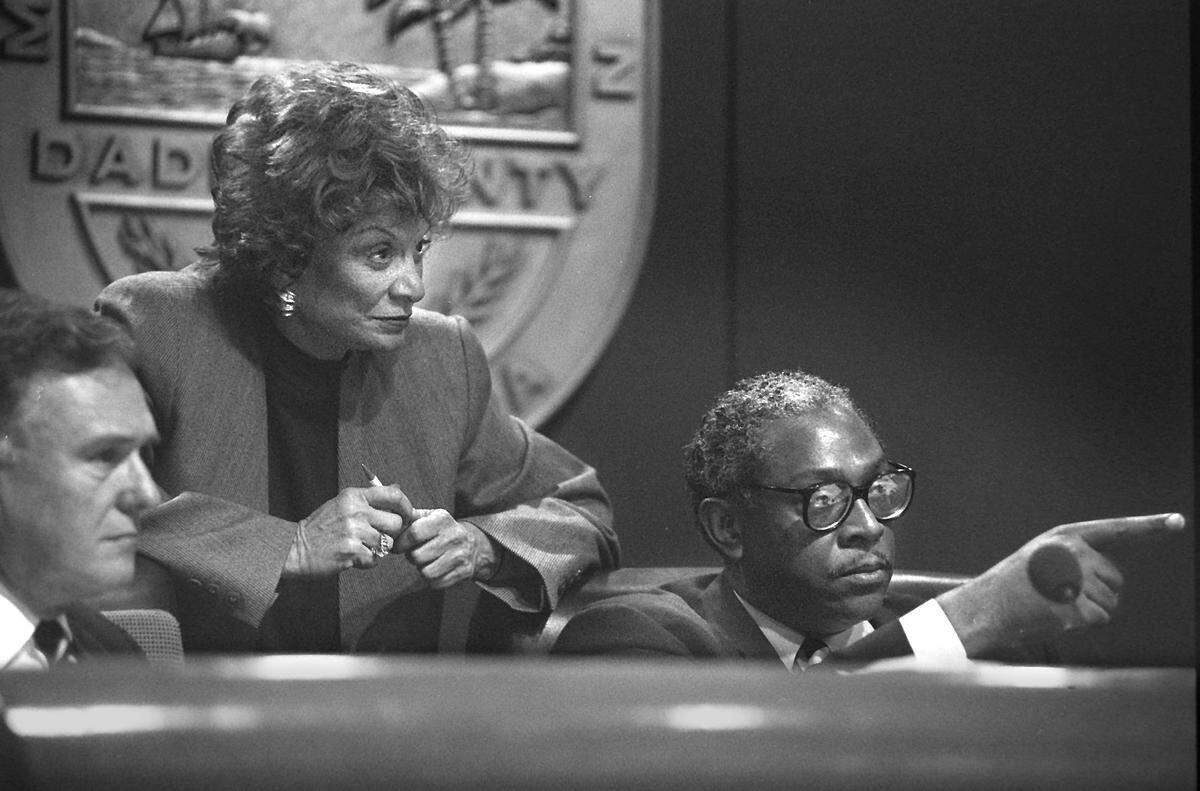
Nor does it mean that Blacks in Miami-Dade lacked for white and Hispanic allies in politics and business. The late former Miami Mayor Maurice Ferré, a wealthy Puerto Rican-born white, was a champion of Black Miamians, who provided a key bloc of support during his 12 years in office, for instance. Ferré named the first Black city attorney, city manager and police chief — positions today all held by Cuban Americans.
DISPROPORTIONATE IMPACT
To some degree, Black disadvantages in Miami-Dade are also a microcosm of the county’s increasing inequality across the board. But those structural disparities disproportionately affect Black Miamians.
The county’s Hispanic majority is riven by sharp economic disparities of its own, with high poverty in areas like Homestead and its rural surroundings, in perennially impoverished East Little Havana and even in Hialeah, today the principal gate for newly arriving Cubans. The county’s thinning sliver of non-Hispanic white residents, now just 13% of the county population, meanwhile constitute an absolute minority but a relative economic elite, concentrated in affluent suburbs and neighborhoods like Pinecrest, Coconut Grove, Aventura and Miami Beach.
The Color of Wealth study estimated the median net worth of assets of white households in the Miami-West Palm Beach metro estimated at $107,000, compared to $3,700 for African Americans. Cuban-American households had the next-highest median wealth at $22,000, while other Hispanics and Black residents of Caribbean origin had median assets worth $10,500 and $12,000, respectively.
The burden of poverty in Miami-Dade still falls unequally on Black residents. At the socioeconomic bottom, Portes said, the population is “overwhelmingly” African American. A quarter of Miami-Dade residents living beneath the federal poverty line are Black, even though they represent about 17% of the county’s total population.
More than 24% of Miami-Dade’s Black residents were living below the federal poverty line in 2018, according to Census data — a figure virtually unchanged in a decade. And that represents only a slight improvement over the preceding decades of the 1960s, 1970s and 1980s, when 30% of the impoverished population in the county was Black.
“The nut that cannot be cracked is that up to 30% of the African American community remains in poverty, and it will be until we find a way to help those folks participate meaningfully in the economic mainstream,” Dunn said.
The ongoing COVID-19 pandemic will likely only exacerbate those disparities. Early research shows that Blacks and Hispanics are becoming infected at higher rates than non-Hispanic whites in Miami-Dade, and are likely also losing jobs and businesses at disproportionate speed. That’s because of a double whammy of circumstance: They’re heavily concentrated in service and hospitality jobs that not only increase their exposure to the coronavirus, but, perversely, also to the chances of unemployment.
A comprehensive New York TImes analysis of infection rates across the country found that Black residents of Miami-Dade have a significantly higher rate of infection, at 48 cases for every 10,000 Black people in the county population. That compares to a rate of 38 for white non-Hispanics and 39 for Hispanics.
A study by the Pew Charitable Trusts’ Stateline reporting and analysis arm concluded that the pandemic is threatening the progress the Black middle class has made across the country. A Stateline report cited research showing the number of Black-owned small businesses fell by 19% between February and June, compared to 5% for white-owned businesses. The reason for the disparate impact: Black-owned businesses tend to concentrate in service industries like hospitality and personal services.
Comprehensive data on the impact on small businesses in Miami-Dade is not yet available. But MDEAT’s Wright, a former police officer and chief who runs a security business, said it’s severe for Black entrepreneurs, many of whom work in janitorial, restaurant, landscaping and day-care enterprises, all hard hit by the pandemic.
“COVID is putting people out of business,” he said. “That has a ripple effect because we are not at a place where we can survive COVID, much less where we can scale up our businesses. It further puts the African American community behind.”
Census data shows the Black population category is not homogeneous, however. An increasing percentage of that cohort is made up of immigrants, mostly from the Caribbean, who tend to be slightly better off economically, as the Color of Wealth report shows. For example, compared with American-born Black residents, Haitian residents have higher incomes, higher rates of homeownership, and lower unemployment rates.
Black immigrants from Haiti and Jamaica have done relatively well in Miami-Dade. Haitians in particular have risen from Little Haiti to create an economic and political enclave in North Miami and increasingly in the Broward suburbs.
“The Haitians have been elbowing their way into the city,” Portes said.
RELOCATION
The county’s native-born African American middle class and black businesses appear to be moving out of Liberty City and Brownsville and re-concentrating in Miami Gardens, which is 70% Black. That city, however, is in many ways isolated from the rest of white and Hispanic Miami-Dade, Portes said.
“As far as the Miami power structure and its machinations are concerned, it is as if it’s another state,” Portes said of Miami Gardens.
Racially speaking, Smith said, Miami-Dade appears to be a monolith to its Black residents.
“Miami is not a diverse community. That’s the biggest lie ever told,” Smith said. “Miami is a confederation like the Soviet Union was. We are forced together, but there is no real diversity in terms of freedom and interaction between Hialeah and Homestead and Liberty City.
“Miami Gardens and Aventura share a border. But they have very little to do with each other. Miami is about shared spaces but separate lives,” Smith said. He likened life for blacks in Miami to a plantation, where slaves never stepped in the master’s house.
.jpg "003 (2).jpg")
That separation is no accident, historians say, but the direct result of decisions made by white leadership to restrict the movement of Black residents since the incorporation of Miami in 1896. Initially confined mostly to the Central Negro District — today’s Overtown — the west Grove and rural pockets in Goulds and West Perrine along Flagler’s railroad, Black Miami spread to the northwest with the construction of the all-Black Liberty Square public housing project outside city limits in the 1930s.
After local officials began pushing to clear Overtown, a Black middle-class suburb gradually emerged around Liberty Square and nearby Brownsville, separated from white areas by concrete walls. Federal and local officials ensured Black residents remained bottled up through legal and de facto housing segregation.
Meanwhile, residents of Black neighborhoods were disqualified from business loans or mortgages through the practice of redlining, in which banks and federal officials drew red lines around “undesirable” areas. Property appraisers assigned markedly lower values to homes and property in those areas, another “racist” practice that Connolly said essentially dispossessed Black owners.
Explicit Jim Crow zoning laws or exclusionary property covenants barred home sales in the new post World War II suburbs to Black people.
In Miami, those policies reached their zenith with construction of the Interstate 95 system through the historic heart of Overtown in the 1960s, displacing thousands. Many Black property owners were stripped of homes and businesses through eminent domain, typically at far less than real market value.
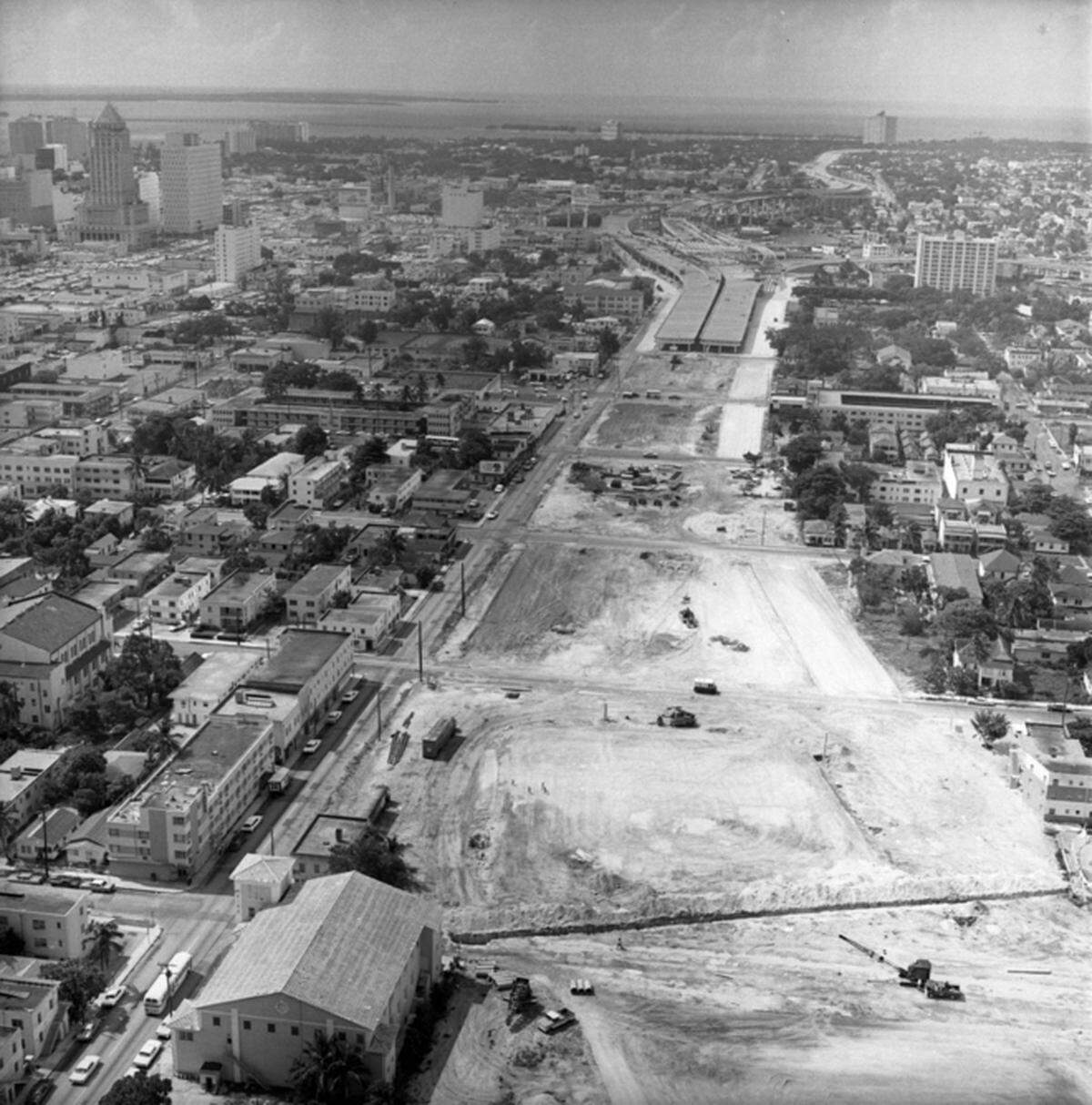
Most of those displaced from Overtown had little choice but to resettle in Liberty City or Brownsville, typically in cramped, federally subsidized “Concrete Monsters” that soon deteriorated because of poor maintenance, Connolly and others say.
Those repercussions are still felt today.
“Systematically, that continues to cripple the community,” said Fleuranvil, the Haitian-American entrepreneur. “You stripped a whole generation of people of their wealth and they have to start all over again. You have put them a whole generation behind.”
That also meant, Connolly writes, that Black residents were forced to settle for the inferior public services, housing, jobs and schools available in those neighborhoods.
UPWARD MOBILITY?
In those neighborhoods, many of the usual paths to upward mobility offer uneven terrain at best — including schools. Despite the landmark 1954 Supreme Court decision mandating the desegregation of schools, Miami-Dade public education remains highly segregated, a consequence of the county’s high degree of residential separation by race.
High schools with large Black enrollment don’t excel in state ratings, and Black students are woefully underrepresented in the system’s stellar all-magnet high schools, which often rank among the best in the country.
While Miami-Dade’s public school system has an overall A grade from the state of Florida, that doesn’t extend to the county’s seven majority-Black traditional high schools.
Five of these get “C” grades from the state. Two, Norland and Edison, have “B” grades. None has an “A.”
Five other high schools have Black enrollment above 25% because they serve historically Black neighborhoods. Booker T. Washington in Overtown, Jackson High in Allapattah and Homestead High have “Cs,”, while Southridge and Krop in Ives Estates have “Bs.” Again, none has an “A.”
Meanwhile, Black enrollment in all-star high schools such as MAST, Design and Architecture, Coral Reef and Terra ranges from 2.4% to 9.8%, Miami-Dade schools statistics show.
To Dunn, it all comes down to the historic segregation and dispossession that Black people in Miami have suffered for over a century, and continue to endure.
“If you go to the rock bottom, all these disparities resulted from blacks being landless. We don’t own land. Black people were renters who did not own land. Or land got taken away,” he said. “Had Blacks been allowed to own land we wouldn’t be in this mess. Blacks would own part of downtown Miami, would own part of Miami Beach. To that extent, we have always been running on one leg.”
For a Black person growing up in Miami-Dade, all that means success is far harder to achieve than its is for others — a “stiff, cold headwind,” in the words of H.T. Smith.
And it shouldn’t be, he said.
“Yes, Black people here can make it against the odds. But that’s not fair,” Smith said. “It is not all bad, no. But in 2020, it should be a lot better.”
This article was updated to clarify specifics about MDEAT’s existing and planned reports.
This story was originally published August 20, 2020 at 7:00 AM.