Who will run Miami’s $1B government? Mayor gets to choose but approval could be rocky
Art Noriega sat in the corner of the mayor’s conference room in Miami City Hall, quietly reading a document as Allapattah activists and senior administrators took their seats to discuss the city’s affordable housing crisis. As the CEO of the Miami Parking Authority, Noriega’s presence at Tuesday’s meeting raised some eyebrows.
Parking was not on the agenda. The topic of the meeting: a planned solicitation for proposals to develop 18 acres of public land near Jackson Memorial Hospital. Housing advocates asked Mayor Francis Suarez and other top administrators to consider community input before developing a plan for a mixed-use project and putting the concept out to bid. Those administrators were assistant city managers — Suarez is looking for a new city manager in the wake of Emilio González’s recent resignation.
Tuesday’s meeting on Dinner Key might have been an audition for Noriega, who has expressed interest in the job. He chimed in with a number of suggestions for how to incorporate public input into the city’s plans. He offered his take on how to run community meetings in the neighborhood, including finding a good facilitator for the public forum.
“You need someone that’s actually not invested in any one aspect who’s sort of pushing the Q-and-A,” Noriega said.
Noriega is in the mix as Suarez prepares to name the new manager, the most powerful individual in Miami’s city government. The mayor said he intends to announce his pick Monday morning before a commission meeting. Whoever he picks would still need approval during that meeting from three out of five commissioners.
Suarez, who has struggled to assert power in City Hall’s fractured political landscape, could find it difficult to secure the votes because he does not have a clear majority of allies on the commission. Divisions could make the decision contentious — the selection of the city manager will be framed by debates that could lay bare these fault lines. Besides a vote on Suarez’s nomination for city manager, the agenda lists discussions on Suarez’s compensation, the amount the city is spending on defending Commissioner Joe Carollo in lawsuits, and how much the city is spending on personal security for Suarez.
Another topical item: the establishment of rules for recalling elected officials. A petition to recall Carollo is currently circulating.
An otherwise light agenda of city business is loaded with items ripe for political squabbles. Frequent foes Suarez and Carollo are expected to square off on the spending issues, which appear as vague discussion items without dollar amounts on the agenda. Carollo wants to discuss Suarez’s outside employment as a real estate attorney at law firm Greenspoon Marder, an arrangement that has inspired many barbs from Carollo and questions about Suarez’s client list — a roster he’s refused to disclose.
If the meeting devolves into bickering, it wouldn’t be the first time. The first commission meeting of the year unraveled amid flaring tempers and disagreement over the order of the day. The tension underscores a key downside to the city manager job: The administrator is subject to political pressures from sometimes competing sides.
The person who jumps into the maw will also assume a major responsibility. The city manager is the most powerful executive in the $1 billion bureaucracy that largely runs on Miamians’ taxpayer dollars. The manager oversees more than 4,000 city government employees who issue permits to people who own property and run businesses, fill potholes, clean parks and fix sidewalks. The city manager supervises the city’s police and fire chiefs, negotiates big-ticket real estate deals and union contracts, as well as contracts with other outside entities to do work for the city.
Manager candidates
Speculation has run rampant in local government circles about who Suarez will nominate, particularly because of the mayor’s tenuous relationship with some of the commissioners who will have to approve the appointment.
According to sources with knowledge of the mayor’s thinking, Miami-Dade Deputy Mayor Maurice Kemp made the shortlist. A former Miami fire chief who retired in 2017, he joined Miami-Dade Mayor Carlos Gimenez’s administration later that year.
“I don’t have any comment on that,” Kemp said this week.
Noriega’s participation in the housing meeting on Tuesday, as well as other recent high-level government meetings, could signal his position on Suarez’s list. Many whispers in and around City Hall include his name, and the 20-year veteran of the parking authority has made no secret of his interest. He told the Miami Herald he’s had a number of conversations with Suarez about the job.
But, he added, “I haven’t been formally offered the job.”
On Thursday, the mayor said Noriega is one of multiple candidates he’s considering, though he declined to provide other names. Suarez did compliment Noriega’s two decades as head of the parking authority, a semi-autonomous agency within Miami’s government.
“Art is someone who has a lot of attractive qualities,” Suarez said. “You could say he is the longest-tenured department director.”
Suarez might find Noriega’s political savvy attractive — he is friendly with Carollo and has a long friendship with Commissioner Alex Díaz de la Portilla, who was elected in November. Noriega raised money for Díaz de la Portilla during the campaign.
The next city manager’s ability to please feuding bosses will be crucial to success.
The commission acts as the elected board of directors for the city government. When commissioners pass laws, the city manager is responsible for implementing and enforcing them. The manager’s team also handles residents’ complaints, whether they come directly to a city department or through commissioners’ offices. When a resident complains to either the mayor or commissioners, those gripes are supposed to be forwarded to the city manager so they can move down the bureaucratic chain of command.
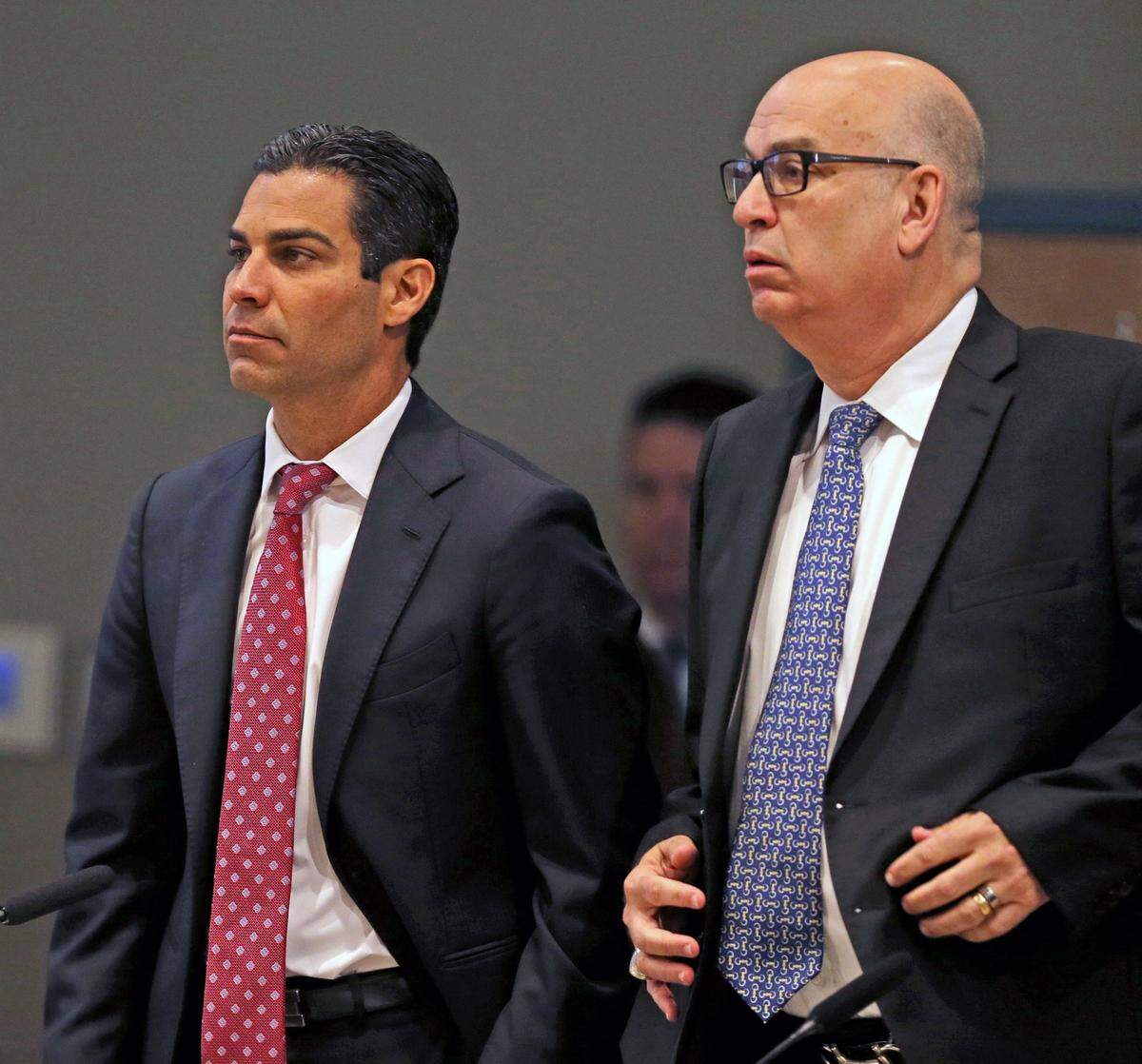
Whoever it is will sit in a seat left warm by a harsh political climate.
González left amid criticism and bad blood at City Hall. When he resigned, he said he needed to spend more time with his wife, who has been ill since late 2019. He also said that “commission meetings have devolved into a circus,” noting the divisive and tense atmosphere that dominates the time when Miami’s elected leaders are supposed to handling city business. At the time he resigned, González was also accused of falsifying documents when applying for a permit to build a backyard deck. González has not publicly addressed those accusations, though the city’s auditor is investigating.
After Carollo made the accusations during a December commission meeting, he and Díaz de la Portilla and Commissioner Manolo Reyes voted to fire González. They came one vote short of the four required to dismiss the manager when commissioners Keon Hardemon and Ken Russell voted no.
Suarez has had turmoil in his own office. His former adviser and spokesman Rene Pedrosa was recently arrested and charged with groping a teenage boy in City Hall.
He said the turbulence in Miami’s city government has made recruitment difficult. This week, Suarez enlisted former congressman Carlos Curbelo to advise him on policy and politics, including helping him with the transition when the new city manager is confirmed.
“It has to be someone who has the ability to handle what can be a very dynamic political situation,” he said.
This story was originally published February 21, 2020 at 6:00 AM.