Emilio González, the most powerful administrator in Miami’s government, resigns
The city of Miami government’s top decision maker, City Manager Emilio González, resigned Thursday after coming under fire from some city commissioners.
González, who has served as the municipal government’s top administrator since January 2018, submitted his resignation to Mayor Francis Suarez on Thursday afternoon. The effective date has not been determined. González and Suarez told the Miami Herald they plan to work together on a smooth transition until González vacates his office.
In his resignation letter, González said he was proud of his tenure at the city and his employees. He touted low property tax and crime rates, stable city finances and strong bond ratings among the high points of his administration. The manager then pointed toward the political instability on the commission as he closed his letter.
“In spite of all this and quite sadly, this city has entered a new era,” he wrote. “Our city commission meetings have devolved into a circus. Policy discussions have given way to politics of personal destruction. As the city manager and more importantly a resident, I think it is best for our city if I remove myself from this spectacle.”
Suarez, who has the power to nominate the city manager, said he intends to consult with the commission before proceeding.
“I want to sit with them and get their perspectives,” he said.
Upon his election in November 2017, Suarez nominated González to head the city’s $1 billion government, a bureaucracy with more than 4,000 employees. The city manager is responsible for overseeing public employees who enforce the city’s laws, fix potholes, clean parks and issue permits. The city administration is also expected to address broader challenges facing Miami, from the affordable housing crisis to looming impacts of sea level rise and climate change.
González’s exit comes during a tumultuous political fight at City Hall, some of which stems from accusations, still unresolved, that the city manager doctored documents to secure a permit for work on his home and used his position to fast-track the permit. Commissioner Joe Carollo, who has long criticized González’s management style and voted against his appointment in January 2018, levied the accusations during an hours-long speech at a December commission meeting. González was not present to hear the allegations because he was with his wife, who is ill.
Carollo moved to oust González, a motion that failed on a 3-2 vote because four votes are required to fire the manager. Commissioners Ken Russell and Keon Hardemon said they wanted clarity on the accusations, but believed González should have been given an opportunity to defend himself. The commission then unanimously voted to send the information Carollo presented to the city’s auditor general for investigation.
On Thursday, González said his top reason for stepping down is because he wants to be with his family, saying his current priority is being at home with his wife.
González was expected to respond to the allegations at the Jan. 9 commission meeting. That hearing unraveled in messy fashion when commissioners fought over the order of the agenda, concluding with a hasty motion to adjourn.
“My plan today was to address the accusations that have been leveled against me,” he told the Herald after the meeting ended abruptly. “Some of them very serious, and some of them rather tawdry, and set the record straight. You can have those big bad moments when I’m not sitting here. But now I’m sitting here. Hear me out. And that didn’t happen. So there will be another opportunity.”
Commissioner Alex Diaz de la Portilla, who called for the adjournment on Jan. 9, quickly called for an emergency meeting to address a portion of that day’s agenda — including the discussion on González and Suarez’s veto of the vote to launch an investigation into the manager.
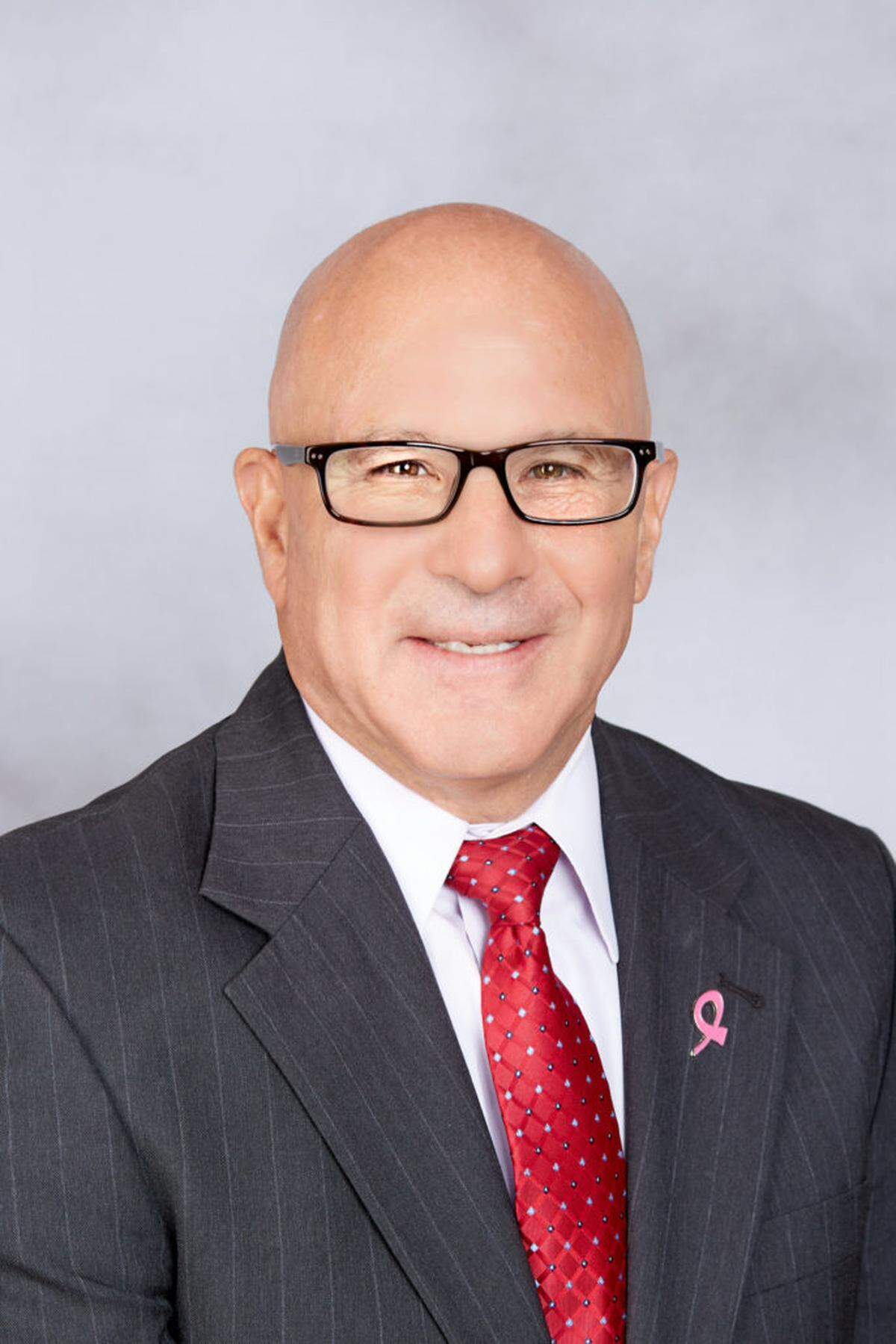
On Thursday afternoon, González said he will not attend Friday’s meeting. He declined to discuss the details of his response to the allegations, saying only that he intends to address the permitting issue at another time.
“That will play itself out,” he said.
While González will no longer be steering the ship at City Hall, neither will his top deputy, Joe Napoli. Earlier this week, Napoli accepted the city manager position in Cooper City. Napoli, the hands-on administrator whom González has tasked with running much of the city’s day-to-day operations, will begin his new job Feb. 17.
The Cooper City Commission confirmed his appointment Tuesday night in a public meeting. Napoli and González are not the only upcoming departures from City Hall. Earlier on Tuesday, building department director Jose Camero announced he will retire Feb. 7. Sources said more resignations could be coming.
Carollo had set up his intention to blast González months earlier when he requested a discussion on the city manager, but the item was deferred several times. The commissioner had shared his dissatisfaction with González’s penchant for posting photos on social media with Tallahassee politicians and other bigwigs.
Carollo’s suspicions of permitting issues came months after Carollo himself was cited for unpermitted improvements to a home he owns in Coconut Grove. Commissioner Manolo Reyes joined in the criticism of González by saying the manager’s office has been unresponsive to requests for information and directives from his office. Diaz de la Portilla went along with political ally Carollo and Reyes, saying while he had no personal issue with González, he sensed a “toxic environment” in City Hall.
After González submitted his resignation, Carollo told reporters outside the city’s downtown administration building that he thinks the manager should make his resignation effective immediately.
“This chapter has to end for this city,” he said, adding that he thinks the city should be “going through a national search, like we should have done before, and finding a true professional — not a political hack from the swamp like an Emilio González.”
Carollo said he met with González earlier Thursday and gave him the opportunity to refute the accusations about the permit. The commissioner said the manager did not want to the address the issue until after any potential investigation, but González asserted he had not done anything wrong.
The balance between politicians’ efforts to serve their constituents and city administrators’ desire to insulate their work from political influence can fuel friction between administrators and elected officials. Under Miami’s form of government, another caveat can make the situation more awkward. The mayor, who nominates the manager, has no vote on the commission and no authority to direct city employees. The power to direct the city’s workers lies solely with the city manager and his staff.
Under this framework, González has worked under an increasingly combative elected body, with district commissioners jockeying for votes and power on some items while failing to consider many others. Some votes have been repeatedly deferred, from land use decisions that impact development to resolving the proposed private use of public lands.
In his two years at the helm, González addressed one of his top priorities: settling a $200 million debt owed to the city’s police and fire pension fund. The issue was settled at a total cost of $53.5 million. On a separate lawsuit from a developer wanting to build a hotel project on city-owned Watson Island, the city settled for $20 million under González’s administration.
The city has enjoyed healthy growth in property values in the past two years, bolstering the city’s budget and reserves. In the fall of 2019, González proposed a $1 billion spending plan that came in slightly under the previous year’s final budget, a feat the manager touted alongside a historically low property tax rate. The budget included more money for the code compliance department, for prevention and prosecution of illegal dumping and for rent subsidies for the elderly. The city has expanded its trolley system, created a new scholarship program for Miami Dade College and launched multiple projects funded under the Miami Forever bond.

The manager’s tenure was also marked by controversy over high-profile issues.
The police department, while notching the lowest homicide rate in decades in 2018, still faced complaints over use of force and misuse of body-worn cameras. A city watchdog agency recently revealed broad mismanagement of the police’s off-duty work program.
A major centerpiece of González’s administration, pushed in tandem with Suarez, is the proposal to redevelop city-owned Melreese golf course into a $1 billion commercial and soccer stadium complex. The campus would include a hotel, office park, shopping center and 25,000-seat stadium to host home games for David Beckham’s Major League Soccer team, Inter Miami.
From a referendum on whether to pursue the lease to questions of the property’s environmental contamination, the project has stirred debate over the use of the city’s publicly owned lands. Administrators are currently negotiating the lease, which is expected to go before commissioners later this year.
González, a retired U.S. Army colonel, took the top job at City Hall in January 2018 for a salary of $265,000, the same amount he earned running Miami International Airport before stepping down in November 2017. González also receives monthly stipends of $800 for his car and $200 for his cellphone, 31 days of vacation and holiday, and a retirement account to which the city contributes $53,000 annually.
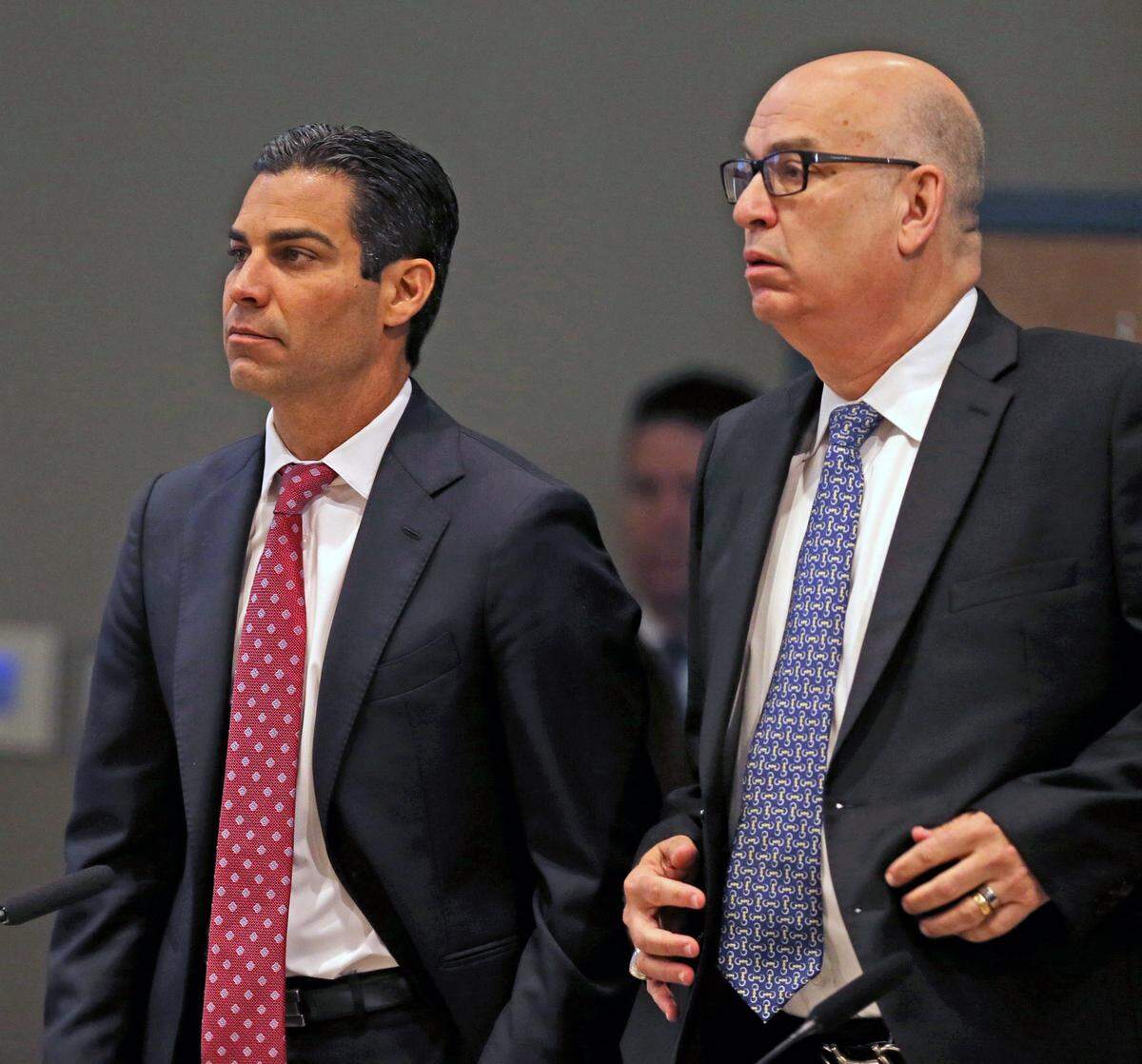
He had led the county’s aviation department since 2013. Before working in Miami-Dade’s halls of power, he served as director of U.S. Citizenship and Immigration Services under President George W. Bush from 2005 to 2009. He had previously served on the National Security Council following a 26-year career in the U.S. Army.
In his foray into local government, González has not shied away from politics, much to the chagrin of other politicians who disagree with him. He was involved in contentious political battles over concession contracts at the airport. Toward the end of his tenure, he acknowledged that he had “pissed some people off.”
“But if you don’t piss people off, you’re not doing your job,” he told the Herald at the time.
In Miami, he publicly criticized the tenor of the political campaigning against Suarez’s effort to become a “strong mayor,” a failed referendum that would have transferred the top administrative power from González to Suarez. The comments referenced attack ads backed by Carollo, who vehemently opposed the strong mayor effort. Carollo, a former city manager and mayor, bristled at the comments.
In a press conference held shortly after the news of González’s resignation became public, Suarez told reporters he thought the allegations against the city manager were “political theater and personal.”
“He obviously has been dealing with his wife of 41 years’ medical issues,” Suarez said. “He said that he could not dedicate the amount of time that he needed to dedicate to take care of her, and, at the same time, run a city of this magnitude.”
This story was originally published January 16, 2020 at 2:36 PM.