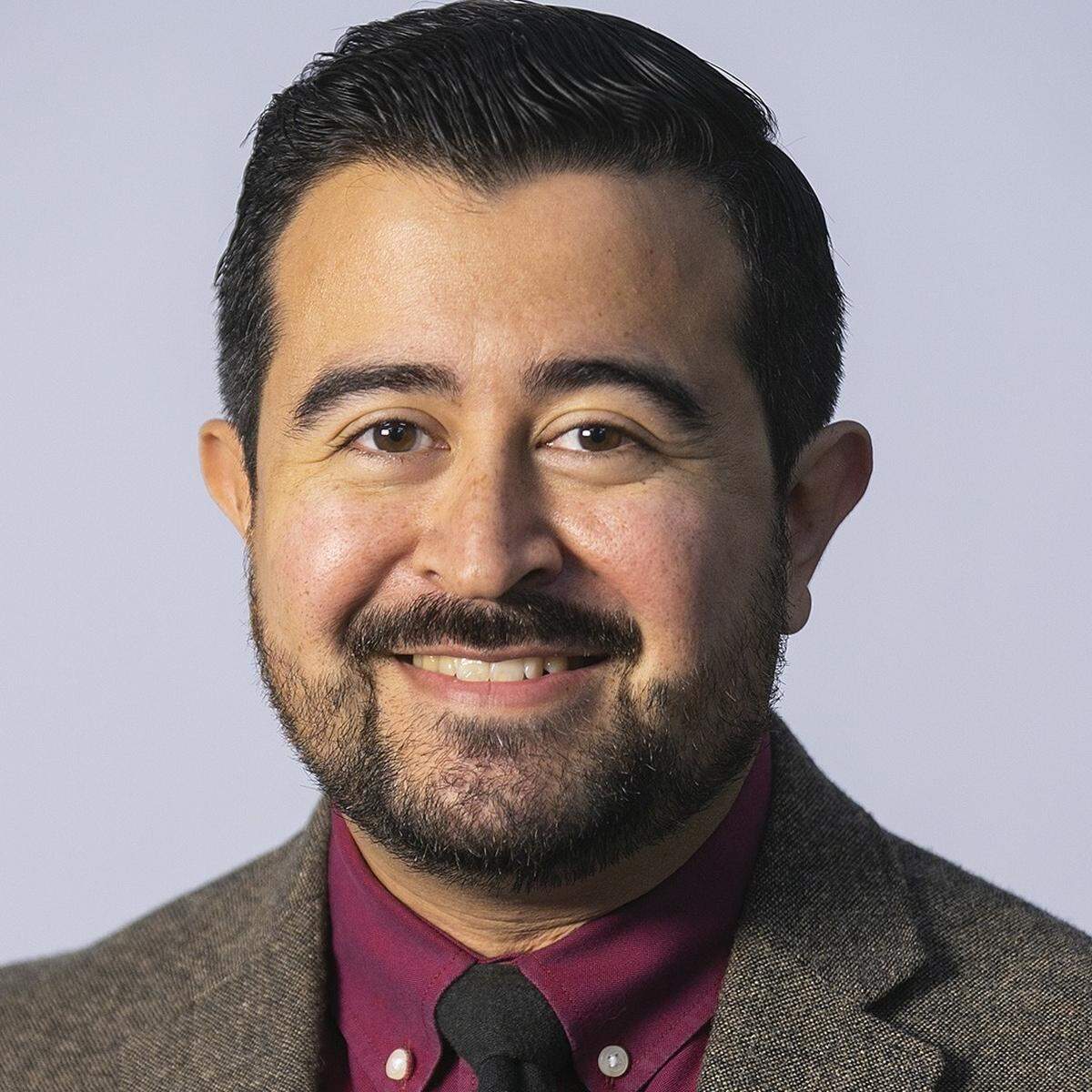
How Norman Braman pushed anti-gambling law through City Hall and almost got his way
An anti-gambling billionaire and his lobbyists quietly orchestrated a change to Miami’s zoning laws that blocked Magic City Casino’s plan to open a poker room and jai-alai fronton in Edgewater, according to documents obtained by the Miami Herald.
Internal emails show that in September 2018, when auto magnate and staunch anti-gambling activist Norman Braman sought an ally in Miami’s government, he turned to Mayor Francis Suarez, a beneficiary of $75,000 in campaign donations since 2018.
He sent to Suarez’s private email account his opinion on the anti-gambling legislation, already placed on the city’s letterhead, with a request to simply have the planning director sign it and submit it as the official city recommendation.
Suarez sent the paperwork to the private email of Emilio Gonzalez, the city manager. Days later, his memo showed up, almost word for word, on the commission’s agenda. The law making it harder to open a gambling facility passed, sparking a lawsuit against the city from the casino’s owners.
Braman got his way. But after a majority of Miami commissioners approved a settlement Thursday, the casino’s plans will again be in motion. Braman’s role was referenced but not spelled out as one commissioner explained why he voted to settle the suit.
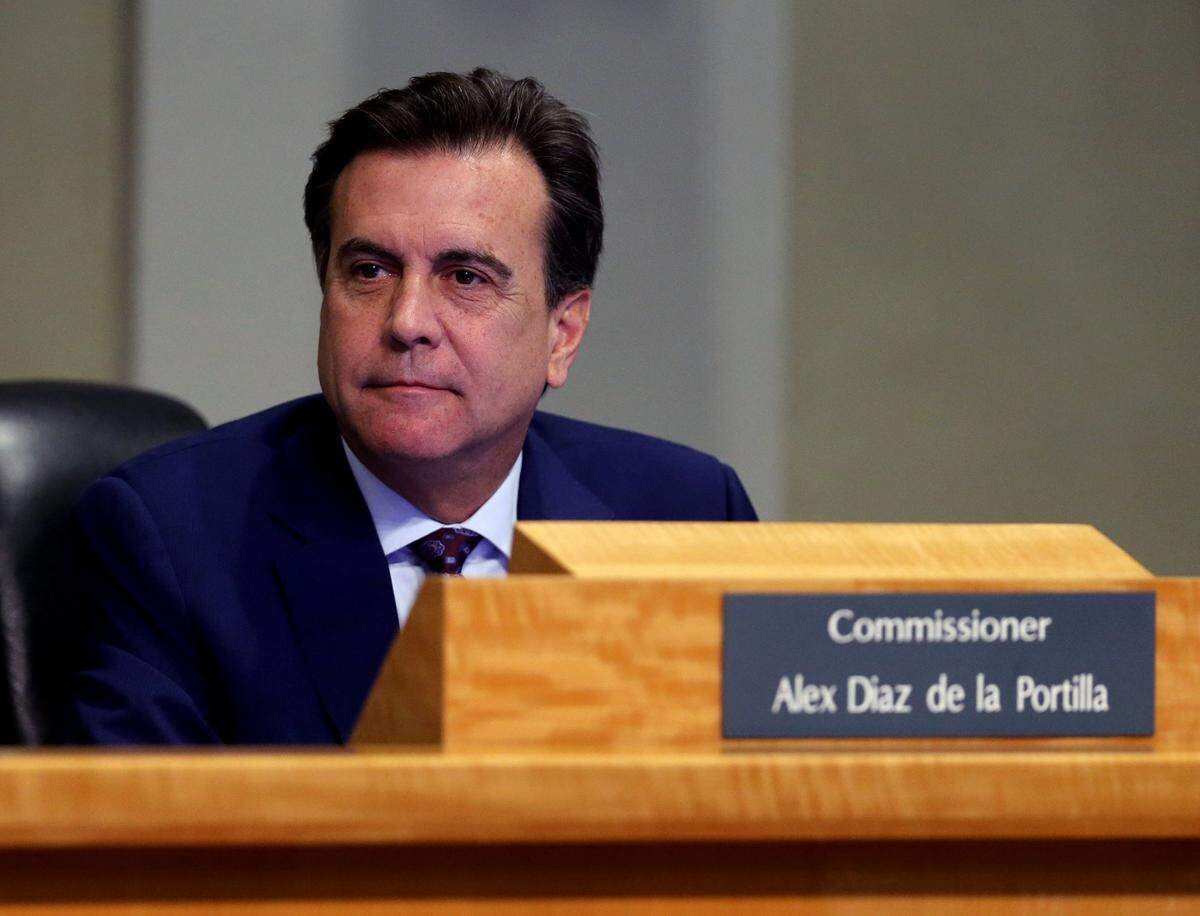
“You should not let one individual and one law firm determine what happens in a community,” said Commissioner Alex Diaz de la Portilla.
Emails and influence
On July 3, 2018, Florida gaming regulators approved a permit for the Magic City Casino’s owners to open the card room and fronton in Edgewater as part of a large complex by Miami Beach developer Russell Galbut’s Crescent Heights. To obtain the permit, casino ownership relied on multiple letters from city zoning officials stating that gambling was an acceptable use in that area.
Braman, along with developer Jorge Perez, Knight Foundation president Alberto Ibarguen and other local anti-gambling luminaries publicly denounced the plan.
Twelve days later, Braman had Stephen J. Helfman, his attorney from law firm Weiss Serota, contact Suarez. Helfman sent a draft of zoning changes that would require four of five of commissioners to approve new gaming sites and force such proposals to go before public hearings. It’s common for land use attorneys representing interested parties to go back and forth with city attorneys and other city officials on the text of proposed changes to city regulations.
Braman got involved before the commissioners even formally asked administrators to revise the city’s zoning laws on July 26. Two months later, he inserted himself further into the process during the week commissioners were going to consider a final vote on the new regulations, when Braman emailed his memo to Suarez’s private email account and requested that his analysis of stricter gambling zoning regulations be presented as the city planning department’s opinion.
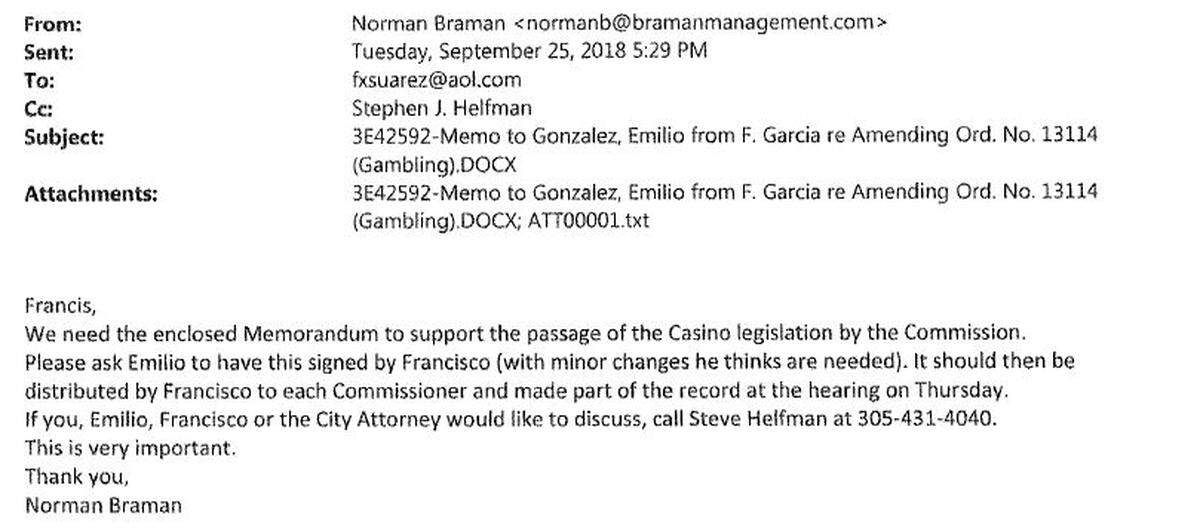
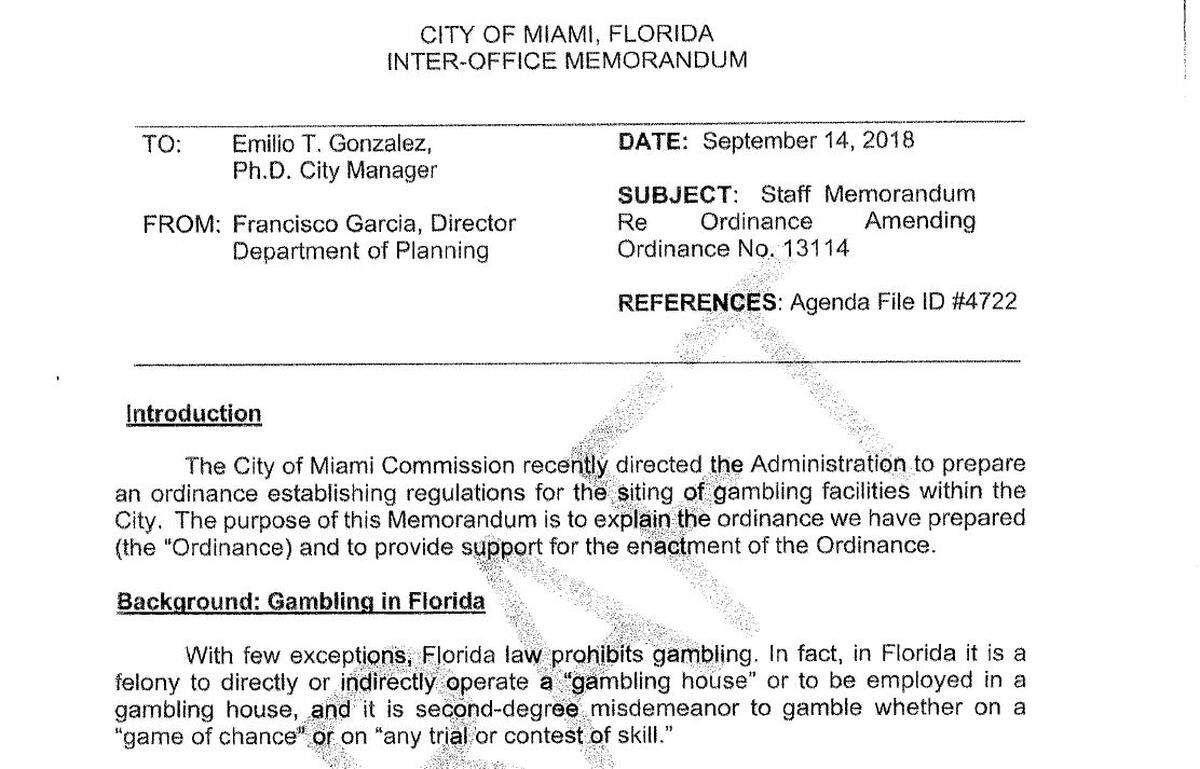
Braman attached a memo, made to appear as the work of city administrators, that supported making it more difficult for gambling establishments to get zoning approval in Miami. Braman asked Suarez to ask Gonzalez to have the city planning director, Francisco Garcia, to sign the document.
“We need the enclosed Memorandum to support the passage of the Casino legislation by the Commission. Please ask Emilio to have this signed by Francisco (with minor changes he thinks are needed),” Braman wrote.
Suarez then sent the request to Gonzalez’s private email. Days later, city administrators essentially honored Braman’s request. In an unusual move, the planning department submitted Braman’s memo as the city’s official analysis of proposed law, almost word-for-word, with Garcia’s signature on it.
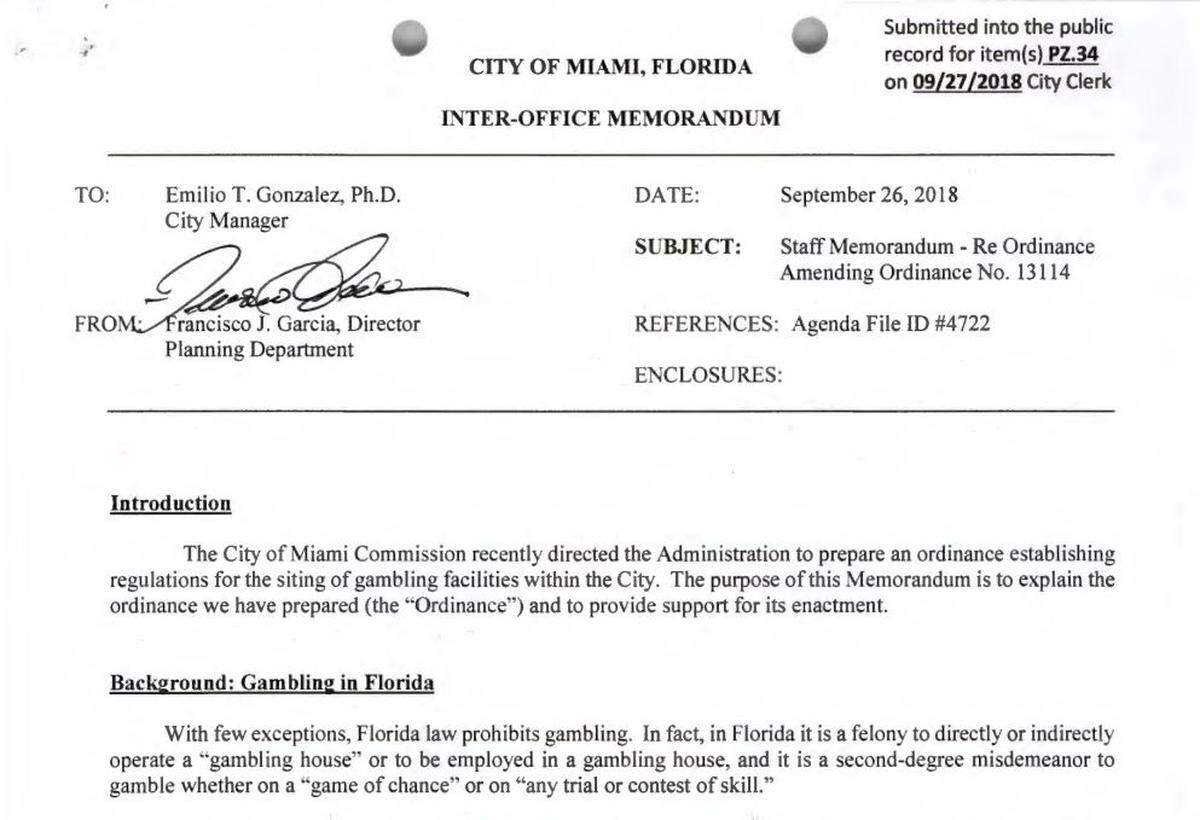
The documents show the analysis from Braman became the staff’s professional assessment, an unconventional arrangement, according to sources familiar with City Hall’s legislative process. The report was presented to the City Commission, which voted 4-1 to adopt the new regulations over protests from the casino’s owners, the Havenick family.
Braman’s emails surfaced during discovery after the Havenicks sued the city. The suit accused the commission of intentionally changing zoning rules to make it harder for the Havenicks to open the jai-alai fronton and card room right after the casino got the necessary state permit. The casino’s owners had previously obtained several letters from city zoning officials saying gambling would be allowed under the existing zoning in Edgewater — letters the casino used to secure a permit from Florida gambling regulators. The Havenicks argued that the city had moved the goalpost on them.
The revelations of the emails provided a backdrop to Thursday night’s vote to settle the suit. Commissioners Diaz de la Portilla, Manolo Reyes and Keon Hardemon voted to accept the settlement. Commissioner Joe Carollo and Ken Russell voted against settling.
Under the terms of the approved settlement, the casino can apply for a permit for a summer jai alai facility. The casino agreed to not operate slot machines at the fronton and to not seek legal fees from the city. If the Havenicks want to open a cardroom in the future, they would need only three of five commissioners to approve it.
After Thursday night’s vote, the casino’s owners did not respond to a request for comment.
Braman: ‘entirely appropriate’
When asked about the memo on Thursday, Braman did not address why he sent the document to the mayor’s personal email. He told the Herald his involvement was “entirely appropriate.” He took aim at the city’s interpretation of its previous zoning laws, which allowed gambling at 3050 Biscayne Blvd. without a public hearing.
“Petitioning government and urging legislation is a fundamental right and entirely appropriate,” Braman wrote. “Even more so under circumstances where lobbyists were used to obtain an ‘interpretation’ from a city staff member to allow the extension of gambling without any public notice or input. This is just wrong.”
In September and October of 2018, around the time Braman emailed Suarez, the auto dealer donated $50,000 to the mayor’s campaign to become a “strong mayor,” an effort to make Suarez the city’s top administrator. That campaign failed at the ballot box in November.
On Thursday, Suarez denied he was influenced by Braman’s contribution and pointed to a $15,000 donation from the casino during the strong mayor campaign. He said he’s supported protecting the casino’s rights in the past.
“Listen, I’ve gotten contributions from both sides on the strong mayor,” he said. “The Havenick family are longtime friends. They’ve been big supporters.”
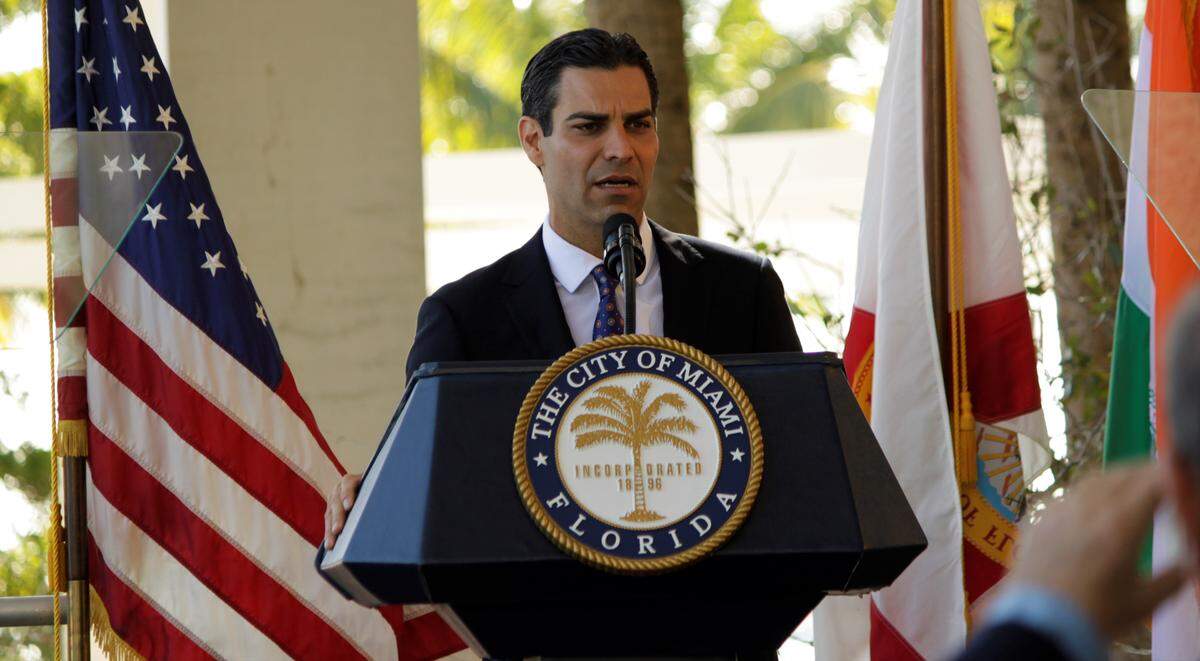
City officials provided no clear answers on several questions raised by the documents.
Suarez said he must’ve unintentionally forwarded Braman’s email to González’s personal email because González’s personal address is almost identical to his work address.
“Why was it sent to the city manager’s private email? I have no idea,” Suarez said. “It could have been an accident.”
Garcia, the planning director, said that in his analysis of the legislation, he saw the memo and understood that it had been vetted by his superiors.
“The city manager’s had some input to provide, and I was, at one point in time, presented with a memo that contained information that was mostly of a legal type, mostly pertaining to legal background issues, which I was told had been vetted by the city manager’s office,” he said.
González, the city manager who has resigned effective Feb. 18, told the Herald he did not recall seeing the email. He said he had no record of forwarding it to anyone from his personal account.
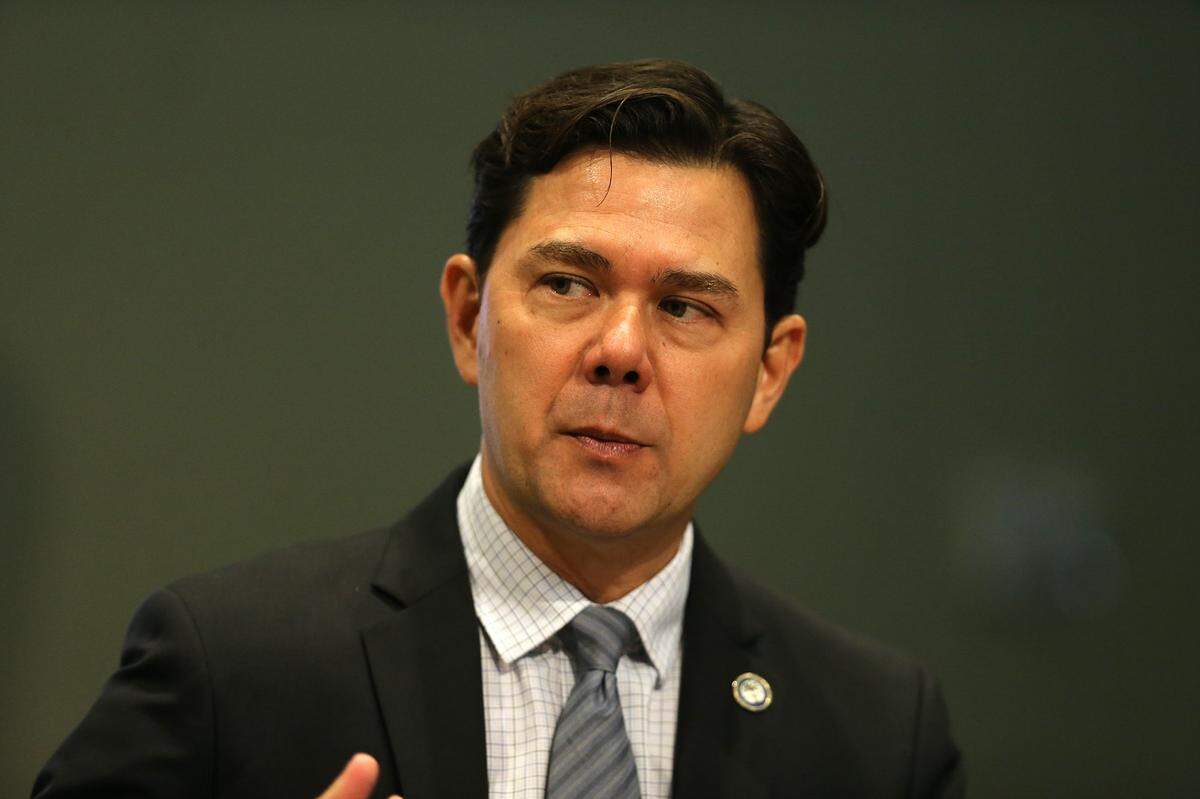
Before commissioners voted Thursday night, Russell defended the city’s law and tried to convince his colleagues to continue the litigation. He said he felt the law was passed at the right time, and the Havenicks were not being targeted.
“It’s not saying this a ban on gambling. It’s not saying this is against gambling as a principle,” Russell said. “And it’s not saying we’re targeting one company. We’re creating a process which will be good from here, in perpetuity, for our entire city.”
Carollo, who also voted against settling, said he felt the zoning administrator at the time, Devin Cejas, had made incorrect recommendations when issuing the letters that the Havenicks used to get the state permit.
Reyes and Diaz de la Portilla, who was not a commissioner when the vote occurred in 2018, said the city should have handled this situation differently.
“I think it’s an unfair process,” Diaz de la Portilla said. “ I wasn’t here, but they were perhaps targeted by this commission, and I think that we need to just move on.”
This story was originally published February 14, 2020 at 6:30 AM.