The breathtaking views on the Overseas Highway can be deceptive. There’s danger ahead
READ MORE
The Overseas Highway
The legendary road in and out of the Florida Keys faces more and more pressure.
Expand All
On a routine day in the Florida Keys, with locals and tourists on the road, four women from Spain headed to the beach in their rental Nissan Rogue. They braked on the Overseas Highway, waiting to make a left turn toward the waterfront.
They never made it.
A work truck carrying portable toilets hit their SUV from behind and sent it into oncoming traffic. The driver of a southbound RV couldn’t stop in time and barreled into the rental. The impact crushed the Rogue and hurled it into a roadside tree.
Margarita Cortes-Pardo, 31, Maria Lopez-Bermejo Rossello, 31, Teresa Sanchez Quetglas, 30, and Ana Gaitan Diaz, 31 were killed instantly.
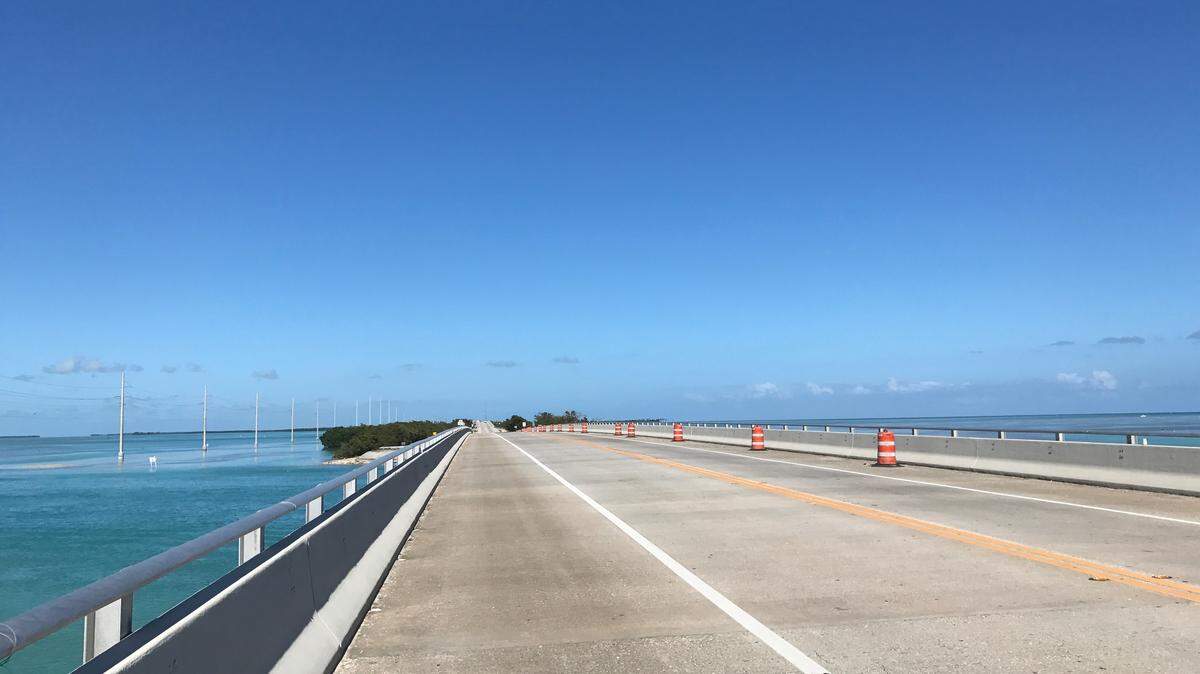
On one of America’s best known scenic highways, where water views can take your breath away, there is trouble on the road.
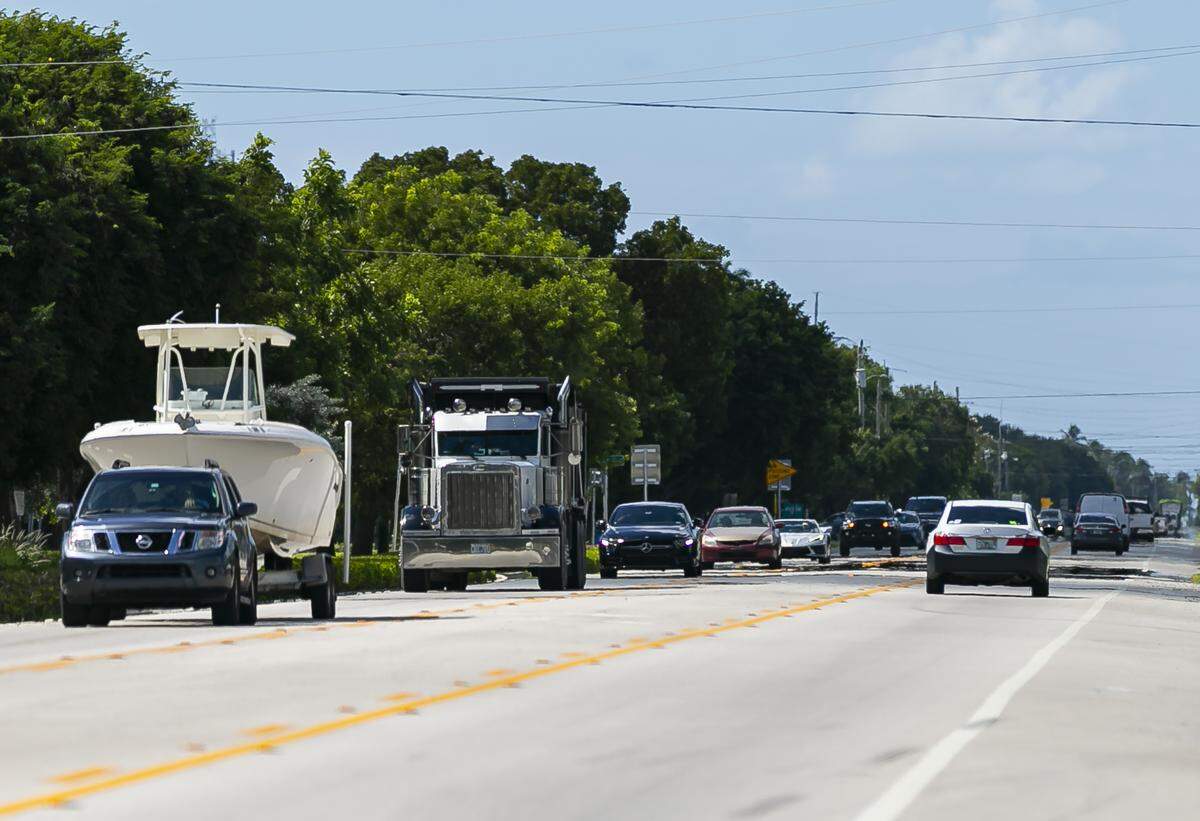
Heavy traffic. Speeding cars. Narrow stretches of pavement. Lack of turn lanes. Work vehicles going back and forth. Distracted drivers.
They all add up to the crashes and backups that can turn the beloved 113-mile-long Overseas Highway in the Keys into a deadly stretch of pavement.
Danger for drivers
The March 2018 tragedy of the four tourists who died made world headlines. It also affected local policy. After the crash, Monroe County Sheriff Rick Ramsay urged the Florida Department of Transportation, which oversees the road, to lower the speed limit on a stretch of the Overseas Highway.
After more than a year of negotiations between Ramsay and FDOT, the agency finally agreed to lower the speed limit between mile markers 77 and 80 from 55 mph to 45 mph in July 2019.
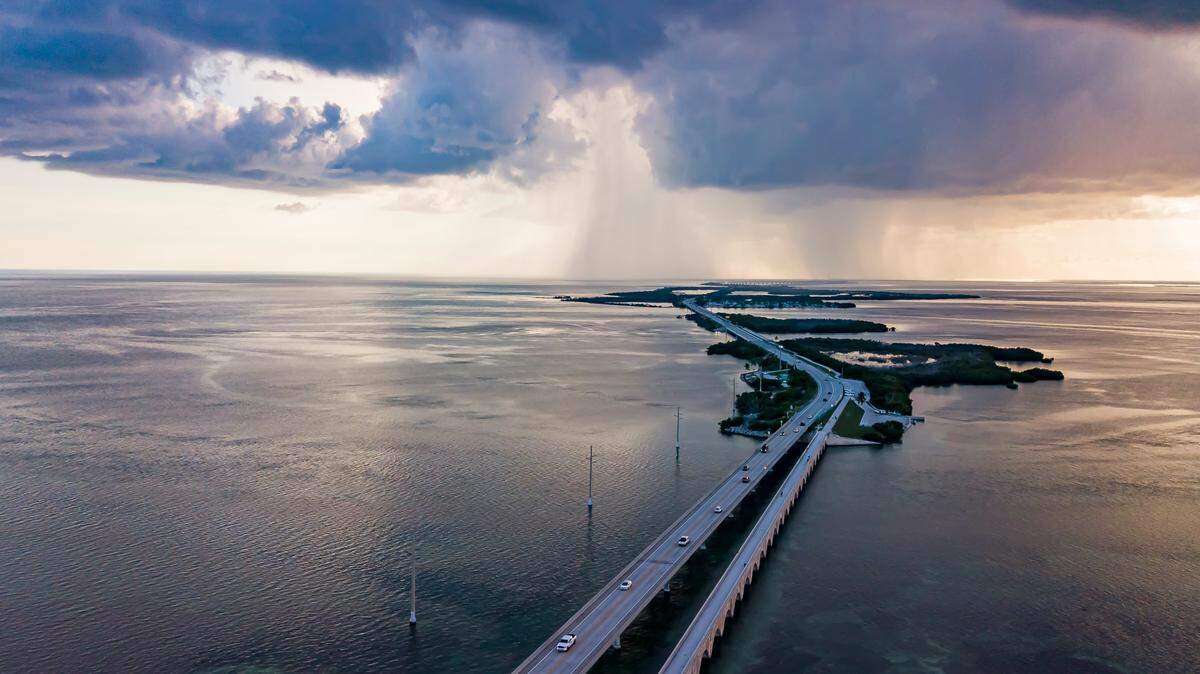
The crash remains a sad reminder that the historic highway — one of the world’s most scenic, with the Atlantic Ocean on one side and the Gulf of Mexico on the other — is deceptively dangerous.
Already this year, more than a dozen crashes have ended in fatalities, with 14 people dead, according to Lt. Kathleen McKinney, the Florida Highway Patrol’s sub-district commander for the Keys.
Even though Monroe County has grown to a population of 74,000, the main street in the Keys hasn’t kept up. The configuration of the Overseas Highway has not changed much since 1944, and was not designed for the crush of traffic that pours into the Keys today, Ramsay said.
“Our road system has reached saturation,” Ramsay said. “We’re above capacity.”
In addition to the daily woes of a major commuting highway, add in all the confused or wide-eyed tourists who are trying to find their destinations just off the road.
“We have so many tourists, people who are driving slow looking for a certain hotel or restaurant or looking around,” the sheriff said. “More people are playing on their phones. Distracted driving is more dangerous than impaired driving.”

Earlier in October, a head-on collision involving five cars was a scene right out of a war zone. Medical transport helicopters landed on the Long Key Bridge, the second longest span in the Keys, and flew the injured to Miami-area hospitals. That was just days after a man driving a stolen pickup truck crashed head-on into an ambulance on the island chain’s longest bridge, the Seven Mile Bridge.
And when there’s a crash on the Overseas Highway, cops can’t just divert the traffic to other lanes or an alternative route. Often, when car hits car, a stretch of the road shuts down. That could mean hours-long traffic jams, with cars backed up, bumper-to-bumper, for miles in both directions.
But it’s not just accidents clogging traffic on the highway. More people are on the road because more people live in the Keys than 10 years ago, more commute from Miami-Dade, and more tourists visit year-round.
“Let’s face it, the Overseas Highway is limited,” said Andy Newman, public relations director for the Monroe County Tourist Development Council.
Safety and solutions: What’s being done
While there is no appetite locally or on the state level for major changes like widening more of the highway, both county and Florida transportation officials say plans are in the works to try to at least ease some of the traffic headaches.
“There’s certainly more we could do to move people on the highway quicker and safer and off the highway quicker and safer,” said David Rice, who represents the Middle Keys city of Marathon on the Monroe County Commission.
Monroe County commissioners are considering a resolution asking the Florida Department of Transportation to examine several ways to improve conditions on the highway. But most are smaller, such as more merge, acceleration, deceleration and turn lanes.
FDOT said in a statement that a study commissioned by the county in 2019 found only four of the 24 roadway segments along the Overseas Highway “were identified [as] failing to operate at an acceptable level of service.” The problem areas:
▪ Near Tea Table Key at mile marker 77.5 to mile marker 79.5
▪ Upper Matecumbe Key from mile marker 79.5 to mile marker 84
▪ Windley Key from mile marker 84 to mile marker 86
▪ Plantation Key from mile marker 86 to mile marker 91.5.
“Overall, the corridor operates at 44.6 miles per hour, which is slightly below the acceptable threshold of 45 mph,” the agency said.
FDOT also announced this past week plans to rebuild the Long Key Bridge, which, at 2.3 miles, is the second longest span in the island chain. Construction bids for the projected $150 million job are scheduled to go out in 2027, the agency told Monroe County commissioners.
Newman, with the county’s Tourist Development Council, said one thing sure to lighten traffic is other tourist destinations around the globe returning to business after being shut down by the COVID-19 pandemic. That will translate into fewer people pouring into the Keys, he said.
“From a tourism standpoint, this kind of business cannot be sustained,” he said. “You have cruise lines that are coming back up online. Bahamian, Caribbean destinations are coming back online after the pandemic. So, that should lessen it, and I think will help normalize it.”
While county, state and federal officials worry about the effects of sea level rise in the Keys, most of the focus of preparing for it is on elevating off-highway residential roads that are prone to flooding, an effort that could come with a hefty price tag of around $1.8 billion.
However, the Army Corps of Engineers identified six areas along the Overseas Highway in need of shoreline stabilization against erosion and wave energy in a proposed $5.5 billion hurricane protection plan.
The Keys tourism factor
For decades, the busy season in the Keys was winter, when northern tourists flocked to the archipelago to escape the cold back home. Come summertime, other than the day trippers driving down from Miami, the Keys were hollow, empty of tourists.
“When I first moved here in 1973, you could fire a cannon down U.S. 1 in the summertime. We had no summer tourist season,” said Rice, the county commissioner.
That started to change over the last decade, and the summers in the Keys turned busier. The trend accelerated as the COVID-19 pandemic dragged on through 2020.
With tourist hot spots around the globe shutting down, the Keys remained wide open — except for late March to May 2020 when Monroe County set up two checkpoints to keep visitors out in an effort to slow local spread of the coronavirus.
By the fall, vacation-starved people across the country had a tropical destination available to them that was a car ride away.
“Last couple of seasons with COVID, so many other places were closed,” Rice said, “so the Keys was a good alternative.”
In Key Largo
Tanya Cleary knows the impact of the crowded highway. She owns Dream Bay Resort, a boutique motel in Key Largo, right off the bayside of the highway at mile marker 99. Cleary, 57, has been in the Keys since the 1980s, and she said she’s never seen so many visitors on a daily basis. But while the traffic is a hassle, the money is a benefit.
“I worry that tourists will eventually tire of being stuck on U.S. 1 for hours, but so far, it doesn’t seem to have had a negative effect,” Cleary said. “We’ve been busier than ever, although that may just be because of the pandemic and restricted travel to other countries. Hopefully, traffic will ease up some once we’re through this.”
Elizabeth Moscynski, president of the Key Largo Chamber of Commerce, says the increase in traffic also comes down to a pair of factors: a larger labor force driving down from the mainland — and an increase in buyers of second or third homes. She said those homes are being occupied on the weekends, leading to more cars coming down to the Keys Thursdays through Sundays.
“Many of the home sales over the last few years are vacation home buyers,” she said. “These homes are used for weekend getaways and vacation rentals.”
Workday traffic on the highway
Living in the Florida Keys, where 44% of jobs are related to tourism, is expensive. A small one-bedroom apartment in Key West can cost $2,000 a month, and an efficiency or room $1,500. It gets a little less steep up the rest of the 120-mile long island chain.
According to the United Way of Florida, almost 40% of Monroe County’s 31,362 households are struggling to earn enough money to meet basic needs such as child care and transportation. That means more people unable to live in the more expensive Keys. Instead, they are forced to find more affordable housing on the mainland and drive down each day to staff Keys hotels, restaurants and other tourist attractions.
“As for labor, the same old song and dance,” Moscynski said. “Affordability in the Keys. Not many of our hourly wage workers can afford the rentals, nor can families needing two or more bedrooms, so they drive in from the mainland.”
And even if housing were more affordable, the inventory of homes isn’t there. But the wealthy are moving in, and that means even more traffic.
In Marathon and Islamorada
Janet Wood, an Islamorada Realtor, said so many homes have sold over the past year and a half that there is little left on the market.
“There’s no inventory, that’s the problem. If there’s inventory, they want it, and most of it is second or third homes. It’s unbelievable,” Wood said.
Monroe County is such a hot market that Illinois-based Century 21 Affiliated, the largest franchise of the Century 21 real estate brand, acquired a local firm and opened six new offices in the Keys in early October.
Sheriff Ramsay, who grew up in Marathon and started out as a patrol deputy in 1987, remembers when decades ago the pace of U.S. 1 matched the much shorter tourist season in the Keys.
“A lot of businesses would close down for two months in the summer because there was no business,” Ramsay said. “Now our season is 12 months per year.”
The growing volume of vacation rentals brings in an influx of vehicles, he said.
“It’s not just a normal house with two or three cars,” Ramsay said. “It’s people trailering boats in. It’s six to eight cars.”
Ramsay has watched the Keys change dramatically over the years.
“It wasn’t the tourist mecca it is now,” he said. “People want it to go back to what it was, but it’s never going back.”
The Florida Keys Board of Realtors said information on the number of homes sold this fiscal year, which runs from October to October, won’t be available until the end of the month, but confirmed that the market for second and third homes spiked over the past 12 months. According to Monroe County Property Appraiser Scott Russell, of the 43,844 residential properties in the Keys, only 37 percent, or 16,336, are receiving tax breaks offered to primary homeowners.
With the increase in second-home ownership also comes more demand for those residences to be maintained and repaired.
“You have a lot of contractors coming up and down from southern Miami-Dade County. ... And certainly, they add a lot of impacts to the road,” said Newman, the tourism industry spokesman. “You still have some folks who are recovering from Hurricane Irma, three or four years ago, or they’re just remodeling after that.”
Population in the Keys
The population of full-time residents hasn’t changed significantly in the past 10 years, but is less than 20 years ago. According to the latest U.S. Census numbers updated in July 2019, the Keys population is 74,228. In April 2010, the population was 73,090.
In 1990, the Census recorded the Keys population at 78,624. It rose to 79,589 by 2000, but the 2010 Census numbers reflected the impact of 2005’s busy hurricane season, when the Keys, although not directly hit, were badly damaged by Hurricanes Rita and Wilma.
Then there are the more than three million tourists who come to the Keys each year.
One thing is for sure: The Overseas Highway wasn’t designed to support the population.
History of the highway
When it first opened in its original inception in 1928, the population in the Keys outside of Key West was less than 1,000, said Barbara Edgar, a Keys resident since childhood. Her father, Irving Eyster, was an archaeologist and a Florida Keys historian before his death in 2014 at age 95.
Even by the time Edgar, 70, moved to Lower Matecumbe Key, now in the incorporated Village of Islamorada, in the 1950s, the Keys had only a fraction of the population and tourists that it does now. A big reason? Mosquitoes. The swarms made the archipelago barely habitable.
Unlike today, when the Florida Keys Mosquito Control District wields a multi-million-dollar budget and a fleet of planes, helicopters and trucks to combat the disease-carrying insects, back then there was only a truck that belched out a fog of poisonous DDT.
“We would run behind the fog truck, as did all the kids when it went by. The fog always blew across to the bay as we had an ocean breeze, so we never had any of the fog come across our property,” Edgar said. “It didn’t help much until later years when they started using the spray plane.”
Meanwhile, traffic along the highway in the 1950s was almost nonexistent, according to a 2009 interview with Eyster in Keys Sunday, a former Miami Herald publication.
“One morning, these guys on the Seven Mile Bridge set a tent up,” he said. “I stopped and said, ‘Aren’t you guys afraid of being hit?’ He said there’s only one car that comes through here at night, and that’s the one taking things to the commissary in Key West. You’re the first one who’s been through here in 24 hours.”
When the highway opened to public traffic in 1928, it ended on Lower Matecumbe Key, more than 70 miles from Key West, said Keys historian Brad Bertelli. People wishing to go farther west down the island chain had to do so by an automobile ferry, which after about four hours, dropped them off on No Name Key in the Lower Keys. From No Name, people could drive the rest of the 30 miles down to Key West.
“Ferry service wasn’t super reliable and inconvenient and did not bring a great deal of automobile traffic to Key West,” Bertelli said.
Born of the railroad
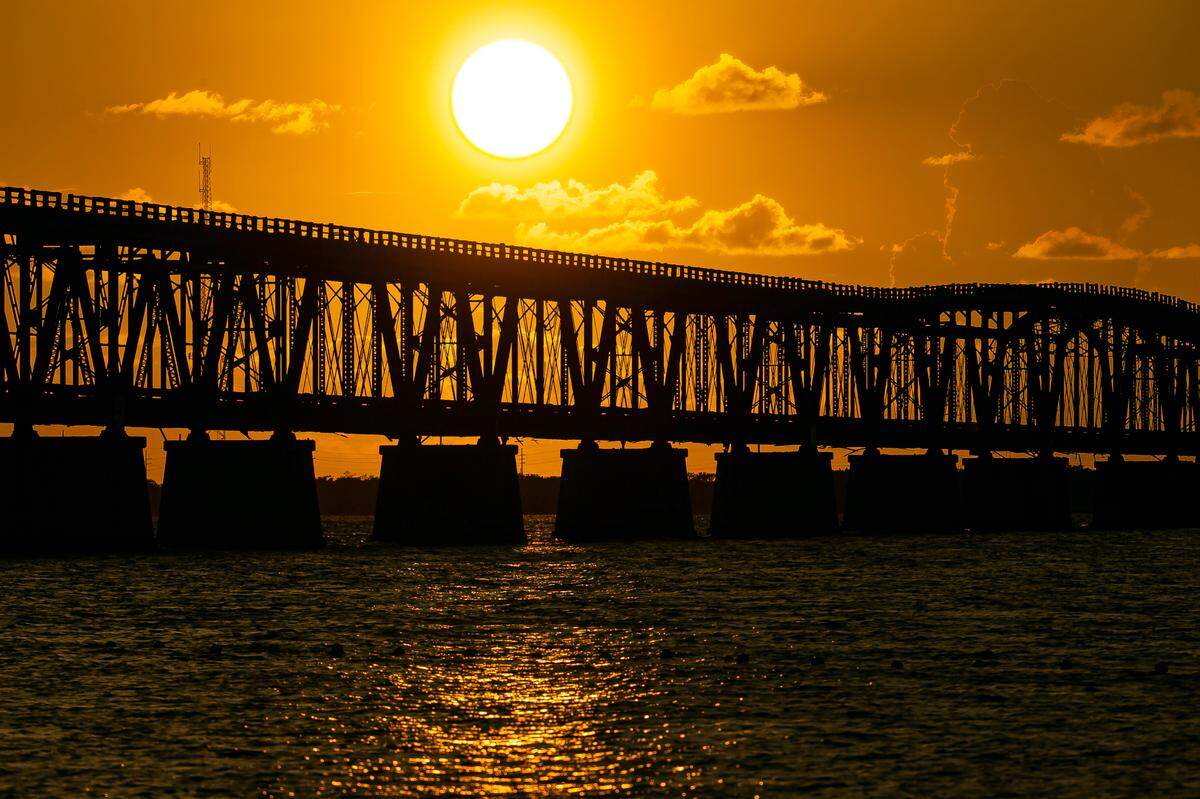
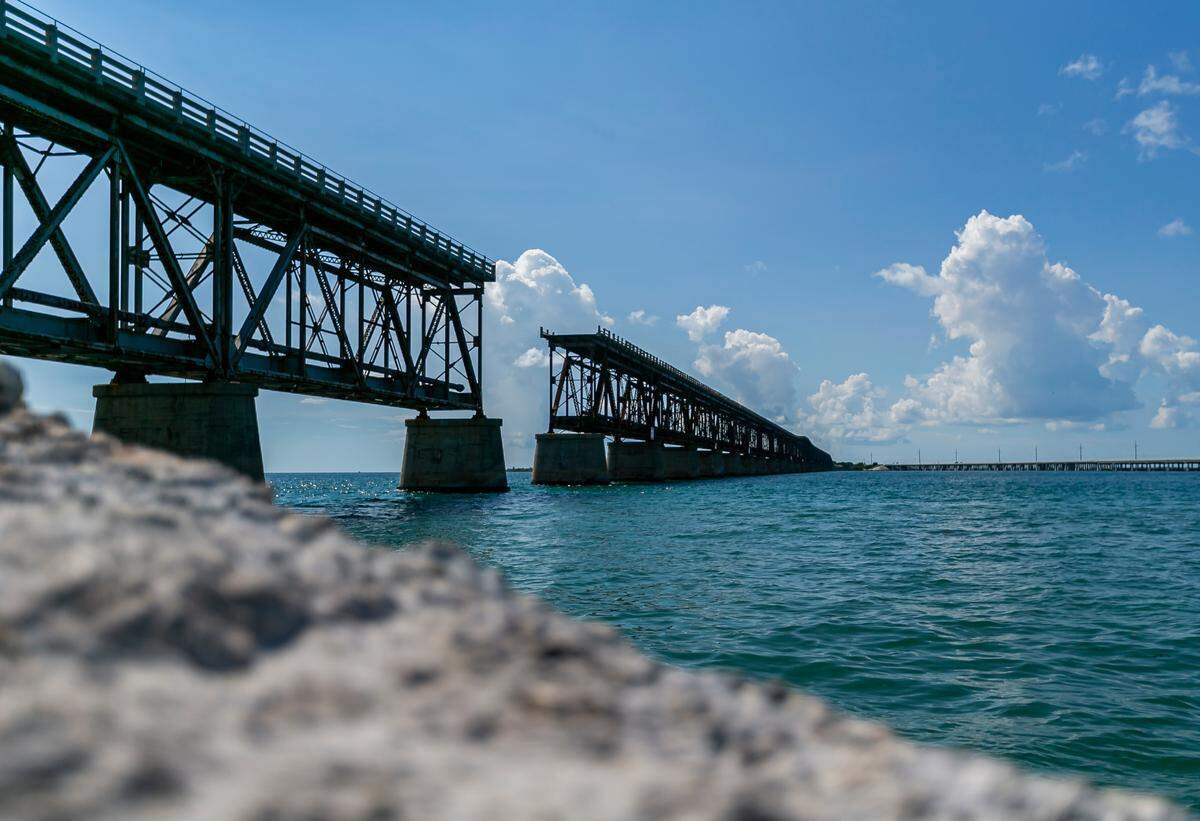
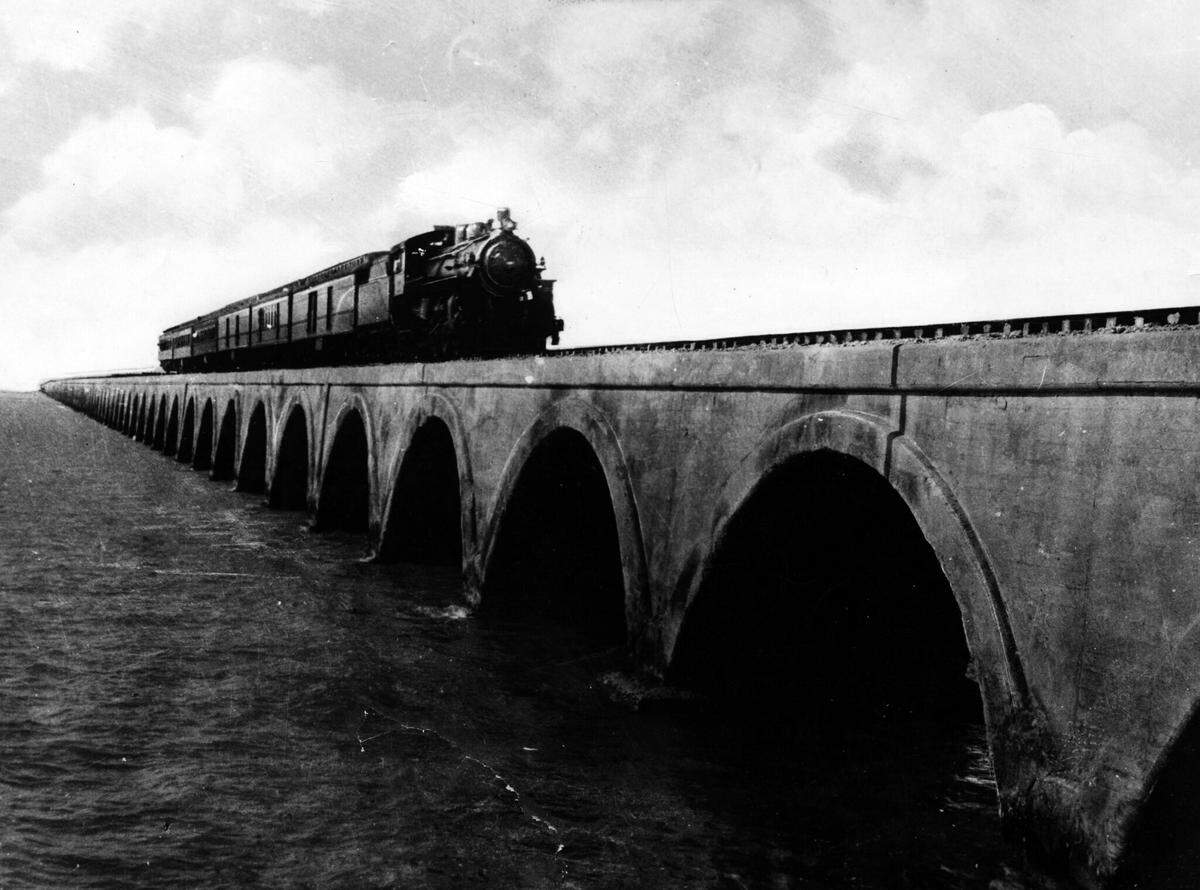
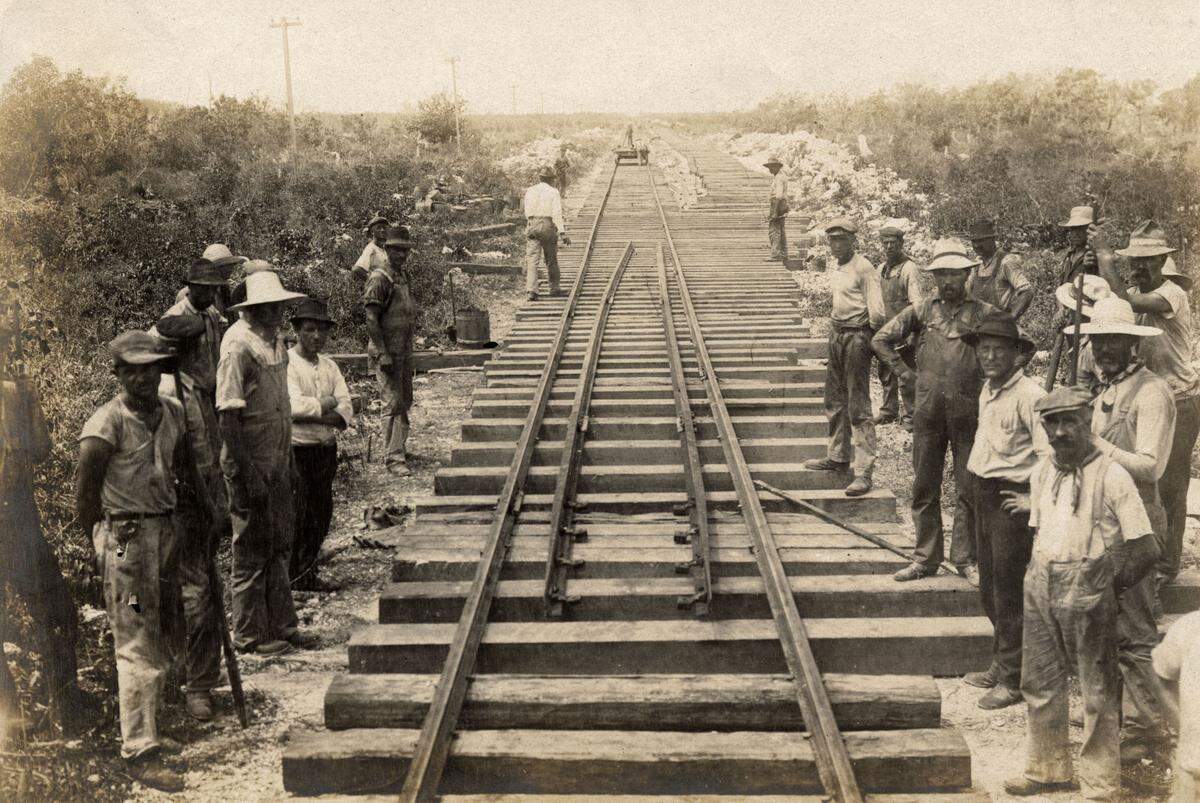
The modern origins of the Overseas Highway begin with the Florida East Coast Railway’s Over-the-Sea railroad to Key West. Construction began in 1904 and was officially finished on Jan. 22, 1912, said Seth H. Bramson, adjunct professor of history and historian in residence at Barry University in Miami Shores. With the line completed, all of Florida’s east coast was connected to the railroad, owned by Standard Oil tycoon Henry Flagler.
The road that exists today lies over right-of-way where Flagler’s railroad tracks were laid, said Bramson, an author and the Florida East Coast Railway’s historian.
Around the time Flagler initiated the building of the Key West extension, the United States took over construction of the Panama Canal from France. The nearest deep water U.S. port to ships passing through the canal was Key West. And although not many people lived in the rest of the Florida Keys, Key West was the largest city in Florida then and stayed that way until around 1920, Bramson said.
Both were contributing factors in encouraging Flagler to extend his railway the rest of the way. Despite some historians’ view that the extension was a financial failure, Bramson said that isn’t the case.
“The extension, for a number of years, did make a profit, and in fact, in the great day of the Florida ‘boom’ of the 1920s, saw three passenger trains and two freight trains operating between Key West and the northern points in both directions daily,” Bramson said.
Flagler never got to see the extension grow to its potential. He died at age 83, just a few months after he rode the first passenger train as it steamed into Key West’s Trumbo Point.
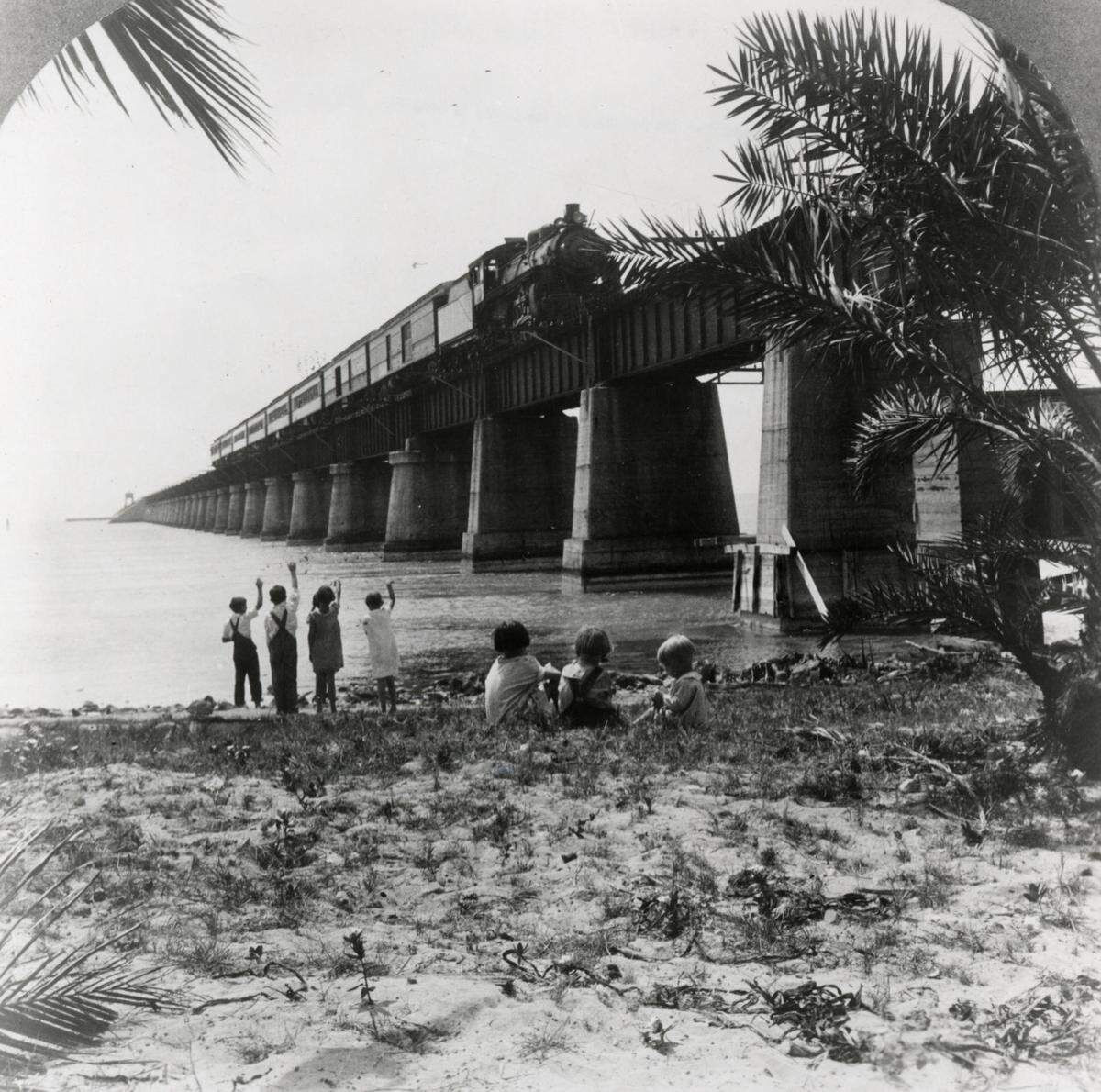
Despite the railway extension’s success, misfortune was on the horizon in South Florida, most notably from what has become known as the Great Miami Hurricane of 1926. The storm caused $100 million in damage and spelled the end of that era’s building boom in Florida.
With the Great Depression just three years out, Flagler’s Florida railroad began to suffer, and by 1931, it was operating in bankruptcy and continued to do so until 1961, Bramson said. It was another huge storm, the Labor Day Hurricane of 1935, that wound up ending the Key West extension.
But that 1935 storm also marked the beginning of the current version of the Overseas Highway.
The Category 5 hurricane — which hit the Keys on Sept. 2, and is the strongest Atlantic storm at landfall on record in terms of barometric pressure — destroyed or severely damaged dozens of miles of tracks. Officially, about 400 people died, most of whom were World War I veterans in the Keys constructing what would ultimately become the highway as part of a Depression-era works program. However, Bramson puts the number at closer to 800 people, because another 400 “were washed out to sea and never found.”
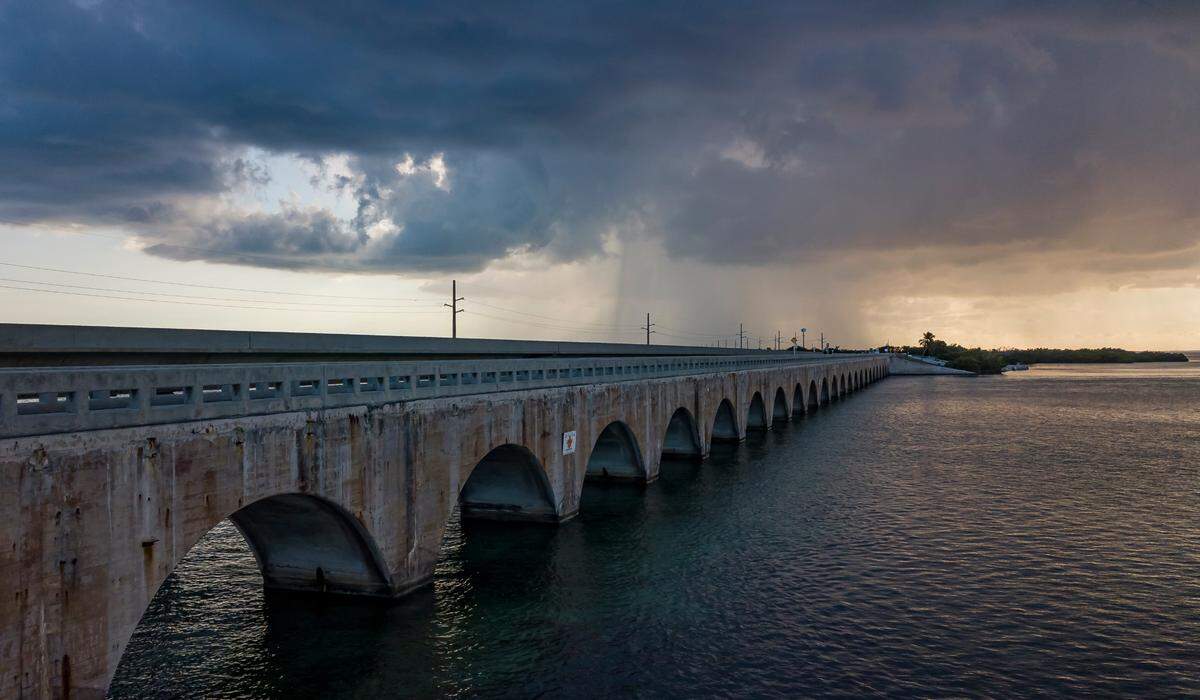
The men were working on bridging the 40-mile gap between Lower Matecumbe Key and No Name Key. They were building a series of permanent concrete bridges that would eventually run parallel to the train and create a more direct connection from Lower Matecumbe to Big Pine Key, said Bertelli, the Keys historian.
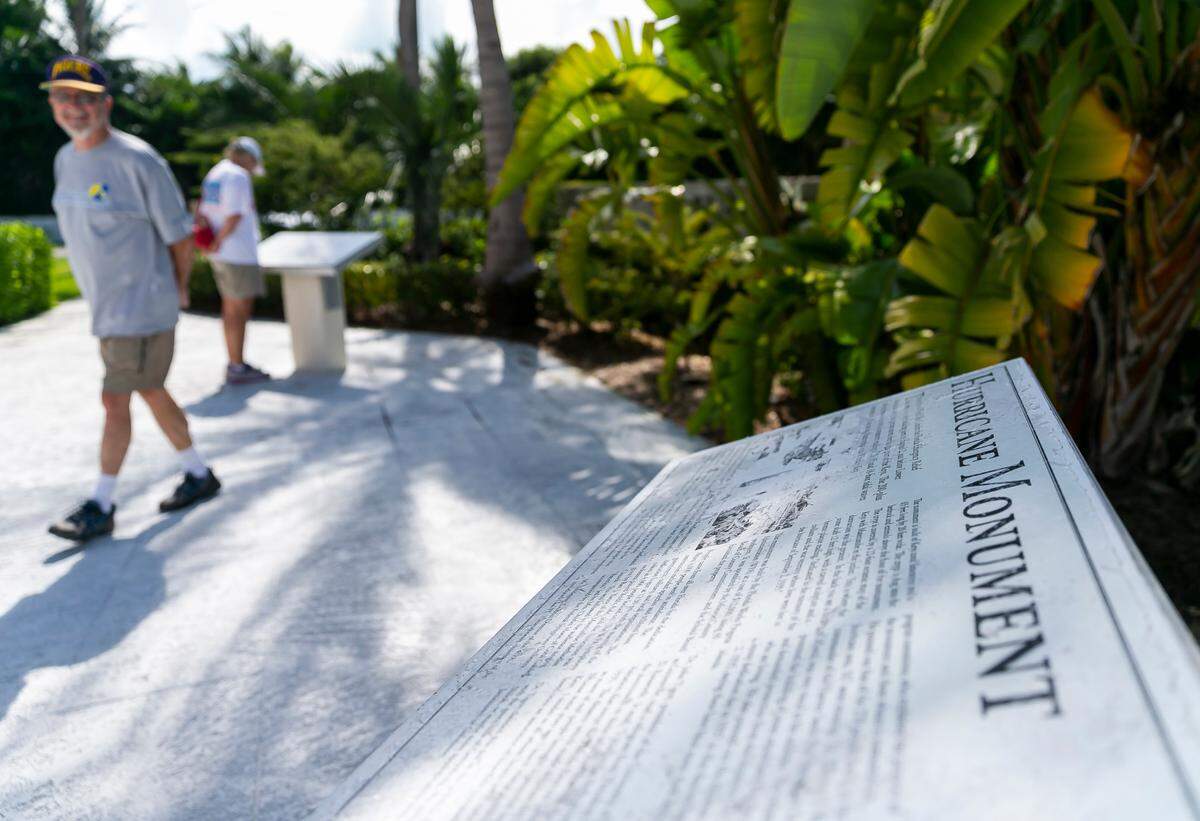
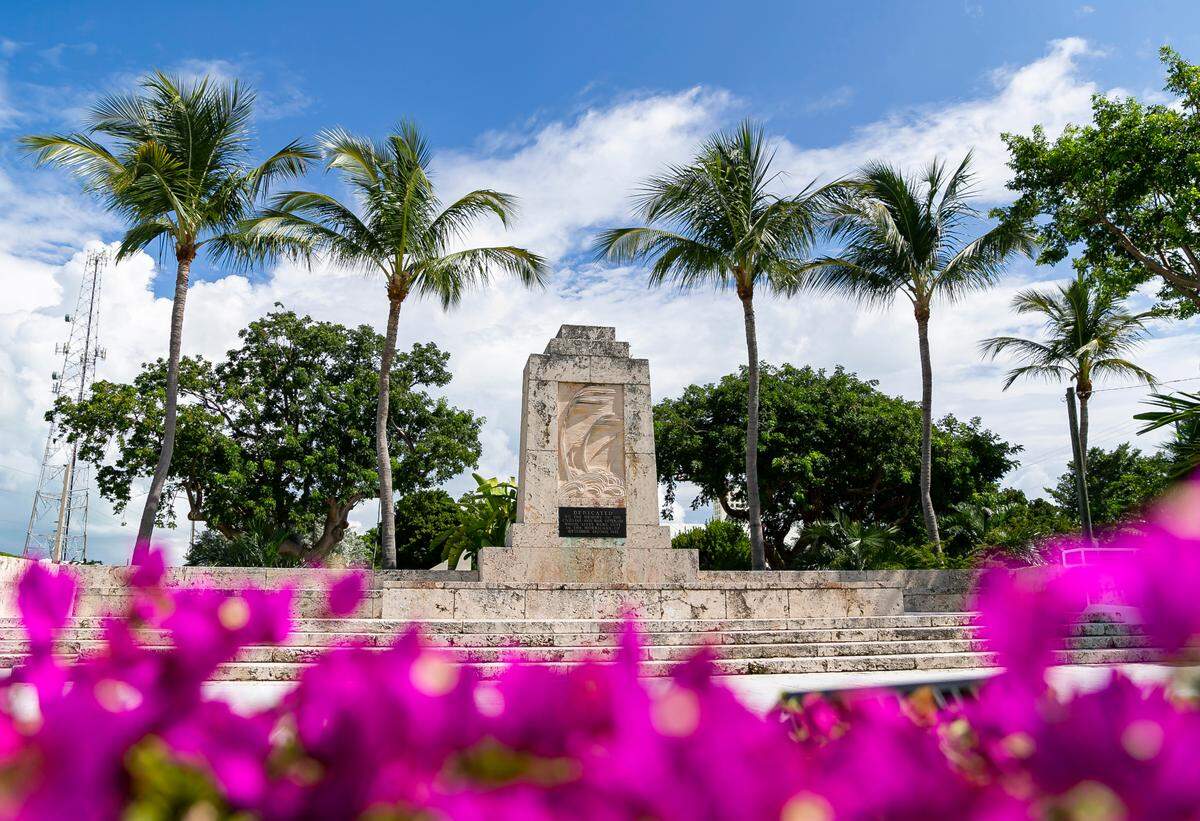
The cremated remains of about 300 of the dead are in a crypt in front of the Hurricane Memorial on Upper Matecumbe Key that honors victims of the storm. The monument was dedicated in 1937.
Although the Florida East Coast Railway continues to this day as a freight line, the company decided not to rebuild its Keys extension in the storm’s aftermath. The extension cost Flagler $50 million to build, but its infrastructure was sold to the state and federal government for $1.4 million, Bramson said.
The end of the railroad was the beginning of the road for the Overseas Highway, with automobile traffic spanning the Keys over much of what was Flagler’s extension, Bertelli said.
“Because Flagler’s bridges were so well constructed and because they largely withstood the hurricane’s fury, many of them were widened to accommodate automobile traffic,” he said. “Railroad tracks were repurposed to use as guard rails on the new bridges. This is the second incarnation of the Overseas Highway, opened in 1938.”
The highway that most resembles today’s road opened to traffic in 1944, according to Bertelli. That includes the 18 Mile Stretch of U.S. 1 that leads in and out of Key Largo from Florida City on the mainland. Engineers also straightened some “twists and turns” in the Lower Keys, further incorporating the railway’s right-of-way.
“Part of the reason for this was that the Navy needed to get heavy equipment from the mainland to bases at Key West, and those big operating vehicles were unable to navigate some of the tighter twists and turns on the highway,” Bertelli said. “Bridges too, were reinforced to accommodate the heavy payloads.”
At this point, U.S. 1 was now linked from Maine to Key West.
On the Seven Mile Bridge
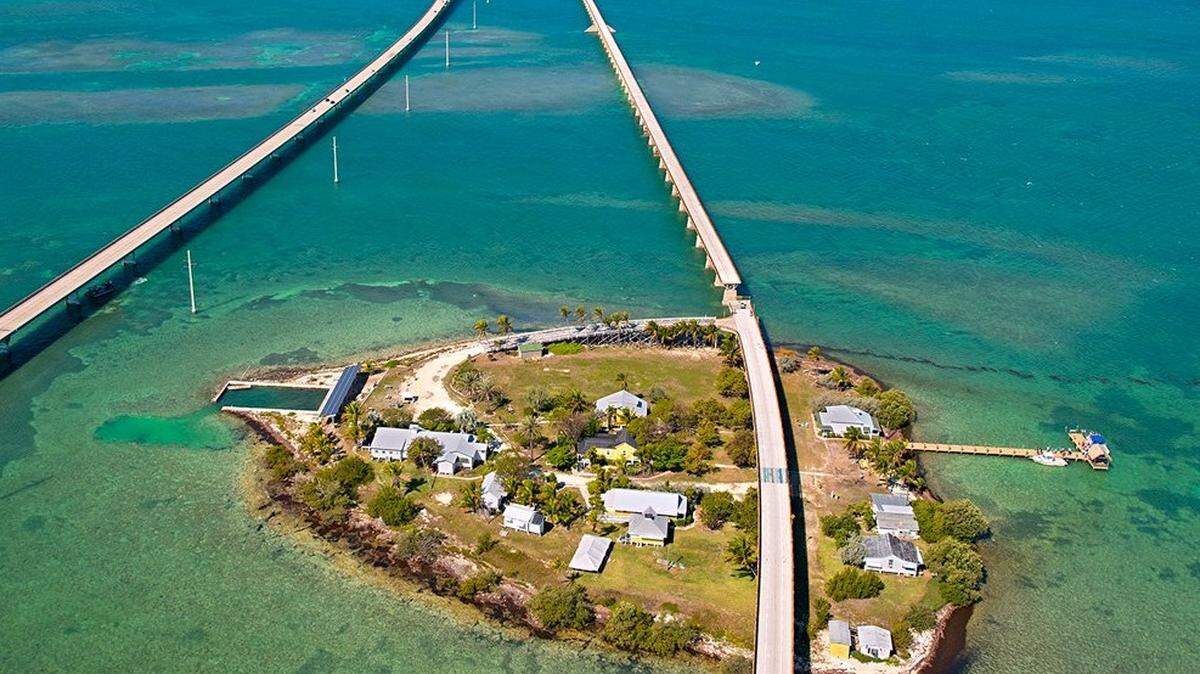
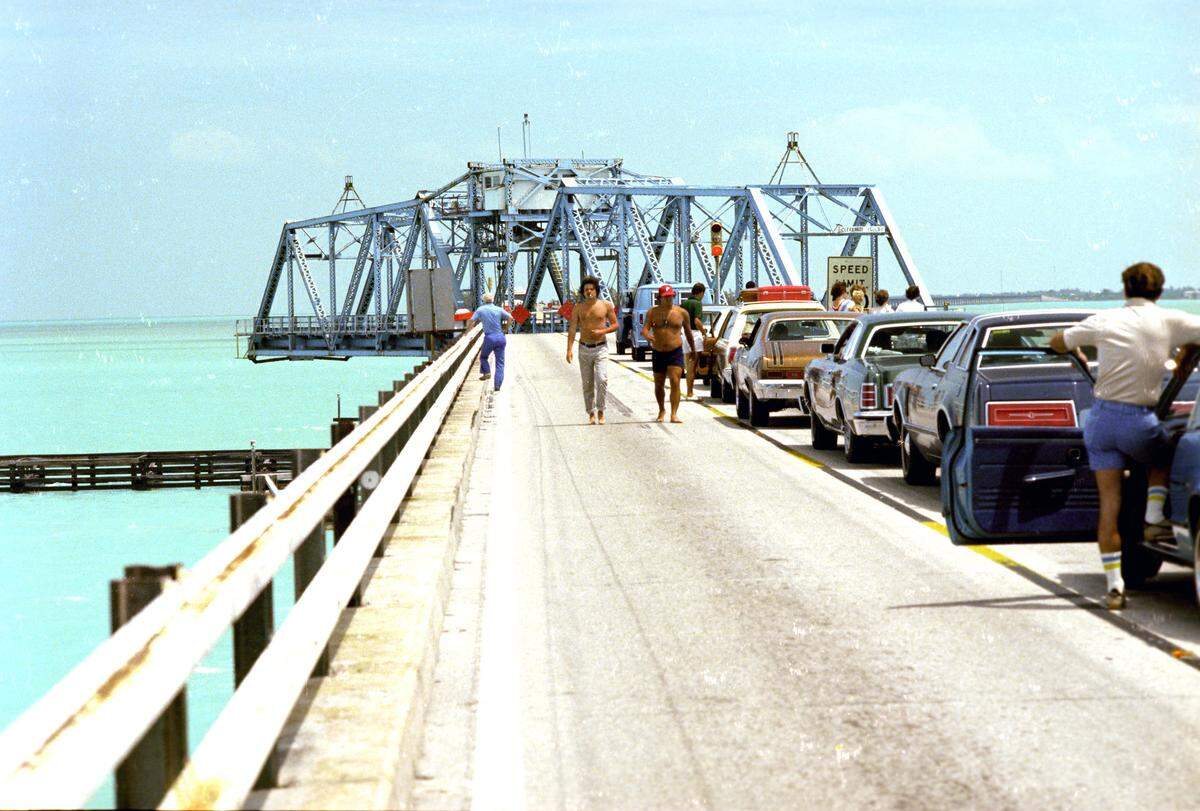
The next major project along the Overseas Highway was tearing down the old Seven Mile Bridge and building the current span, which connects the Middle Keys city of Marathon to Little Duck Key in the Lower Keys.
The new bridge cost $200 million by the time it was completed in 1982.
On the 18 Mile Stretch
Next came the overhaul of the 18 Mile Stretch. Beginning in 2005, the Florida Department of Transportation began an ambitious $300 million project on the road to make traffic along that portion of U.S. 1 both safer and flow more smoothly.
Before the project’s completion in October 2011, an average of 10 to 13 people were killed in car crashes on the Stretch every year. Most of those were head-on collisions because cars regularly passed one another using the oncoming traffic lane.
The Stretch now has a three-foot high concrete barrier that separates northbound and southbound traffic. The shoulders were widened for both safety reasons and to hasten traffic in the event of a hurricane evacuation.
The project was initially met with opposition from some local people who worried about more tourists coming to the Keys and environmentalists concerned about the destruction of mangroves alongside the highway. One activist went so far as to chain himself to the old bascule drawbridge that crossed Jewfish Creek into Key Largo.
The focal point of the project was the replacement of the drawbridge with a 65-foot high, 1.25-mile-long fixed bridge. The $93 million project was completed in May 2008, three years before the entire project was finished.
Suffering on the Overseas Highway
Carolyn Guarini, who lives on Big Pine Key in the Lower Keys, has commuted on the highway for years. She moved to the Keys in 2003 from the Northeast, and for several years lived on Cudjoe Key and worked in Key West at a bar right off Duval Street.
Now she produces the “Hoebee in the Afternoon Experiment” show on WAIL 99.5 at a studio on Sugarloaf Key, about 15 miles from her home on Big Pine.
“I’ve seen everything, from a naked spring breaker running down the middle line by Sugarloaf Lodge,” Guarini said, to “picking up a lady on the side of the road to drop her off at the sheriff’s department because her son was trying to kill her.”
She was even forced off the road during a police chase. On May 24, a man fleeing Monroe sheriff’s deputies forced cars off the road, reaching speeds of up to 100 mph, recklessly passing cars and driving on the shoulder. He was caught and arrested.
“I went home and pounded a beer,” Guarini said.
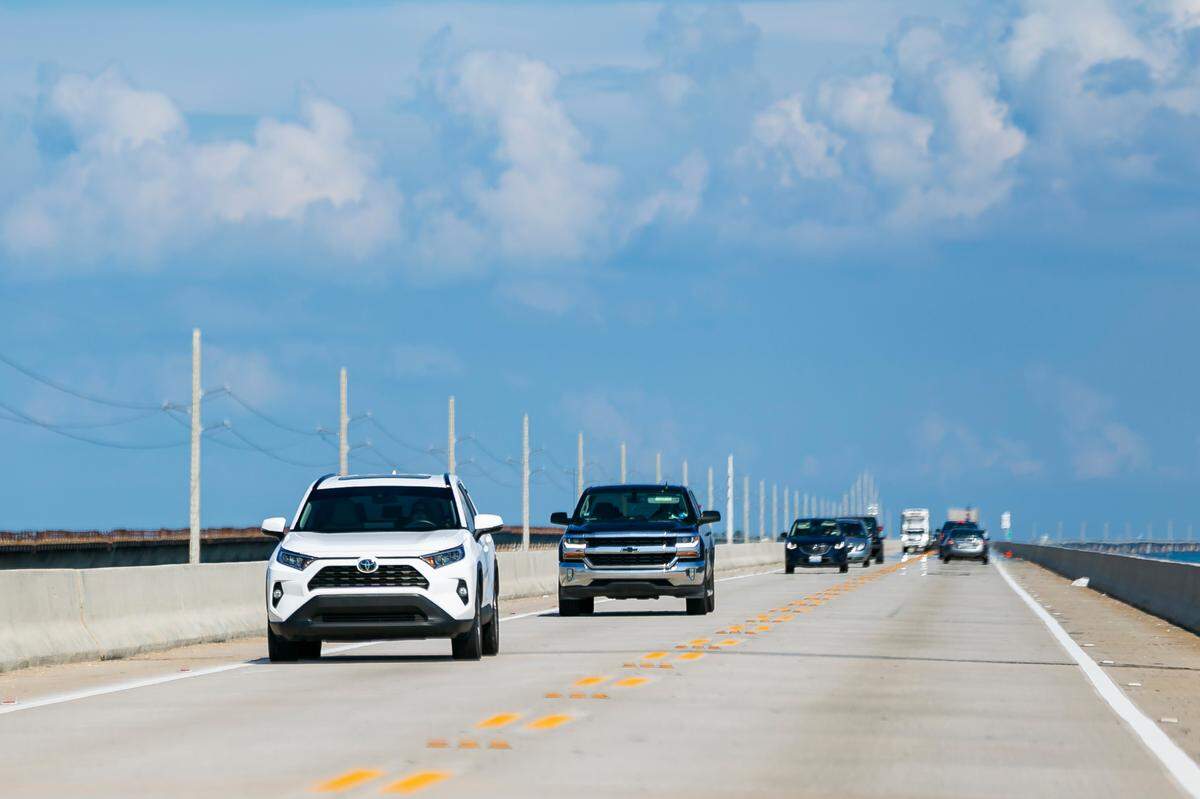
Yes, the road is a precarious place.
“I see people pass constantly on that road unsafely and over and over and over again,” Guarini said.. “It just seems like a bunch of idiots that drive that road who are always in a rush, from tourists to locals.”
Even deputies who patrol the Overseas Highway aren’t spared from reckless drivers.
Sgt. Greg Korzen, traffic unit supervisor for the sheriff’s office, was on a marked motorcycle a few months ago in the Upper Keys when a car passed him on the shoulder of the road.
“It was a two-lane highway,” Korzen said. “They went around me.”
Cali Roberts, executive director of Womankind Health in Key West, lives on Big Pine Key, and has a 45-minute commute in the morning. After 14 years of life on the highway driving her two daughters to schools in Key West, Roberts now has a teenage daughter who drives herself to school down U.S. 1.
“I just try to warn her,” Roberts said, recalling watching people go off the road. “You really have to pay attention.”
“It definitely is frustrating,” her husband, Brian Roberts, said. A musician who plays often at Sloppy Joe’s bar in Key West and also at events across the Keys, he’s on the highway almost every day. “The road is maxed out.”
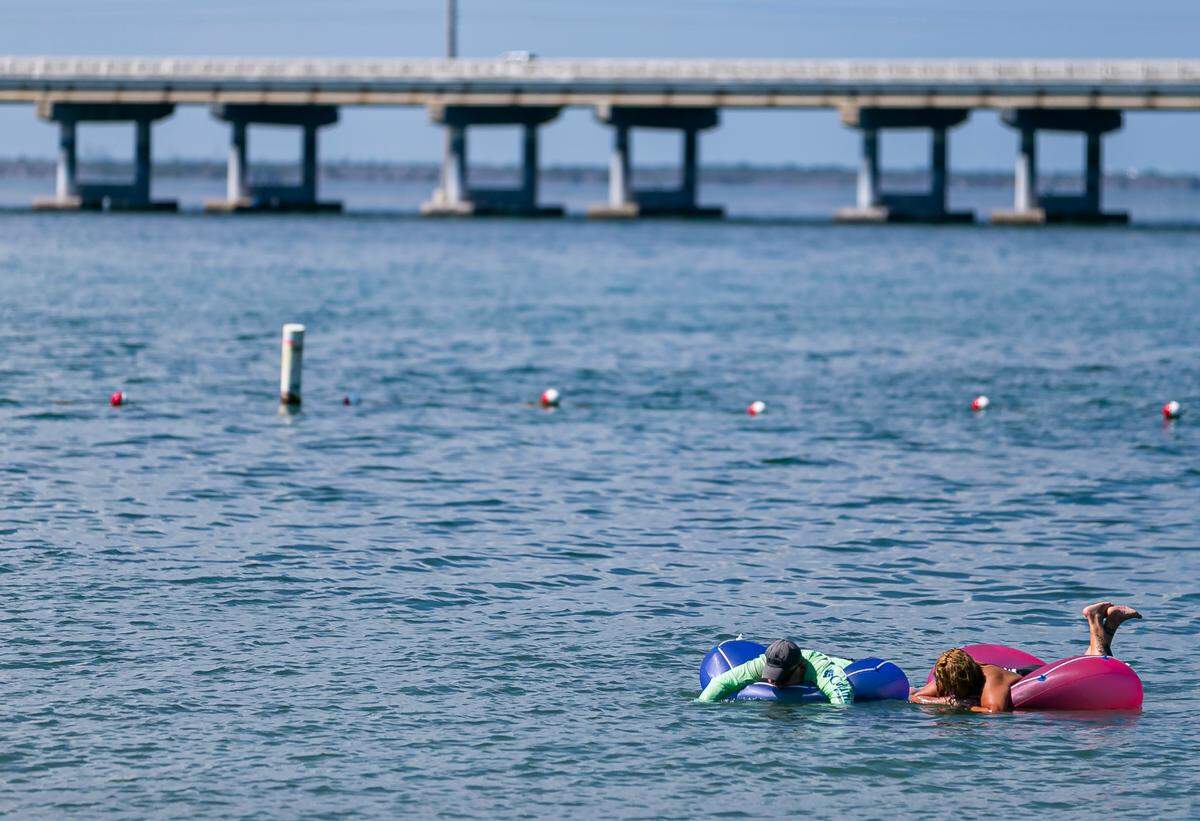
At one spot in Key Largo, he said traffic slows down as drivers spot people in the water.
“If there is a boat in the water with a woman in a bikini, there is a massive backup every single time.”
End of the road
U.S. 1 hits Key West and turns into a city street: four-lane North Roosevelt Boulevard. Then it soon becomes the path through the quaint neighborhoods of Old Town.
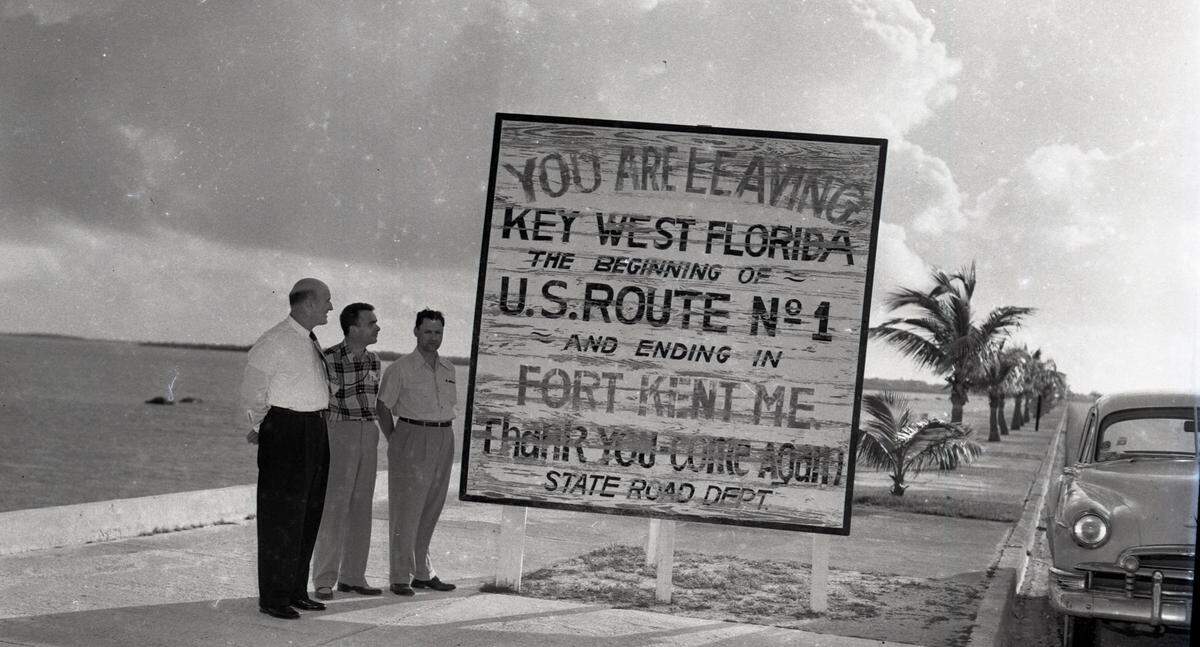
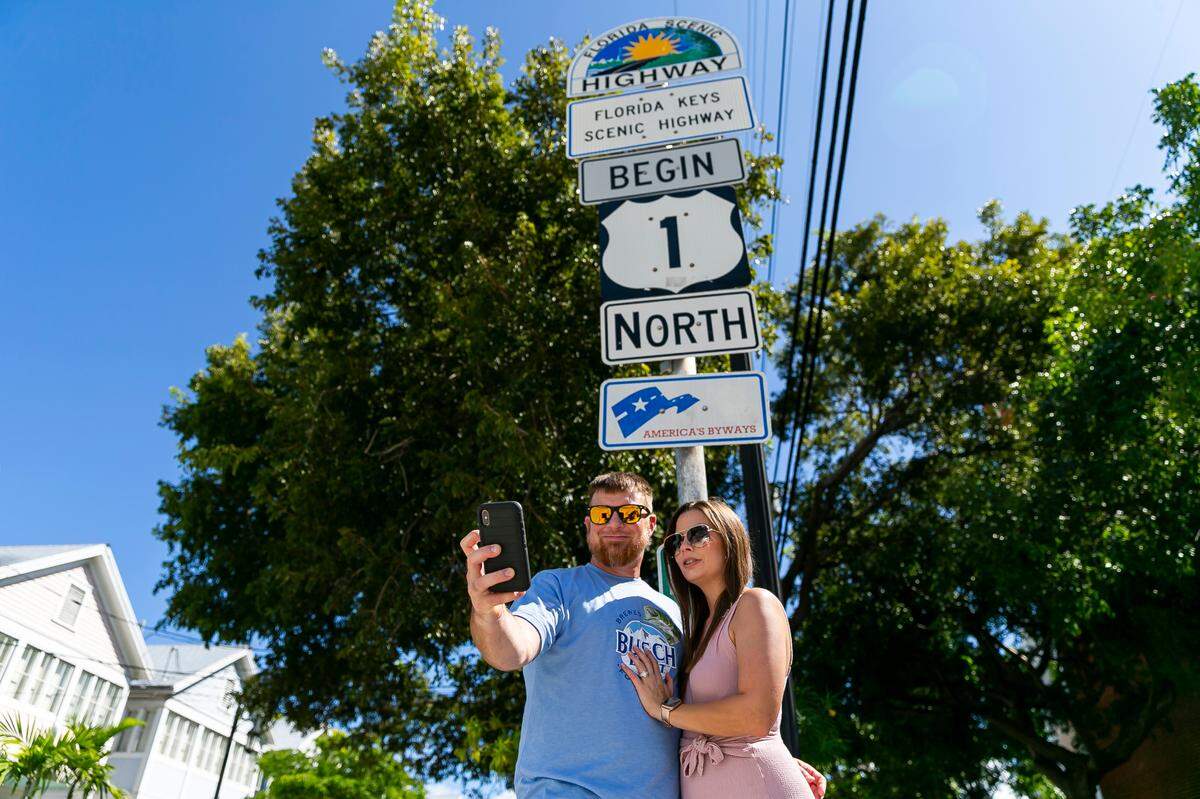
Key West is where the Overseas Highway ends, or begins, depending on where you’re headed. The mile marker zero signs are at the intersection of Whitehead and Fleming streets. Passersby stop for selfies.
Meanwhile, this part of the road is a symbol for people searching for a fresh start, a second chance, a peaceful ending.
“The tragedy of Key West is people come here and sometimes they’re at the end of their road, literally,” said Andy Thurber, a 61-year-old Key West native and an acclaimed painter who has been capturing the island’s residents and street scenes for 40 years.
“They’re at the end of their wits and the end of the road at the same time.”
This story was originally published October 24, 2021 at 6:00 AM.

.JPG)