
How do you run a business along U.S. 1 in the Florida Keys? It takes survival skills
Along the Overseas Highway, businesses line the only way in and out of the Florida Keys.
You may see U.S. 1 as the long road to where you’re going. But this is Main Street for the communities that dot the island chain.
Restaurants, resorts and hotels. Dive shops and watersports companies. Grocery stores and seafood outlets. Post offices and government buildings.
For many, the roadside address means high visibility and more tourist dollars.
The market
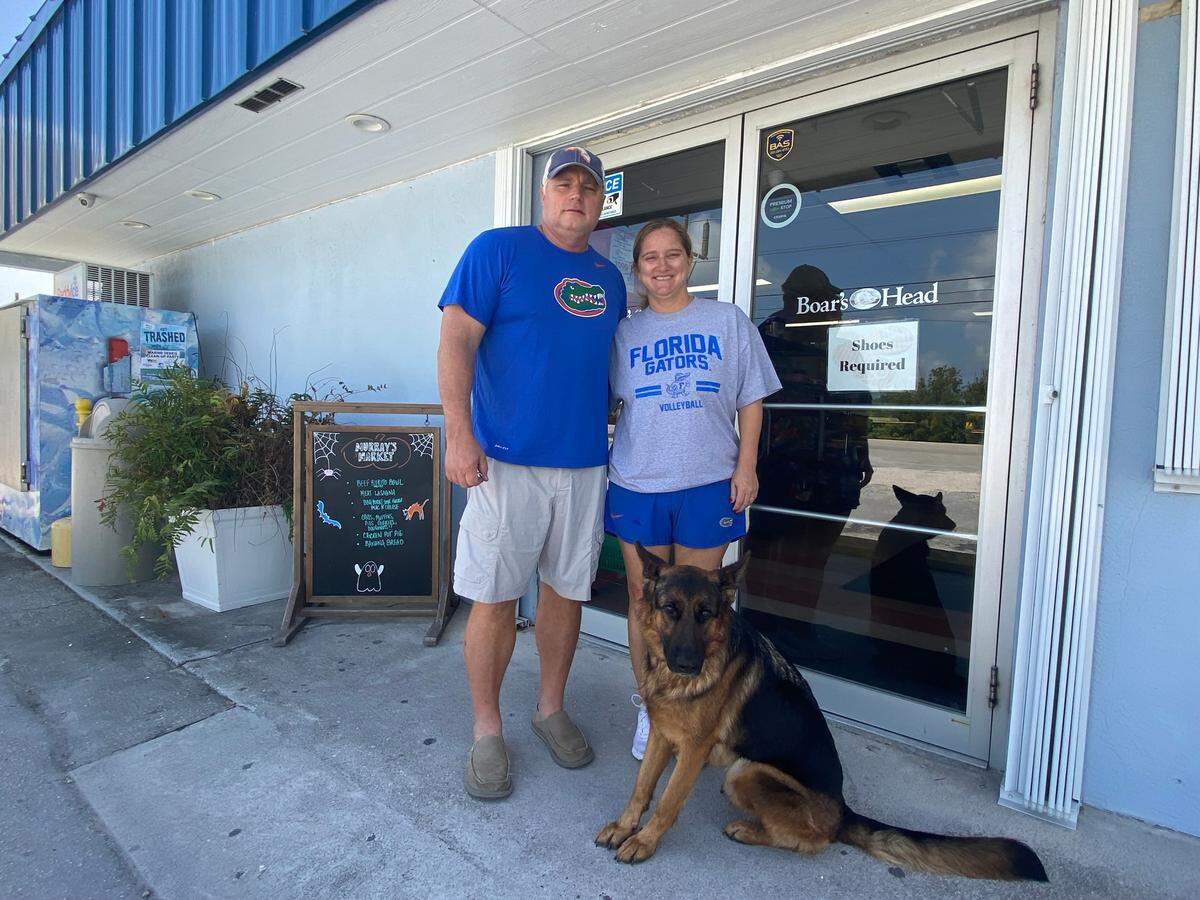
Drew and Ginny Haggard run Murray’s Market on Summerland Key, a busy spot for locals they know by name, along with a steady number of tourists.
Murray’s also doubles as a Keys welcome station. Visitors pop in nearly every day to ask for recommendations.
“They’ll ask us where to go eat; they’ll ask us where to go fishing,” Ginny said.
The store has been in Drew Haggard’s family for 30 years after his parents, Jeri and Jay, bought the market from the Murray family after moving to the Keys from Lafayette, Indiana.
The Haggards say U.S. 1 is the best place to be for a business like Murray’s.
“Just in terms of ease, telling somebody where we are, visibility. I wouldn’t choose to be anywhere but on the highway,” Drew Haggard said. “As a business person it works pretty well.”
The grocery, which has about a dozen employees, offers homemade baked goods and a meat and deli counter. And of course, they sell bait. Manatees appear regularly in the canal behind the store.
“Being off the road is great,” he said. “We get a lot of people that just come in and want to talk, say hi. Everybody’s in a good mood and happy to tell you where they’re from.”
The health food store
Like Murray’s, other businesses have become fixtures off U.S. 1.
Marney Brown opened the Good Food Conspiracy, a health food market with a juice bar and deli, on Big Pine Key almost 40 years ago off the highway at mile marker 30.2.
“We’re the vortex of U.S. 1,” she likes to say.
“It’s better than being in the background, off the road,” she said of the location. “You have to be on the road with a business like this.”
Brown wishes she were a little bit closer to the highway, which at times brings her opportunities to help passersby. She’s had bicyclists come in after a spill. Once after a fender-bender, she offered the driver a flower remedy — a glass of water with drops of flower essence meant to ease stress.
“You could feel the anxiety of the person driving the car,” Brown said. “The next day he sent a bouquet of flowers.”
The highway on Big Pine is also known for attracting the endangered Key deer.
“We’re always chasing deer back to their habitat,” Brown said. “The deer come out sometimes. They want to cross the road.”
The restaurants
Some businesses light up a piece of the highway.
“We rely on curb appeal,” said Chad Helmke, operations manager for Boondocks, a landmark restaurant on Ramrod Key. It features an 18-hole miniature golf course with several fountains and two waterfalls.
“People pull in just because of how things look on the outside,” Helmke said. “There’s not a whole lot going on in this area. It’s almost like we’re the Disneyland of Ramrod.”
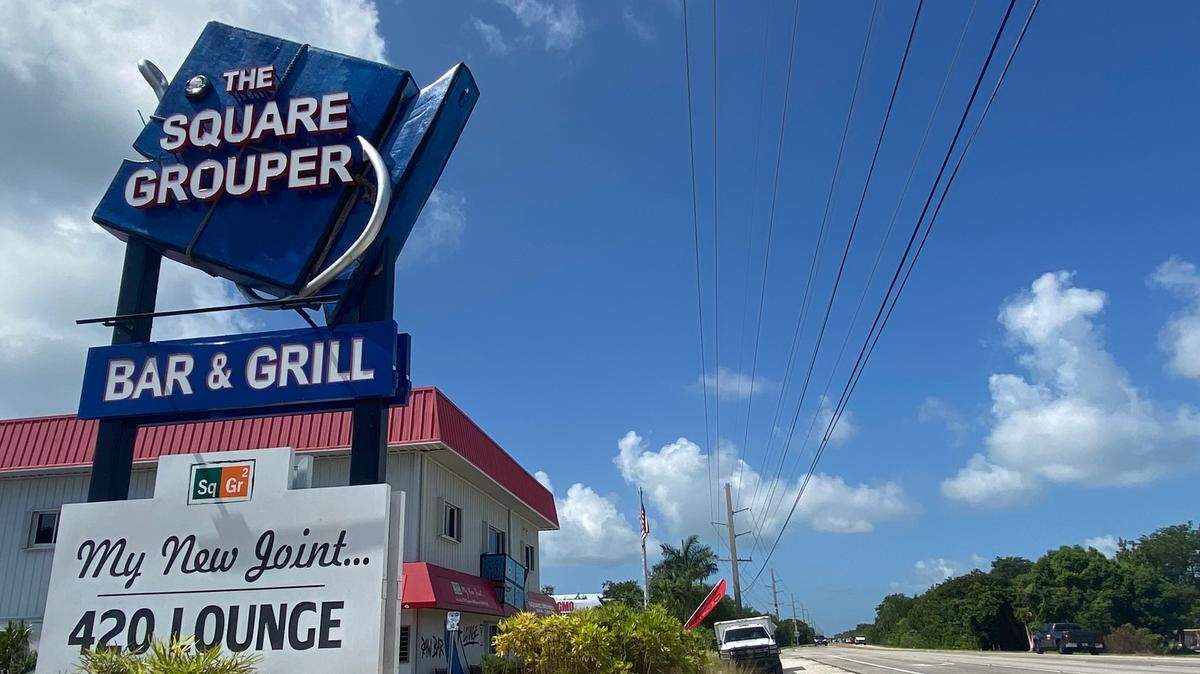
The Square Grouper restaurant on Cudjoe Key, whose name is what people in the Keys call a bale of washed-up marijuana, has been around for 19 years. Facing the highway at mile marker 22.5, the Square Grouper, which also has an upstairs cocktail lounge and tapas bar called My New Joint, is a busy spot.
The proximity to U.S. 1, though, led to a devastating crash. In June 2013, a Miami Gardens man lost control of an SUV, left the road and crashed into a corner of the restaurant. One of the four passengers, a 12-year-old boy, was killed.
It was a rare incident for the area, but one that left owner Lynn Bell shaken.
“That was the worst day ever,” Bell said.. “It was life-altering for my cooks and myself. We were literally all there helping them. It was tragic.”
The resort
Over the course of the COVID-19 pandemic, the Keys have seen an increase in business. Local leaders say it’s because so many other destinations shut down. But, with the exception of the two months when Monroe County put up two checkpoints to keep visitors out between late March and early May 2020, the Keys have been open for business.
From Key Largo to Key West, that has meant more people on U.S. 1 than most locals can remember, and also more money coming in, particularly in what are normally the slower summer months.
“Traffic is definitely worse, and I worry that tourists will eventually tire of being stuck on U.S. 1 for hours. But so far, it doesn’t seem to have had a negative effect,” said Tanya Cleary, owner of the Dream Bay Resort in Key Largo.
“We’ve been busier than ever, although that may just be because of the pandemic and restricted travel to other countries. Hopefully, traffic will ease up some once we’re through this.”
Miami Herald/FLKeysnews.com staff writer David Goodhue contributed to this report.
This story was originally published October 24, 2021 at 12:00 AM.
%20Cropped%20(1).jpg)