
What happened inside this concert venue? A look back at the Sportatorium
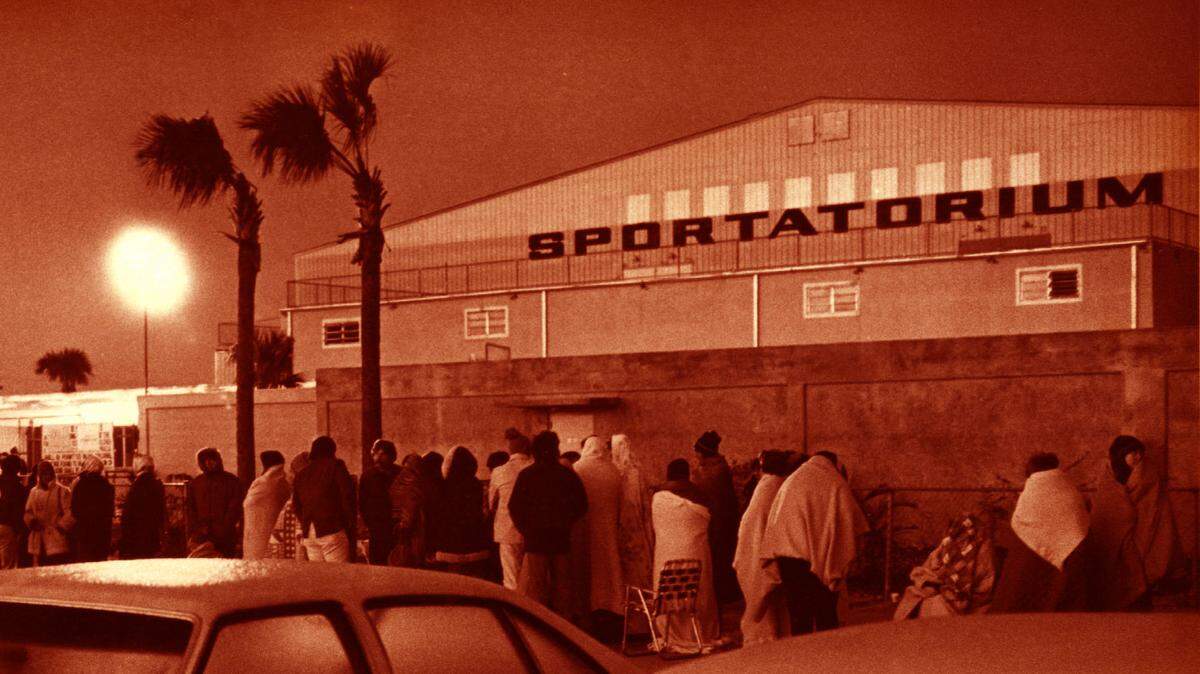
South Florida is filled with the ghosts of concert venues past.
Do you remember Dinner Key Auditorium in Coconut Grove? What about Pirates World in Dania Beach? Soon, the Knight Center in downtown Miami will likely join them as just a memory.
Then there’s Miami Marine Stadium, closed for decades as it waits in limbo for a major renovation,
Major pop and rock concerts today play at Kaseya Center in downtown Miami, Hard Rock Live near Hollywood, Hard Rock Stadium in Miami Gardens, Amerant Bank Arena in Sunrise.
But no concert venue in the region is more beloved or loathed as the Sportatorium.
The hulking barn that was known less for sports than for its raucous rock concerts in the 1970s and ‘80s.
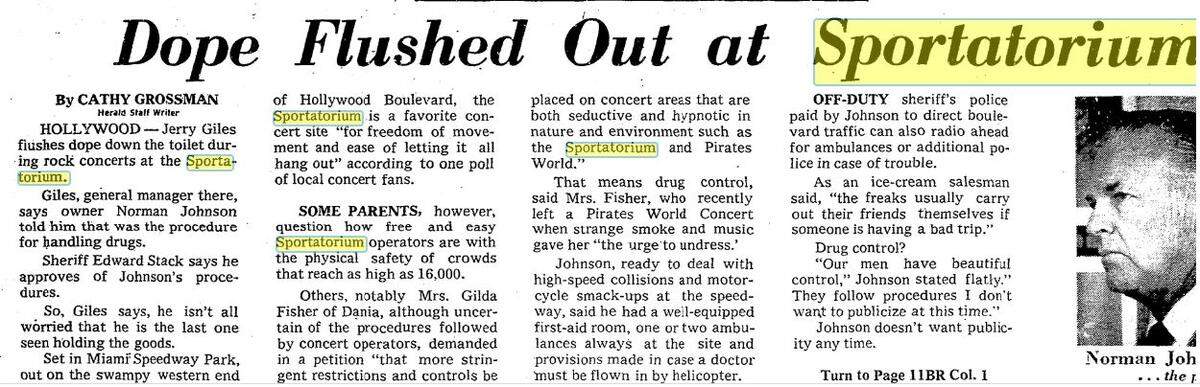
There was the music. And there were other things.
At some shows, security guards confiscated piles of drugs, alcohol and weapons from concertgoers, and police occasionally hauled away lawbreakers in the crowd.
From 1970 to 1988, the Hollywood Sportatorium, actually in Pembroke Pines, was the place to catch rock’s biggest acts. The 15,500-seat arena was once in the middle of nowhere, at the end of a two-lane road.
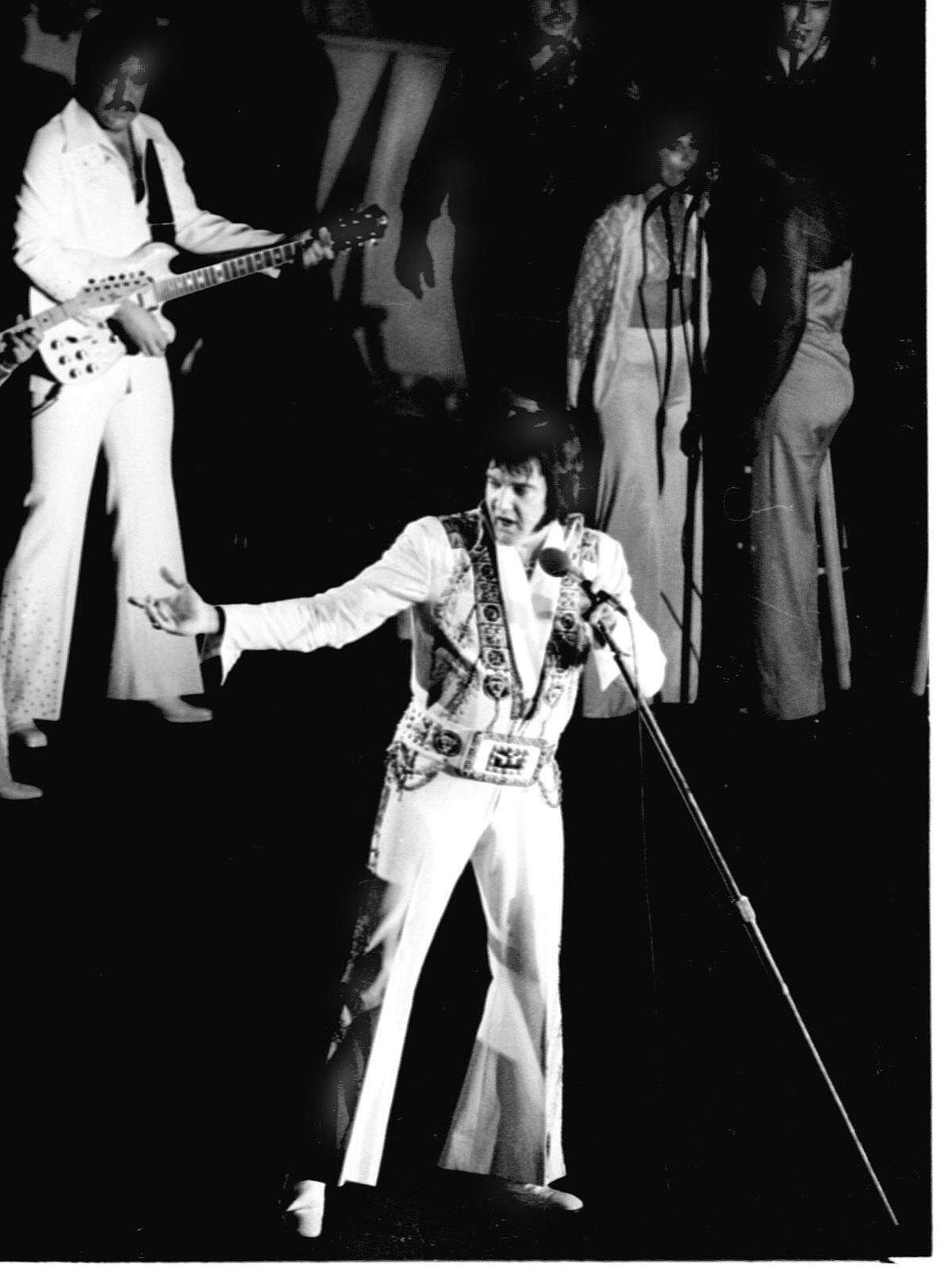
Who played there? Just about everyone. Elvis Presley, Led Zeppelin, and Kiss in the ‘70s. Fleetwood Mac, Styx, the Grateful Dead, Tina Turner, Whitney Houston in the ‘80s.
It was hot. Even after air conditioning was installed in 1976, the arena was sweltering.
The final show in 1988 was a benefit concert for the Fraternal Order of Police, featuring country music’s Highway 101. That was when the Miami Arena opened, replaced just 12 years later by AmericanAirlines Arena, now known as the Kaseya Center.
By 1993, the Sportatorium was dust, replaced by homes in the Pembroke Isles subdivision just north of Pines Boulevard.
But the music plays on in our memories. So, here is a look back at the Sportatorium from the Miami Herald archives:
The end of the Sportatorium
Published Oct. 17, 1993
They’ll bring the house down for the last time this week at the Hollywood Sportatorium.
It won’t be Elvis or the Grateful Dead or Tina Turner rocking the decrepit 16,000-seat arena on Pines Boulevard.
A demolition crew is now on center stage. Five guys with some trucks and small bulldozers will probably flatten the hall by late Tuesday afternoon, said Dave Kanzler of Omega Contracting, which is doing the job.
Omega cleaned concrete and wood out of the arena Saturday so workers can cut steel support beams and let the roof crash down early this week. Omega will recycle the steel.
So far, the job has been routine. Kanzler’s crew has uncovered no interesting souvenirs in the arena, which hasn’t hosted a show since 1988.
“It was pretty well stripped when we got here,” Kanzler said.
The last hope for salvaging the arena came from Pembroke Pines Mayor Charles Flanagan. He suggested last January that the tin shed might be a perfect place for Wayne Huizenga’s new professional hockey team.
It wasn’t to be. A state task force tried to push the site as a processing center for Haitian refugees. Other suggestions in recent years included turning the hall into a National Guard training center, a jail and a backdrop for movies starring giant lizards.
Instead, the Sportatorium and the adjacent drag strip will become a 1,257-home subdivision, Lakes of Western Pines.
Ghosts of the Sportatorium
Published June 16, 1991
When Nancy Schneider describes her job at the Hollywood Sportatorium in western Pembroke Pines, she calls herself “the keeper of an empty building.”
The Sportatorium, which over the past two decades played host to everything from Grateful Dead concerts and Striker soccer matches to Jehovah’s Witness assemblies, closed its doors Oct. 21, 1988, with the twang of a country music concert.
Since then, Schneider, who has worked there 11 years, hasn’t had much to do weekdays except unlock doors and flip on lights for potential buyers of the huge, barn-shaped building on Pines Boulevard.
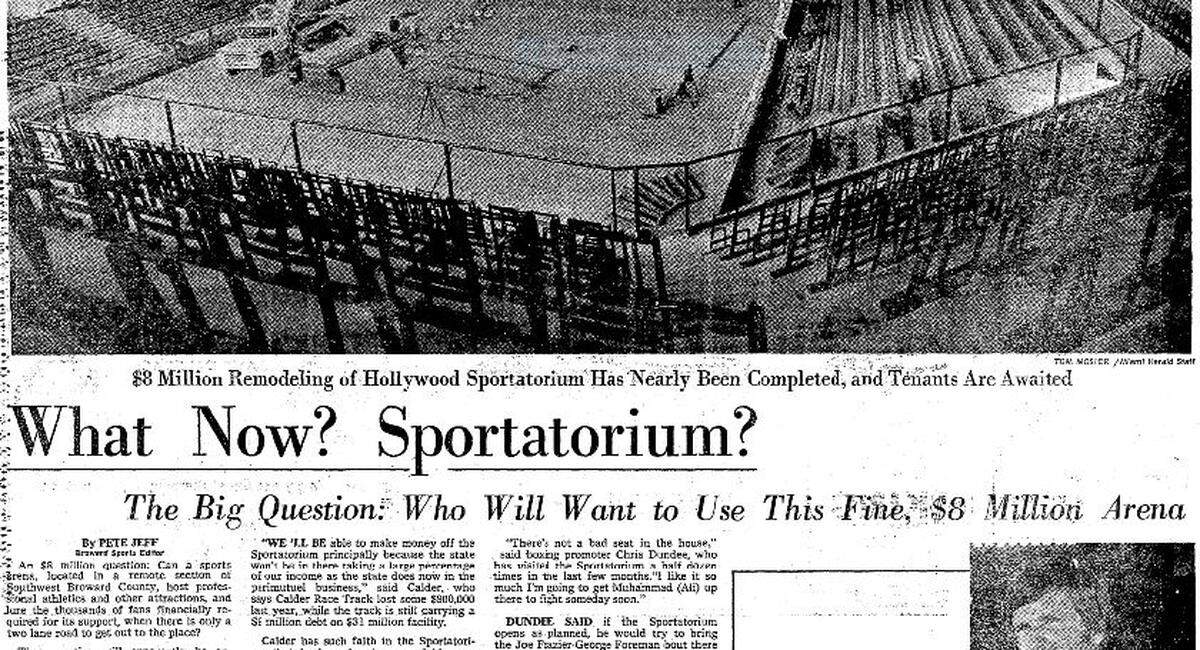
It may not be that way much longer. Come October, the sound of a puck skimming across ice and players crashing into the boards surrounding a hockey rink may shatter the 2 1/2-year silence.
Richard Gerry, owner of Florida’s franchise in the newly formed Continental Hockey Association, announced last week he has negotiated a lease/buy-back package that will give him ownership of the 24-acre Sportatorium site by September. Gerry, 33, said at a news conference Tuesday that he is putting up $6 million of his money to prepare the building for play in October, when teams from the league are supposed to begin playing 80-game schedules.
If Gerry’s plans for his team come to pass, the Sportatorium will return to what it was designed to be when it opened some 21 years ago - a sports complex and hockey arena.
The Sportatorium, owned by the Stephen A. Calder estate whose executor is Hort Soper, closed when the Miami Arena came on the scene. The thinking was that the new arena would sap most of the big shows that would have played the Sportatorium.
Since the Sportatorium closed, the National Guard considered using it as a training site, and the Broward Sheriff’s Office suggested the cavernous hall would make a dandy jail. The city of Pembroke Pines bristled at both suggestions -- single-family residential homes are planned for almost all of the 400 acres around the Sportatorium. But a hockey team appears to be something the city can live with.
“I think it would be nice entertainment for the area,” said Pembroke Pines Mayor Charles Flanagan, a fan of the Boston Bruins of the National Hockey League. “It’s a lot better than some of the things I’ve heard of over the years - the jail and the National Guard.”
Flanagan said he has received about 10 calls from residents supporting the team, but he is taking a wait-and-see stance on Gerry.
“We are not just going to give him a key to the city,” Flanagan said. “We want to look at what he has in mind in the way of renovations.”
Daniel L. Lavrich, a consulting engineer for Gerry, said that fewer than 100 seats would have to be removed to make way for the penalty boxes. With the ice rink installed, the Sportatorium will seat about 14,000 people, he said. The building already has a network of pipes for an ice rink, but Lavrich said new pipes will be installed on top of the current concrete floor and then a layer of concrete would be poured on top.
Renovations are the key to the deal, said Walter Hollander of Silver Builders, one of the partners in SilverLakes, a 2,400- acre residential community just west of the Sportatorium. Hollander is a managing partner for the joint venture involved in the Sportatorium deal, which includes Gerry, Silver Builders and the Calder estate.
Gerry’s option to buy the Sportatorium is conditional on his making the behemoth pleasing to the eye, improving the appearance of the building, the parking lot and the landscaping, Hollander said.
Hollander wants to make sure potential home buyers don’t view the Sportatorium as a neighborhood eyesore. If he’s not satisfied with the improvements, the deal is off, he said.
Even if the deal with Gerry were to fall through, hockey players still might play at the Sportatorium one day. Hollander said his plan then would be to court established teams in the National Hockey League.
“Once there is a decent skating rink in the area,” Hollander said, “that would be a very big plus.”
The Sportatorium’s ice rink also would be available for public skating. And private organizations, such as religious groups, could rent the building for special events. There won’t be any more rock concerts, however. The agreement prohibits them, Hollander said.
Last week, once word of the hockey deal spread throughout the community, Schneider’s phone started ringing. Seven callers asked Schneider how to buy game tickets.
She hopes she’ll hold on to her job long enough to be a part of the Sportatorium’s renaissance as a hockey arena.
.JPG "9360160001 (1).JPG")
A prison?
Published Feb. 1, 1989
With the tent empty and the county jails clogged with people who can’t afford even $100 bonds, Broward County officials are looking at the Sportatorium as a temporary prison, bad acoustics and all.
Even a new 90-bed addition to the county jail that will be ready Friday won’t help relieve the crowds that prompted Sheriff Nick Navarro to pitch a tent and fill it with cots and inmates. Poor people who can’t pay bail will continue to swell the population beyond its 2,650 capacity, an advocate for the inmates said.
On Tuesday the jail population was 694 over the cap set by a federal order. The total included 780 inmates who lacked the collateral to post bail of $1,000 or less.
“That’s our overcrowding,” said Christopher Cloney, an attorney advocate for the inmates. “This particular condition is being taken out on the poor, and that’s probably why the public doesn’t much care.”
Of those 780 inmates with low bonds, 128 of them were being held on as little as $100 or less, according to jail records. One man was being held Tuesday on a $25 bond. There were 339 people in jail for misdemeanors.
“If they had a few bucks in their pockets, they’d be back on the street,” Cloney said. “They’re subject to this inhumane treatment because they don’t have money.”
About half of those new 90 beds should be ready by today when the county dedicates the new drunk-driver unit at the stockade.
Jail officials removed 82 inmates from the tent late Monday night after U.S. District Judge William Hoeveler gave them 24 hours to shut it down. He also is considering holding Navarro in contempt of court for putting them in the tent even after Hoeveler told him not to last July.
Navarro said the tent was an emergency measure to relieve crowding while he looked for better, though temporary, places to put them. The Sportatorium is one place he is considering, even though “finding facilities is not our job,” said Col. Ed Werder, who is in charge while Navarro is in Los Angeles talking to television producers.
Pembroke Pines Mayor Charles Flanagan said Navarro can expect much worse from him than the judge if the county pursues using the abandoned Sportatorium for a jail.
“It’s going to be a blood bath, I’ll tell you that,” Flanagan said. “We don’t need it, we’ve already got our share of problems. We’ve got the women’s prison, the state mental hospital, the dump to the north and North Perry Airport, and that’s enough for any town. If they get it, they’ll deserve it because they’ll have to go through one hell of a battle.”
The city has plans to fight the proposal, including enacting an emergency zoning change, said Charlie Dodge, assistant city manager.
The county most likely will end up moving prisoners into temporary, portable mobile-home-type cells set up on the grounds of the three existing jails, Werder said.
Meanwhile, the inmates moved out of the tent Monday night were sent back to the main jail on Andrews Avenue in Fort Lauderdale. Their cots were moved back to the fifth and sixth floor recreation rooms.
When they moved out of the recreation rooms on Friday, jail officials converted them back to ping-pong and weight-lifting rooms. On Tuesday, the games were removed and inmates were back sleeping shoulder-to-shoulder.
“When we moved them out, things got slightly better in here, at least the inmates had some diversion over the weekend,” said Ralph Bates, acting director of the jails. “Now it’s back the way it was. We’re very crowded again.”
Country closer at the Sportatorium
Published Oct. 22, 1988
The county couldn’t shut it down. Two decades of heavy- metal-crazed rock fans couldn’t tear it down. Promoters couldn’t live it down.
But a gleaming new Miami Arena and creeping civilization in the faraway marshes of Southwest Broward County were enough to close the Hollywood Sportatorium.
After 19 years, the concert hall went out Friday night not with a whimper but a twang.
More than 5,000 mostly clean-cut country-music fans were on hand for the swan song of the infamous hall, since 1970 the big, bad home of rock stars from Elvis Presley to Genesis who made cops quiver, parents shiver and kids mad with glee.
“I don’t like it, but what can you do about it?” said Sean Wilson, 21, part of a crowd hanging around a ‘73 Ford pickup in the parking lot drinking “red-and-white cowboys” - Budweisers to most - and reminiscing.
Recalling the good old days was a popular item for many who attended Friday’s benefit concert for the Fraternal Order of Police, featuring Highway 101, the Desert Rose Band and local hero Larry Boone, a graduate of Cooper City High School.
Inside the looming, gymnasium-like arena, the crowd lounged in fixed plastic seats in air-conditioned comfort, a far cry from the old days.
“I was here when there was nothing but a dirt floor, some asphalt and no seats,” recalled employee Charlie Shanley, 75, who has done just about every job there was at the hall.
He propped himself up in the office, sitting in front of a giant calendar marked with all the home games of the new Miami Heat basketball team at the Miami Arena.
It’s that arena that has spelled the demise of the Sportatorium, with its terrible acoustics and high-school-like discomfort that only a rock ‘n’ roll fan could love.
The owners, have decided that the Arena will sap most of the big shows that ordinarily would go to the Sportatorium.
“I think that the real tragedy is that Broward County, with 1.2 million people, won’t have a major concert venue,” said John Gehl, the 41-year-old promoter of Friday’s concert.
The owners have also realized that the 550-acre tract that includes the Sportatorium, once home to little but marsh birds and alligators, is now smack in the middle of a building boom that is sweeping southwest Broward.
In the county’s proposed new land-use plan, the whole tract is now being considered for residential development.
But civilization was the farthest thing from the site when it opened, and far from the minds of thousands of kids who went to concerts there, racing engines down the two-lane stretch of Hollywood (now Pines) Boulevard, grooving to the music of Elton John or Billy Joel or Judas Priest.
“It was wild,” said Mary-Jo Sansone, all of 20, as she hung out with the Davie crowd outside.
“I’ve been here for every heavy metal concert there was,” Sansone said. “You’d sneak through, find the best seats, and you’d try to sneak up further and if you were really nice to the bouncers they’d let you up. I got backstage once. Bon Jovi. 1987,” she said.
“It’s just going to concerts and getting ripped,” said Wilson, 21, his crew-cut head shorn of the long hair of his youth. “Where are we going to go now?”
Memories, good and bad at the concert venue
By Kathleen Krog
Miami Herald Editorial Board
Published Sept. 26, 1988
The Sportatorium, the West Broward concert hall of deserved ill repute and a South Florida landmark of sorts, will close next month.
Ah, the Sportatorium. A Midwesterner would kindly label its architecture as early pole barn. It looks like a hangar for crop-dusting planes. Its acoustics are worse than TOPA’s, if that’s possible.
Thanks to its poor ventilation, smoke and the steam from several thousand adolescent bodies with hormones in full bloom could choke a person whose senses aren’t dulled by drugs or booze by mid-concert.
Its other interior nonamenities consist of rest rooms to be avoided in favor of the stagnant canal out front (unless you are buying legally controlled substances), and seating that dictates that if you want to see the stage, you stand on your chair. Meaning that everyone does.
Once in a great while, some optimistic promoter would promise reserved seating for a Sportatorium concert. This had about as much chance of being true as Isaac Stern agreeing to play the place.
During my years of acquaintance -- late 1970s and early 1980s -- traffic access to the Sportatorium was abysmal. Vehicles idled for miles on Pines Boulevard on the eve of concerts. Serious adolescent relationships (that may be an oxymoron) could begin and end in the time it took to get from home to the Sportatorium. The parking lot then was mostly potholes surrounded by sand. Inevitably, it rained.
Fans started toward the Sportatorium three hours before concert time. The smart ones didn’t leave home without a survival kit: beer, snack food, a baseball bat for self-defense, and a note telling police whom to call in case of serious mishap.
I attended two concerts there. Both were crashing bores because of the literally nauseating behavior of fans and the uncaring attitude of the proprietors. Regard your property as an investment in a pigsty, and visitors will treat it thus.
Most of my experience consists of chauffeuring my then- teen-age son and his pals. How I became the designated driver for this bunch, I never did figure out. But I think it has to do with the fact that much of my behavior in life will earn me the epitaph, “She was a good sport.”
After a couple of arduous trips to and from the Sportatorium, I was showing serious reluctance to do it again. Since my would-be passengers didn’t possess a single vehicle among them, they offered “Manny’s shortcut.”
Manny then owned 67 T-shirts commemorating the 67 concerts he had thus far attended. They were Manny’s equivalent of a stamp collection, and he had every faith that the shirts would reward him as handsomely as if he had dutifully practiced philately. “Don’t touch my shirt, man,” was Manny’s best line.
Anyhow, from the back seat one dark and steamy night, Manny directed me onto this road just wide enough for one compact vehicle. There were five of us in the car, and four of us smelled suspiciously of Budweiser. “Turn left here, I think.” “Listen, man, we’re gonna have to stop soon.” “Oops, we should have turned right there.”
“We gotta stop - now.” Four bodies piled out. A collective sigh of relief mixed with the sound of warm liquid hitting the ground. Back in the car. Another left.
We drove over several metal bars in the roadbed. “This is a cattle crossing, for Pete’s sake! Are you sure this isn’t the road to hell? . . . Hmmm. That’s synonymous with Sportatorium concerts anyhow.”
There is a God. The hall’s blazing lights finally rose out of the Everglades-black night.
I took Pines Boulevard after that. Soon, my son’s big day arrived: He got a car. I was free! I’d survived! But would he?
Yes. And these days my son, now 23, attends concerts at the Knight Center or the Miami Arena. He wouldn’t be caught dead at the Sportatorium. I can only wish, though, that someday, somewhere, another Sportatorium will rise like a Phoenix when his children-to-be reach concert-going age. Call it the good sport’s revenge.