
‘It’s real.’ After years of delay, Miami is moving on restoring iconic Marine Stadium
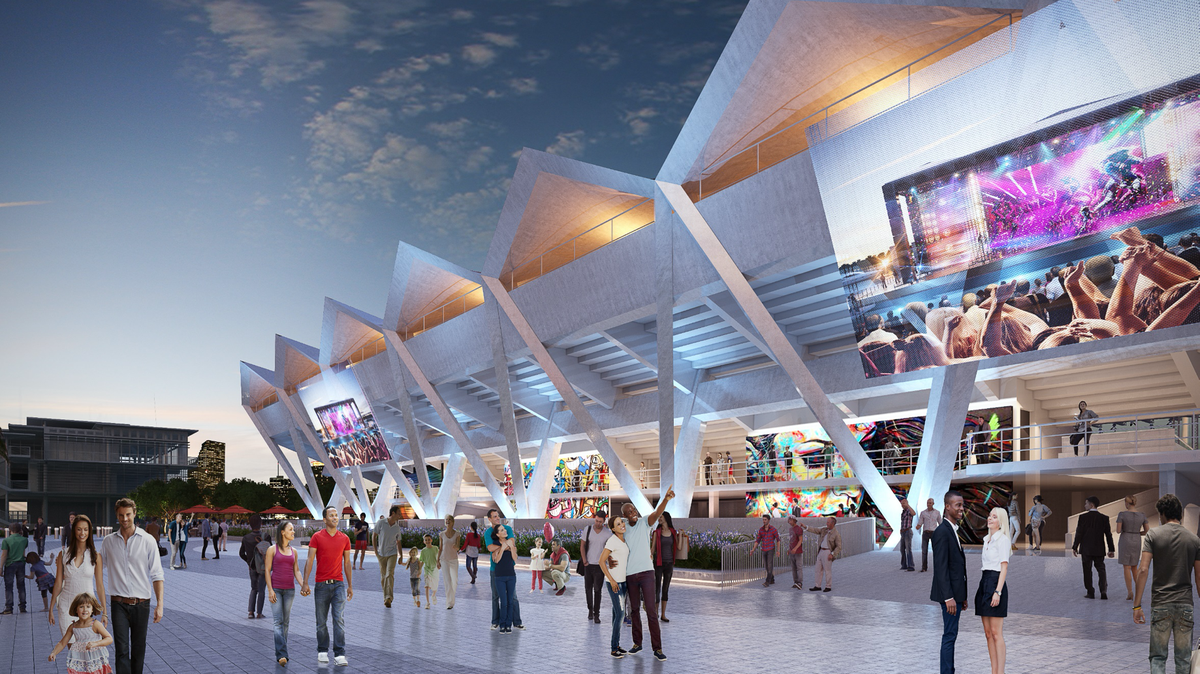
After years of putting off a promised restoration of the iconic but long-closed Miami Marine Stadium, city of Miami officials are suddenly moving quickly on a plan that could see voters asked to advance the ambitious project before the end of 2025.
The city has issued a public solicitation for a private operator to run the historic and architectural landmark on Virginia Key as a concert and performance venue. It’s a long-anticipated step that could finally set in motion a plan for restoring and re-opening the 1963 stadium that has been fitfully in the works for 15 years, since the administration of former Mayor Tomas Regalado.
The request for proposals, released at the end of January, sets an unusually fast schedule for the competitive selection process, with the goal of naming a proposed operator in time for a referendum on the choice on the city general election ballot Nov. 4.
The operator would help develop plans for the renovation and programming of the stadium, then manage and book the reopened venue with “world-class concerts and performing arts talent,” according to the city’s bid solicitation. Applicants’ proposals must also include a business plan showing how the venue would cover its operating costs.
The solicitation plan calls for the city to finance and carry out the extensive renovations, though how much it’s willing to put up, and how much the project will cost, remains an open question.
The commission approved but never issued $45 million in bonds for the project, but that authorization lapsed amid changing political dynamics and wavering support from commissioners. Subsequent project estimates exceeded $62 million because of an increase in construction costs.
But stadium supporters hope the detailed renovation plan worked up by the chosen operator would help pin down precise cost figures and provide momentum for a new bond authorization and, potentially, identification of other funding, That could include historic preservation tax credits and revenue from local convention facilities development taxes.
“This is major, it’s real,” said Stu Blumberg, the retired founding president of the Greater Miami Hotel & The Beaches Hotel Association, who has been pushing Miami Mayor Francis Suarez, city commissioners and administrators to move forward on the solicitation as a critical step towards completing the stadium project. “It’s more active now that it’s ever been. To me, this is exciting.”
The solicitation comes 10 months after Suarez and City Commissioner Damian Pardo, whose district includes Virginia Key, publicly recharged the stalled renovation drive following release of a consultant’s report that concluded the reopened stadium would be a profitable and in-demand venue.
Suarez, who has consistently supported the marine stadium’s renovation but had not made a political push for it, has said he wants to secure its future as a legacy-defining project before he leaves the post this year because of term limits.
Read More: How Miami’s historic waterfront stadium look in its heyday
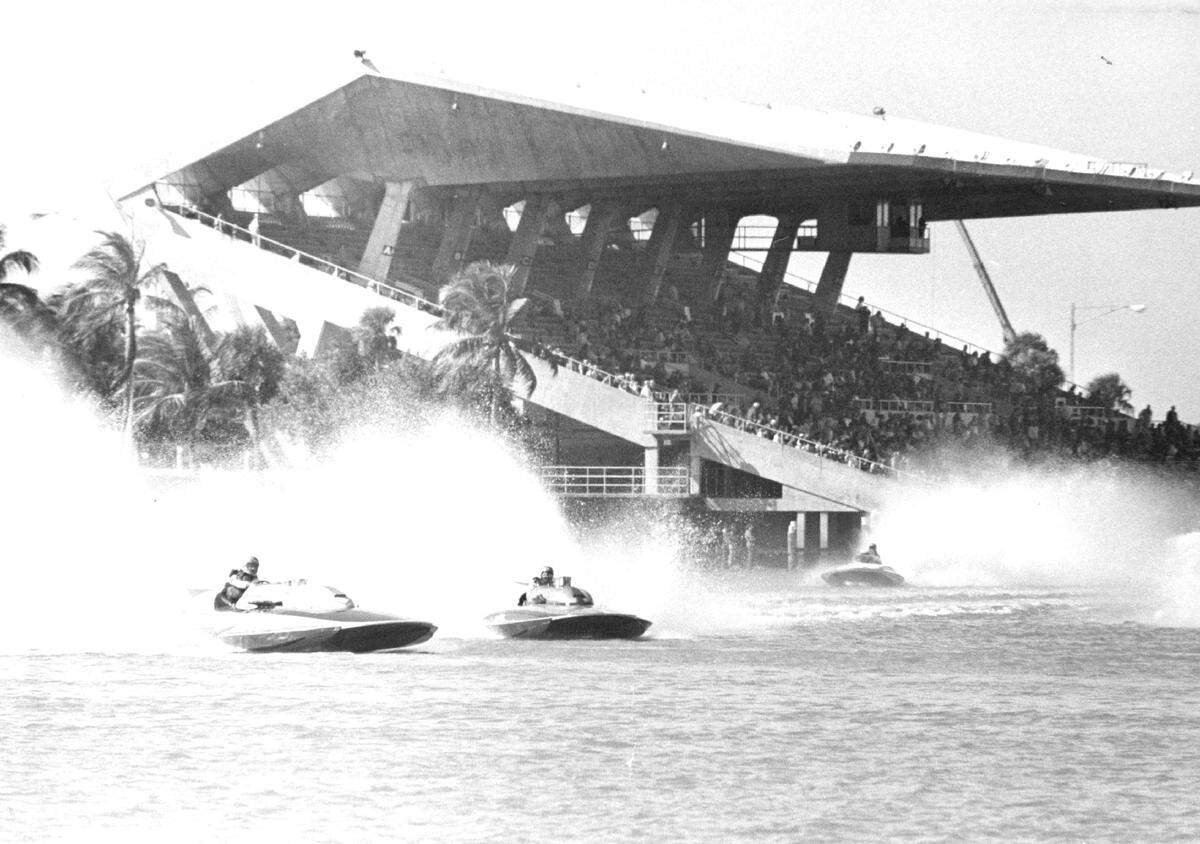
The stadium and its man-made oval basin opened in 1963 on the edge of the Rickenbacker Causeway, quickly becoming a cherished landmark for Miamians who attended boat races, concerts by big stars and and Easter sunrise services at the architecturally daring facility. But the venue lost money and was closed by the city after 1992’s Hurricane Andrew, though engineering reports concluded damage from the storm was minimal.
A campaign by fans, activists and preservationists succeeded in protecting the stadium as a historic and architectural landmark, but the spectacular, bare-concrete Brutalist structure, widely considered a singular feat of design and engineering, continued to languish and serve mostly as an illegal canvas for graffiti artists. Studies over the years have show the structure to be sound, and the city last year completed a $3 million repair of corroded grandstand support columns that stand in the water.
Though the city has a conceptual plan for stadium restoration from prominent preservation architects R.J. Heisenbottle, the operator would be responsible for tailoring the renovation design and devising any needed ancillary structures to ensure it can function successfully as a modern, state-of-the art performance venue. The operator would also cover the cost of fitting out spaces for food and dining.
“The Successful Proposer will be tasked with, not only managing the Stadium, but also helping to design and program the new spaces that will be created within and adjacent to the Stadium,” the city request for proposals says.
Under the city solicitation, the project would also include a new floating stage for performers to replace the converted barge that once hosted performers at the stadium.
In a nod to Brickell and downtown residents concerned about noise carrying across the water from the stadium, the document also requires the operator to hire a full-time sound engineer and buy monitoring equipment to ensure that amplified sound is contained on the venue site.
Under the tight selection process, site tours for interested bidders will take place this month, with proposals due in April. A winning bidder would be selected in May by a city selection committee and the city manager’s office.
If voters approve the choice in November, the operator would be required to submit its renovation and management plans to the city within 30 days.
The report that’s helping fuel the renewed effort was commissioned by the city from AMS Planning & Research, a national firm that specializes in analyzing finances for cultural groups and facilities. AMS concluded the 6,000-seat stadium would be a prime draw for performers and producers to rival legendary venues such as the Red Rocks Amphitheater outside Denver.
AMS recommended that the city hire an independent operator to run the stadium to reduce the risk and financial load for taxpayers.
This story was originally published February 4, 2025 at 5:30 AM.