Miami, you’re looking different on your 125th birthday. Here’s a peek at then and now
The Magic City turned 125 on Wednesday, but it’s celebrating all week with a series of events to honor its rich history. The festivities will center around food, fun, culture and innovation to commemorate Miami’s founding.
“We are going to have a series of events around our 125-year celebration to commemorate our history and to remember how we got here. Why we’re doing well and how we could continue to learn from our past and be successful in the future,” Miami Mayor Francis Suarez told Miami Herald news partner CBS4.
It all started out with 444 residents, according to HistoryMiami, the museum in downtown Miami. As of 2019, the city was home to 467,963 people, according to the Census Bureau.
Let’s take a look at how far Miami has come in its 125 years.
Names in the city
Julia Tuttle
Then: Julia Tuttle was a founder of the city on July 28, 1896. Tuttle was a wealthy widow from Ohio who moved to Miami in 1891 and bought the Fort Dallas land where she built a home, according to the city’s archives. Her vision for the city? A hub of international trade, especially with South America, according to HistoryMiami.
Now: She is regarded as the “Mother of Miami.” She has a causeway named for her, the Julia Tuttle Causeway, a 4.4-mile highway connecting Interstate 95 to the west with Miami Beach to the east.
Henry M. Flagler
Then: Henry M. Flagler was a multimillionaire and partner with John D. Rockefeller in Standard Oil, according to HistoryMiami. Around the time Tuttle was building the Magic City, Flagler extended his railroad south along the east coast of Florida. His railroad reached West Palm Beach by 1894, but the next year when frigid weather destroyed crops in the rest of the state he made an agreement with Tuttle to expand his railroad down to Miami in exchange for land. Flagler also had a hand in giving Miami its nickname: the Magic City. He commissioned writer E.V. Blackman to write a “strong, positive story” about Miami for Flagler’s magazine East Coast Homeseeker to entice people to travel south.
Now: You’ve probably driven your car across his namesake, Flagler Street, the 12.4-mile road running east to west.
Mary and William Brickell
Then: The Brickells were natives of Ohio, but their connection with Miami’s other big-name founders like Flagler put South Florida on the map for them, according to The New Tropic. They moved there 20 years before Julia Tuttle arrived in the area. In 1871, William built a house at Brickell Point and his family relocated there soon after. They helped found both Miami and Fort Lauderdale. After her husband’s death, Mary also helped build Miracle Mile and helped develop The Roads area, which she originally called Brickell Hammock.
Now: Like other founders, their legacy is carried by their name in the Brickell area, the financial and condo hub just south of the downtown business district.
Miami neighborhoods
Brickell
Then: Long ago, it was home to Tequesta natives (many artifacts have been discovered there), and once the city was founded, Brickell became the trading post of Miami. Before and after World War I, tourism exploded in Miami, and wealthy visitors built large homes along “Millionaire’s Row,” according to HistoryMiami. These homes found some competition across Biscayne Bay, though, in other mansions like James Deering’s Villa Vizcaya, which was completed in 1916.
Now: Brickell is now the financial center of Miami, and is the site of many international banks and other financial institutions. Trendy restaurants and high-rises that are home to young professionals are sprawled across its streets.
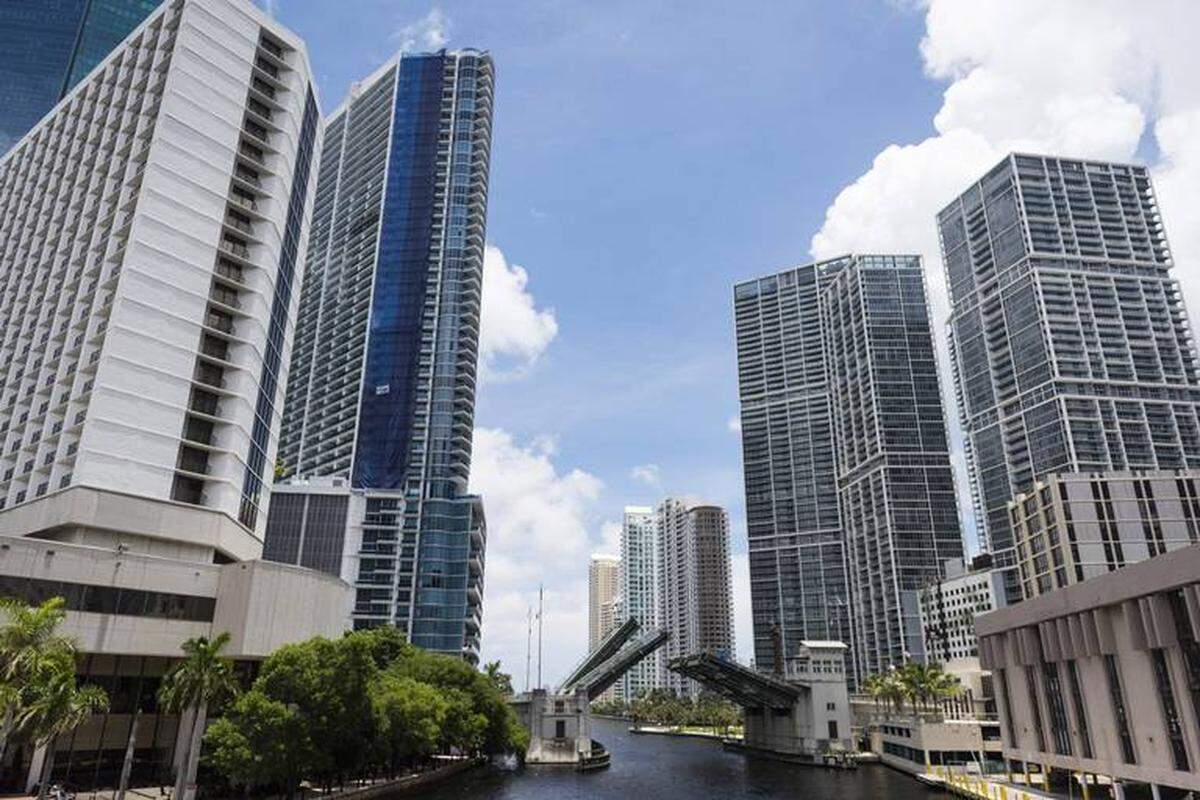
Coconut Grove
Then: Coconut Grove predates the city of Miami. Founded in 1873, Coconut Grove is Miami’s oldest neighborhood. It was the site of early African-American and Bahamian culture. When it was annexed with other communities including Lemon City in 1925, the city of Miami grew from 13 to 43 square miles. By this point, Miami had reached a population of more than 100,000.
Now: Locals call it “the Grove.” Emblems of its history can still be seen across the neighborhood (you can still visit the Barnacle home). It also has classy restaurants and shops, parks (including some you can bring your dog to) and many boats in its marinas.
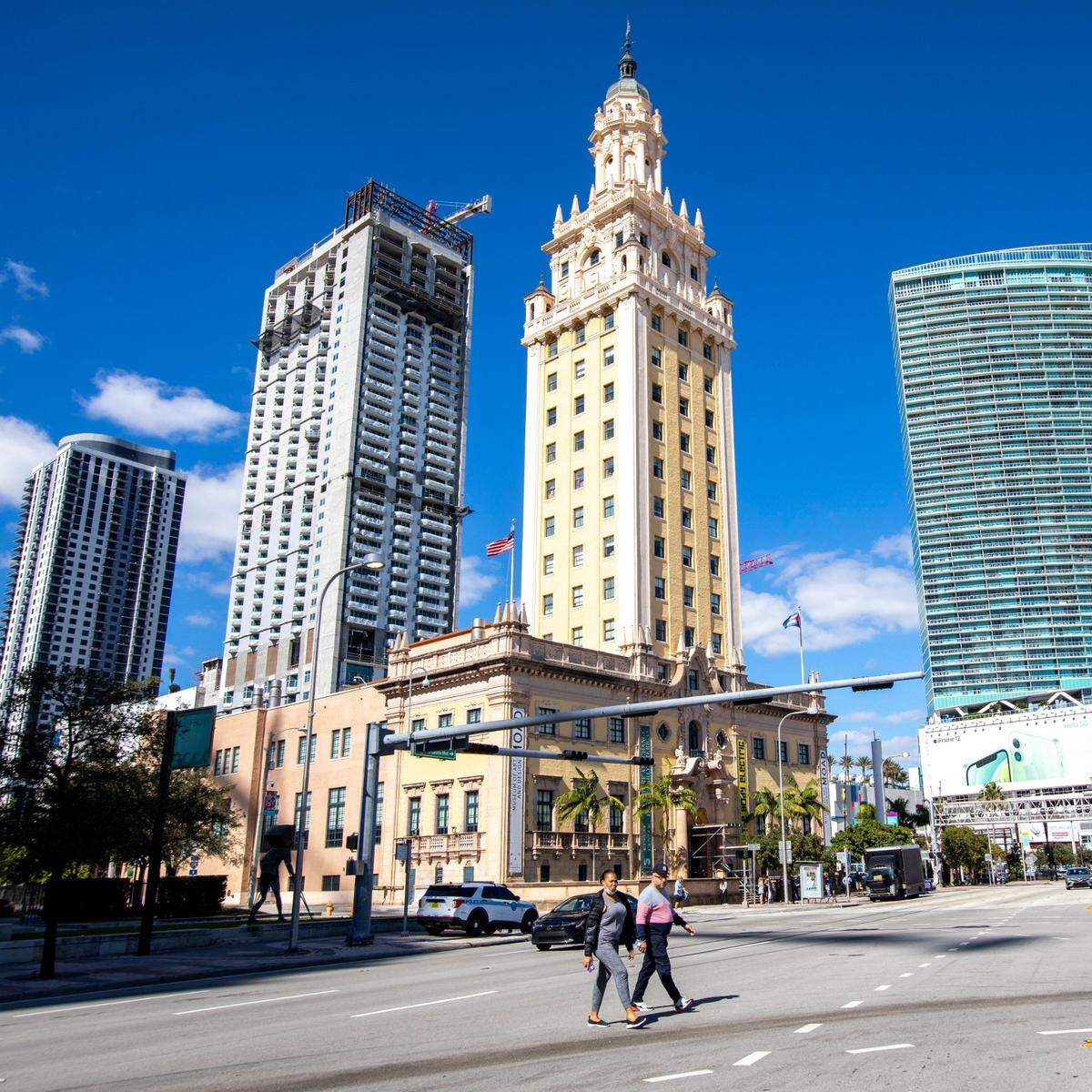
Downtown
Then: A hurricane in 1926 destroyed unfinished structures in downtown Miami, and took many lives and leveled many homes. But in the 1970s, downtown got a face-lift. Gleaming skyscrapers and Bayside Marketplace rose in the 1980s. Also downtown is the landmark Freedom Tower, or “Ellis Island of the South,” according to the National Park Service. Then known as the Cuban Assistance Center, or “El Refugio,” to Cubans, the 17-story building was a place thousands of Cuban refugees could go to get assistance adjusting to their new lives in the U.S. from 1962 to 1974. Before that, it was home to the Miami News.
Now: Today, downtown Miami has no shortage of live entertainment. It houses concert venues and the arena where championship team the Miami Heat play. PortMiami, which is home to the “greatest collection of cruise ships and the largest number of vacationers of any port in the world,” according to HistoryMiami, is just across the Dodge Island bridge. The Freedom Tower, which is now a contemporary art museum, also stands opposite FTX Arena on Biscayne Boulevard.
Little Havana
Then: After Fidel Castro’s regime took over Cuba, hundreds of thousands of Cubans flocked to Miami to seek refuge. By the 1980s, the Cuban population in Miami was larger than 600,000, according to HistoryMiami. Also by the 1980s, Little Havana — which was the initial entrance for the earlier groups of Cubans to arrive in Miami — was the destination for other Latin Americans, particularly from Nicaragua.
Now: Little Havana is still filled with Cuban character. It’s home to Domino Park, countless places to buy a cafecito, and of course, the renowned Versailles restaurant that sits on Southwest Eighth Street, or as the locals know it, Calle Ocho.
Lemon City / Little Haiti
Then: Refugees from Haiti also arrived in Miami to escape the poverty and turmoil in their home country, and the neighborhood soon became a strong cultural Caribbean community.
Now: The neighborhood is still rich with Haitian culture, but it looks different than it did when it first got the name after being known in early years as Lemon City. Gentrifying neighborhoods like Wynwood, the Design District and the Upper East Side have closed in on Little Haiti, rendering it vulnerable to real estate investors, business owners. Climbing rent rates and value of the land pose a threat to the existing immigrant population there, and investors in some parts of the area have already pushed out small, longtime Haitian commercial tenants.
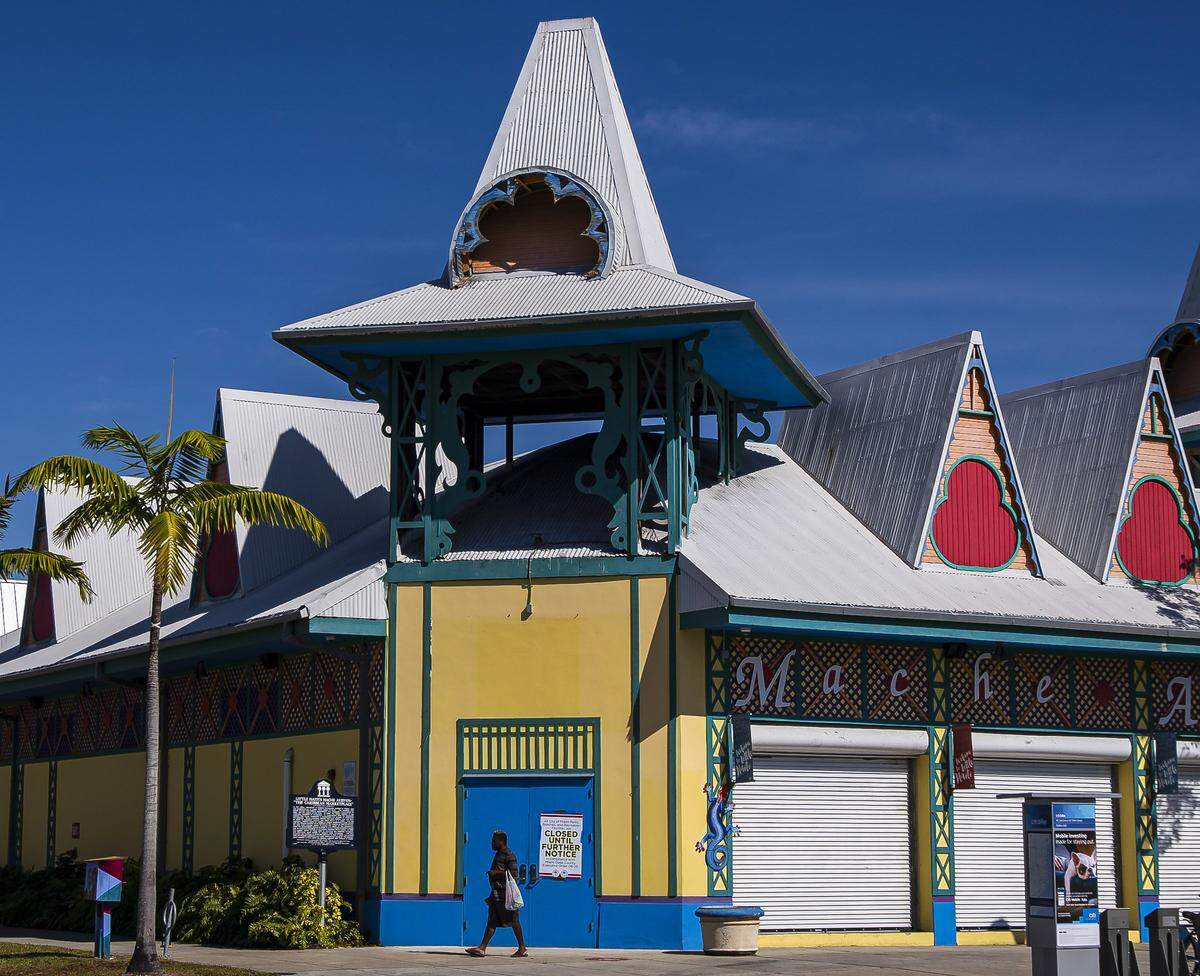
Overtown / Liberty City
Then: It was originally called “Colored Town,” because when the land was incorporated into the city, Blacks were prohibited from buying land anywhere other than within that quarter, according to HistoryMiami. Although it saw severe poverty and a lack of municipal amenities, Black Miami grew to become 25 percent to 40 percent of the population within a generation. Even after desegregation, Miami’s Black population faced disproportionately high levels of poverty and crime. These problems were only exacerbated by the community’s frustration with injustices of the criminal justice system, which prompted a series of riots in the 1960s and ‘80s.
Now: While the Black Lives Matter movement continues to shine light on injustice, Overtown is making a comeback with new restaurants, shops and pride. Miami’s historic Overtown is gradually reclaiming its place as a center for Black life and culture thanks to millions in tax revenue from nearby development. And upgraded housing is transforming Liberty City.
-
“These moments are moments of reflection and moments we can take a breath collectively and realize how far we’ve come and how much further we can go,” Suarez told CBS4 of the city’s celebrations.
The city began hosting many activities to celebrate the festivities on Monday, but here are some you can still catch:
Birthday events
City of Miami 125th Anniversary Celebration
When: July 28 from 7:30 p.m. to 10 p.m.
Where: Pérez Art Museum Miami, 1103 Biscayne Blvd.
Mayor Francis Suarez will present four Lifetime Achievement Awards to four of Miami’s historical preservationists. There will be live performances from local artists and food will be provided at the waterfront modern and contemporary art museum.
Miami’s 125th Birthday Celebration — Miami Downtown Development Authority and City of Miami
When: July 28 at 6 p.m.
Where: Miami-Dade Courthouse, 73 W. Flagler St.
The Miami Downtown Development Authority and the city of Miami are hosting a free, outdoor public event with appearances by the city’s elected officials, live musical performances by award-winning artists including Flo Rida, Fetty Wap, and local DJs. It will also feature a 3D mapping tribute to the city that will be projected onto the courthouse building.
It’s a Miami Thing: Highlights from Our Collection
When: July 29 through Jan. 9, 2022, from 10 a.m. to 4 p.m. on Thursdays through Saturdays and on Sundays from noon to 4 p.m.
Where: HistoryMiami Museum, 101 W. Flagler St.
HistoryMiami is hosting a special exhibit with highlights from its collection of artifacts and other archival materials from over the decades, including Tequesta artifacts, Seminole patchwork and treasure from the 1622 Nuestra Señora de Atocha shipwreck, among others.
Little Havana Fridays
When: July 30 from 6 p.m. to 10 p.m.
Where: Domino Park Plaza, 801 SW 15th Ave.
The hub epicenter of Miami’s Cuban culture is partaking in the city’s founding anniversary festivities with a night of live music and art to promote the community’s diversity.
Miami Day and Grove Heritage Day
When: July 31 from 10 a.m. to 6 p.m.
Where: Various locations
Grove Heritage Day will occur around the neighborhood and will feature live music, entertainment, a period-themed tea party and an old-fashioned cocktail party, among others. Attendees are encouraged to dress in costumes from their favorite Grove era.
View Local Artist Xavier Cortada’s Art
Where: Miami City Hall, 3500 Pan American Dr. Public art piece at the corner of South Miami Avenue and Southeast Fourth Street
In 2005, for Miami’s 109th birthday, the city commissioned local artist Xavier Cortada to create site-specific murals for Miami City Hall. The murals, “First Encounter: 1566” and “The Incorporators: 1896,” portray important figures in Miami’s history, including Julia Tuttle, Henry Flagler and Menendez de Aviles. In 2008, Cortada also created a site-specific public art piece, “Incorporation Palm,” which is a green and living monument honoring those who incorporated the city and those who keep it growing. It is located on the corner of South Miami Avenue and Southeast Fourth Street.
Cesar A. Becerra Book Readings
When: July 31 from 1 p.m. to 4 p.m.; Aug. 1 from 2 p.m. to 3:30 p.m.
Where: Main Library at 101 W. Flagler St.; Coral Gables Museum at 285 Aragon Ave.
Author Cesar A. Becerra will be doing book signings and readings of his new book, “Orange Blossom 2.0,” which delves into the question of co-mother status of Mary Bulmer Brickell. The Coral Gables Museum event is free, but a $5 donation is encouraged to help cover expenses. Participants for the library event must register and can also take a tour of the Helen Muir Florida Collection and learn about Library resources that can be used for historical research projects.
Honors
During the week of festivities, the city is also recognizing residents who have made an impact on the city’s history and progress. Honorees include:
▪ Dr. Enid Curtis Pinkney: preservationist, community leader and humanitarian
▪ Arva Moore Parks McCabe: Miami historian, author and preservationist
▪ Paul S. George: Miami’s resident historian, author and scholar
▪ Dorothy Fields: Documented Miami’s African-American history through manuscripts and photography
▪ Marvin Dunn: author, educator and historian
This story was originally published July 28, 2021 at 6:46 AM.