A growing medical hub is changing healthcare in Miami. What’s driving the new push?
Gridlocked traffic is the last place Jorge De Apodaca wants to be after his cancer treatment appointment. Dizziness and “foggy brain” don’t go well with bumper-to-bumper traffic.
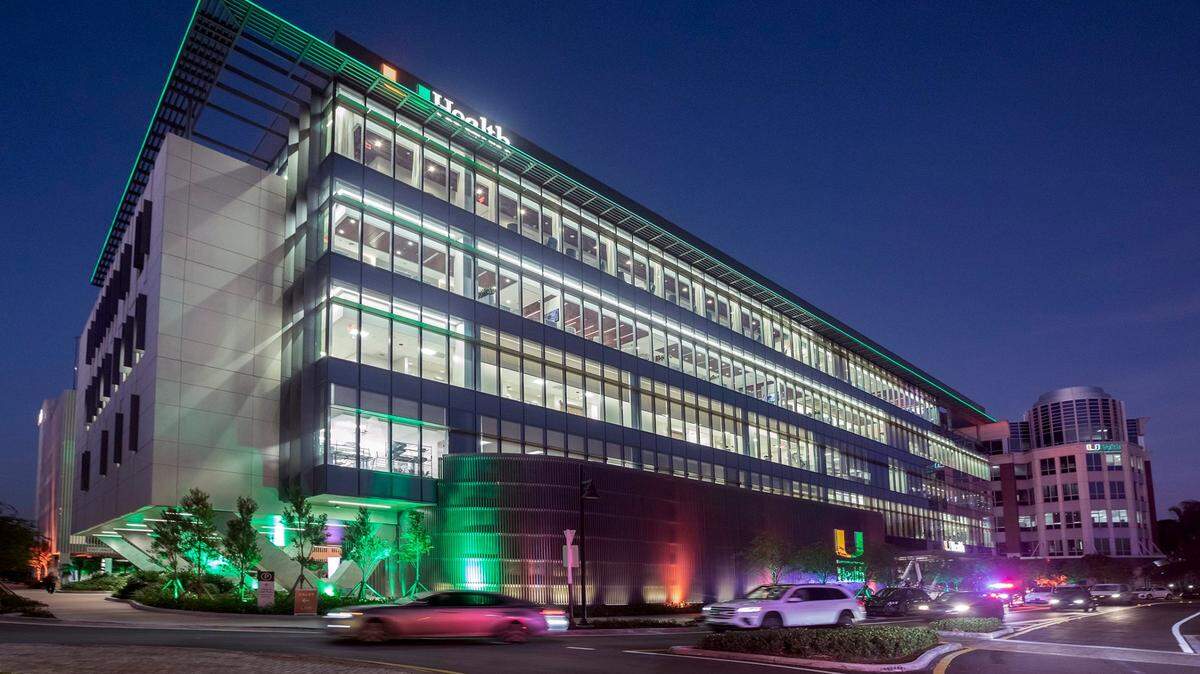
The 68-year-old’s commute is now a bit easier since the University of Miami Health System expanded to Doral, one of the fastest growing cities in the state. While De Apodaca and his wife still have to slog through traffic, the drive from their Miami Lakes home to Doral is shorter than to UHealth’s Kendall location, where he had undergone treatment
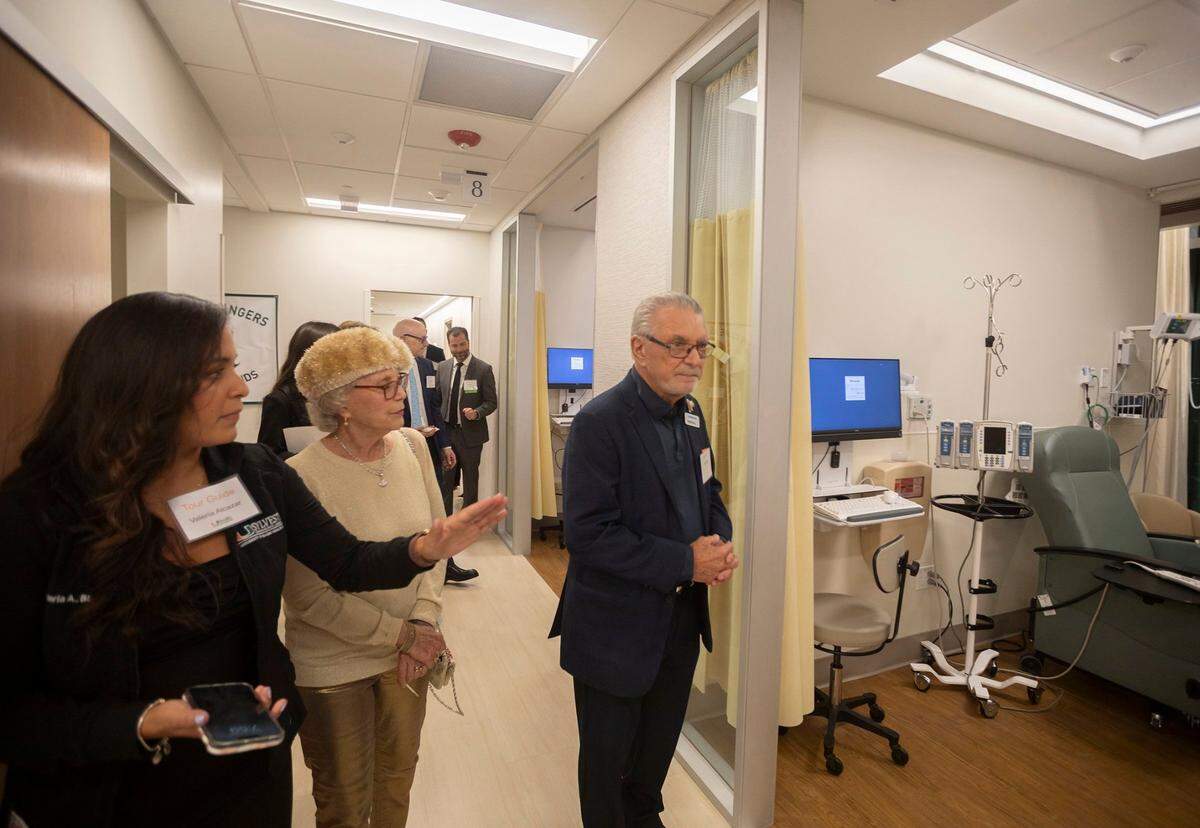
Every time he walks into UHealth’s new medical center at Downtown Doral, the staff offers him snacks and coffee, the UM graduate said. During a recent visit, he was given a free lymphatic massage to help his swollen feet. And he has a nice view of the city while he’s getting treatment from an upper floor.
“It’s a healing environment,” he said. “It heals the soul, takes out the stress, which obviously helps the cancer.”
UM’s health system, which shares a main campus with Jackson Memorial Hospital in Miami’s Health District, is the newest health giant to expand its footprint into Doral, offering primary care as well as cardiology, oncology, urology, cancer treatment and outpatient surgeries. Patients can usually go home the same day of a procedure at the new center, 8375 NW 53rd Ter.
“No one and their families like to be in a hospital,” said Dr. Dipen Parekh, UHealth’s chief operating officer. “And because of the advances in medicine ... we are able to deliver some of the most complex care without the patients having to spend the night in the hospital.”
The U’s expansion into Doral advances the city’s position as South Florida’s newest medical hub. Growing Doral is home to more than 80,000 residents and over 17,000 businesses, and close to highways and the airport.
The move west is part of UHealth’s plan to bring care closer to patients, a strategy to not only improve access to care, but to also attract and retain patients and employees.
“It’s location, location, location,” said Manuel Pila, the economic developer for the city of Doral, echoing the familiar real estate refrain about a home for sale in a desirable neighborhood. “The opportunity was here, the space was here, and the growing population was here.”
Doral, a city once filled with sprawling fields of cows and warehouses, is now full of houses, apartments, condos, restaurants, shops, hotels, schools and parks. And it’s projected to keep growing, with the city’s population expected to balloon to over 100,000 by 2030.
Baptist Health South Florida, the region’s largest health system, ventured into Doral in 1990 after seeing an opportunity to provide care to a “medically underserved” and growing population, said Ana Lopez-Blazquez, executive vice president and chief strategy officer at Baptist Health.
“Early on, Doral had the recipe for success,” she said, noting that Baptist’s presence in the city has “grown over the years based on the needs of that community.”
In February, Baptist opened a standalone cancer center offering chemotherapy, infusion and radiation. Baptist also has a hospital, ER, and a primary and urgent care center in the city.
“Expanding our cancer care services to Doral represents an important step in providing high-quality treatment options and resources for more patients closer to home,” Dr. Michael Zinner, CEO and executive medical director of Miami Cancer Institute and Baptist Health Cancer Care, said in a statement earlier this year announcing the opening. “For us, it’s not just about growth, but empowering the community to better prioritize their health.”
Doral’s rapid growth has everyone’s attention — families, real estate developers, businesses and the health industry.
Miami-Dade’s public safety net hospital system, Jackson Health, opened the 98-bed Jackson West hospital four years ago. Nicklaus Children’s Health System, with outpatient and urgent care centers across the region, has cared for thousands of patients since its Doral outpatient and urgent center opened in 2008. The center, which also offers dental and rehab, saw more than 50,000 patients in 2024.
South Florida healthcare expands into neighborhoods
While Doral has seen an explosion of healthcare growth, medical centers, outpatient, urgent care and standalone emergency rooms are also popping up across South Florida as hospitals compete for patients.
UHealth will open a new seven-story medical center in North Miami-Dade later this year, part of a mega-development of residential towers, to serve Aventura, North Miami and surrounding areas. Miami’s Mercy Hospital now has a standlone ER in Kendall. And Miami Beach’s Mount Sinai Medical Center plans to open a standalone emergency room in Westchester.
“Every major system is expanding. The whole area is hot now,” although some locations are hotter then others, including Doral, Aventura, North Miami, and parts of Palm Beach County, saidJohnathan Peavy. He’s the operations manager for the Fort Lauderdale office of Robins & Morton, a company that specializes in healthcare-related construction.
The Alabama firm, which oversaw the construction of UHealth Doral, is working on several South Florida projects, including UHealth at SoLé Mia in North Miami-Dade, and Baptist Health’s new rehabilitation hospital in South Miami.
Everyone seems to want a piece of the South Florida market, including President Donald Trump, whose company plans to build luxury condos at the edge of Trump’s golf course resort in Doral.
Health systems are also trying to keep up with South Florida’s growth and are searching for “pockets” in the community where clusters of people live or are moving to that don’t have nearby health services, according to Peavy. But hospitals are also facing a challenging real estate market, where “prices are through the roof” and limited land to build.
He expects South Florida’s healthcare market will continue to heat up, from Homestead in South Miami-Dade to Martin County on Florida’s Treasure Coast.
For patients, the expansion of health services into neighborhoods mean it’s a lot easier to find care close to home. For health systems, the push into the suburbs isn’t just to improve access to care, one of several factors that can affect a person’s health. It’s also a chance to secure lifelong patients, reduce overcrowding at main locations, and prepare for the future.
Hospitals aren’t just competing for patients, but also for nurses and doctors during a nationwide shortage predicted to get worse by 2030, when the youngest Baby Boomers — people born between 1946 and 1964 — hit 65. Health experts worry there won’t be enough healthcare providers to meet the needs of an aging population.
Executives bet a shorter work commute — a benefit that comes from opening medical centers across neighborhoods — could help improve retention and hiring.
And while many people have moved out of South Florida due to rising costs, some parts of the region are seeing the arrival of younger families. Miami Beach, once a popular retirement destination for seniors, now has a younger, and fitness-friendly crowd of residents. Doral has more families moving in. Sweetwater is trying to reinvent itself into a college town.
For some health giants, the strategy to attract young and old patients has even lured some across county borders.
Memorial Regional, one of two public hospital systems in Broward, opened a primary care center a few years ago in Northwest Miami-Dade, near Hialeah and Miami Lakes. Memorial opened the center after seeing a big need for preventive and specialty care in an area that is home to more than 500,000 people.
Nicklaus Children’s, whose hospital near South Miami is considered to be one of the state’s top pediatric hospitals, recently struck deals to become the primary pediatric provider of public hospital system Broward Health and the exclusive pediatric teaching hospital of Florida International University’s medical college.
READ MORE: Nicklaus Children’s and Broward Health team up for care. What it means for patients
Patients can find Baptist Health South Florida, FIU’s future teaching hospital, all over the place with urgent care centers, ERs and medical offices. The newest location is a freestanding ER in Miami Lakes, which offers the same emergency care as a hospital ER, but usually has shorter wait times and is not physically connected to the hospital.
“It’s demand and supply,” said Parekh, the UHealth executive. UHealth noticed many of its patients lived in Doral and were trekking across South Florida’s congested roadways to seek care at its centers in Miami and Coral Gables, with some even going as far as Broward County.
“The constant feedback we received from the community was that they wished that UHealth had a presence in Doral,” Parekh said. Doral’s “culture of live, work, play is such an integral part of this community ... we decided it was time for the University of Miami Health System to really make a significant presence in the community.”
MORE: What patients and students should know about new FIU-Baptist Health teaching hospital
Why is Doral a hot market for health-related businesses?
It’s not just hospitals trying to gain ground in Doral. Leon Medical Centers vans drive around town, taking seniors to and from its Doral center. Sanitas Medical Center, which houses health insurer Florida Blue’s center, and other doctor offices and medical centers are scattered across the city. Dentists, orthodontists, physical therapists, plastic surgeons have moved in. Companies that specialize in biotechnology, medical equipment and other health-related products and services are also setting up shop in Doral’s warehouses, according to Pila.
Like the rest of Miami-Dade County, small businesses make up the majority of Doral’s commerce, although you’ll also find chain restaurants, hotels and other large companies scattered across the city including Walmart, Amazon, Carnival Corp. and Trump National Doral within the boundaries. The healthcare and social assistance areas, along with professional, scientific and technical services are part of the city’s top industries for employment.
“Doral has a unique blend,” said Peavy, noting that the centrally located city is continuing to see growth in its high-rise and multi-family market, while also maintaining a robust market for manufacturing and other businesses.
And Doral’s economy is continuing to see growth in industries that require employees to have a high level of skill and knowledge, according to a 2024 economic analysis report prepared for the city in partnership with Florida International University’s Jorge M. Pérez Metropolitan Center. This includes the science and healthcare field, which the city is keen on attracting because of the opportunities for high-paying jobs and other economic growth, the report states.
Doral’s proximity to Miami International Airport is why BioTissue in 2012 opened its production facility in the city when it decided to leave Kendall and expand its operations, said Michael Cornelius, the company’s chief financial officer.
BioTissue, formerly known as TissueTech, specializes in re-purposing donated birth tissue —umbilical cords and placenta that is traditionally discarded after live birth — to create medical products that can help treat and speed up recovery for eye conditions, burns, wounds and injuries. Birth tissue is often used inreconstructive procedures and is known to help reduce inflammation and scar formation.
Birth tissue-products are stored at below freezing temperatures to retain their viability and effectiveness and are also shipped in special containers. That’s why being near the airport is key to operations, the executive said.
“We have patients all around the country. So, getting from production to Miami airport on a FedEx plane and to Memphis overnight and then out to various hospitals and doctors offices, next day, is really important for us,” Cornelius said.
But finding space to build isn’t the only challenge in Doral.
The city is “over-burdened” by road congestion, according to FIU’s economic report.
So, no matter that medical centers are moving closer to the people, one problem persists:
Traffic is a headache.
This article was updated to clarify the types of products BioTissue uses.
This story was originally published March 24, 2025 at 5:00 AM.