Hey, Curious305: I don’t want to wait at a drawbridge. When do they go up in Miami-Dade?
Editor’s Note: This article was inspired by a question submitted from Miami Herald reader Louis Martin through Curious305, our community-powered reporting series that solicits questions from readers about Miami-Dade, Broward, the Florida Keys and the rest of the Sunshine State. Submit your question here or scroll down to fill out our form.
Hey, Curious305: As residents of Miami Beach, we have to spend considerable time waiting in our car during bridge openings and closings on our way to the mainland. As we sit waiting, and sometimes cursing, we wonder how it all works. What is the modus operandi? Do boaters need to make reservations? Is there a published schedule? Are there fees involved?
Traffic jams are part of living in South Florida.
Sometimes it’s because of rush hour. A crash. A train is passing or a drawbridge gets stuck in the up position. It can get frustrating, especially if you’re trying to head into or out of Miami Beach and downtown Miami.
Questions about drawbridge safety may also be on your mind following the recent tragedy of 79-year-old Carol Wright, who fell to her death when the West Palm Beach drawbridge she was crossing opened. Her family is seeking answers on what went wrong and police are investigating her death.
A similar tragedy happened last year in Miami, when bicyclist Fred Medina fell to his death after trying to beat the opening of the South Miami Avenue Bridge.
With so many bridges to navigate in South Florida, we put together a guide to help you understand them better, including who is at the controls and how frequently they rise:
What time do drawbridges in Miami-Dade go up?
Drawbridges can go up at any time because they are required by law to open quickly once a boat notifies the operator using sound, flag, lights or radio that it needs to pass.
However, some South Florida drawbridges, including in Miami-Dade, operate under special regulations that let them have set times (also known as “peak times”) for drivers, pedestrians and bicyclists. For some drawbridges, the special regulations reduce or delay the frequency of bridge openings for boats during a specific time-frame like rush hour.
Basically, tenders can prioritize drivers, pedestrian and bicyclist traffic over boat traffic during peak times.
It’s worth noting that bridge tenders can open a span for a boat during peak times, but they’re not required to, except in certain situations such as an emergency, according to the U.S. Coast Guard.
So, what are the peak time schedules for drawbridges in Miami-Dade?
Here’s what the Code of Federal Regulations says:
▪ Brickell Avenue Bridge — From 7 a.m. to 7 p.m., Monday through Friday (excluding federal holidays) the bridge only needs to open on the hour and half-hour. However, it does not need to open for boats between 7:35 a.m. to 8:59 a.m., 12:05 p.m. to 12:59 p.m. and 4:35 p.m. to 5:59 p.m.
▪ Miami Avenue Bridge and the SW Second Avenue Bridge — From 7:35 a.m. to 8:59 a.m., 12:05 p.m. to 12:59 p.m. and 4:35 p.m. to 5:59 p.m., Monday through Friday (excluding federal holidays) the bridge doesn’t need to open for boats.
▪ SW First Street Bridge, up to and including the NW 27th Avenue Bridge — From 7:35 a.m. to 8:59 a.m. and 4:45 p.m. to 5:59 p.m., Monday through Friday (excluding federal holidays) the bridge doesn’t need to open for boats.
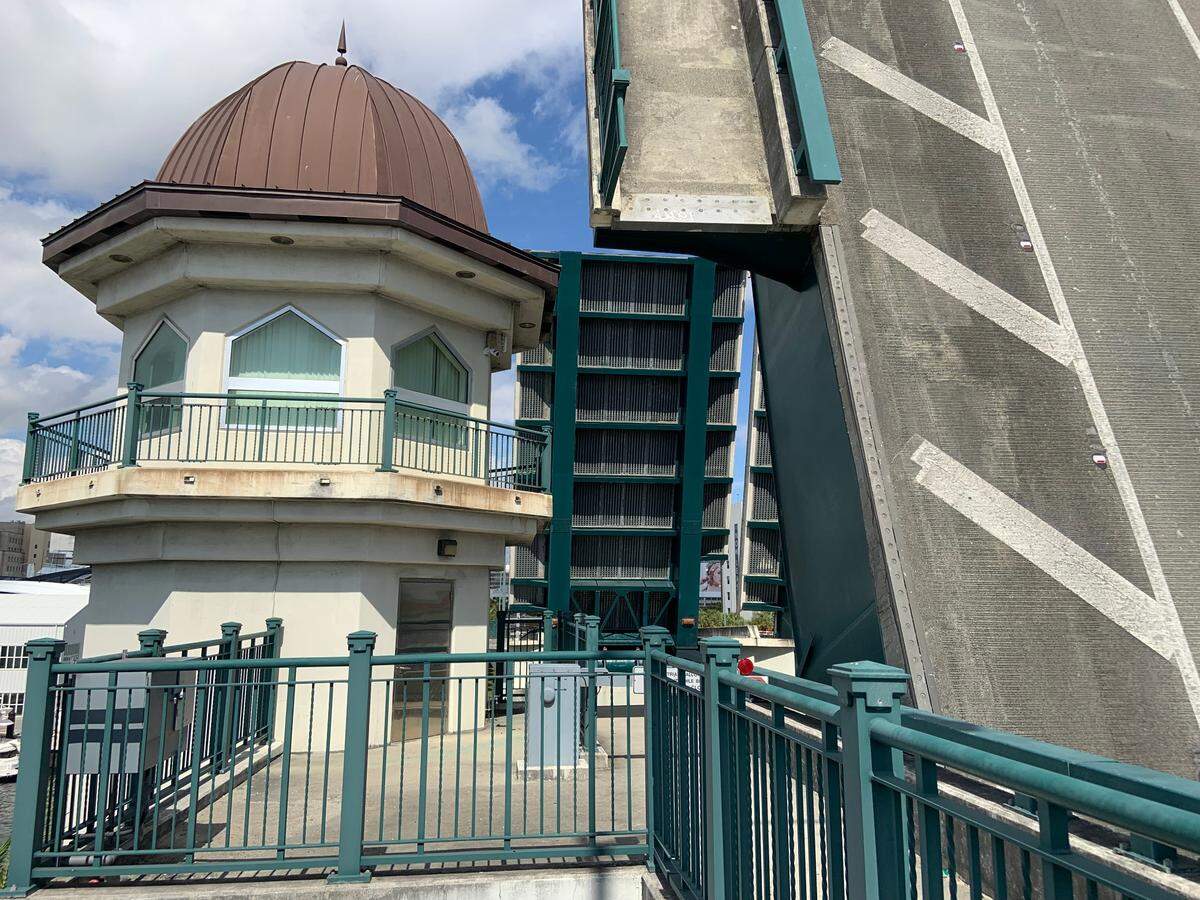
▪ Venetian Causeway (west and east) — Between 7 a.m. and 7 p.m. daily, including federal holidays, it only needs to open for boats on the hour and half-hour.
▪ NE 163rd Street bridge between Sunny Isles Beach and North Miami Beach — From 7 a.m. to 6 p.m. Monday through Friday (excluding federal holidays) and from 10 a.m. to 6 p.m. on Saturdays, Sundays, and federal holidays, the bridge only needs to open on the quarter-hour and three-quarter hour.
▪ Broad Causeway bridge between Bay Harbor Islands and North Miami — From 8 a.m. to 6 p.m., the bridge only needs to open on the quarter-hour and three-quarter hour.
▪ 79th Street drawbridge (west and east) — From 7 a.m. to 7 p.m. Monday through Friday (excluding federal holidays) the bridge only needs to open on the hour and half-hour.
▪ 63rd Street Bridge in Miami Beach — From 7 a.m. to 7 p.m. Monday through Friday (excluding federal holidays) the bridge only needs to open on the hour and half-hour. However, it does not need to open for boats from 7:10 a.m. to 9:55 a.m. and 4:05 p.m. to 6:59 p.m., Monday through Friday (excluding federal holidays) It also has a special schedule for when the Yacht and Brokerage Show is in town.
Remember, most drawbridges are required to open for “public vessels of the United States, tugs, tugs with tows, and vessels in a situation where a delay would endanger life or property” regardless if its a peak time, the U.S. Coast Guard said.
How do you know if a drawbridge is going up or down?
Just like there are traffic lights, there are traffic signals at drawbridges. Here’s how it works:
▪ Green means go
▪ Yellow means stop if you can safely do so. The light will turn red soon and the bridge will start operating.
▪ Flashing yellow means slow down and prepare to stop because the drawbridge is moving.
▪ Red means STOP at the marked stop line. The bridge is going up or down.
Lots of drawbridges have gates with flashing red lights and bells, too. If you see a bridge like this, make sure to “stop when the lights begin to flash and before the gate lowers across your road lane,” according to the Florida’s Driver Handbook.
And just like with train railroad crossings, it’s illegal to go around or under a drawbridge crossing gate when it’s down or in the process of opening or closing, whether you’re a driver, pedestrian or cyclist. It’s also dangerous.
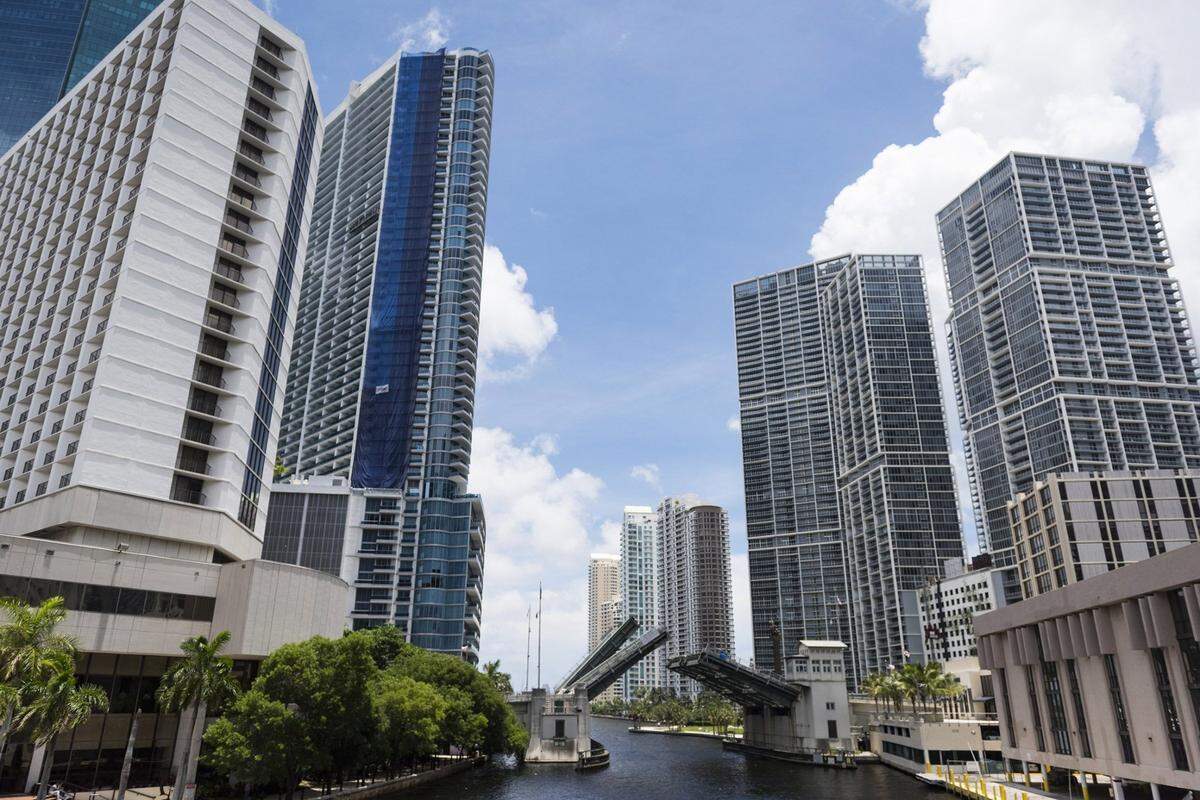
Do cyclists need to walk their bikes across bridges?
It depends on the bridge. If the bridge doesn’t have a bike lane, Miami-Dade recommends the cyclist walk the bike over the bridge instead of riding it.
How do tenders check if someone is on a bridge before opening it?
Bridge tenders are required to follow safety protocols before opening a bridge. And the way drawbridges operate today is not how they worked years ago.
Major safety changes were made to drawbridge operations across South Florida after 80-year-old Desmond Nolan fell to his death in November 2009 when the Sheridan Street bridge he was crossing in Hollywood began to open, according to Miami Herald news partner CBS4.
The changes were the result of a lawsuit attorney Jay Cohen, representing Nolan’s family, filed against the bridge tender and the company operating the Broward bridge. Nolan’s family received a settlement of more than a million dollars.
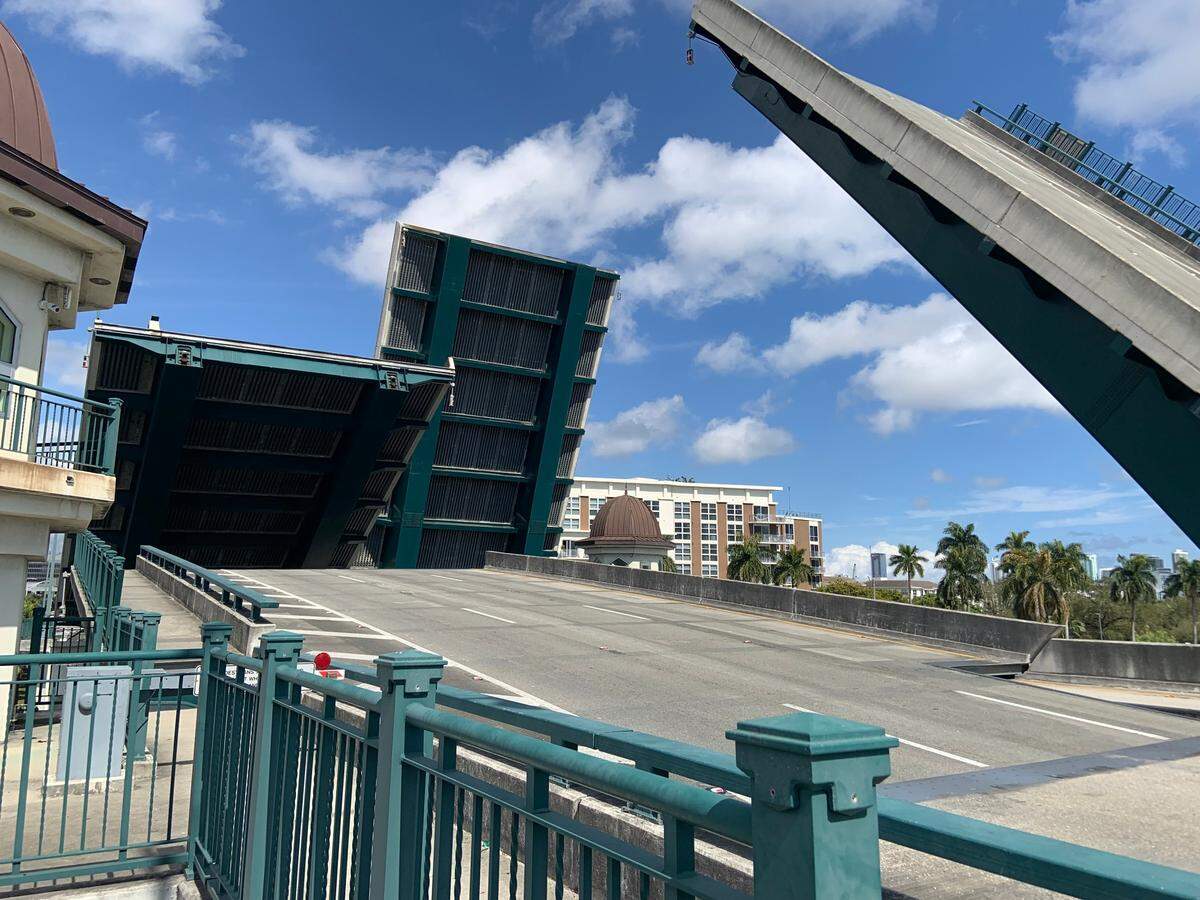
Some of the protocols that are now in place at some bridges:
“No kind of entertainment device can be housed in the tender houses so there’s no distractions,” Cohen told CBS4 this week. “The bridge tender is supposed to exit the tender house so that way they get a complete view of the area before opening the bridge.”
The Florida Department of Transportation did not respond to the Miami Herald’s inquiry on safety protocols.
Miami-Dade County Department of Transportation and Public Works said tenders at county-operated bridges follow Coast Guard rules and regulations and that they perform “visual safety checks” before opening and closing the bridge. The department then redirected the Miami Herald to the U.S. Coast Guard for more info on the rules and regulations. The Miami Herald has reached out to the U.S. Coast Guard.
How do tenders know when to open a bridge for a boat? And do boaters pay a fee for the bridge openings?
Not every boater will need the bridge to go up to pass underneath. For vessels high enough above the water line and need the bridge to go up for clearance, boaters have several ways to notify operators that they’re approaching. They can use “sound signals” like a loud whistle or horn, “visual signals” like a white flag raised and lowered vertically or radio-telephone communication, according to federal regulations.
The Coast Guard says boaters pay fees like drivers do for non-tolled roadways through taxation, registration and licensing fees.
Who operates the drawbridges in South Florida?
Eight drawbridges in Miami-Dade are maintained by the county, including the Venetian Causeway, the NW South River Drive bridge and two bridges that are on Miami Avenue. The tenders of these eight bridges are county employees, according to Miami-Dade County Department of Transportation and Public Works.
Miami-Dade says other drawbridges are operated by municipalities or by the state of Florida.
The Royal Park Bridge in Palm Beach County where Wright fell, for example, is owned by the Florida Department of Transportation and is operated by a private company called Florida Drawbridges Inc, which employs the bridge tenders, according to the Palm Beach Post.
The Pompano Beach-based company now does business as FDI Services, according to its website, though it still refers to itself as Florida Drawbridges. It employs drawbridge tenders and offers a variety of services, including bridge maintenance and repairs, according to its website.
The Florida Department of Transportation did not respond to the Miami Herald’s inquiry on what company or companies operate its bridges in Miami-Dade County. FDI Services notes on its website that it has been providing “Asset Management” — maintenance and operational activities — for 11 drawbridges in Miami-Dade and Monroe counties since 2007.
I have concerns about a drawbridge. Who do I call?
For concerns regarding county bridges in Miami-Dade, call the Road, Bridge and Canal Maintenance Division at 305-592-3115 between 6 a.m. and 5 p.m. weekdays, excluding holidays. For other bridges, you can call 311 to be redirected to the appropriate person.
Here are the eight bridges Miami-Dade says it maintains:
▪ SW Second Avenue over the Miami River
▪ Two bridges on Miami Avenue over the Miami River
▪ NW 17th Avenue over the Miami River
▪ NW 22nd Avenue over the Miami River
▪ Venetian Causeway (west and east)
▪ NW South River Drive over the Miami Canal
This story was originally published February 17, 2022 at 12:02 PM.