Preserve island paradise where Sinatra regaled fans or allow mega developments?
Developers seem to have found their next gold mine in North Bay Village.
They want to transform 20 acres of the islands in Biscayne Bay near Miami Beach, from a quiet enclave to a bustling place over the next decade, with new condo towers, apartments, restaurants, hotels, stores and offices.
The bold shift leaves a community divided. One view is this would provide much-needed modern living and millions of dollars for the village to maintain roads and public services. Others fear it will spoil their coastal treasure and leave the place overcrowded with people and cars.
North Bay Village — comprised of Harbor, North Bay and Treasure islands connected by bridges — spans five miles and links the mainland to Miami Beach’s Normandy Isles neighborhood. It is decades beyond its heyday during the 1950s, when Frank Sinatra and Judy Garland performed there.
Today, the village is home to a large Miami Beach expat community, finding solace in cheap apartments, single-family houses and condos. The prices are far less than the rents and sale prices in Miami Beach. Outsiders may know it as a scenic drive through to Miami Beach’s North Beach.
The North Bay Village Commission hopes the development spree changes the village’s well-worn reputation. That was the intent after officials approved four major developments, since modifying the village’s zoning in late 2020 to allow for greater height and density. In total, the projects include building about 530 condos, 2,200 apartments priced at market rates, 117 discounted apartments for the county’s working class, two hotels and over one million square feet of sleek retail, restaurant and office space.
Proponents say the developments will make North Bay Village a destination, instead of a pass-through town. The village will gain a windfall from the development fees, money they say can be used for public projects and infrastructure improvements. However, certain residents and real estate experts aren’t sold on the planned transformation.
It can be a “jarring experience” for residents when a handful of large real estate projects are drawn up for such a tiny area, said Robin Bachin, a history professor at the University of Miami specializing in urban planning, and assistant provost for civic and community engagement. “People want to protect the area they want to live in.”
North Bay Village landed on the map during the 1940s, a sanctuary for snowbirds who wanted access to the waterfront. Treasure Island earned its reputation during that time as the locally known Broadcast Key, home to radio and broadcast news stations.
“Following World War II, a number of people had been stationed in South Florida. This is a time when there was a lot of development,” Bachin said. “When people were looking for waterfront opportunities, it (North Bay Village) was cheaper and didn’t feel as urban as Miami Beach was starting to feel.”
Today, the village has about 8,000 residents with an average household annual income hovering at $73,000, compared to the Miami-Dade County average of $68,300.
Village’s rationale
Two key things set the village on its development binge: the zoning changes the commission made and South Florida’s wealth migration during the coronavirus pandemic. The zoning adjustments enable developers to construct buildings up to 24 stories on the south side of Treasure Island and 30 stories on the north side. Now, the tallest condo on the island is The Bridgewater, built in 2006 at 21 stories.
Developers are required to build a baywalk along the development site and a seawall. The commission also expects 5% of total units in residential buildings to be dedicated to workforce housing. Should developers seek to build higher or reduce parking, then the commission expects to negotiate with the builder to gain more benefits for the village, such as additional lower-cost housing for local workers.
“The fact that we’re seeing so much development is not a surprise. It was a strategic and thoughtful effort. We were deliberate in master planning the future of the village,” said Rachel Streitfeld, a lawyer, North Bay Village resident and village commissioner.
The daughter of former Miami Herald journalist Linda Streitfeld, the commissioner was born and raised in South Florida. She moved to the village in 2019 to escape escalating rents in Miami Beach and bought a condo in 2020.
“We have a lot of infrastructure needs and we needed to increase our tax base and our budget,” she said.
Developers have chosen to move forward with plans for North Bay Village, instead of sitting on land due to South Florida’s wealth migration. Deep-pocketed transplants traded cities across the country — primarily those in the Northeast — for Miami, searching for refuge from winter, high taxes and strict COVID-19 restrictions. Builders see an opportune time to remake the village for newcomers and Miami-area residents.
“South Florida has experienced something in the past two years that no other market has experienced,” said Anthony O’Brien, senior managing director of Groupe Jesta, one of the builders on North Bay Village. “You’ve got a significant influx of residents. You’ve got a rental residential market that’s kept up with construction costs. It has allowed development to continue. ... It is not something that’s a flash in the pan.”
Development wave
North Bay Village faces four big developments, each gaining approval between spring 2021 and last month. Coral Gables developer Shoma Group came in first, submitting plans to develop a 2.8-acre site at 1850 and 1872 79th St. Causeway. It gained approval in March 2021 for Shoma Bay, a 21-story condominium with 327 residences. It also committed to about 16 workforce housing units and a 36,000-square-foot Publix supermarket at the base of the building.
The development is expected to be completed by late 2024, falling a year behind schedule. It has yet to break ground. Shoma Group declined to comment.
Sunbeam Properties came in with development plans that right away raised concerns among residents due to size. Sunbeam owned the home of its WSVN Channel 7 station, and expanded its portfolio by acquiring adjacent land to amass 13 acres.
Sunbeam presented a plan to build on every inch. The firm’s CEO Andy Ansin, a billionaire who inherited the family business and news channel, wanted to build way above the village’s height limit. The firm wanted and secured the ability to reach 650 feet, or roughly 65 stories, for some of its towers. It threatened that if it couldn’t gain approval for that height, then it would squeeze in 18 buildings, instead of nine towers.
“You need the height to create the visible identity and sense that you’re some place new,” Ansin said. “You’re not in the historic North Bay Village. You’re somewhere new.”
Residents poured into town hall meetings in the fall and contacted the North Bay Village Commission about the project. Some supported the development, while others questioned its size and the developer’s need to build higher than the 30 stories permitted by zoning.
Concerns arose regarding commissioner Streitfeld. Before the land-use attorney established her own law practice in 2018, she worked for Shubin & Bass. The Miami law firm represents Sunbeam Properties in its development efforts in the village.
And in August, Miami’s WTVJ NBC 6 broke the news that Streitfeld had been arrested in Rabun County, Georgia, in April. Police had stopped her speeding vehicle, then accused her of marijuana possession with the intent to sell.
Some residents questioned whether Streitfeld should stay on the commission. She remains a commissioner, and Georgia prosecutors opted not to file any charges against her.
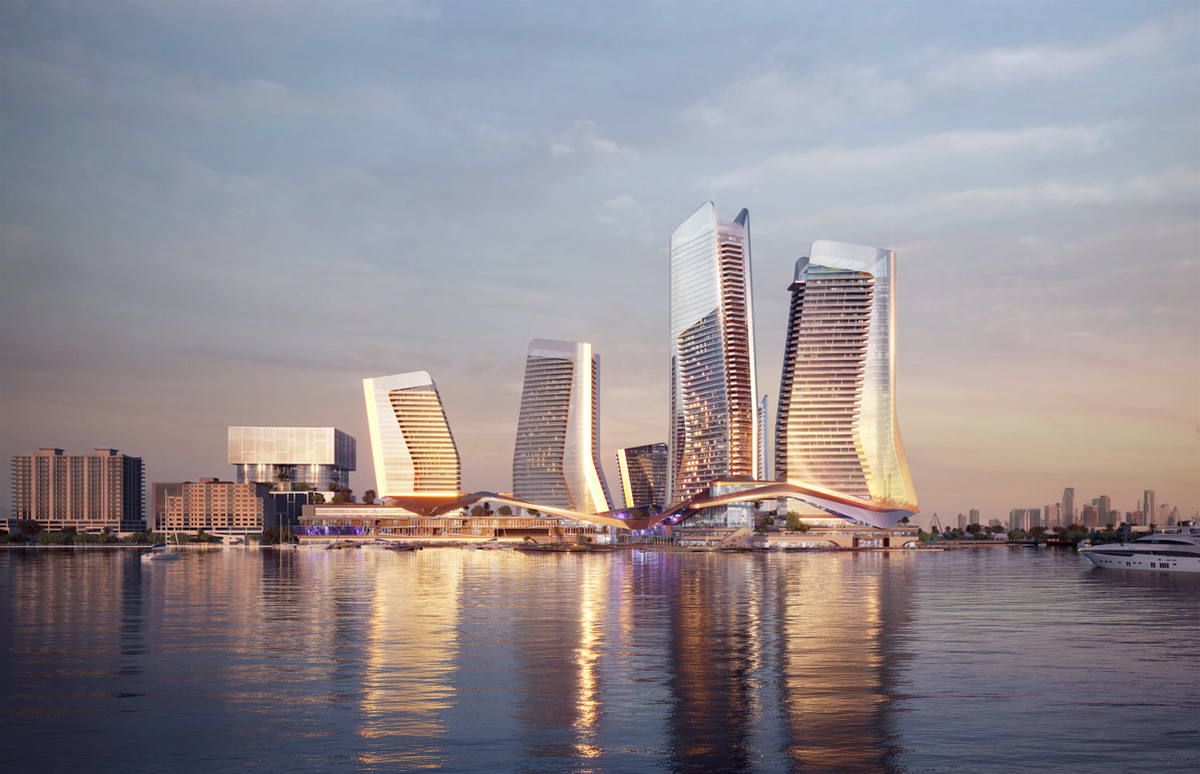
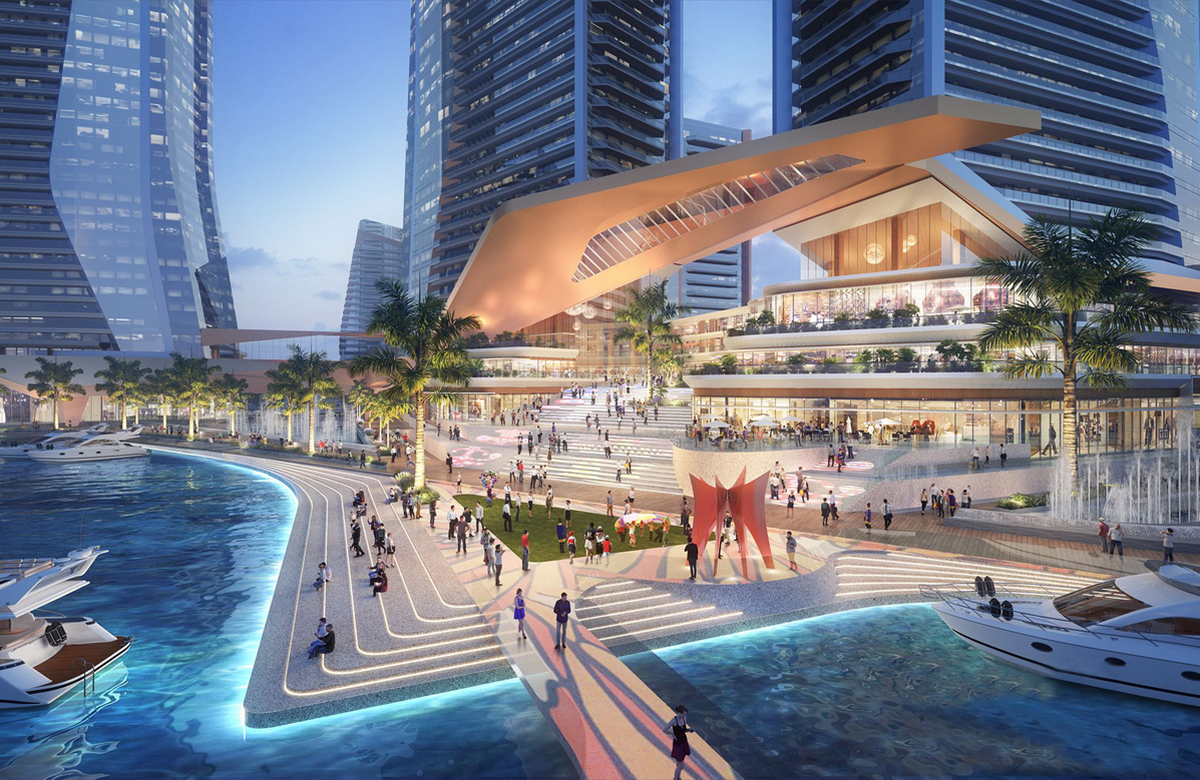
Sunbeam’s final plan packs 2,000 apartments, an office tower, a 300-room hotel and nearly a million square feet of retail and restaurant space. The developer is required to build a baywalk, a seawall and dedicate 100 apartments to workforce housing, in exchange for getting a special exception to build up to 65 stories.
In October, the North Bay Village commissioners approved that plan and the height exception. As they saw it, the village would yield $17 million in impact fees, $15 million in development fees and $10 million in community fees, way beyond the village’s annual budget of $11 million. The money will go towards enhancing the village’s parks, stormwater infrastructure and road repaving.
Sunbeam’s master plan would also bring much needed retail, restaurant and office space. In other words, Streitfeld said, North Bay Village will become a place where residents can live, work and play.
Sunbeam’s development will span a decade, Ansin said. Construction will be divided among three parts. The firm is working on pulling building permits for the first part — apartments, workforce housing and commercial space for restaurants, retail and a grocery store.
Montreal-based real estate investment firm Jesta Group, which bought the boutique Best Western hotel with the well-known watering hole Shuckers Bar & Grill in 2016, submitted its redevelopment proposal in the fall. The firm wants to convert the hotel at 1819 79th St. Causeway into a 30-story tower. It will have a new space for Shuckers Bar & Grill, 250 hotel rooms, 345 apartments and 17 workforce housing rentals — apartments with capped rents between 60% and 140% of the county’s area median income of $68,300.
North Bay Village is the “only place left in Miami with significant waterfront land that’s sitting vacant,” O’Brien said.
The firm needs final site plan approval and expects to have that by January. After the approval and securing permits, construction is expected to start in 2023 and wrap by early 2026.
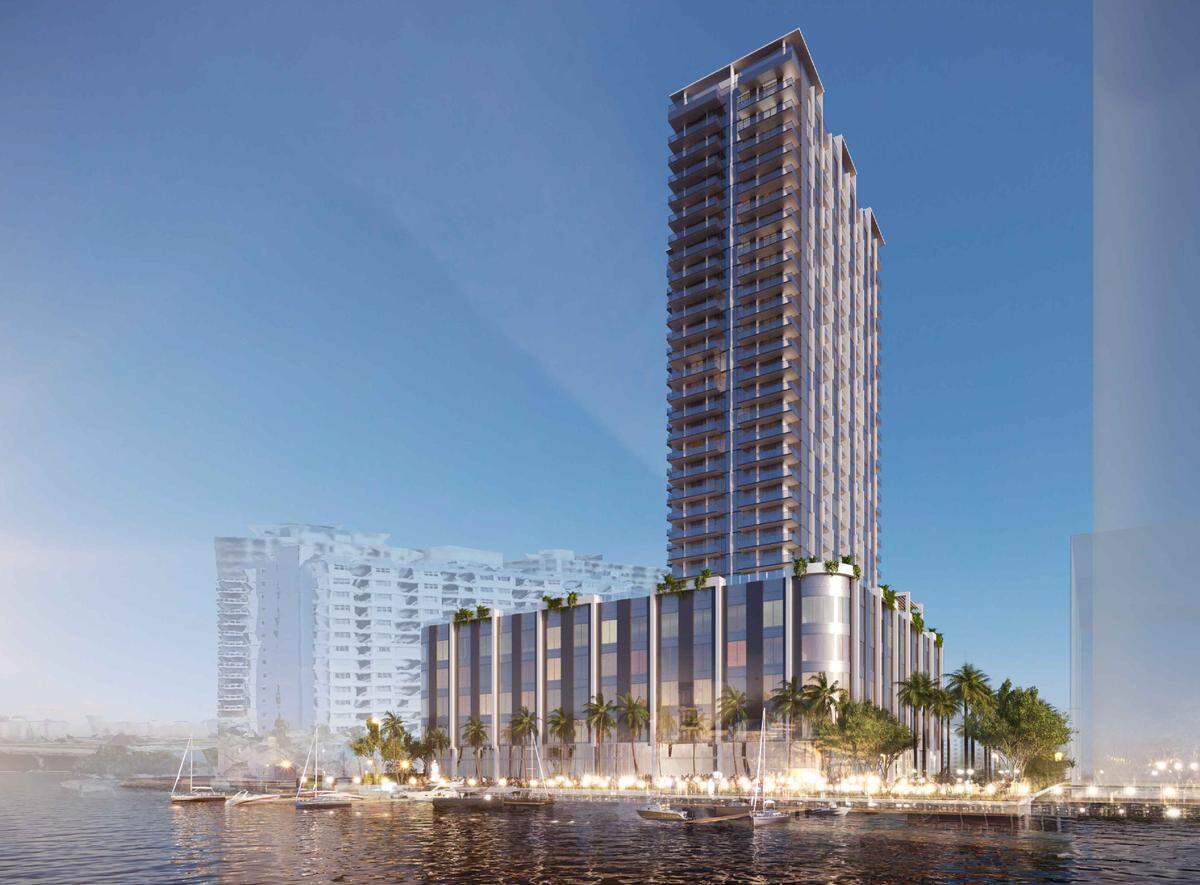
Finally, last month Ian Bruce Eichner — who built the Continuum on South Beach — presented a revised condo project adjacent to Jesta Group’s Best Western and Shuckers Bar & Grill site. Eichner filed plans to build a 30-story building with 201 residences and space for retail. North Bay Village approved the project, including the request to reduce parking from 408 parking spaces to 384.
‘It’s time to go’
Certain residents and real estate experts doubt whether these real estate projects actually will materialize and how much good — if any — they’ll bring to the community.
Robert McKnight and his wife moved to North Bay Village 10 years ago. They lived in Miami Beach and found an oasis in the village. They moved around the village and now live in a condo with two children. McKnight and his wife are grateful for their close-knit neighbors.
After the approval of Sunbeam’s project, McKnight said, “Now, we’re thinking it’s time to go.”
Traffic, he said, will become unbearable. Given the parking reductions all developers have requested, he predicts a scenario where cars will be jammed on the village streets.
Sherry Abramson, another village resident and member of the planning and zoning board, shared similar concerns. Abramson moved to North Bay Village four years ago.
“The whole community could potentially benefit from this project, if it’s executed responsibly,” Abramson said. “I am not anti-development. I would love to see those unutilized lots developed. That would be wonderful. Slapping 650 foot towers across those lots up and down the causeway is not what our zoning allows. It would eliminate view corridors to the bay.”
Residents might not have too much to worry about, said Peter Zalewski, founder of the consultancy firm Condo Vultures in Miami.
“The North Bay Village condo market is where they go to die,” Zalewski said. “I would compare it to a rest stop at a highway. You’re always in transition. The services there are always subpar for what developers want to get.”
Well-regarded home developers like Lennar had attempted to build successful high-rises and failed, he said.
“Assuming that they get built, it could be 50/50,” Zalewski said. “It’s where developers announce stuff, and either it never gets done or it gets done and it’s not successful. I define success by being able to sell out and not having to do distress sales.”
Apartments tend to be successful there, he said, since North Bay Village, Bay Harbor and North Beach often attract a steady stream of renters.
Time will tell how these developments will alter North Bay Village, a community whose most well-known destination — Shuckers Bar & Grill — sits tucked away in a nearly deserted boutique hotel. On a recent weekday night, customers sat on the restaurant’s deck, breathing in the intermingling scents of saltwater and calamari. A line of televisions showed different sports games above a bar and rock music soon turned to a live performance with a singer crooning a tune reminiscent of Phil Collins, a star who, like the town, had experienced better days.
“What’s important for the community is that projects get realized,” developer Jesta Group’s O’Brien said. “It’s a good time now to build even with a potential recession.”
This story was originally published November 20, 2022 at 5:30 AM.