Sign of evolving Wynwood: Luxury apartment building replacing Salvation Army lot
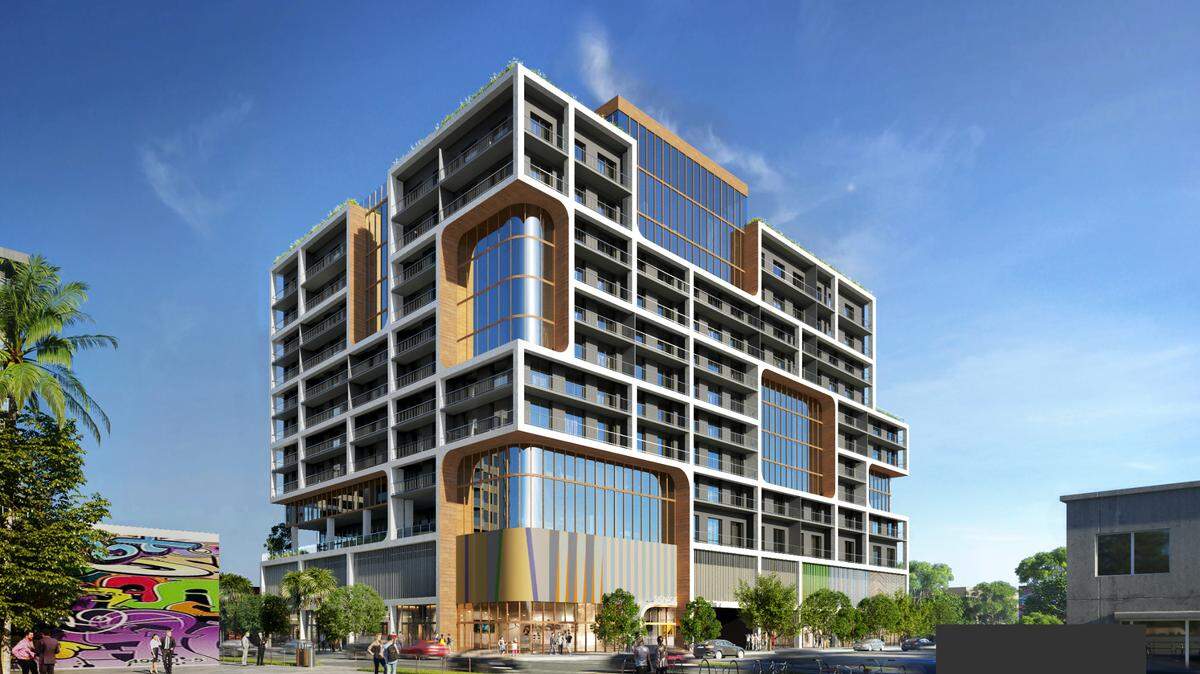
A New York developer plans to build its first apartment building in Miami on a former Salvation Army site in Wynwood, in a project exemplifying continued gentrification of the neighborhood.
The nonprofit sold its parking lot last week at 18 NW 23rd St. for $18 million to investment firm Breakers Capital and Alchemy-ABR Investment Partners, a New York City apartment and condominium developer and operator.
The development firm’s co-founder and managing partner Brian Ray said the plan is to convert the L-shaped, 36,000-square-foot property into a 12-story development with 186 market-rate apartments, retail space and a garage. The apartments will range from studios to three-bedroom layouts. The project will deliver more living options, but likely at rental prices few local residents could afford.
The apartment project adds another boutique residential development in the pipeline in the area, since condo and apartment developers have jumped in to provide pricey housing in a neighborhood known decades ago for its factories and artist studios.
Wynwood continues to transform far from its 1950s roots as a warehouse hub. Artists turned to the neighborhood — an area spanning 27 blocks and landlocked by Edgewater, Midtown and Interstate 95 — during the early 2000s to find cheap rents for studios. Projects like the Wynwood Walls and the now-gone Wynwood Yard drew foot traffic from residents and tourists alike. Now, the neighborhood keeps growing into a full-fledged community with high-end restaurants, office space, shops and housing.
The area has condo and apartment developments in the works by the likes of Related, LNDMRK, Carpe Real Estate Partners and L&L Holding Company. After an outcry from longtime residents in nearby Wynwood Norte, a few mixed-income developments have cropped up, including one by Magellan Housing and Miami Heat star Udonis Haslem.
“We’re still New York developers, but we’re trying to spread our wings. Wynwood is a unique area,” Ray said in an interview.
Having grown up in West Palm Beach, he said, “I’ve watched Wynwood evolve. We feel it’s a unique market that has boundaries to it. Once that land is developed, it’ll be over. It reminds us of Santa Monica, Williamsburg, the Village [Greenwich Village]. It’s walkable and based around art and culture. There’s not a lot of places like that.”
The project actually will be the firm’s first development in South Florida. Alchemy hired Arquitectonica and interior design firm MKDA to design the building. The developer expects to secure final approvals from the Wynwood Business Improvement District and the city of Miami over the next year. Construction is expected to start in 2024 and conclude by 2026.
The Salvation Army will use the $18 million from the parking lot sale to support its 108-bed rehabilitation center in Wynwood, said Mark Winters, Salvation Army’s administrator for its adult rehabilitation center in Miami.
The nonprofit still has 18 remaining properties across Miami-Dade County, according to property records, and intends to keep all of them, including the rehabilitation center and store in Wynwood, Winters said.
“It became apparent we weren’t going to use it for the original purpose, which was a store. It would have been sitting there being used as a parking lot,” Winters said. “We spoke with the Atlanta headquarters and said it was time to let that property go.”
The Wynwood Business Improvement District — an organization focused on supporting business owners in the neighborhood — embraces Alchemy’s apartment project, its executive director, Manny Gonzalez, said. More dense residential buildings mean more foot traffic will come for local restaurants and retailers.
Still, Gonzalez said his organization recognizes the value of and need for the neighborhood to have housing that’s priced affordably for local workers and other residents. The Wynwood BID started a $10 million fund in May to encourage developers to include either affordable or workforce housing units in their developments.
Money for the business improvement district comes from developers chipping into the Wynwood Public Benefit Trust Fund, which they started doing two years ago, in exchange for additional square footage to build apartment or condo buildings. Gonzalez said he hopes the fund will double to $20 million next year.
So far, three real estate developers are in talks with Wynwood BID officials to tap into the trust fund in exchange for mixed-income housing projects. In a month, Gonzalez said, the improvement district’s website will include a formal application for developers to apply for funding.
Wynwood joins many neighborhoods and municipalities across Miami-Dade facing an affordable housing crunch. Several of them, such as Miami Beach, are like Wynwood making a push to encourage developers to build affordable and workforce housing, after seeing an exodus of essential workers in South Florida during the pandemic.
“Our goal is to have diverse housing. Wynwood became famous by welcoming all,” Gonzalez said. “The same applies when it applies to business. Businesses understand that folks working at these businesses, they are not going to be able to recruit employees that cannot find cheap parking that have to travel in traffic to get to Wynwood. The perfect scenario is to have employees living near with where they work.”