
After Surfside tragedy, ‘a major move forward in safety.’ How will condo reforms work?
Until now, the volunteer boards responsible for the upkeep of Florida’s 1.5 million condos have gone about the job with little state oversight.
Some — no one knows how many — have simply dropped the ball, placing residents’ lives at risk by neglecting routine maintenance or critical repairs, critics say.
Now that’s all about to change, rapidly and dramatically. For the first time, the state will require condos across Florida to conduct regular building inspections, with strict requirements to build sufficient cash reserves to cover structural maintenance and repairs. What’s more, the state’s 4.5 million condo dwellers and the general public will find out the true condition of the aging but critically important stock of condominium residences.
It starts almost immediately: Under a reform law approved unexpectedly and unanimously by the Florida Legislature this week and signed into law Thursday by Gov. Ron DeSantis, the association boards governing all condo and cooperative buildings taller than three stories will have until the end of 2024 to complete baseline inspections to determine current and future structural maintenance and repair needs. And then boards would calculate an amount of money to be collected from condo owners to cover any repairs. That amount of money will vary depending on a building’s age and condition, and existing cash reserves. Condo associations will no longer be able to waive cash-reserve requirements for structural work.
All condo buildings over three stories that have been occupied for more than 30 years, meanwhile, must from now on undergo extensive structural and life-safety “milestone” inspections, and obtain a seal of approval from a licensed engineer or architect, then repeat the process every 10 years after that. Those within three miles of Florida’s coasts must conduct milestone inspections after 25 years of occupancy. For buildings occupied before July 1, 1992, the first inspections must be completed by Dec. 31, 2024.
Condo structural fitness transparency
Also for the first time, the findings from those inspections must be submitted to county building officials, condo unit owners and even prospective condo buyers, introducing a significant level of public transparency to a process that often had been shrouded in obscurity by condo associations worried about the effect on condo values or maintenance assessments. Condo board members who neglect to raise needed money and undertake repairs can henceforth be sued by condo owners for dereliction of duty.
Developer obligations on new condos
The legislation also imposes new financial duties on developers. Before turning over new condo buildings to associations, developers must conduct a baseline structural study and an analysis of future maintenance and repair needs, and start building reserves.
That required reserve study will cover load-bearing walls, primary structural elements, roofs and foundations, among other things, and could reduce the chances that construction or design defects are passed on to owners. Experts think that hidden design and construction deficiencies in tandem with inadequate maintenance contributed to the catastrophic collapse of the Champlain Towers South condo in Surfside in June 2021.
The changes are laid out in a set of amendments to Florida’s condo law approved by the state House and Senate on Tuesday and Wednesday, more than two months after the Legislature failed to agree on reforms during its regular session.
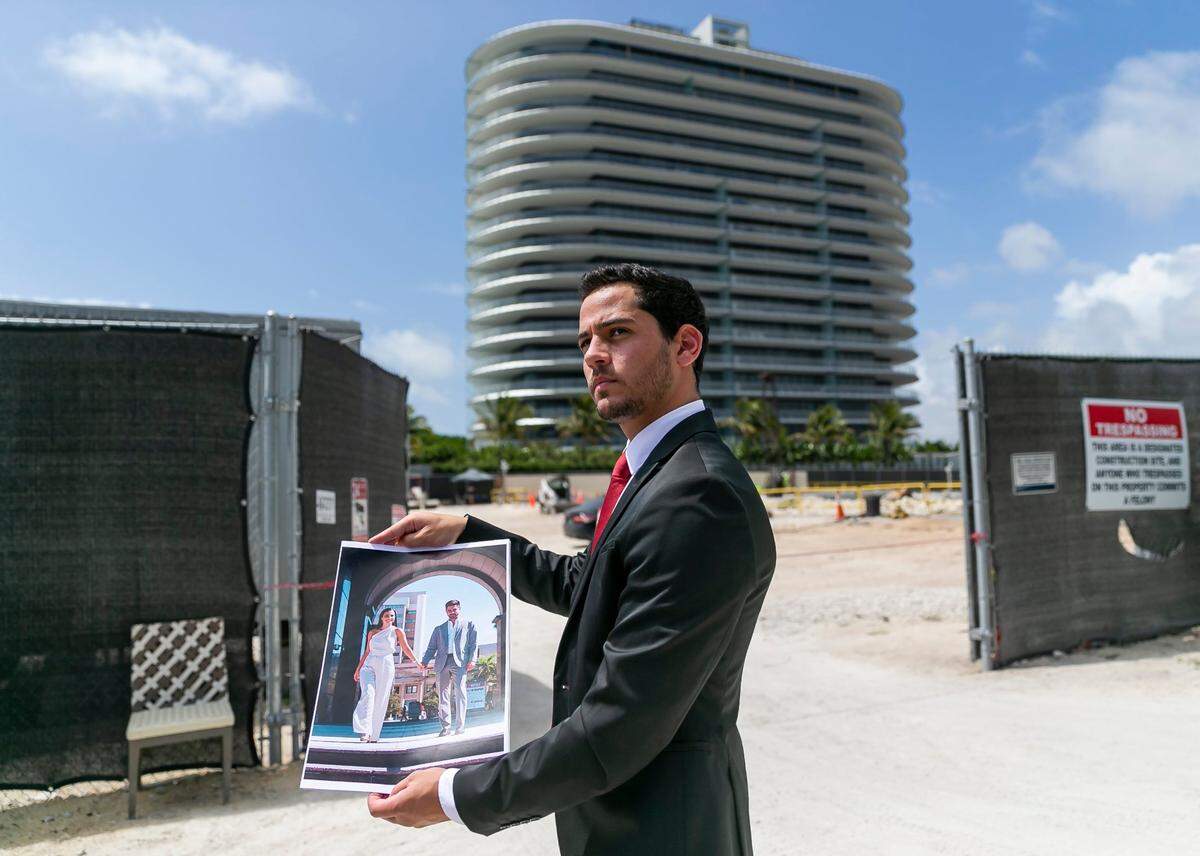
In a surprise, the Legislature acted swiftly this week during a special session designed to address a home-insurance crisis after coming under substantial public pressure for doing nothing to shore up condo inspections and regulations following the Surfside tragedy, which claimed 98 lives.
The reform law generally hews to detailed findings and recommendations issued after Surfside by public-interest groups that include the Florida Bar, the Miami-Dade County Grand Jury, a consortium of Florida professional engineer associations, and the Community Associations Institute, a national organization that represents thousands of associations, managers and residents.
The reforms had broad but not uniform support from principal sectors of the condo industry, including association representatives, condo lawyers and real estate brokers.
Together, backers say, the reforms should markedly boost confidence in the safety of Florida’s condos, shaken by the Surfside collapse. The new rules give added authority to condo boards that may have in the past been reluctant to raise fees and assessments for needed repairs because unit owners object to paying more money. New disclosure regulations mean boards can no longer hide bad news on the condition of condo buildings.
“For condo owners, its going to create, especially after they watched the Surfside building collapse, an opportunity for residents and their boards to know for sure whether their building is safe or not, because that inspection is going to happen,” said Dawn Bauman, senior vice president at the Community Associations Institute, which helped Florida legislators draft the condo amendments.
The periodic milestone inspections of older condo buildings, she said, “will provide proof of the structural integrity and safety of the building.”
“It will also give an opportunity for a better understanding of what maintenance may need to be done. It gives backing to boards and managers to get the work done when it needs to be done,” Bauman said.
No state action to reduce financial stress
Bauman and others caution that the bill, the result of compromises worked out quietly over a period of months, will likely require tweaks to refine rules and address other lingering issues. More guidelines on inspections are still to come, for instance. The bill instructs the the Florida Building Commission, which oversees statewide building construction codes, to make recommendations on specific requirements for the milestone inspections by the end of this year.
Prominent condo-law attorney William Sklar, of Miami-based Carlton Fields, who chaired the Florida Bar’s task force, said the Legislature did not tackle a key issue — the financial consequences of stricter inspection and reserve rules on condo owners and associations.
Post-Surfside reports by the state’s legal bar and other groups urged legislators to consider financial assistance for older condos with residents on fixed incomes who may find it unaffordable to build reserves or pay for extensive inspections or repairs, especially if they had waived the requirements to set aside cash.
The bar also recommended allowing new requirements for reserves to kick in gradually over years to give those condos time to beef up their accounts, but the legislation appears to require they be up to date on collecting money within two years, Sklar said.
Uncovering unforeseen building defects
Those reserve and inspections requirements may mean unpleasant surprises even for well-run buildings with cash on hand, said broker Andres Asion, founder of Miami Real Estate Group and a board member of the Master Brokers Forum, a local network of prominent real estate agents and brokers.
As an example: Asion’s own condo residence at South Pointe’s Murano at Portofino tower, a 21-year-old building whose association undertook inspections as part of routine due diligence and discovered unexpectedly extensive concrete spalling, pool deck waterproofing and balcony issues. The cost so far, at a time when construction costs have risen dramatically: a $30 million special assessment, on top of existing reserves, that’s expected to increase further.
The affluent owners of Murano’s 189 units can afford the assessment, but many others won’t when inspections uncover unforeseen problems, Asion said.
“They’re going to find surprises. Now they realize they have structural issues, say, and even though they have reserves, the reserves don’t contemplate this,” Asion said. “It becomes a problem for some unit owners. It’s going to displace people who can’t cut the check for these assessments.”
Still, he said, the reforms were necessary, and will help future condo buyers know exactly what they’re getting into.
“There are clearly issues that need to be addressed,” Asion said. “I think overall it’s security and safety for future buyers that the building they’re buying into is a sound investment. That lifts the surprise element. But I think there will be a lot of turnover of owners.”
Will Congress offer condo owners financial aid?
Assistance may be forthcoming from Congress. The Community Association Institute is working with Florida’s Congressional delegation on a bill that would provide low-interest financing and grants to associations to carry out repairs. Florida representatives Charlie Crist and Debbie Wasserman Schultz recently introduced a bill that would allow individual condo owners to apply for low-interest loans, she said.
Overall, though, the enacted reforms are far-reaching and should have enormous effect, Sklar said. The state says 60% of Florida’s condo buildings, or some 912,000 units, are older than 30 years. Those would quickly need to get the ball rolling on milestone inspections, even if some details and requirements are still to be worked out, he said.
“Its well over two-thirds of all condos that will be covered by this. That’s the good news,” Sklar said. “This is a fine first step. In the next year, professionals can look at how to implement this.”
The enormity of the undertaking does give some supporters of condo reform pause.

It’s not clear whether the limited pool of licensed Florida engineers and architects who do condo inspection work can cope with the expected surge in demand for their services, said Roberto Blanch, an expert on association law at Siegfried Rivera in Coral Gables. Many engineers and architects already avoid condo work for fear of lawsuits, a concern exacerbated by the staggering $1 billion settlement of litigation over the Champlain Towers disaster, Blanch said.
It’s also unclear how the reforms will affect county building departments that may be faced with substantial workload increases as condo associations apply for permits for repairs as a result of the mandated inspections, he said.
“Something had to be done, and this is a step in the right direction,” Blanch said. “Let’s see how it works. Once we start getting into the real world and putting this all into place, I think we’re going to experience some growing pains. We shall have to see, from the condo boards’ perspective to the engineers and to the building departments, how all these ingredients blend together.”
‘Major move forward in life safety’
The bill approved this week represents a somewhat trimmed-back version of the proposal that stalled at the end of the regular session, chiefly over the issue of strictly requiring cash reserves. Its sponsors and chief backers, Rep. Danny Perez of Miami and Sen. Jennifer Bradley of Fleming Island, both Republicans, and Sen. Jason Pizzo, a Miami Democrat, continued to work with advocates and other legislators on compromises to get the bill passed, the Community Associations Institute’s Bauman said.
Among the changes that led to approval was focusing the stricter cash-reserve requirements on structural and other critical building elements, and not on relatively minor items such as lobby renovations, to lessen the financial burden on associations and unit owners, Bauman said.
Among the most far-reaching changes are the requirements for milestone inspections for older buildings, which will consist of two phases. The first is a visual inspection of structural building elements. If a building passes the test, no further action is needed.
But if evidence of structural issues is uncovered, the law will require a second phase consisting of deeper inspections that could include drilling into concrete and support elements to determine their underlying condition, and then a repair plan if needed. The law also imposes tight deadlines of 180 days for completion of inspections and a year for phase two repairs.
“That is a major, major move forward in life safety,” the Florida Bar task force’s Sklar said.
Sklar and other supporters say the measures will ensure consistency across the state and create a public record of condo conditions for the first time. The cash-reserve structural integrity studies must be conducted every 10 years and reports kept for 15 years. There are also plans to create publicly accessible databases of condo inspection reports.
They also say the reform law should ease concerns of condo insurers, some of whom pulled out of the Florida market after the Surfside collapse amid a broader statewide home-insurance crisis. They also hope it can help persuade the two federally chartered agencies that back most condo mortgages, Freddie Mac and Fannie Mae, to dial back strict, sweeping new requirements that condos prove structural safety before bankers can issue loans to unit buyers. The requirements, which went into effect this year, have added uncertainty and a substantial work burden to the condo-buying process.
One potentially significant question hinges on how the state reforms will affect longstanding extensive and mandatory condo-inspection programs in Miami-Dade and Broward counties, which require buildings 40 years old to undergo recertification every 10 years. Miami-Dade commissioners have been looking to move up the county recertification timeline to 30 years and broaden inspections requirements in the wake of Champlain Towers.
In some respects, condo-law expert Blanch said, the new state regulations appear to replicate or overlap the Miami-Dade and Broward programs, though the counties require a broader suite of inspections.
“I see that (state bill) as a spin on what Miami-Dade and Broward already have,” Blanch said. “The question that I presume will have to be reconciled is that there is some duplication. One question mark that’s out there is how the boards of county commissioners are going to handle it.”
Another question, Bauman said, is whether “special interests,” such as developers, who did not have a chance to weigh in on reforms this week will attempt to “tear away” at the new rules at the next regular legislative session in 2023, especially if implementation issues crop up in the meantime.
“It’s not perfect. There is work to be done,” Bauman said. “But the fact that it passed is an A-plus.”
This story was originally published May 27, 2022 at 6:00 AM.