Real estate is pumping South Florida’s engine. But who’s fueling it with cash?
In easier times, construction financing was generally a routine matter of paperwork.
But in the COVID age, lenders often are laser-focused on details that previously were rarely even discussed.
That was the experience of Nelson Stabile, a principal with the Miami-based private equity and development firm Integra Investments, who found himself reviewing construction cost analysis and insurance programs with lenders — even conducting virtual tours — to them to finance $70.3 million in construction loans for two projects in July and August.
“We had one lender who is keen on physically walking the neighborhoods. We had to basically do everything virtually,” Stabile said.
The entire process added a month to the overall development timeline. “Still,” said Stabile, “we were fortunate to secure financing amid the pandemic.”
Other local developers weren’t as lucky. As the pandemic swept the nation, South Florida lenders slowed or halted construction financing, further staunching a development wave that had already begun to ebb. COVID’s impact on brick-and-mortar retail and hospitality brought a full stop to plans for many new shopping centers and hotels; the shift to remote working left banks and other firms wary of new office projects.
But as October and November have rolled around, lenders have warmed to warehouse and residential projects — provided the developer has a strong track record and a penchant for detail.
That’s good news for South Florida’s real estate development and construction industries, which employ about 140,000 workers.
“Every construction project is a potential economic engine for the community,” said Steve Cohen, senior director of commercial real estate for Synovus, a Columbus, GA-based bank backing South Florida projects. “It creates jobs for architects, engineers, contractors, building supply firms. It creates construction jobs that can last two years or beyond. It provides real estate tax to the community.”
Synovus is one of a handful of commercial banks still lending for South Florida projects; others include Wells Fargo, Bank of America, BB&T, Bank OZK and Canadian Imperial Bank of Commerce. Private equity firms including Blackstone and Goldman Sachs, family offices and private investors also provide lending for local deals.
One thing all have in common: Stringent requirements. Bank stress tests implemented after the Great Recession have made lenders acutely aware of the need to manage risks.
“Deals have to be fully buttoned up,” said Andrew Kurnit, executive director of DWNTWN Realty Advisors. “There is no appetite for risk. The stars have to perfectly align these days for a project to be financed.”
Only seasoned developers are making the cut, said Eddy Arriola, chairman and CEO of Apollo Bank. These days, he only looks at projects from developers with more than five years of experience.
“We want multiple successful projects,” Arriola said. “As a lender, we want to see how have they responded to a lawsuit, partner issue, managing multiple subcontractors? How do they manage three or four projects at a time? How have they handled hurricane season? There are so many factors that can come up and it’s important to see how they handle market forces.”
Patrick Ramge, Wells Fargo Florida’s senior vice president for commercial real estate, calls it “cycle tested.” Ramge wants to see that “they’ve been through one or five market cycles to show that they have behavioral performance, or acted accordingly to whatever obligations that they had on financing circumstances. It comes down to making sure that we understand our clients very well.”
A successful track record shows banks that borrowers have their priorities straight, Cohen said.
“We’re in the business to rent money, not to give money away,” Cohen said. “Those borrowers that come with a lot of experience know how to anticipate the risks that are inherent in development. If they know the risks, they know how to protect themselves as the investor and therefore they protect us as the lender.”
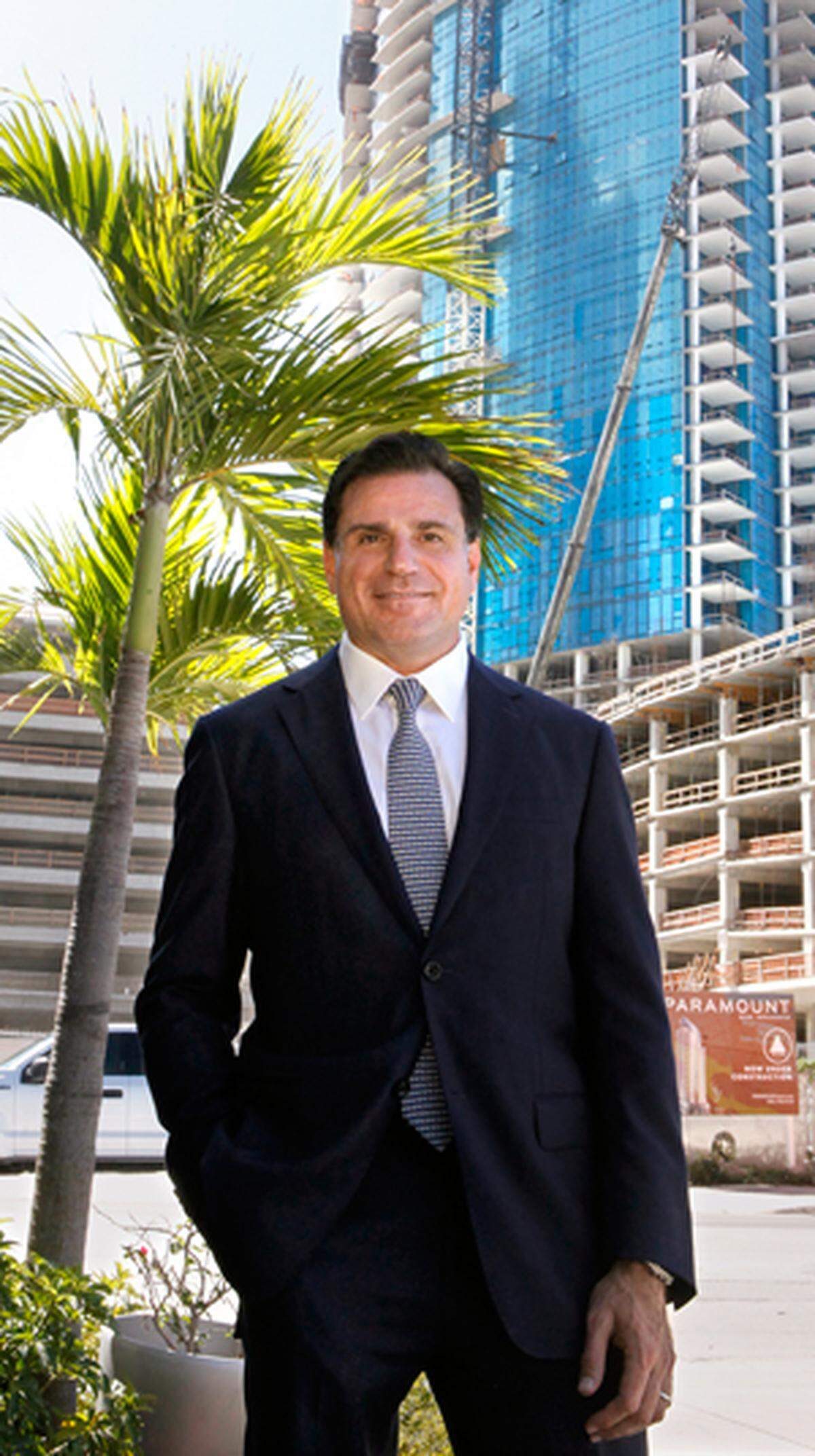
As a result, big firms generally have an edge, said Dan Kodsi, CEO of the Paramount Miami developer Royal Palm Companies. “This is where reputation and execution matters.”
.jpg)
Industrial takes center stage
Market forces also matter. This fall, that means warehouse is pulling in the green, said Sebastian Juncadella, an associate with Coral Gables-based commercial brokerage Fairchild Partners.
Juncadella credits the warehouse market’s relatively unscathed performance.
“It is a sector that has done relatively well in terms of vacancy, loss of tenants, and defaults compared to other real estate sectors, such as office and retail space,” he said.
The pandemic has accelerated already-vibrant e-commerce — resulting in increased demand by Amazon, logistics companies and existing industrial tenants, said Ramge.
As a result, lenders are competing for industrial projects, Arriola said. “Industrial is super hot, because Miami is booming. There is so much competition that we’re seeing alternative money, such as equity with debt, and big banks [in the space].”
Still, the industrial boom won’t last forever, noted Suzanne Hollander, a lawyer and professor at Florida International University’s College of Business Hollo School of Real Estate. “But I expect we are going to see a pause in lending. If a developer had it built to suit, it’s still seen as risky.”
Residential? It depends
That doesn’t mean residential is out in the cold. Multi-family rentals, condos and single-family home developments can still be good bets, said Arriola. For Apollo Bank, the sweet spot is condo and single-family developments with dwellings listed for $700,000 or less, and rental apartments leasing for less than $3,000 per month.
“South Florida is in need of housing. If there is something more people can afford, we want to lend,” Arriola said.
Bank OZK, too, is backing construction for apartment rentals. “Everyone needs a place to sleep at night,” said Brannon Hamblen, Bank OZK president.
Synovus was encouraged by a high collection rate — about 90% — by apartment landlords as tenants continued to pay their rents during the pandemic. Like others, his bank also anticipates population growth as more people abandon northern cities for South Florida’s warm weather and low tax rates.
“Our clients have a long-term view on investment strategy,” Cohen said. “To start a project today, units won’t be delivered for 18 to 24 months. By then, there should be a solution for the pandemic. The other thing that we see is that apartment complexes that were recently completed have been leasing up in a strong way.”
And as always with real estate, the key is location, location, location, said Carolyn Whatley, managing director of broker Berkadia Commercial Mortgage, by email.
“Specific to the pandemic, we pay close attention to markets with a concentration of a high-risk employment base being impacted by the pandemic. This requires a deep analysis on the market’s past resilience and current performance, using our proprietary data analytical tools. Still, this brings us back to the fundamentals — ‘Is there demand?’ ‘Is there household growth?’ ‘Is the location good?’”
While starts on multifamily condo and rental projects were down significantly in the third quarter — with 2,055 units in 2020, down almost 38% from 2019 — they’ve picked up since October, according to Ned Murray, associate director of FIU’s Jorge M. Pérez Metropolitan Center. Construction starts already are set to be up about 30% in the fourth quarter of 2020 over the same period in 2019. More than half are in the city of MIami.
“The city housing market is still attractive to developers and investors,” Murray said. “The question going forward will be the absorption rates of these new developments. That will determine whether a slowdown is occurring.”
Still, bankers see uncertainty in the residential market. As a result, they’re charging a premium — and demanding developers shoulder a greater share of the burden.
Prior to the pandemic, lenders were looking for a developer to put up 30% to 34% in equity on a project. Now the threshold has edged up to 35% to 45%, said Stabile.
His firm, Integra Investments, secured financing for two affordable multifamily projects in July and August. At Las Brisas Trace in Brownsville, Integra put down $26.3 million in equity and received a $24.8 million construction loan. In Allapattah, the company put down $18.7 million and landed a tax-exempt bond construction loan for its $58 million senior housing development, Mosaico. It is working in partnership with the Elderly Housing Development & Operations Corporation.
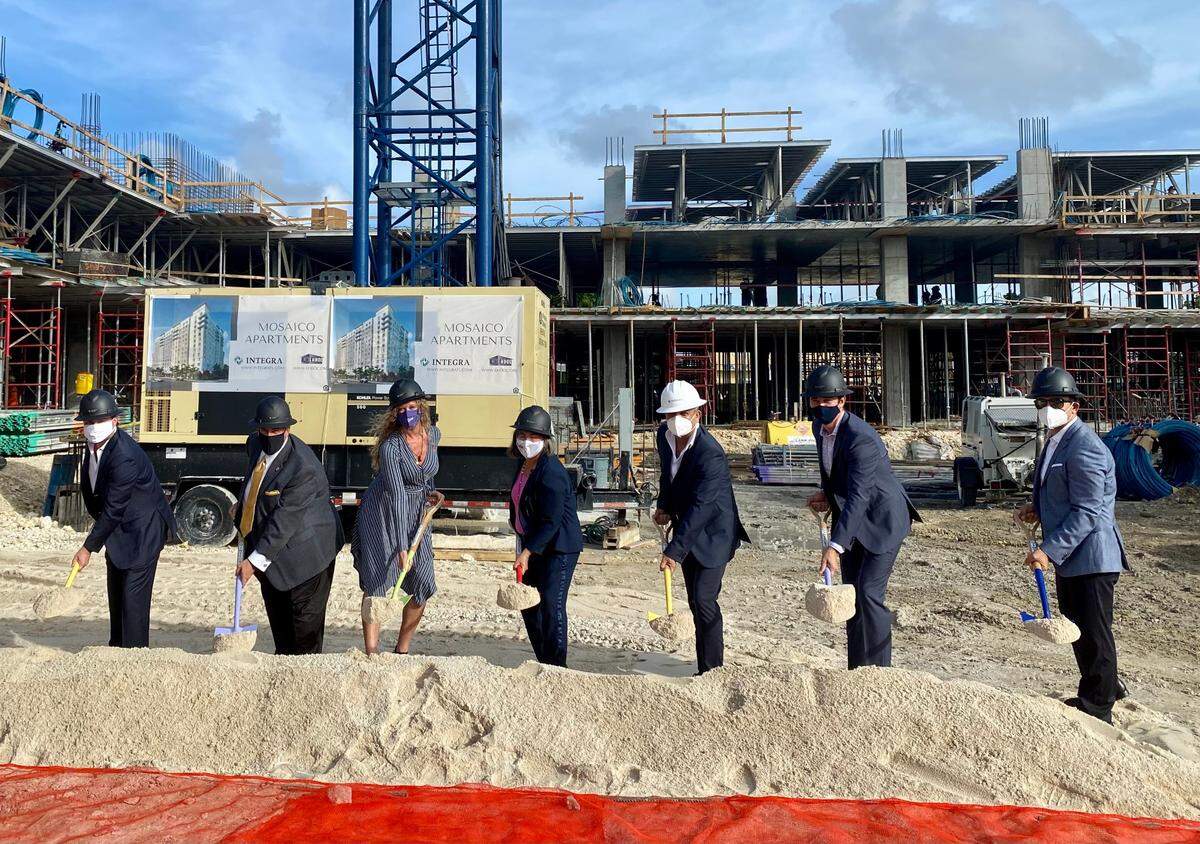
Despite ongoing demand for affordable and workforce housing, Mosaico may be one of last new projects of its kind for the foreseeable future, experts say.
Developers can earn higher profits through other types of residential projects, said Ken H. Johnson, a real estate economist and professor at Florida Atlantic University, via email. “Margins remain relatively small for developers. Therefore, developers continue to build in the higher margin markets and not in the area of workforce housing.”
“The time to solve housing-affordability problems is when the housing market is at the bottom of a housing cycle... when local governments can move to acquire land rights and future concessions from developers,” he said. The market is too strong now for that to work, he said.
Federal, state, and local incentives may make a difference, said Hollander. “There is a demand for affordable housing; there is going to be an increased demand as there is more unemployment. Developers can make a profit...even with moratoriums or unemployment, the developer still gets paid because the government pays a portion of the rent.”
SMALL LOANS, LESS RISK
For some lenders, smaller is better.
“Smaller firms are doing a lot of the business right now,”said Heather Zatik, senior vice president and senior commercial loan officer at Arkansas-based Centennial Bank, which is active in South Florida. “The huge developers may be putting projects on hold, depending on what the projects are. The smaller developers can get financing as long as they have a portfolio. As long as it’s a reputable company, this is the time that they can get financing.”
Cordelia Anderson agrees.
The founder of Miami-based I Heart Real Estate LLC lends only to small developers seeking a one-stop option for brokerage, property management and other services.
“We’re seeing more small developers,” Anderson said. “The money is there. Lenders have this money and they want to lend it. As long as the numbers make sense — the borrowers have some skin in the game — lenders are lending.”
A third of her loans are for new construction. She’s particularly keen on multifamily developments in Miami Gardens, Liberty City, and near downtown Fort Lauderdale.
“Those are good areas to get rent out of,” Anderson said. “The value is going up, because of all the areas around it. The numbers make sense.”
The size of the deal matters more than the size of the firm, said Jay Jacob, managing partner at the Davie-based private lending firm Community Capital Holding Corp.
“South Florida has a lot of folks that have a lot of real estate experience. It’s more about the deal size and scope of the project,” Jacob said.
His firm often lends to developers seeking around $5 million for a construction or bridge loan. Those have included Gregg Covin, co-developer to One Thousand Museum, for Covin’s spec single-family home developments in Miami Beach, and Current Capital, for projects in Hollywood.
Lenders consider loans of $1 million small, a deal small if they lend about a million, medium-sized if it’s between $5 to $9 million medium, and over $10 million large.
Community Capital has always preferred loans below $10 million. “We don’t like to play in large deals,” he said. “We like to stay in the medium range to spread out credit risk among many deals.”
Small-scale residential projects targeted to upscale buyers are finding success with individual investors, say lenders.
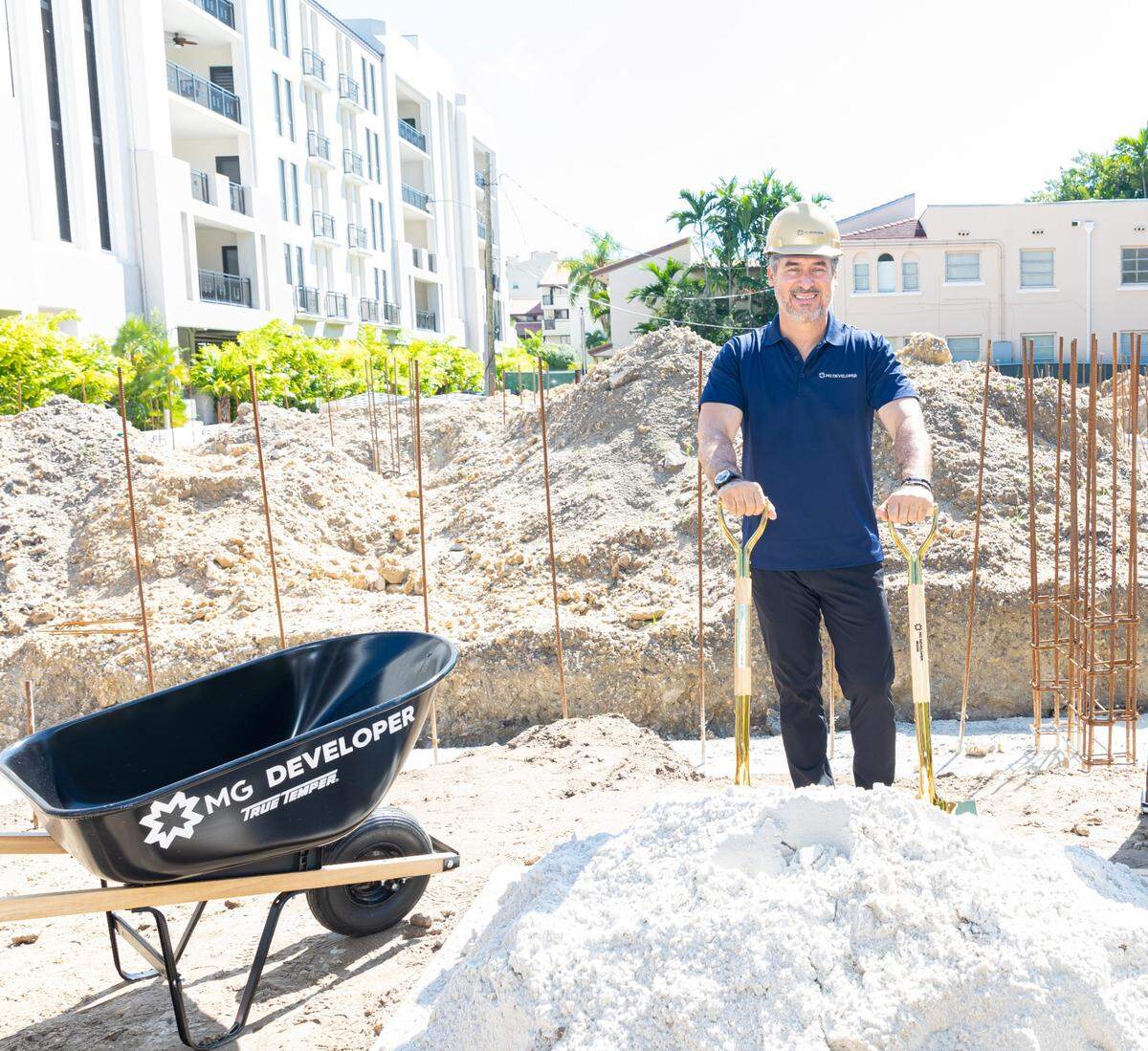
Coral Gables-based MG Developer secured a $16.15 million equity financing loan in October to complete a five-unit townhouse project, Beatrice Row, and and 10-unit Biltmore Row, both near downtown Coral Gables. Jeffrey Donnelly and Dmitry Levkov of Colliers International helped MG find an investor in New York. MG Developer spent a total of $60 million, from land acquisition to construction, on both projects.
“Florida is an attractive place for investors from New York and Chicago, because the population keeps on growing,” said Alirio Torrealba, founder and CEO of MG Development.
MG feels confident it can find backing for two additional Gables projects, a single-family home development and a rental apartment project. The details for both are still being finalized.
“We are not looking for financing yet,” Torrealba said, “but we feel that the projects are viable and we won’t have an issue finding financing.”
Retail, office
When it comes to retail and office projects, nearly all banks and lenders are giving a thumbs down as they wait to see how occupancy and the remote-work trend progresses
“Retail, office, hospitality — no not doing it,” said Camilo Niño, CEO and founder of LV Lending, a branch of the Miami and Medellín-based Linkvest Capital. “Eventually we will, but right now it is difficult to measure the risk.”
Says Bank OZK’s Hamblen, “There’s a lot more work from home. [But] there are some businesses that say it’s not easy to train new hires or build corporate culture working remotely.”
Arriola agrees. “On office, our phone is not ringing.
“For retail, I don’t think anyone is thinking about new construction, because there is going to be at some point next year a giant shift. Because of vacancies and consumer interest, I don’t know if I’m going to go shopping for two hours or am I going to be so used to online shopping? Am I going to want to go out to restaurants or keep cooking at home?”
Centennial Bank has continued financing some commercial real estate projects, but with 5% to 10% less leverage than pre-pandemic, said Zatik. While once it financed 70% to 75% of a project, now Centennial limits lending up to 60%.
Synovus is still considering some retail projects, Cohen said, especially those with grocery anchors and service-oriented tenants, including nail salons and restaurants or delis.
Above all, it looks at the project’s location.
“In general, real estate is a long-term asset,” Cohen said. “Owners of real estate have a longer-term perspective. Good tenants who are popular today may not be popular 10 years today. If the center is well located, if the space is going to be attractive to future users...that makes us want to lend on that property.”
Financing is beginning to ease for hospitality — especially when hotels are part of a larger project.
Kodsi is still looking for a $250 million loan for Legacy Hotel & Residences at Paramount Miami Worldcenter, a mixed-use project that includes hospitality, a medical center and residential. “Every lender says the same thing: ‘If it were just hospitality, we wouldn’t give you a term sheet.’ “
Apollo Bank is a bit keener on hospitality, especially when it comes to franchised hotels. It is providing financing for four projects on the west coast and northern region of Florida.
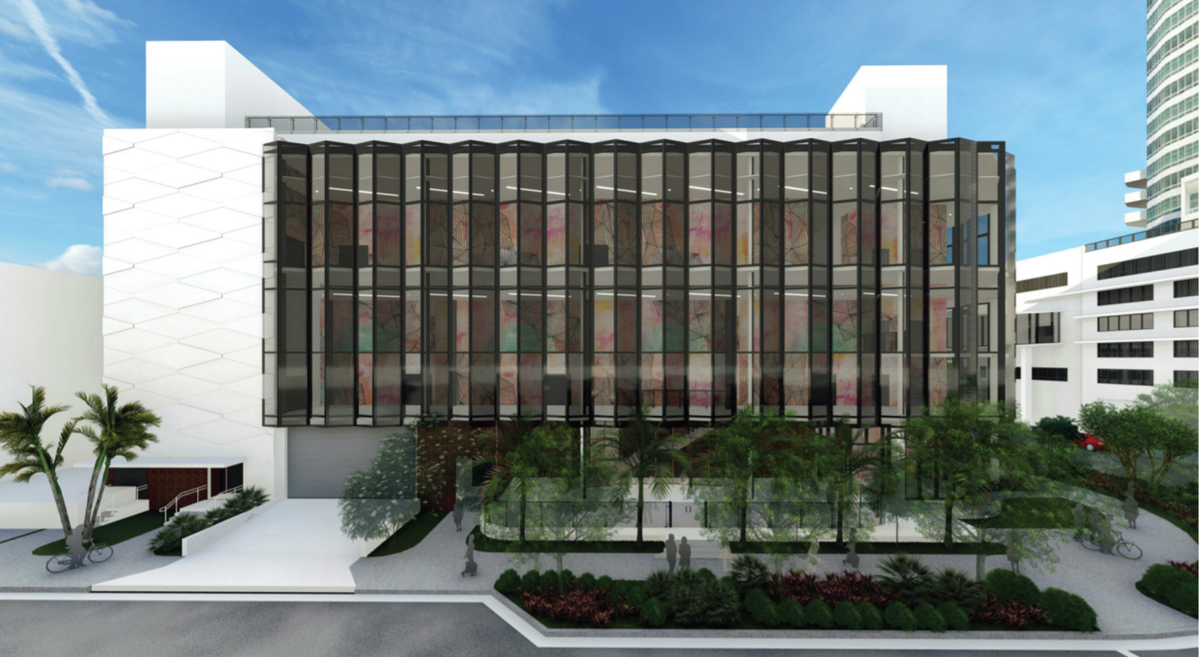
“Florida is expected to do well, because of taxes, sunshine and Latin America,” Arriola said. “With that comes people that are moving here and people who are going to work here. We are seeing more people that need to visit Florida for work, and tastes are changing. People don’t want a lot of human interaction; they are ok with less services.”
Despite layoffs earlier this year, Fontainebleau Development is moving forward with its Fontainebleau Miami Beach expansion, said Brett Mufson, president and CIO of the Miami-based development firm Fontainebleau Development. It is finalizing the design details and obtaining permits.
But it’s not yet at the money stage. “We are not ready to put a shovel to the ground for the Fontainebleau expansion,” Mufson said. “We wouldn’t start anything that we couldn’t get financing for.”
Next for lending
As to when lending is likely to increase, that answer may depend on medical advances.
Synovus’ Cohen is waiting for a time “when we all feel more comfortable getting on airplanes, going to sporting events, going out to dinner. Making sure that we do that responsibly is going to be key to the success of our economy, its the key to the success of our real estate market.”
Wells Fargo is evaluating projects on a case-by-case basis overlaid with a wait-and-see approach.
“We just need to see things play out locally, nationally, internationally as we learn to live with COVID,” said Ramge. “Each asset type is different. You are going to examine the merits of each transaction and make a decision on that — sponsorship, market forecast, and the project [itself].”
For Bank OZK’s Hamblen, last week’s upbeat news about promising immunizations was a welcome sign.
“The vaccine would certainly give people more clarity and confidence around getting back to work. That’s significant for a market like New York. It would also give clarity and confidence around traveling, which would be good for hospitality.”
One thing is for certain — businesses relationships will be more important than ever.
Community Capital’s Jacob finds that developers are now willing to pay a higher interest rate to work with a time-tested lender.
“We find that when we establish a relationship with the client they see how easy it is, cutting out the bureaucracy,” he said. “That velocity of the project moving forward, which creates efficiency, matters.”
“You can get the lowest interest rate at a bank,” said LV Lending’s Niño. “But when something like this happens the banks cut you off....Developers are going to value more the institutions that are going to work with them even through a difficult time.”
This story was originally published November 18, 2020 at 7:00 AM.