Average sale prices of local industrial spaces have dropped. But experts aren’t worried
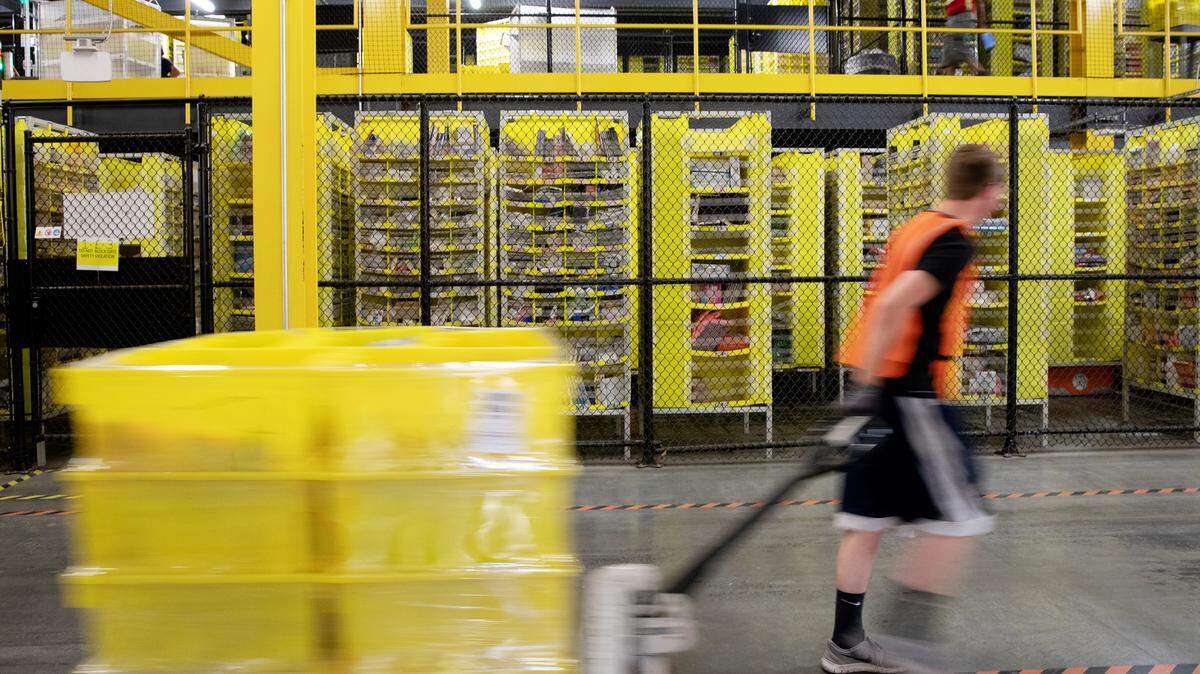
Warehouses in South Florida sold for less this year than in 2018, according to a recent study. But the price per square foot in Miami-Dade was up, indicating a healthy market, say experts.
The average sale price for industrial spaces in Miami-Dade, Broward and Palm Beach dipped from $1.9 million in 2018 to $1.6 million in 2019, according to Reonomy. The commercial real estate data company studied nine metro areas from 2014 to 2019 in its “State of the Industrial Real Estate Market: MSAs on the Rise” study published in November.
Across the region, vacancy rates rose by 1.5% from 2018 to 2019, according to a September 2019 Reonomy report. Still, vacancy remains relatively low, with rates of 4.2% in Miami-Dade, 3.6% in Palm Beach and 4.9% in Broward, according to the 2019 third quarter Colliers International industrial market report.
The slight increase in vacancy rates may have contributed to the decrease in the average sale price, said Reonomy Marketing Manager Nikki Russell, as the market absorbs new construction.
But local experts say the price per square foot and total sales volumes are better indicators of the market’s health.
By those indicators, the market is doing well, according to the 2019 third quarter CoStar Industrial Market metro reports. From 2018 to 2019, the sale price per square foot rose by 6% in Miami, 10% in Fort Lauderdale and 3.5% in Palm Beach.
The total sales volume rose by 10% in Miami and 50% in Palm Beach. And with $1 billion in trades, the Fort Lauderdale metro market had the largest sales volume in the metro’s history, the 2019 third quarter CoStar Industrial Market report said.
“Just because the average sale price went down,” said Sebastian Juncadella with commercial real estate agency Fairchild Partners, “it does not give an accurate picture if people paid a premium for a building.”
.jpg)
Edward W. Easton, chairman of the Easton Group, said the report “must have been skewed by smaller buildings.”
The average price per square foot and total sales volume are two better markers than the average sale price, said Juncadella, of the health of the industrial market.
“What’s driving the price per square foot higher is institutional investors wanting industrial warehouse space in Miami,” Juncadella said, “and users who want to control their own real estate and not be subject to a landlord’s rent increase are driving price per square foot.”
Easton saw more demand than supply in 2019, driven largely by online shopping and the storage space required for goods. “E-commerce is 18% to 20% of the absorption in the local warehouse market per year. There’s a new e-commerce customer every new year.”
Still, the increase in vacancy rates will matter to investors, said Reonomy Market Analyst Omar Eltorai.
“It’s indicative of demand across the market,” Eltorai said. “Looking at it from an investor’s standpoint, you want to know you can fill the property.”
Juncadella said he has seen vacancies rise. “But the market is absorbing a lot and some, not all, will be filled in 2020 at a rate that we’re comfortable with.”
Even with the increase, vacancy rates are in a healthy range, said Easton. “Vacancy rates are below 5% since 2014, and anything below 5% vacancy is a strong market.”
When comparing Miami to the other metro areas, including New York, Los Angeles, Chicago, Atlanta, Philadelphia, Phoenix, San Francisco and Minneapolis, Eltorai said, “It wasn’t performing as strong as N.Y. and L.A.”
The average sale price rose for three cities: In Los Angeles, from $3.4 million in 2018 to $3.5 million in 2019; in New York, from $2.9 million in 2018 to $3.1 million in 2019; and Minneapolis saw $2.53 million in 2018 and $2.68 million in 2019.
Other cities suffered average sale price losses from 2018 to 2019: Chicago had $2.39 million in 2018, $2 million in 2019; Atlanta had $2.18 million in 2018, $1.91 million in 2019; Philadelphia had $1.8 million in 2018, $1.71 million in 2019; Phoenix had $2 million in 2018, $1.9 million in 2019; San Francisco had $3.64 million in 2018, $3.56 million in 2019.
This story was originally published November 29, 2019 at 4:30 AM.