Garth Reeves III was groomed to be The Miami Times publisher. He’s now showing why
Garth Reeves III has a lot going on.
The Miami Times, the award-winning weekly his family has published since 1923, has an edition due in four days. A key advertiser for the Biscayne Times has yet to turn in its ad, though the deadline has long passed and the print run is just hours away on the monthly magazine’s first edition under his ownership. (“Call them every 15 minutes,” he tells his team.) And his air-conditioned Liberty City office has morphed into a dusty construction site jammed with pick-up trucks.
On this overcast, muggy October morning, Reeves strikes an incongruous figure, a crisply dressed 31-year-old in a gray plaid jacket, a white collared shirt and maroon pants amid the hard hats and socially distanced boot-clad workers. He’s there to do his weekly check-in on the building that will eventually house the operations of both The Miami Times and Biscayne Times.
He keeps a sharp eye on the details, grabbing the contractor to point out a beam that appears slightly uneven. (The contractor assures him it’s level.)
“When you’re cutting those checks, you want them to get it right,” The Miami Times publisher later quips, flashing a sly smile.
This could be seen as a mantra of sorts for Reeves III. At a time when newspapers are strapped for cash, Reeves has chosen to invest in the family business — first by financing a $1.5 million renovation of The Miami Times building, and then by acquiring the Biscayne Times in late September for an undisclosed sum. Both are part of a plan to expand the publications’ audiences through exceptional local coverage.
With its focus on everything affecting the Biscayne corridor, the Biscayne Times has a monthly print circulation of about 30,000 that extends from downtown Miami to Aventura and includes all the island communities. By comparison, The Miami Times, the voice of South Florida’s Black community for nearly a century, boasts a weekly print circulation of nearly 15,000 that stretches from South Broward to Homestead.
“The Biscayne Times and The Miami Times share a commitment to local journalism,” Reeves said. “We are thrilled to be working in the Biscayne corridor community and expanding my family’s belief in community journalism and reporting the news.”
To some, Reeves’ recent investments might seem risky; both were made through internal resources. Ad sales, once a primary source of revenue for newspapers, had fallen dramatically even before the pandemic’s arrival. Black publications have suffered along with the rest, forcing several famed Black newspapers like the Chicago Defender to stop printing physical copies. But from interviews with friends, mentors and employees, it’s clear that while Reeves’ recent moves may appear counterintuitive, he believes they’re integral not just to The Miami Times’ survival but to sustained success.
‘Shut the hell up’
Isheka Harrison, 39, loves to tell the story about one of her earliest memories of Reeves.
The year was 2005 and a 16-year-old Reeves had assumed his customary place at one of The Miami Times’ editorial meetings. His mother, Rachel Reeves, was reviewing story topics with some of the writers when the teenager suddenly spoke up.
“He offered a counter idea and Ms. Reeves would be like ‘Shut the hell up, Garth,’” Harrison, a staff writer at the time, recalled with a chuckle. “But it would be hilarious because some of the ideas that he would offer up were really good.”
The young Reeves’ presence at that meeting — or anywhere else inside the newspaper’s building — wasn’t anything new. He practically grew up on the corner of Northwest 54th Street and Northwest Fifth Avenue, saying that going to the office was essentially mandatory if he wanted to see his mother Rachel, who led the newspaper from 1994 to 2017.
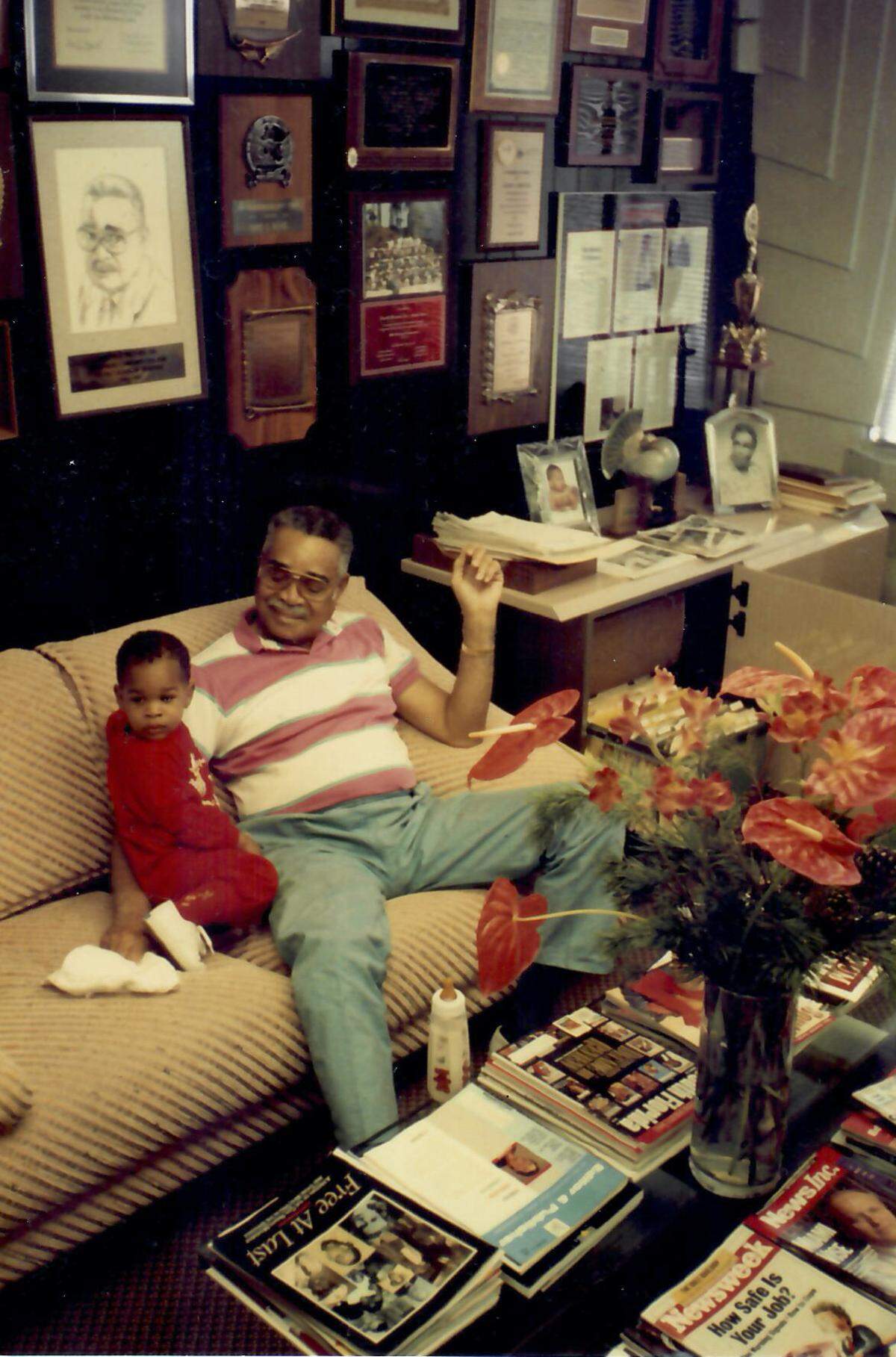
From the age of 3, Reeves became a mainstay in the Times’ newsroom. He wasn’t just interrupting meetings or answering phones, either. Rachel, forever the savvy business women, put him to work. By high school, he had helped in just about every department from advertising to production to business development.
“My mother thought it was important that I work in every department in The Miami Times to understand how it operates,” Reeves said.
While most children get to choose their career path, Reeves’ was never in question. His mother never entertained talk of him being an astronaut or a musician or a teacher; it was publisher or nothing.
“She always hoped and prayed and talked about her son’s role in that paper as he grew older,” said Cynthia Curry, Rachel’s friend for more than 30 years.
Not even Reeves’ undergraduate stint at Emory University could halt his destiny. Emily Cardenas, 56, first met Reeves more than a decade ago while working as director of communications for The Children’s Trust of Miami-Dade County. She joined The Miami Times staff as executive editor in early August and will also oversee Biscayne Times’ content.
Despite attending school in Atlanta, the future publisher was still responsible for contacting advertisers — some 600 miles away in Miami.
“He knew so much for somebody his age.... I remember thinking to myself ‘I’m talking to a college-age kid,’” Cardenas said with a laugh.
When Reeves returned to Miami with a degree in economics and history in 2011, he injected a blast of innovation into the Times’ newsroom. One of his early post-grad moves was to boost the newspaper’s digital presence, an area where many Black newspapers often have lagged. Then came the advent of Studio23, an in-house marketing team that collaborates with companies to create effective advertising campaigns. A Miami Times mobile app is also in development.
Though groomed for the publisher role since birth, Reeves’ transition came earlier than expected. The deaths of Rachel in September 2019 and his grandfather, Garth Sr., two months later, thrust Reeves into a leadership role at a much younger age than his predecessors, who were both past 40 when they took control of the paper.
His relative youth, however, provides Reeves an advantage in what he deems as a “unique perspective on the future of newspapers.”
“Newspapers are not dying as quickly as [experts] like to suggest,” he explained. “I believe that publications that have a targeted audience — a specific market that they serve — will continue to thrive as long as they stay committed to delivering local journalism.”
That conviction influences nearly every aspect of The Miami Times and Biscayne Times operations. From an advertising standpoint, it allows Reeves to attract companies like Wells Fargo, General Motors and Comcast by promising eyeballs from niche audiences, namely South Florida’s Black community and Biscayne corridor residents.
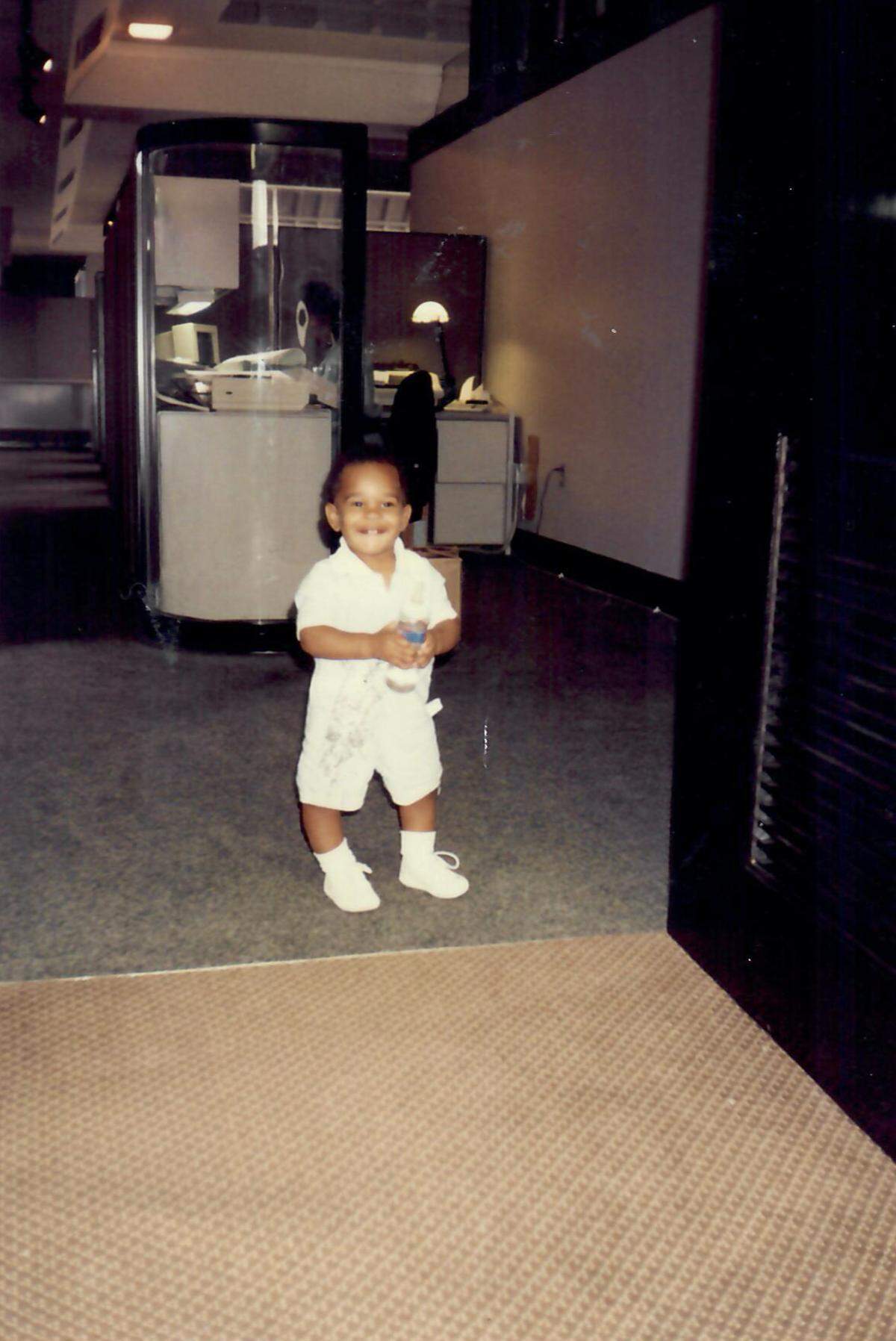
Business has always been the younger Reeves’ passion — he retains the titles of vice president of business development and publisher. He works with Cardenas, who manages the day-to-day operations, to develop the overall tone of each issue. But he does become involved the paper’s political endorsements, which have long aided South Florida’s Black community at the polls; Reeves wants the readers’ trust in solely his hands.
The audience for each of the two newspapers are geographically interwoven, but their interests sometimes overlap, creating opportunities to leverage resources.
“If there’s a story that’s being written for the Biscayne Times that is relevant to The Miami Times readership, I’m reprinting that piece in The Miami Times and vice-versa,” Cardenas said. Reporters for one publication will sometimes write stories for the other.
“Instead of [interviewing] elected official A, B and C, interview elected official C, D, E and now rewrite that story for the other publication,” she said..
‘Best of both’
Media publications fail for a lot of reasons. Loss of revenue, declining readership, lackluster content — all can take publications from viable to defunct.
In the experience of Charles Whitaker, the dean of Northwestern University’s Medill School of Journalism, there’s a more glaring explanation that can cause all three: poor leadership.
“So many of these vehicles [that failed] have been led by dynamic founders,” Whitaker said. “And the thing about dynamic founders is, they were the visionaries who created these vehicles but often times, they have not prepared for succession.”
The Miami Times has been prepping the next generation since he came out of the womb. No, the current Reeves isn’t his great grandfather, Henry Sigmund Reeves, the paper’s founder. He’s not Garth Sr., the civil rights icon. He’s not his mother Rachel, the razor-sharp business woman.
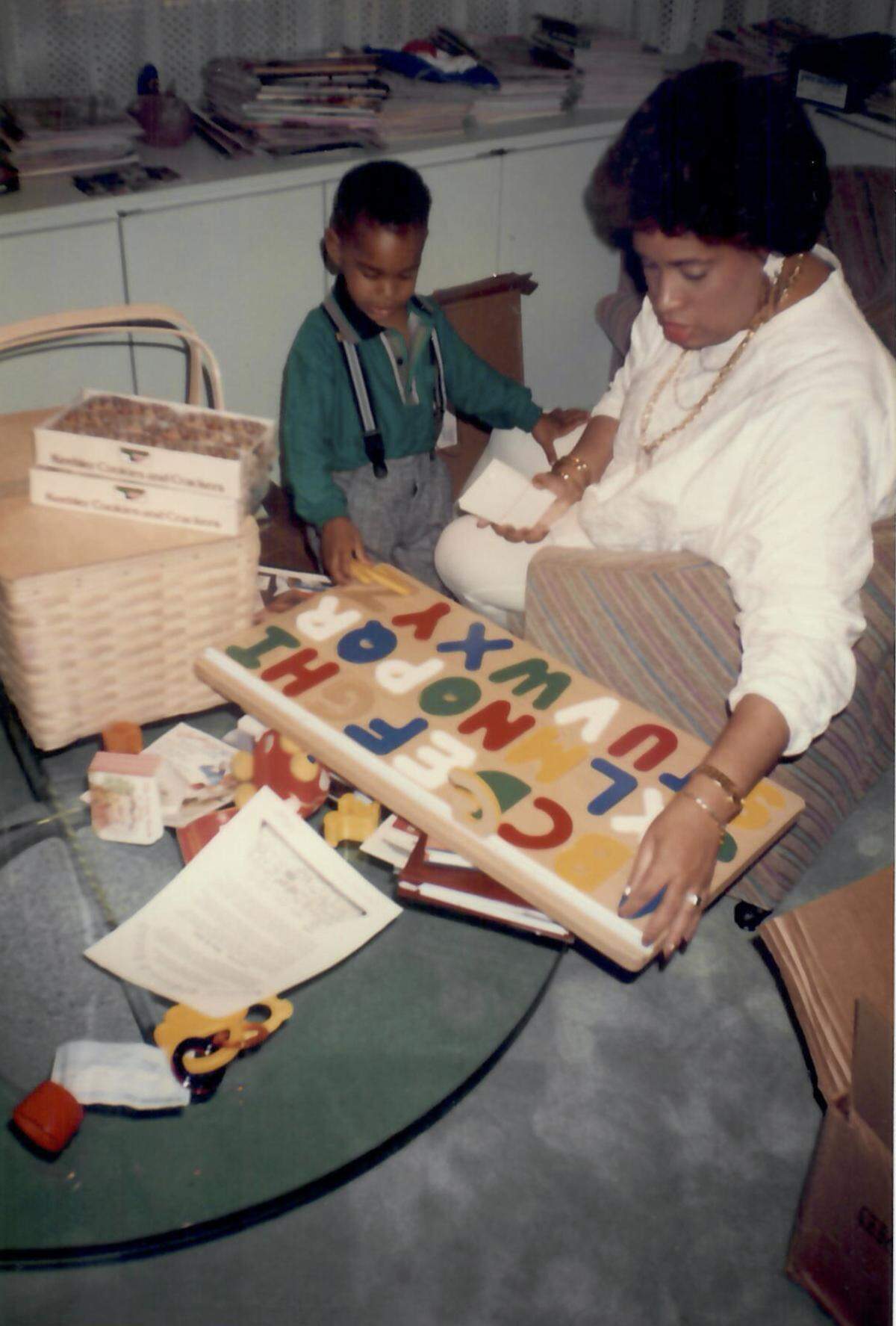
He is, instead, his own man, imbued with the strengths of his two most-recent predecessors, says childhood friend Matthew Beatty, senior director of communications and engagement for the Miami Foundation. Beatty knows something about what it takes to run a newspaper; his father, Robert Beatty, is publisher and CEO of Fort Lauderdale-based South Florida Times, which also focuses on the Black community.
“From Garth Sr., he brings the focus on the Black community and he brings all that intention that even Garth Sr.’s father brought into their work — that this paper is about lifting up Black voices,” Beatty said. “And then he brings the tenacity that his mother brought to her job in ensuring that the organization has the resources to do that work.”
It was the eldest Garth’s rousing editorials and activism outside the newsroom that catapulted The Miami Times into one of the area’s most important institutions aside from the church, says The Miami Times’ former managing editor Mohamed Hamaludin.
“Neighborhood people were looking for this as a beacon, the one thing that will not lie to them,” said Hamaludin, 78.
The bond between South Florida’s Black community and the publication is key to its success — and why moving from Liberty City was never an option when Reeves decided to remodel. He purchased the neighboring lot for a park and is dedicating space in the new building for passersby to relax while searching through their archives.
While Reeves has not sought seats on community boards, it’s a role that he knows will come one day — when The Miami Times no longer consumes his every waking moment. Miami has repeatedly failed its Black residents, something which he believes can be fixed with more political and businesses leaders who look like him. This, he says, will foster more economic development in the Black community.
“More contracts going to Black firms will make a huge difference because you’ll find that black businesses will reinvest in their community, just like we’re doing here,” Reeves said. Both the architect who designed The Miami Times’ building and the contractor executing that vision are Black.
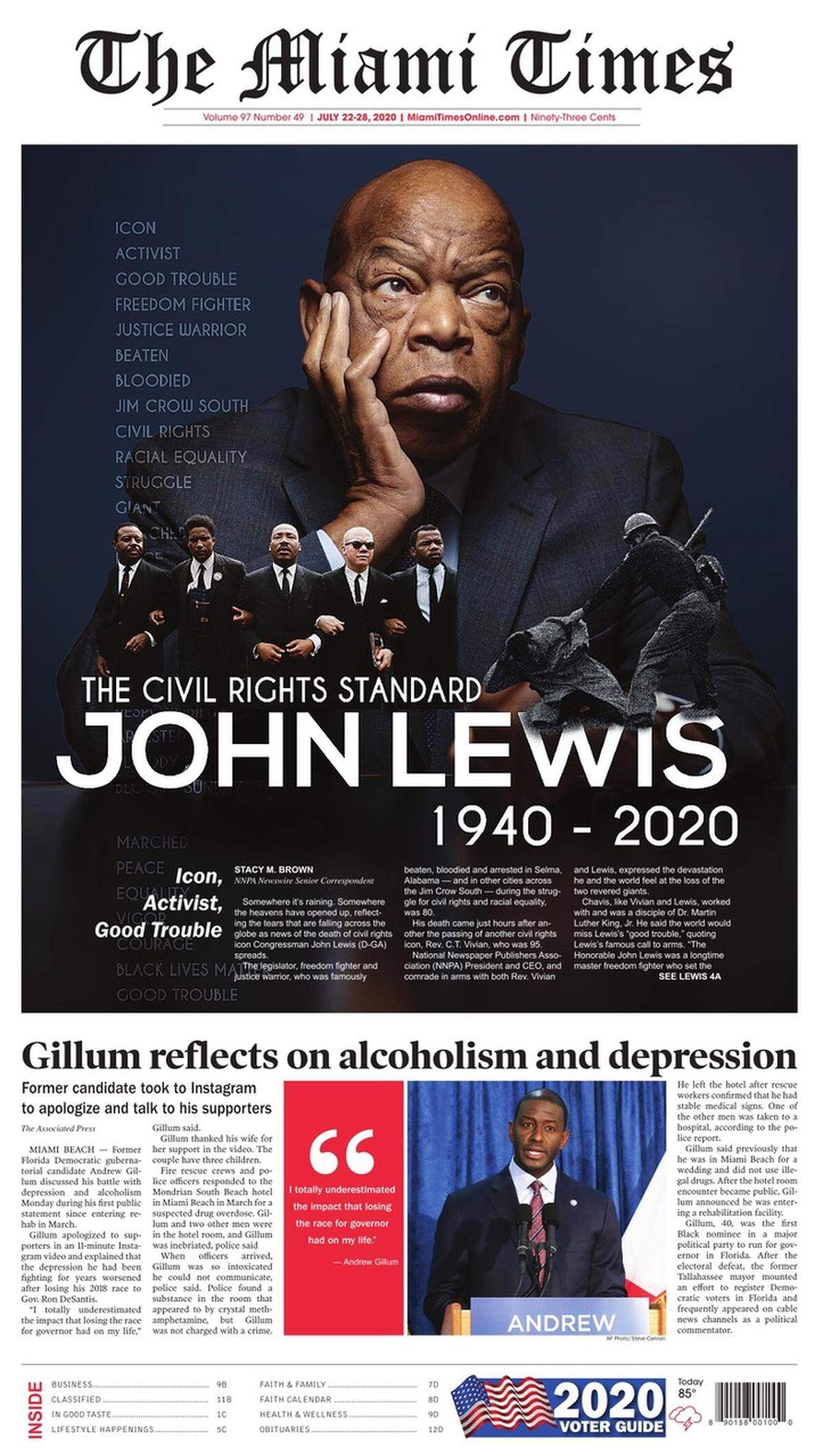
In the meantime, Reeves lets the publication’s work be his chief advocate. Like his mother, he keeps a laser-like focus on everything Miami Times. Known for her exceptionally high standards and business acumen, Rachel Reeves not only encouraged writers to include more analysis in their pieces, she spearheaded the newspaper’s change in format. She also broke gender norms in becoming the first woman to assume the role of publisher at The Miami Times, a position in which her candid personality was crucial.
“Rachel had no problems saying ‘You’re wrong; that’s not good,’” recalled Miami-Dade County Commissioner Audrey Edmonson, a family friend of the Reeves.
Now it’s the youngest Garth’s turn.
‘Too long have others spoken for us’
When Samuel Cornish and John B. Russwurm founded the Freedom Journal, the nation’s first Black-owned newspaper, in 1827 in New York City, they did so with one purpose:
“We wish to plead our own cause. Too long have others spoken for us,” read the newspaper’s mission statement, quoted in Stanley Nelson’s “The Black Press: Soldiers Without Swords.”
That same sense of self-determination inspired Henry to establish The Miami Times nearly a century later in 1923. For the first time in the region’s history, the Black community could form its own narrative outside the white gaze.
“If you wanted information about what’s going on with Black people in a particular city, you may not get it from the mainstream newspaper or it will be so racist that it wouldn’t be an accurate representation,” said Aaron Foley, the director of the Black Media Initiative at Craig Newmark Graduate School of Journalism at City University of New York.
Once, Foley said, Black-owned newspapers like The Miami Times were the only source of accurate information involving South Florida’s Black population.
From the standpoint of many Black Americans, that remains true amid a time of police killings of Breonna Taylor, George Floyd and Daniel Prude, to name a few. The recent stream of deaths — both at the hands of police and COVID-19 which has disproportionately impacted the Black community — has sealed Reeves’ belief that the Black press is more important now than ever.
“We keep our readers informed, make sure that we are combating any fake news, keep them apprised of what was the latest advancements being made on this pandemic and also help them find the resources that they need,” Reeves said.
That doesn’t stop with print. As he once did with The Miami Times, Reeves prioritized revamping the Biscayne Times’ website, which relaunched in early October. Though delivering physical copies to readers still remains an integral part of his business model, he wants to be ready when larger factions of his audience go digital.
“It allows them to engage with our news everywhere: when they’re out and about, when they’re at home,” Reeves added. “It’s about convenience.”
In the future, that could mean expanding the Biscayne Times’ focus into Miami Beach.
For now, Reeves is focused on being a voice for the Black community. Getting advertisers to appreciate the power in the Black dollar. Promoting unity among all people of African descent.
It’s a trying job, one that takes every ounce of him — “The Miami Times is a cruel mistress,” he jokes — and something that he loves dearly.
Living up to the Reeves name is not his sole driving force. He also wants to leave his own mark on the city that has been his family’s muse for nearly a century.
“It’s big shoes to fill,” Reeves said, “but I’m confident that myself and my team, we can deliver.”
GARTH REEVES III
▪ Age: 31
▪ Education: Emory University
▪ Became publisher in 2017. He is also vice president of business development.
▪ From Reeves: “Newspapers are not dying as quickly as [experts] like to suggest. I believe that publications that have a targeted audience — a specific market that they serve — will continue to thrive as long as they stay committed to delivering local journalism.”
▪ About Reeves: “He [always] knew so much for somebody his age.” - Emily Cardenas, executive editor of The Miami Times and Biscayne Times
TIMELINE
▪ 1923: Founded by Henry Sigmund Reeves
▪1970: Garth Reeves Sr. becomes publisher
▪1994: Rachel Reeves becomes publisher
▪2017: Garth Reeves III becomes publisher
▪2019: Rachel dies in September, Garth Sr. dies in November
▪2020: The Miami Times purchases the Biscayne Times in September
THE MIAMI TIMES
▪ Address: 900 NW 54th St., Miami.
▪ Web address: https://www.miamitimesonline.com/
▪ Weekly print distribution: about 15,000. (Single-copy purchases exceed subscriptions. Price: 93 cents, plus tax ($1). Copies can be bought at supermarkets, gas “stations, ‘mom and pop shops” and drugstores from South Broward to Homestead.
▪ Digital traffic: 84,000 unique visitors per month.
▪ Audience profile: Median age of 37, with 57% women and 43% men. Median income of $65,700; more than 35% earn $100,000 ore more annually.
▪ Awards: The John B. Russwurm Trophy from the National Newspaper Association to the “Best Black Newspaper in the Nation” in 2018 and 2019.
BISCAYNE TIMES
▪ Web address: https://www.biscaynetimes.com/
▪ Founded: in 2003 by Skip Van Cel; sold to Jim Mullins in 2007..
▪ Monthly print distribution: 30,000.. Copies are free..
▪ Audience profile: Median age of 50.2, with 53% female and 47% male. 55% of readers earn $100,000 or more annual; 29% earn $75,000-$99,999.
This story was originally published October 23, 2020 at 12:30 PM.