How Spirit’s collapse changed the economy — and lives. ‘Back to ramen noodles’
READ MORE
The end of Spirit Airlines
The low-cost airline shuts down. Here’s what is happening and what it means.
Expand All
Like much of the world, Donald “Dean” Zoellers learned of Spirit Airlines’ demise on the morning of May 2.
He was hit hard, certainly more than travelers who loved the Broward-based carrier’s low prices or bright yellow planes. The 63-year-old grandfather of seven worked as a maintenance controller, managing airline maintenance technicians at Orlando International Airport.
He’d just put in a full week of making sure planes were safe, and fixing those that weren’t. And he was looking forward to the weekend at his home in St. Cloud, a city of just over 60,000 near Orlando. He previously worked for the company in Miramar.
Around 7 a.m., he read his emails and saw one from his long-time employer abruptly informing him that they’d eliminated his main source of income.
Something else ended for Zoellers and his wife that day: health insurance.
His wife, Lydia. 63, has Parkinson’s disease and her medicines will now cost them about $6,000 a month, he said. He has no idea how he’ll be able to pay for that when her current supply runs out in six weeks. She needs regular blood tests, too, and he’s uncertain how he’ll afford them. The couple are now looking at other healthcare options.
If only he could cash in the 700 hours of sick pay he amassed while working at Spirit, or all the vacation days he never took. He lost those, too. At this point, he’s not even sure he’ll get paid for his last week of work.
Zoellers is one of about 17,000 people who lost their jobs when the airline collapsed. More than 2,500 of them were based at Fort Lauderdale-International Airport. Beyond the difficulties individual workers now face, the South Florida economy is expected to take a hit.

Zoellers thinks he has enough savings for him and his wife to get by for one more month, maybe two, if they really tighten their belts, he told the Miami Herald on May 2. Six days later, the couple had already canceled their cable TV and started redoing their grocery list.
“We’ll have to go back to eating ramen noodles,” Zoellers said.
They also weren’t sure if they could stay in the home they’ve owned for five years. As travelers nationwide lamented losing the ability to travel to places on the cheap, Zoellers worried he and his wife might not be able to fulfill their wish — to stay put where they had built roots.
For now, he said, “we’re going to cut every expense we can.”
Economic fallout from the demise of Spirit Airlines
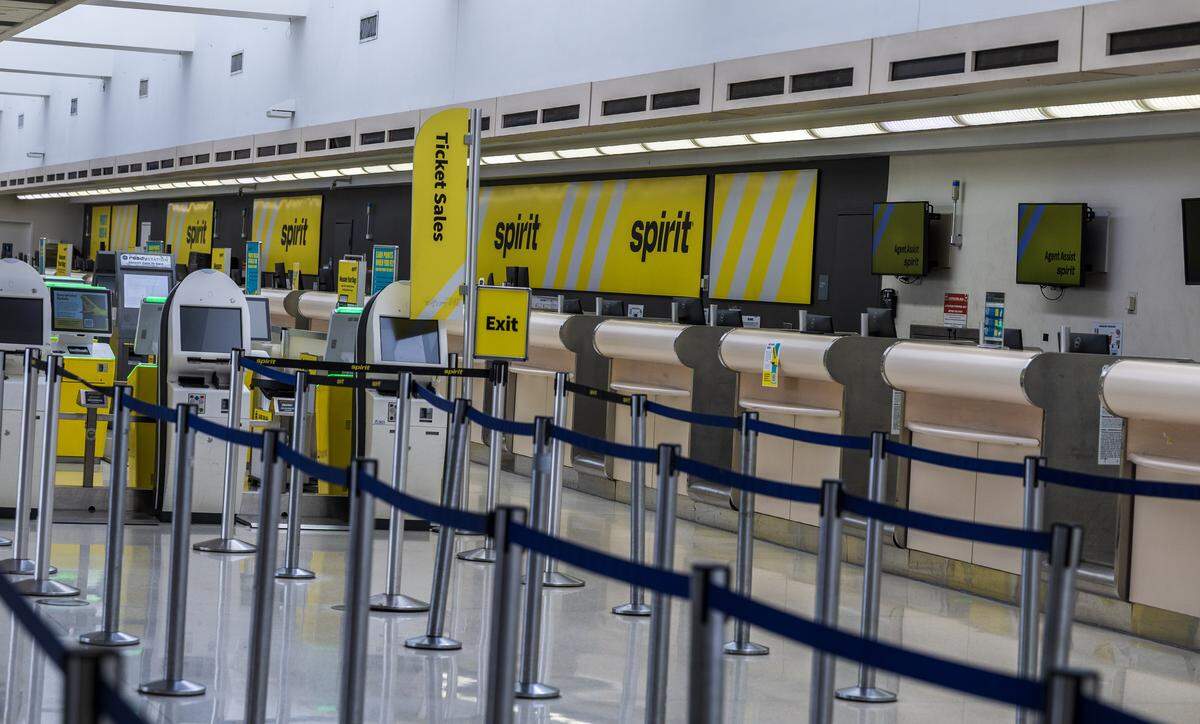
The death of Spirit happened more than a week ago, but the effects are just starting to take shape for workers and travelers.
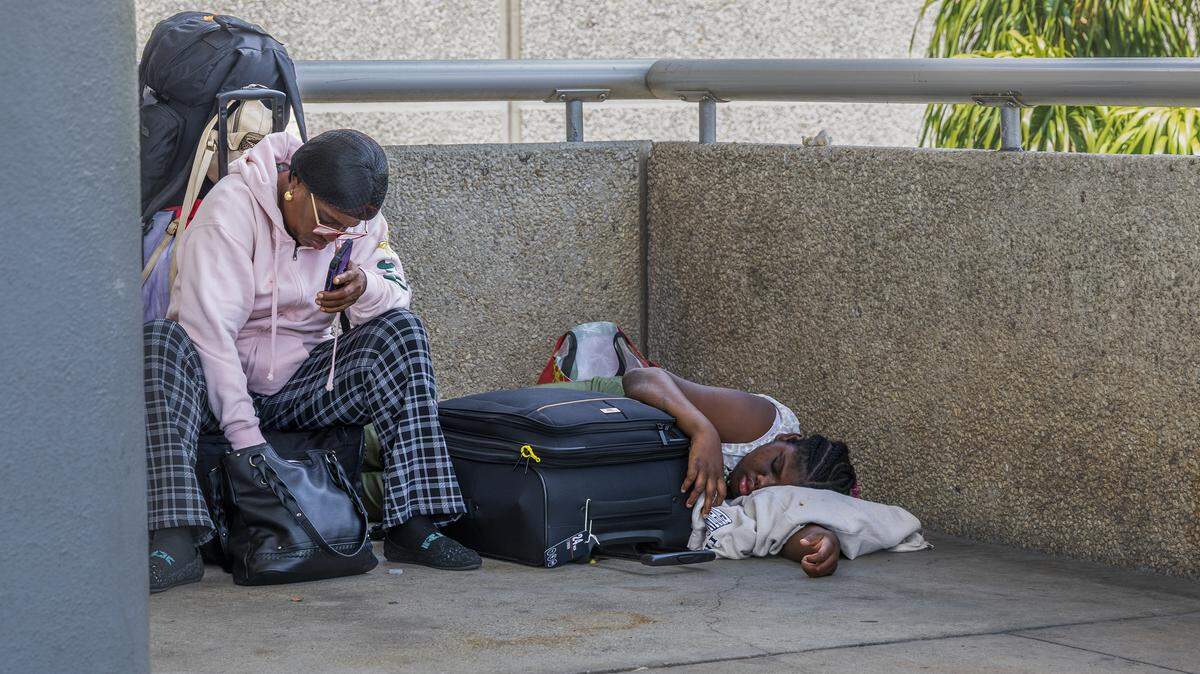
Customers lost tickets and frequent flier miles while thousands of Spirit employees lost their jobs and benefits. That means less consumer spending in the neighborhoods and cities where the former employees live, according to legal, economics and bankruptcy experts.
That could lead to cutting back on certain items at the grocery store, reducing visits to restaurants and buying clothes less frequently.
“It’s going to be terrible for the region,” said Joseph Smith, aviation director at Miami-based investment bank and financial advisory firm Cassel, Salpeter & Co., referring to Spirit’s demise.
“There’s going to be aggregate effects in the economy,” said attorney Shawn Hogue, a commercial law expert with Hunton Andrews Kurth LLP. “They likely will find jobs that don’t pay as well.”
Many other questions remain.
How does the Fort Lauderdale airport fill a gaping void in flights, counter space and gates? What happens to the 2-year-old headquarters building in Dania Beach? Will travelers pay more for airline tickets?
“Spirit was a South Florida airline,” Hogue said. “South Florida is going to have to pay the bills.”
How much does Spirit Airlines owe?
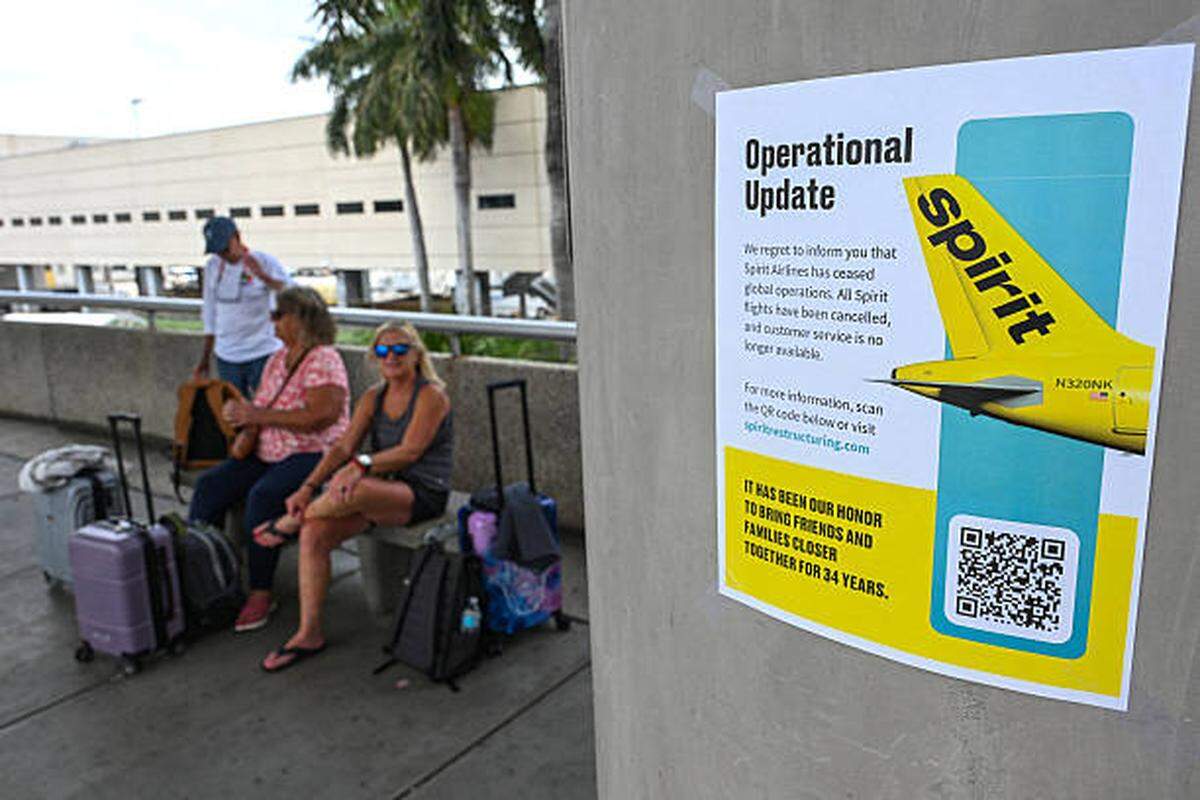
One group that may be in better shape than the rest: the hundreds of vendors that did business with Spirit. Many of them took legal action to get partially paid, and tightened the ways to get paid as Spirit got deeper in financial trouble. Spirit had more than 25,000 creditors.
When the second bankruptcy was filed, the first two of the airline’s top 30 creditors were the U.S. government and an independent advertising firm in Knoxville, Tennessee.
Spirit owes the Department of Treasury $136 million in an unsecured loan obtained during COVID-19.
And the airline owes Charles Tombras Advertising $7.8 million. That’s nearly 7% of their 2025 revenue of $118 million, according to one report. The agency, founded in 1946, is in its third-generation of family leadership.
Spirit owes Lufthansa Technik, the technical services arm of Lufthansa, $5.7 million.
The airline owes the Broward County Aviation, the public department that runs the Fort Lauderdale airport, $1 million.
Then there’s the Avenger Flight Group.
Avenger, an aviation tech company was founded in Fort Lauderdale in 2013 and then expanded globally. The firm developed a flight simulator for pilots to use in training and had n office adjacent to Spirit’s headquarters while focused on training pilots at low-cost airlines.
In February 2026, Avenger filed for bankruptcy protection in a Delaware federal court. The company cited several factors for its struggles, but one was depending on Spirit as a customer.
“Spirit was one of the reasons,” for the bankruptcy filing, Smith said. “A lot of unsecured vendors who’ve been working with Spirit are going to be out of luck.”
Still, given the large number of vendors, most will emerge OK, he and other bankruptcy experts said.
“I don’t think there’s any crazy exposure,” Smith said. He noted that many vendors had been more strict with payment conditions in dealing with Spirit since their troubles started. “It’s not like this is a sudden thing.”
Tell that to many of Spirit’s former employees. They remain the hardest hit.
Next step for a Spirit worker

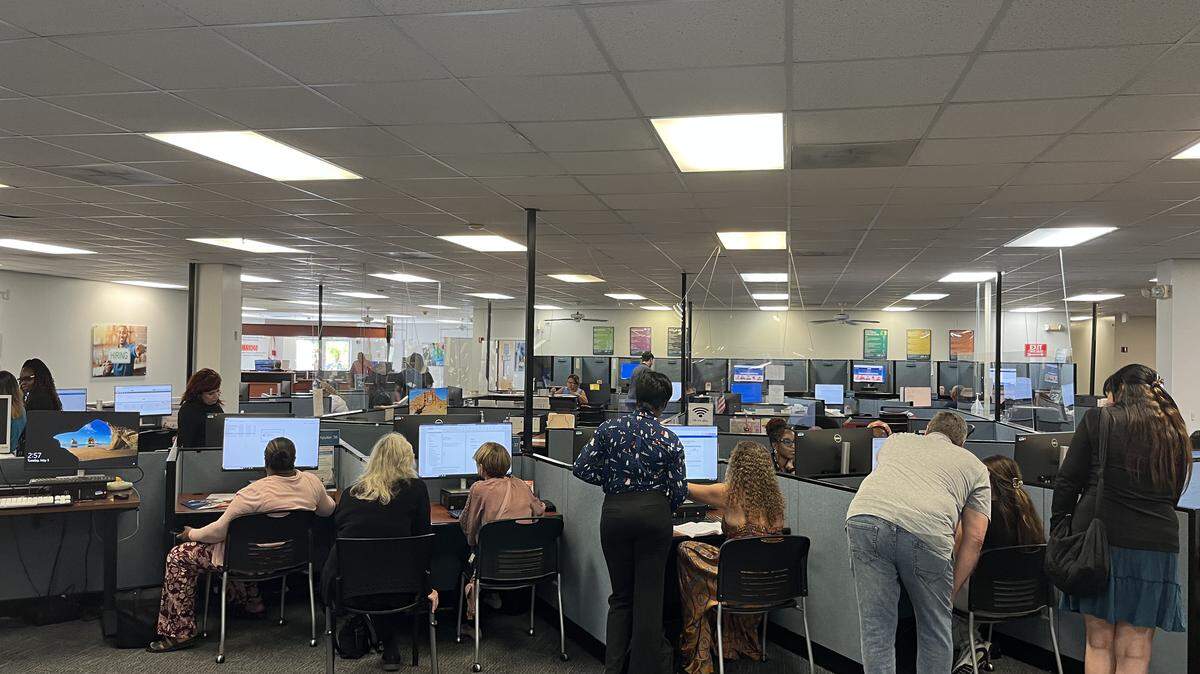
As far as what to do next, Dean Zoellers is aware of the community job fairs and the overtures of other airlines to former Spirit employees. But he’s not optimistic about landing another job, even with his skills.
He’s turning 64 later this month. “Who the hell is going to hire me?” he said.
Zoellers went from high school to spending a year and a half at a technical school and junior college where he learned how to be an aviation maintenance technician. Then he started his career, interrupted only by serving six years in the U.S. Navy.
Zoellers’ most recent position at Spirit was a supervisor in maintenance control, and had multiple aviation technicians working under him. He worked 12-hour shifts.
“It was very stressful and fast-paced,” he said. Yet, “there was a sense of community.” When a new colleague arrived who had a child with autism, Zoellers offered to work the night shift so his colleague could be there for his child during the day as the family adjusted to a new place.
Other former Spirit employees, including ones in different positions, share Zoellers doubts and predicament.
Eric Tirado worked as a Spirit flight attendant for 24 years until May 1. The 67-year-old who worked out of FLL said he had planned to retire in three years.
“Spirit just kind of sped up the process,” he said.
Yet, the thought of being without the work he knew, or not finding something else, haunts him. Getting by the next few months will be difficult, he said. “I gave a lot of my life” to the company.
“It’s really difficult when so many working people across this country identify who they are with their jobs,” said Sara Nelson, international president of the Association of Flight Attendants-CWA, AFL-CIO, the union that represents flight attendants. “To have that ripped away instantly is completely disorienting.”
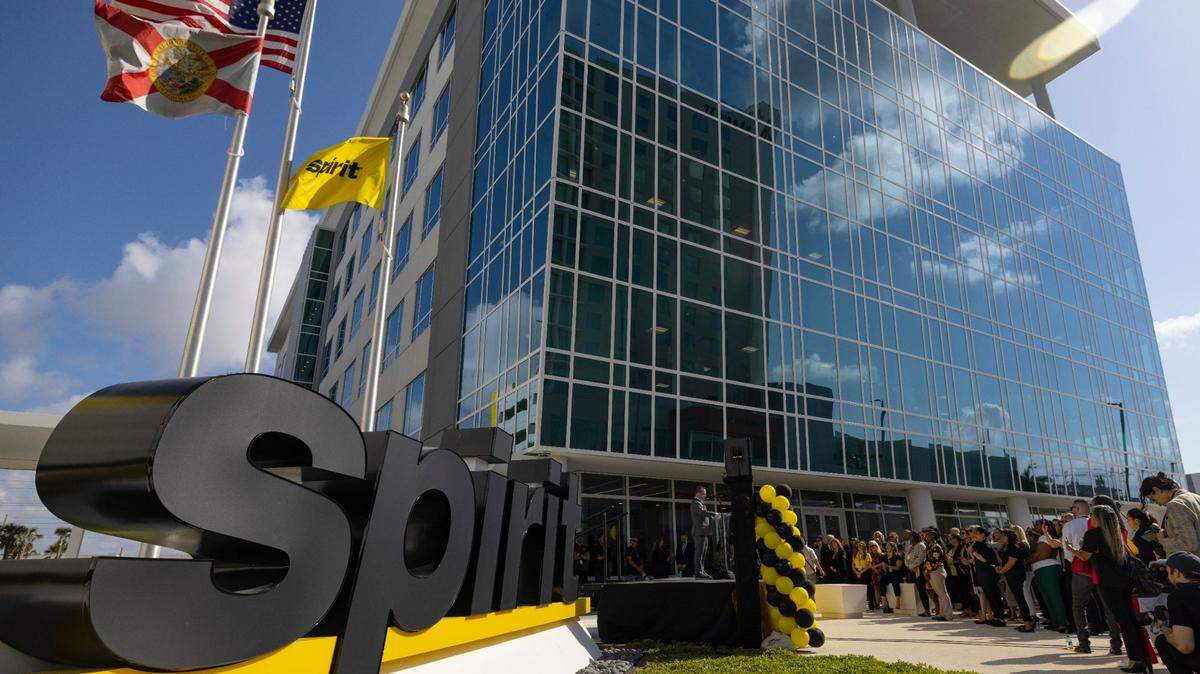
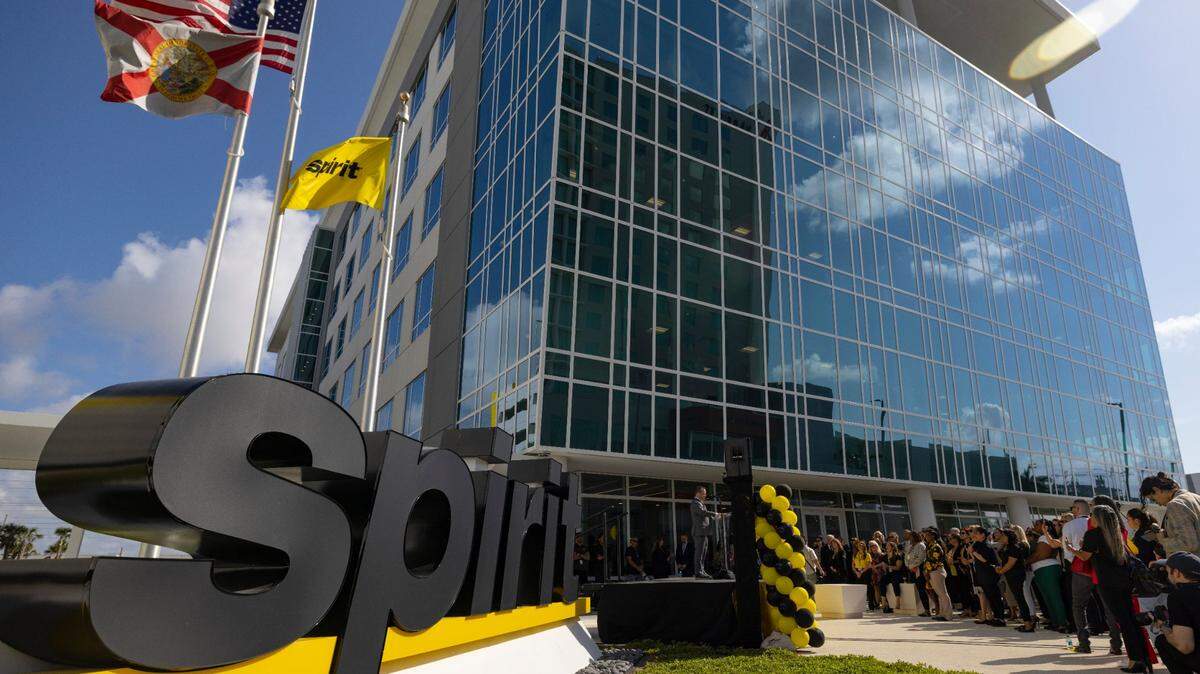
That’s how walking around Spirit headquarters on May 4 felt, several hours after the hundreds of employees who had gathered here had left, and it was evident of what more could come.
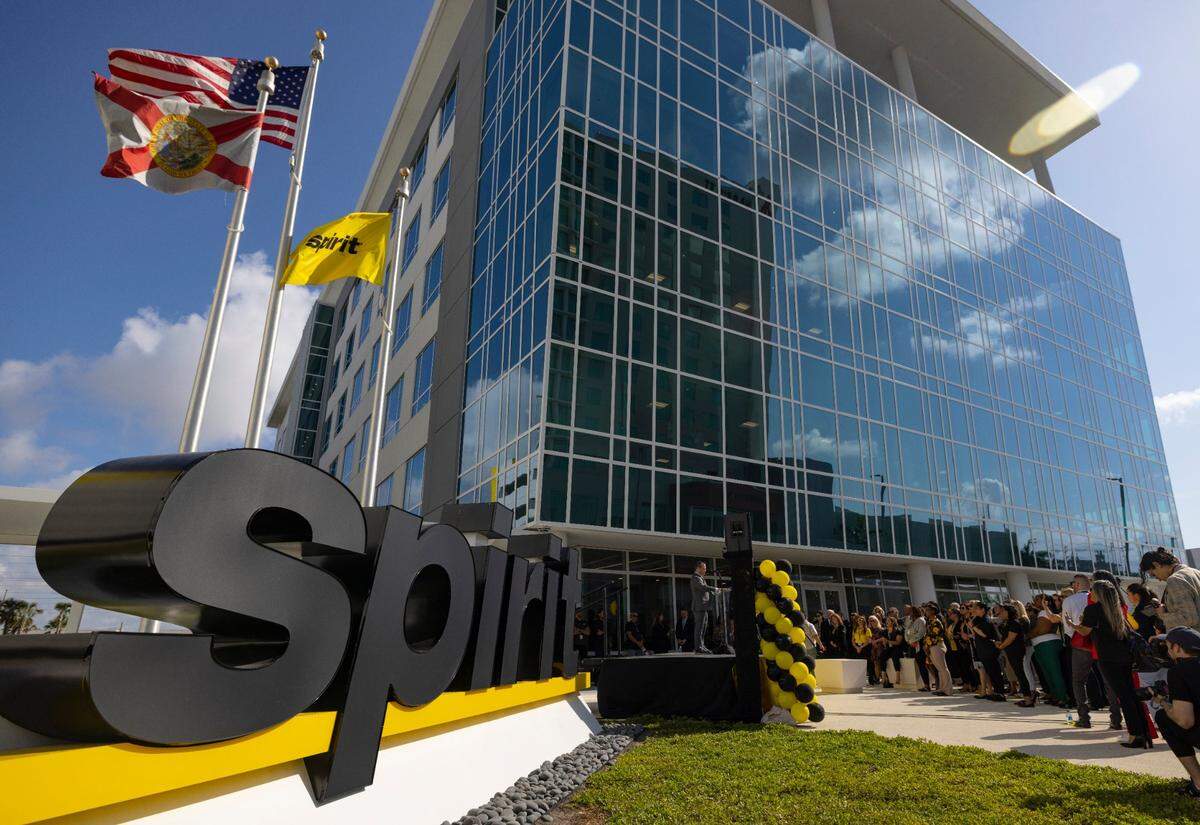
Broward County commissioners are considering buying Spirit’s headquarters and converting it into theirs. The idea is on the agenda for the May 12 meeting, although there won’t be a vote, Broward County Mayor Mark Bogen said in an interview with the Miami Herald. Broward County has been looking for a new building for several years.
The Dania Pointe headquarters wasn’t just where thousands worked. Many employees went there for layovers or flew in for company meetings.

Amy Drinkhouse worked as a flight attendant at Spirit for over 25 years, starting in Feb. February 2001. She kept her job through 9/11, the Great Recession and the COVID-19 pandemic.
She started her career in Atlantic City, then worked out of FLL and finally, was based out of Orlando. She spent a lot of time in the Fort Lauderdale area.
“There’s going to be a big impact on the economy” from Spirit’s absence, she said.
And that could mean the economy surrounding the former Spirit headquarters, just off Interstate 95 and Stirling Road.
A Marriott hotel stands across the main entrance of Spirit at Dania Pointe, a development with stores, restaurants and apartments. While guests stayed there, employees ate lunch at the bar. A chain coffeehouse, Crema Gourmet, drew workers just steps from the office building. Even some of the rental apartments in the area housed Spirit workers.
“We all eat here on a regular basis,” Drinkhouse said of the half-dozen restaurants in walking distance from Spirit’s lobby. “Those dollars are gone.”
Complexes of corporate housing were built here, too, to house the flight attendants who stayed here between flights. All Spirit flight attendants spent their layovers here, said Drinkhouse, “so we’d go out and spend our dollars here.”
Future of pilots, Spirit headquarters and an airport
Then there are the pilots. There were 3,500 before the restructuring process started. All came to town at least once a year for an annual meeting. One building next to the main building at Spirit housed a flight simulator used for training. Pilots trained there almost every day, said Reid Mitchell, a 39 years-old first officer at the carrier until May 2.
Pilots on layovers would stay at hotels throughout the Fort Lauderdale area, eat at restaurants nearby and take transportation to get around.
“Hundreds of pilots would come through every day,” he said.
That’s largely due to the importance FLL gave Spirit. It’s now vulnerable after its hometown airline went under.
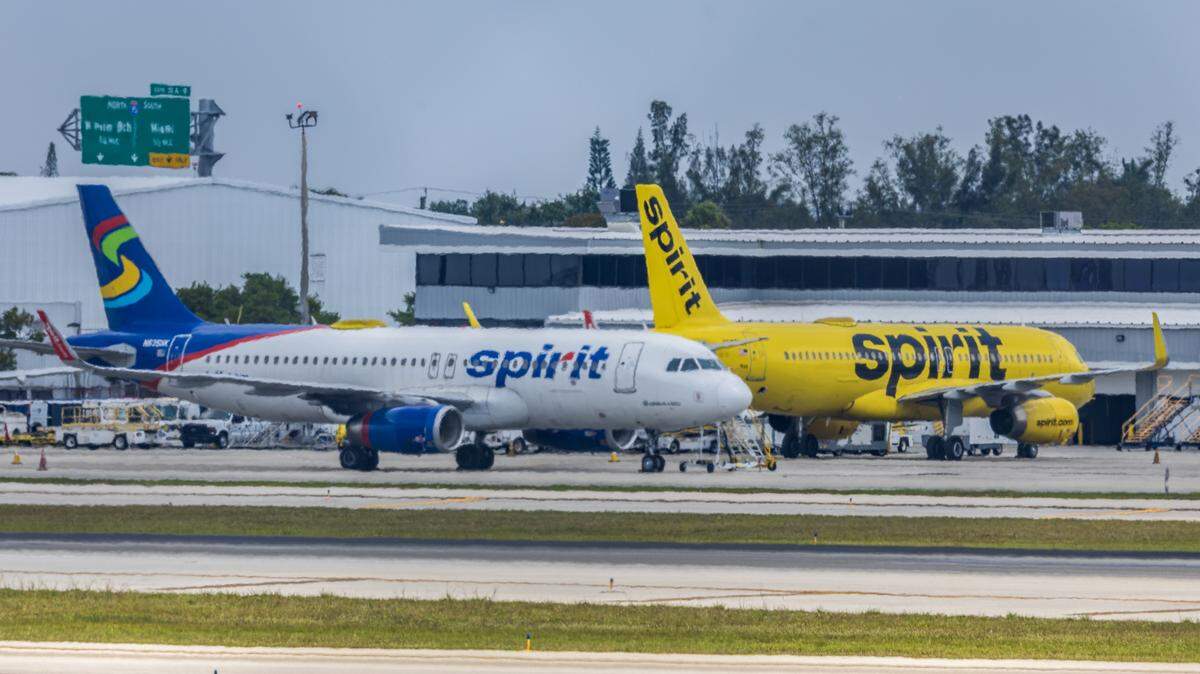
Spirit Airlines provided FLL more passengers than any other airline did, accounting for 28% of its passengers in 2025. FLL saw the most Spirit flights that year, about 29,000, according to aviation analytics firm Cirium. Orlando International Airport was second. Few U.S. airports came anywhere close to either one.
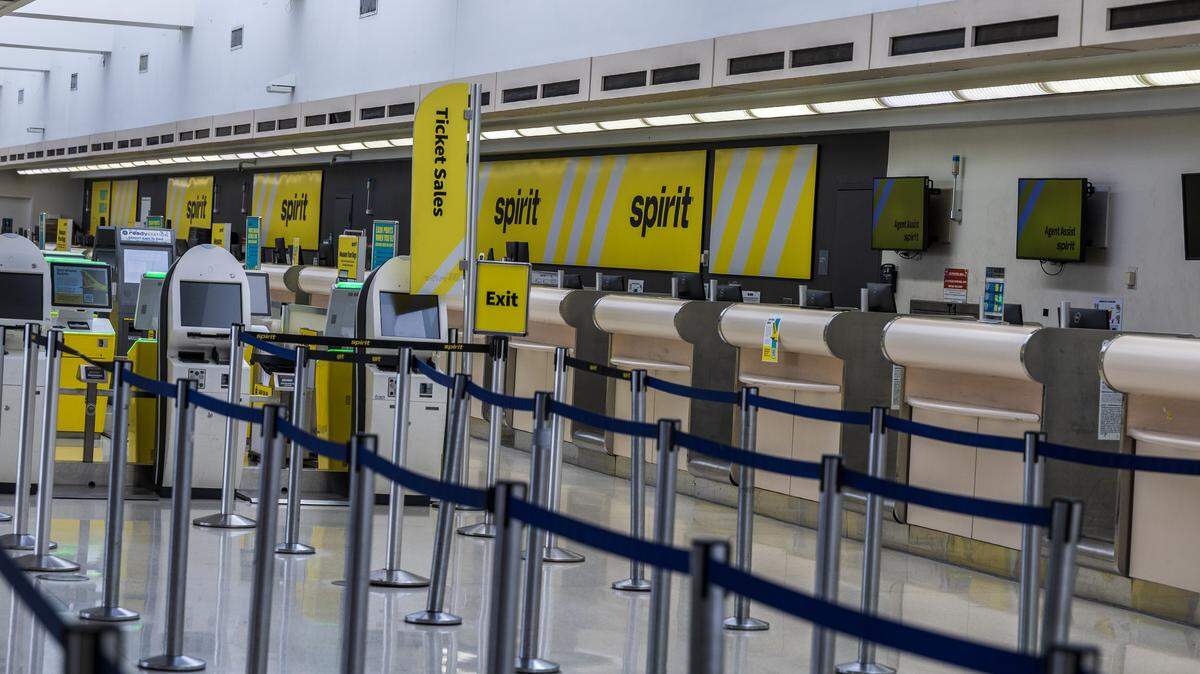
Broward Mayor Bogen said he does expect negative consequences over the next few months, particularly in job loss and the concessions in Terminal 4, where Spirit used about two-thirds of 14 gates and Jamaican and Cuban eateriers served hungry travelers. But he thinks things will turn around.
“There’s an impact today ... and it will last up to six months,” Bogen said.” “But, it will not be long-term.”
Not only had Spirit flights been decreasing the past few years, but “since the [Spirit] closure, we’ve gotten phone calls from other airlines to do more flights,” said the mayor. “The vacuum left by Spirit will be taken up by other airlines.”
Bogen is especially bullish on JetBlue, which after Spirit went down added 11 flights to FLL.
While filling Spirit’s void won’t be easy, there are some figures that back up his assessment.
Spirit’s numbers had been falling long before May. In 2024, the airline provided FLL with 31.4% of its passengers. So, in the last year, the carrier’s market share there had already dropped significantly.
That trend has continued into this year. In the first three months of 2026, Spirit was still in first place, but it was down to 24.5% of passengers at FLL. Notably, JetBlue, Delta Air Lines, American Airlines and United Airlines all increased the percentage of passengers. Allegiant did as well while Frontier shot up 114% compared to the same period one year earlier, the largest percentage increase.
“There’s going to be a scramble for Spirit real estate, especially at FLL” said Jay Shabat, co-founder of Airline Weekly and senior analyst with travel publication Skift.
“There may be a short-term hit to traffic,” he said in an interview with the Miami Herald, “but this is not an existential threat for FLL.”
Still, one of the carriers thought to fill Spirit’s void has some doubters.
Shabat says, “I’m very concerned about the future of JetBlue.”
JetBlue hasn’t made a profit in six years. Their loyalty program has struggled. And now together with other carriers it faces higher fuel prices.
“They’re not going to go bankrupt tomorrow, but they are definitely in financial distress,” Shabat said.
That’s something to which South Florida can relate. After all, Spirit’s demise is “another local tragedy in a long line of South Florida airlines,” said Smith, the aviation director at investment bank Cassel, Salpeter & Co.
From Air Florida to National to Eastern and others, “seems like we keep getting hammered with airlines based here not being able to make it,” he added.
Dean Zoellers can relate. He has been doing some thinking.
A few days after expressing no hope he could find another job, he sounded slightly less down.
“I’d like to find something here,” he said. “Gotta find a job.”
They’ve owned their home for five years. He’d like to keep it even if they move and have to rent another place somewhere else. But he’s doubtful he’ll make enough money to do both.
“I’d like to be able to keep the house, but I don’t think that’ll happen. I’m 90% sure we’ll have to move somewhere else.”
His wife, who has limited mobility, will have a hard time moving. She’ll also have to find new doctors.
Their adult son lives in Seattle and is in the U.S. Air Force. An adult daughter lives in Calgary, and a flight attendant for Air Canada. Zoellers says his children are arguing over which one can put them up: They both want to.
But Zoellers says he and his wife don’t want to stay with either one. They want to continue to be independent.
“We’re just not done yet” with the adventure of life, said Zoellers. “We’ve been punched in the gut before.”
Consider his past work experiences. He was at Lockheed in San Bernardino, California. It closed.
He was also at Miami-based Eastern Airlines. He was an AMT on end line maintenance based in Atlanta.
He worked at Eastern until the very end, in 1991. After he was let go, a court hired him and others back briefly to help the company get rid of their airplanes. It’s a complicated process because the engines often get switched around.
So what’s next?
Something, he says for now. There has to be something.
“It’s going to be a lot tougher, but I’m hoping we can do it.”

This story was originally published May 11, 2026 at 4:25 PM.