
We mocked Spirit’s no-frills misery, then watched an affordable travel option die | Opinion
In 2014, then-Spirit Airlines CEO Ben Baldanza told the NPR podcast Planet Money: “We’re Dollar General. And we like being Dollar General because we save people lots of money.”
For people in South Florida, Spirit was not only an affordable choice for flying; it increased competition among carriers, helping keep other airline ticket prices in check.
That’s why the company’s shuttering last week is troubling. It signals another blow to consumers being able to enjoy affordable travel when the cost of everything else has gone up: gas, housing, groceries. Spirit was notoriously known for no-frills flying, and it was ranked the least popular airline among travelers in 2014, according to the American Customer Satisfaction Index’s travel report. But it served a purpose.
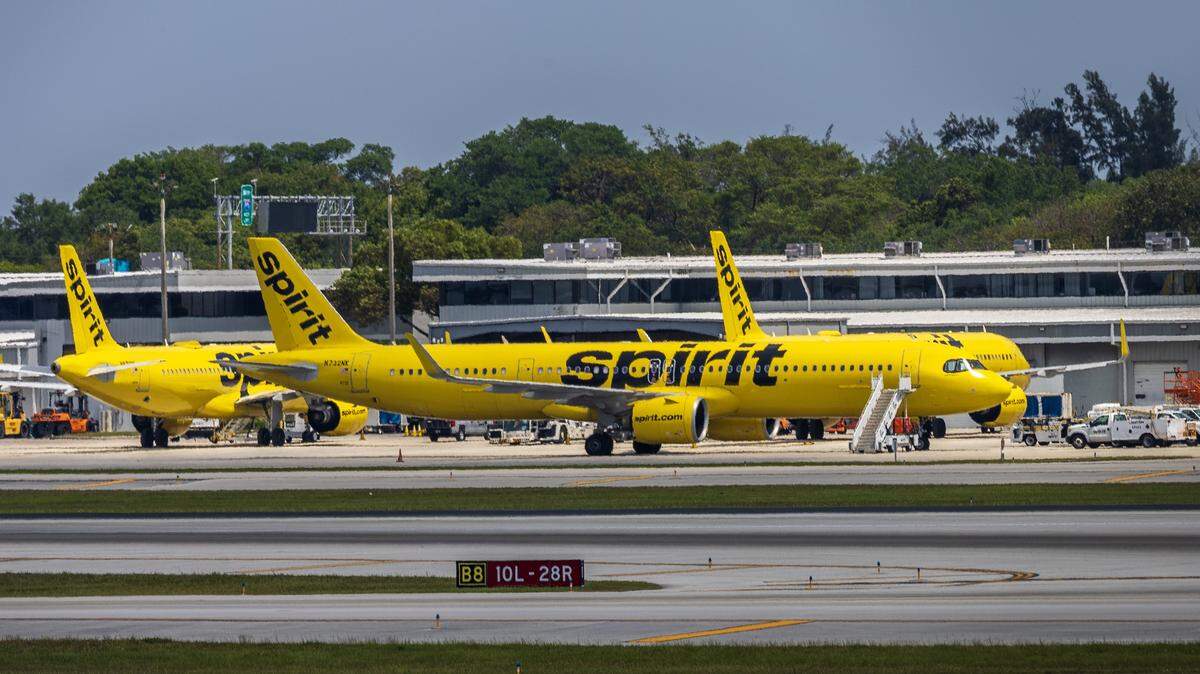
In 2024, Spirit controlled 31% of Fort Lauderdale-Hollywood International Airport, flying 11 million passengers through its South Florida hub, WLRN reported. The airline defined FLL and, at one point, one out of every three passengers flying through Fort Lauderdale was on a Spirit flight.
But now those gates are empty.
As WLRN reported, the shutdown has led to the loss of over 2,500 jobs at Fort Lauderdale Airport, 180 jobs at Miami International Airport and another 550 jobs at Spirit’s Dania Beach headquarters.
That’s a devastating blow for those employees, and travelers will probably feel it too in their pockets.
Even before Spirit went under, whenever the airline exited a route, average fares jumped 23%, or roughly $60, for a round-trip flight, according to a CBS News analysis of data from aviation analytics company Cirium. That’s close to $250 more for a family of four.
The shutdown of Spirit removes pressure on other airlines that forced them to compete on ticket prices. Some passengers may look to Allegiant or Frontier, two other budget airlines, but Spirit’s share of the market at FLL dominated in a way that other carriers won’t be able to replicate overnight. Scaling to replace the airline’s market size will take time and, in the interim, fares might increase.
“Fares will go up. There is no way around it,” Courtney Miller, founder of aviation-data provider Visual Approach Analytics, told The Wall Street Journal.
In 2024, the federal courts recognized this. The “Spirit-effect” became a key argument in the federal government’s antitrust lawsuit to block Jet Blue’s acquisition of Spirit in 2024. A judge agreed and blocked the merger.
“The elimination of Spirit would harm cost-conscious travelers who rely on Spirit’s low fares,” U.S. District Judge William Young, of the District of Massachusetts, wrote in his decision.
The outcome the court tried to avoid happened anyway when Spirit collapsed two years later. Yet, the U.S. Department of Justice’s argument in that case is still valid: competition helps consumers and the loss of budget airlines hurts them.
Florida’s economy depends on tourism and hospitality. When airfare becomes expensive, the Sunshine State becomes less accessible — not just for those vacationing here but for local families who rely on affordable flights.
For millions who flew Spirit, the cheaper fares made the difference between taking a family vacation or staying home. A single mother told the Wall Street Journal, “We fly Spirit because we’re broke.”
The choice to fly Spirit for some wasn’t a choice at all, but more of a commentary on the uncomfortable truth about the economy. Often mocked for its bare-bones service, Spirit was an ultra low-cost carrier that charged for everything, from carry-on luggage to in-flight snacks.
But for an airline everyone loved to complain about, it provided something valuable — the ability to catch a flight without breaking the bank and pressure on the entire aviation market. Its collapse leaves South Florida with fewer jobs, fewer airline options and, possibly, higher fares. When the cheapest option is removed from the marketplace, everyone ends up paying the more.
BEHIND THE STORY
MOREWhat's an editorial?
Editorials are opinion pieces that reflect the views of the Miami Herald Editorial Board, a group of opinion journalists that operates separately from the Miami Herald newsroom. Miami Herald Editorial Board members are: opinion editor Amy Driscoll and editorial writers Isadora Rangel and Mary Anna Mancuso. Read more by clicking the arrow in the upper right.
What's the difference between an op-ed and a column?
How does the Miami Herald Editorial Board decide what to write about?
The Editorial Board, made up of experienced opinion journalists, primarily addresses local and state issues that affect South Florida residents. Each board member has an area of focus, such as education, COVID or local government policy. Board members meet daily and bring up an array of topics for discussion. Once a topic is fully discussed, board members will further report the issue, interviewing stakeholders and others involved and affected, so that the board can present the most informed opinion possible. We strive to provide our community with thought leadership that advocates for policies and priorities that strengthen our communities. Our editorials promote social justice, fairness in economic, educational and social opportunities and an end to systemic racism and inequality. The Editorial Board is separate from the reporters and editors of the Miami Herald newsroom.
How can I contribute to the Miami Herald Opinion section?
The Editorial Board accepts op-ed submissions of 650-700 words from community members who want to argue a specific viewpoint or idea that is relevant to our area. You can email an op-ed submission to oped@miamiherald.com. We also accept 150-word letters to the editor from readers who want to offer their points of view on current issues. For more information on how to submit a letter, go here.