Dandelions Spark a Spring Debate: Should You Kill Them or Let Them Bloom This Year?
Every spring, the same question quietly divides neighborhoods.
You step outside, look at your lawn, and there they are — bright yellow dandelions popping up faster than you can keep up. Some homeowners see a problem that needs fixing. Others see something worth protecting.
And if you care about your yard and the environment, the decision isn’t as simple as it used to be. So, before you decide whether to remove dandelions or let them bloom, there are a few bigger questions worth asking.
What kind of lawn do you actually want?
At the heart of the debate is a bigger shift in how people think about lawns.
For decades, the goal was clear: uniform, weed-free grass. Dandelions didn’t fit that picture, so the default response was to kill dandelions as quickly as possible.
But more eco-conscious homeowners are starting to question that standard. Is a perfectly manicured lawn worth the environmental trade-offs? Or is there room for something a little more natural — even if it’s less uniform?
Are dandelions helping pollinators — or just filling a gap?
One of the strongest arguments for letting dandelions grow comes down to pollinators.
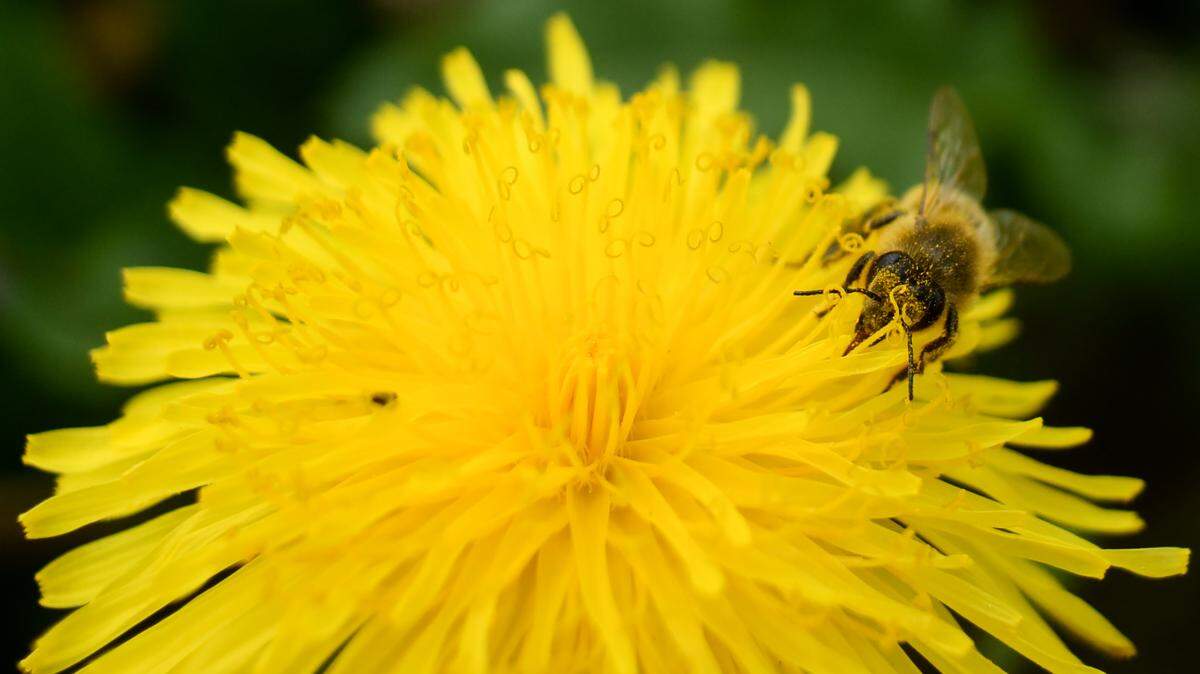
Dandelions bloom early and can thrive in tough conditions, which means they often provide nectar and pollen when few other plants are available. According to the University of Minnesota Extension, they can serve as an early-season food source for honey bees, bumblebees, solitary bees, butterflies, hoverflies and beetles.
But there’s an important nuance.
Researchers note that the dandelion benefits for pollinators are somewhat limited. Their nectar and pollen are better understood as a temporary lifeline — not a complete or ideal diet. A diverse mix of native plants is still far more beneficial long term.
So the question becomes: are you supporting pollinators in a meaningful way, or just buying them time?
What’s the real cost to remove dandelions?
If your instinct is to remove dandelions, the next question is how.
For many homeowners, that means herbicides. And that’s where the environmental impact becomes harder to ignore.
According to the Maine Organic Farmers and Gardeners Association (MOFGA), roughly seven million wild birds die annually due to lawn pesticide use. Americans also apply about 80 million pounds of pesticides across 30 million acres of lawns each year.
Even more striking: the U.S. Fish and Wildlife Service reports that homeowners use up to 10 times more chemical pesticides per acre than farmers use on crops.
For eco-conscious homeowners, that raises a tough question: is a cleaner-looking lawn worth that level of impact?
What is dandelion good for beyond the surface?
It’s easy to focus on what dandelions look like — but what they’re doing underground tells a different story.
Their taproots can reach as deep as 15 feet, according to MOFGA, pulling up nutrients like calcium from soil layers that grass roots can’t reach. When the plant dies back, those nutrients return to the topsoil, acting like a natural fertilizer.
They also help physically improve your soil. National Geographic notes that dandelion roots can loosen compacted ground, improving aeration and reducing erosion. That allows water to soak in more effectively instead of running off — a real benefit in suburban yards where soil compaction is common.
So another question to consider: are dandelions hurting your lawn — or quietly improving it?
Should you try “No Mow May”?
You’ve probably seen the signs.
“No Mow May” encourages homeowners to let lawns grow freely for a month to support pollinators. The idea is simple: allow dandelions and other early flowers to bloom, providing food and habitat for bees and butterflies.
The movement started in 2019 through Plantlife in the U.K. and was later adopted in the U.S. by Bee City USA.
“The start of the growing season is a critical time for hungry, newly emerged native bees,” Bee City USA explains. “By allowing it to grow longer, and letting flowers bloom, your lawn can provide nectar and pollen to help your bee neighbors thrive.”
But it’s not without controversy.
A widely cited 2020 study that helped popularize the movement was later retracted in 2022 due to inconsistencies in data handling, according to Oregon State University’s Garden Ecology Lab.
There are also practical concerns. Letting grass grow unchecked can lead to 10–12 inch blades, and cutting that much back at once can stress your lawn heading into summer.
So the real question: does the approach fit your yard — or just sound good in theory?
Is there a middle ground with dandelions?
For many homeowners, the answer isn’t all or nothing. You don’t have to fully embrace a wild lawn — and you don’t have to eliminate every dandelion either.
The most meaningful shift, according to the research, might simply be what you choose not to do. Avoiding herbicides preserves the soil benefits dandelions provide, keeps early-season nectar available and eliminates the largest environmental downsides.
From there, you can decide how much control you want. After all, the dandelion debate isn’t really about weeds. It’s about priorities.
- Do you value a perfectly uniform lawn?
- Do you want to support pollinators — even in small ways?
- Are you willing to accept some imperfection for ecological benefits?
There’s no single right answer. But the next time you see those yellow blooms popping up, you might pause a little longer before deciding whether to pull them — or let them stay.
This article was created by content specialists using various tools, including AI.