
Hard Rock Stadium to allow 13,000 fans for Miami Dolphins and Hurricanes home openers
The Miami Dolphins and Florida Gov. Ron DeSantis have decided to permit fans at Dolphins and Miami Hurricanes games this season amid the COVID-19 pandemic, at least in September.
Both teams announced Monday that 13,000 fans will be allowed to attend the Dolphins’ home opener Sept. 20 against the Buffalo Bills and the Miami Hurricanes’ Sept. 10 home opener against University of Alabama-Birmingham.
That’s well below the stadium’s capacity of 65,326, which can be expanded for big events.
Also, no tailgating will be permitted at Dolphins or Hurricanes games this season.
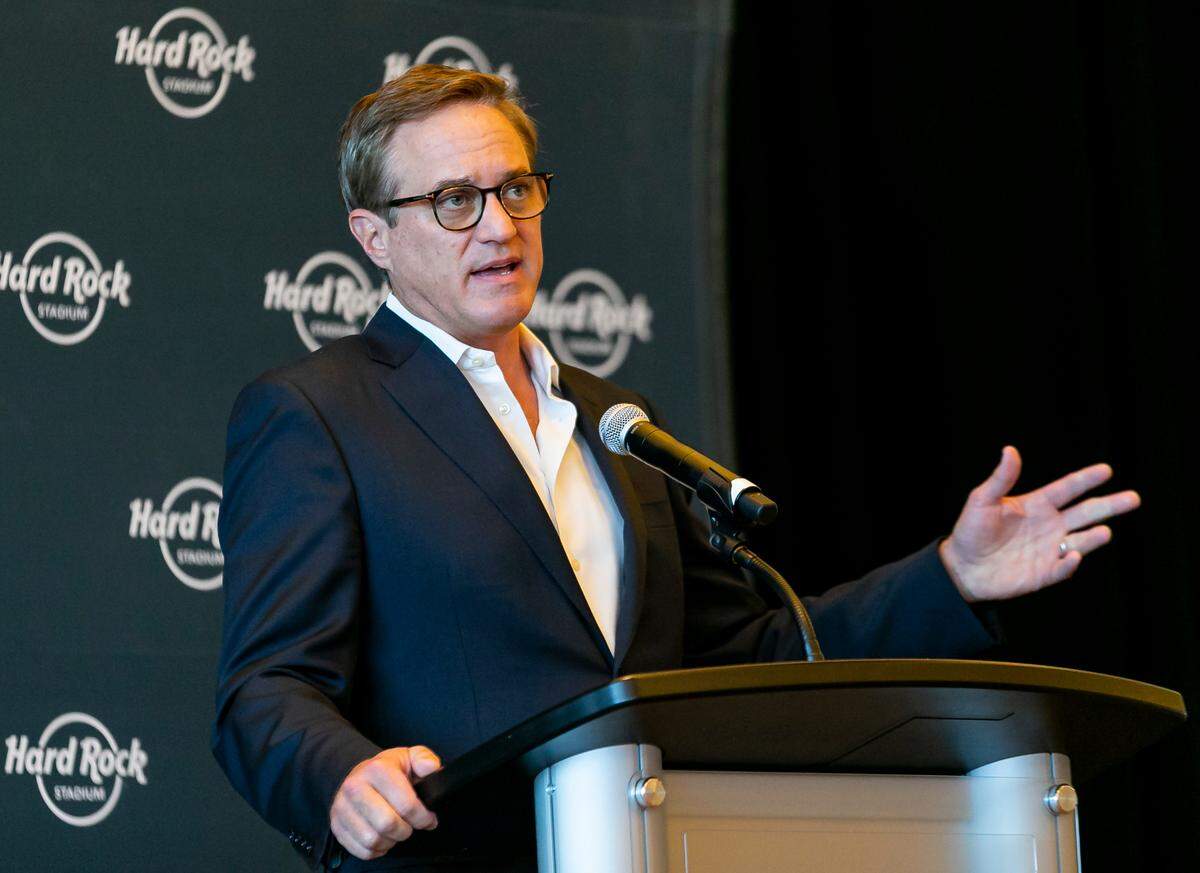
“When we started the process back in March of exploring what a socially distanced stadium could look like, we made the health and safety of everyone the first priority; knowing that if we felt that we couldn’t make it safe, we simply wouldn’t have fans,” Miami Dolphins vice chairman and CEO Tom Garfinkel said. “We’re happy that our elected officials recognize the attention to detail and diligence that we’ve put into creating a safe environment and that they made the decision to move forward with a 13,000-capacity stadium at this time.”
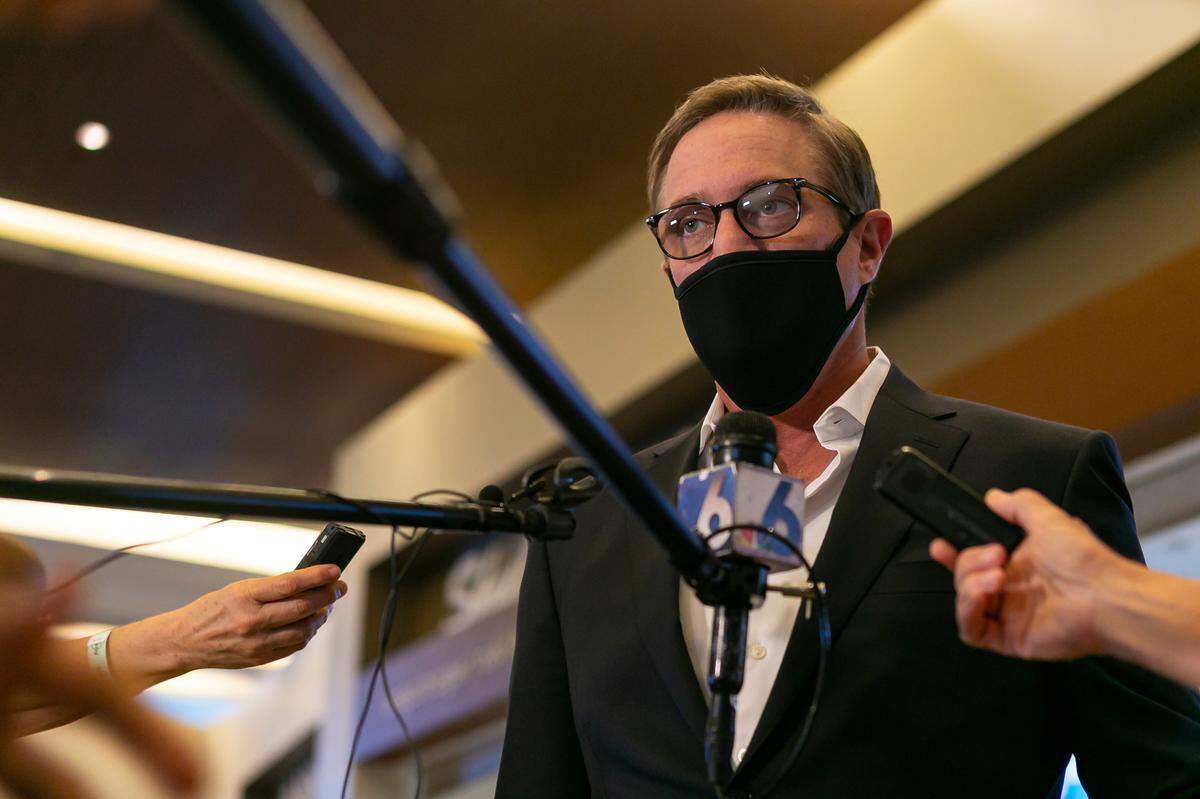
Garfinkel said the team — in consultation with Gov. Ron DeSantis — decided to make capacity decisions a few weeks in advance of games, as opposed to formulating a policy for the entire season. Garfinkel said if health conditions allow, capacity could rise to 50 percent later this season for both the Dolphins and Hurricanes.
“The governor allowed us to have that many fans [13,000],” Garfinkel said. “So, as we move forward, assuming that the trends continue to be positive, we’ll continue to have fans. If the trends reverse, because anything can change, one thing we’ve learned is this ebbs and flows. You don’t know what’s going to happen in three weeks, four weeks. So, if the positivity rate and other factors trend negatively and get bad, if we don’t think we can do it safely, we won’t have fans.
“A few weeks beforehand we’ll deliberate about where the data is in the marketplace with the virus and make a determination for that game. If they tell us the [COVID] numbers have gone down and you can now have a half-capacity stadium, we’ll decide if we think we can do it safely or not. And if the numbers get worse, like they did in July, we won’t have any fans.”
Dolphins players were pleased by the news.
“It’s huge for us as players to have some noise and crowd reaction,” quarterback Ryan Fitzpatrick said.
The Dolphins’ decision angered Buffalo Bills coach Shane McDermott, whose team is Miami’s opponent in the Dolphins’ home opener.
“I think it’s honestly ridiculous that there will be, on the surface, what appears to be a playing field that’s like that — inconsistently across the league with the different away stadiums,” McDermott said Monday.
The Dolphins join a small list of teams that will allow fans at games. The others: Jacksonville (25 percent capacity) and Kansas City (22,000 fans).
The Las Vegas Raiders and Chicago Bears have announced they won’t have fans at games this season. New England, Houston, Tennessee, Baltimore, Denver, Detroit, Green Bay, Atlanta and New Orleans have announced that they won’t have fans at either their first home game in September or two September home games.
And McDermott wasn’t the only one who questioned the decision.
Miami Democratic Congresswoman and former Health and Human Services Secretary Donna Shalala said reopening Hard Rock Stadium safely at this time is “going to be very difficult.”
“It is very difficult to open anything when you have community spread. We still have community spread in South Florida so the kinds of precautions that need to be taken are extraordinary,” said Shalala, who also was the University of Miami’s president from 2001 to 2015. “I hope the Dolphins are using their own resources rather than public resources to do it.”
Shalala, who was the country’s top public health official during President Bill Clinton’s administration, said reopening large venues like Hard Rock Stadium is “risky” when community spread is present.
The Dolphins say masks will be required at Dolphins and UM games and can be removed, only briefly, to eat or drink. What happens to fans who refuse?
“If they do, and we ask them politely to wear their mask and they defiantly refuse, we’ll write down their ticket number and pull their digital tickets and they won’t be able to come to anymore games,” Garfinkel said. “There will be people patrolling and politely asking people to wear their masks and if people again are aggressively defiant about it, we’ll pull their ticket. We’re trying to create as safe an environment as we possibly can, so that means wearing a mask. We can control the environment. I can’t control people’s behavior.”
Also part of the Dolphins/UM COVID-19 plan: There will be no paper tickets. The team will add points of entries and exits to help avoid bottlenecks and use cashless purchases for concessions, parking and retail.
Additionally, “all manual faucets, toilet handles, toilets, soap dispensers and paper towel dispensers have been changed to automatic sensors to provide a touchless restroom experience,” the team announced.
Hard Rock Stadium is the first such facility in the world to receive GBAC STAR accreditation from the Global Biorisk Advisory Council, a Division of ISSA, the worldwide cleaning industry association. The team announced that the stadium completed 20 tasks focused on cleaning, disinfection and infectious disease prevention practices to control risks associated with infectious agents.
The Dolphins in April were the first team to propose a socially distanced in-stadium game experience. Team CEO Tom Garfinkel appeared on ABC’s “Good Morning America” to discuss the plan. Since then, more than 30 franchises from across the world of sports have called for information about the Dolphins’ plan, which is said to include an unparalleled level of diligence investment.
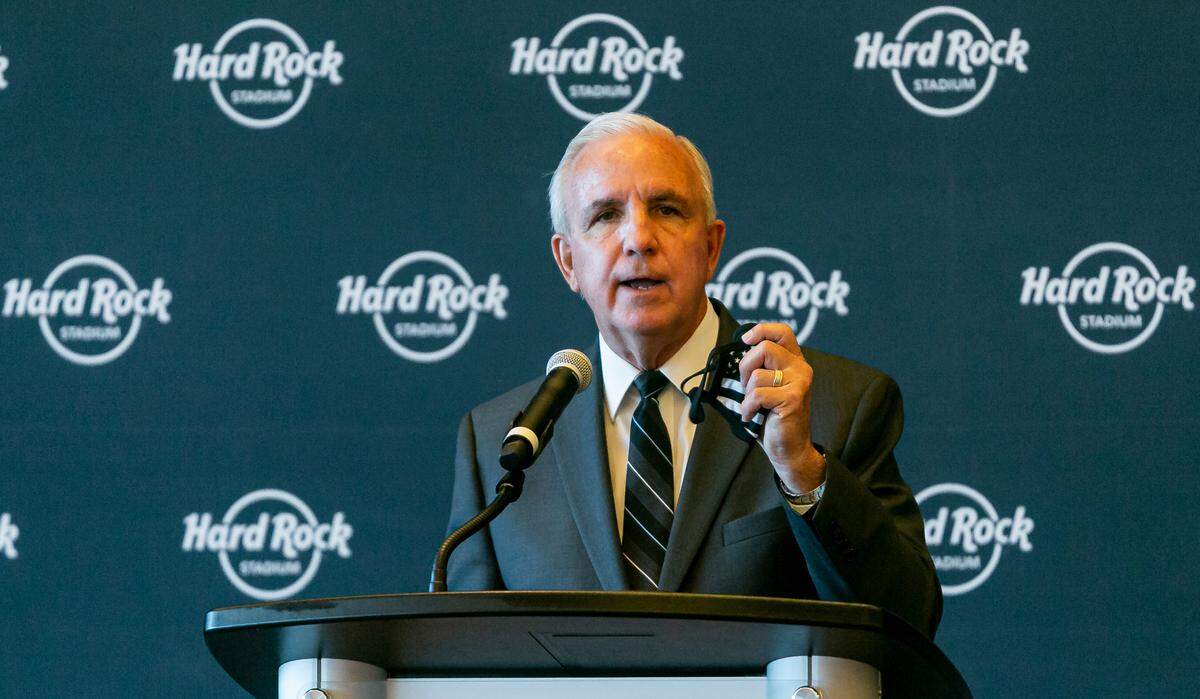
Miami-Dade Mayor Carlos Gimenez — who ultimately deferred to DeSantis on whether to permit fans at games — toured Hard Rock Stadium with Garfinkel on Thursday and emerged impressed with the team’s COVID-19 protocols.
So who gets to attend?
The Dolphins have said priority will be given to season-ticket holders based on length of service, with those with the most service getting first crack.
Garfinkel declined to give results of a team survey revealing how many fans expressed interest in attending games in a pandemic, but said that “without giving specific percentages, there is a lot of demand and a lot of enthusiasm from people who want to come to games. But we’re telling people this year and anybody at risk, ‘If you have a preexisting pulmonary condition, if you’re of a certain age, we don’t think you should come. You should stay home.’
“We’ll try to accommodate all the season-ticket holders if we can. I think we’ll have a fair number of people opt out and then we’ll have the opportunity to take care of the fans who do want to come.”
On Monday, the Dolphins sent a letter to fans who get first crack at the 13,000 tickets. Here are their two options, with a decision due by Monday:
Option 1: Attend games for the 2020 season. “You will be able to select temporary seats for the 2020 season based on your account tenure,” the letter said. “Your current account balance will be applied to the seats you select and any credits remaining will be applied to your 2021 Membership or refunded upon request. You will automatically revert to your current seat location in 2021.”
Option 2: Roll over your payment to 2021 and reactive membership for 2021. “If you do not wish to join us this season at Hard Rock Stadium, you have the option to suspend your Membership for the 2020 Miami Dolphins season, credit any 2020 Membership Dues on file towards the payment of your 2021 Membership Dues, and automatically reactivate your Membership when your first 2021 Membership Dues payment becomes due. “
The Dolphins’ letter added: “With that being said, we strongly recommend that anyone who is considered to be “high risk” under CDC guidelines refrain from selecting seats and take advantage of our rollover plan option.”
Garfinkel said the no-tailgating policy will be strictly enforced.
“We’re going to ask that you either stay in your car or if you’re in the parking lot that you’re moving toward the stadium,” he said. “We don’t want you loitering in the parking lot in groups. If you’re doing that, we will have security and uniformed police officers and people out there dispersing people and say go back to your car or move toward the stadium. These are 100 percent digital tickets. We can just shut their tickets off.”
The Hurricanes, who have said they will use the Dolphins’ capacity number, have said previously that they must find a way to get players’ families, recruits and students into games.
And on Monday afternoon the Hurricanes announced that “UM season-ticket holders will have first priority to participate in an individual game on-sale” basis, but said it’s not sure how many of the 13,000 seats will be allotted to season-ticket holders.
“The University of Miami has told us they’re just going to take our manifest and duplicate it,” Garfinkel said. “How they go about selling their tickets is up to them.’’
The UM letter to season-ticket holders said that “additional details will be communicated via email. If season-ticket holders are not interested or able to attend games in-person, a portion or all of the funds in their account can be rolled over in support of the Canes United Covid-19 Relief Initiative. Their accounts can also be credited for the 2021 football season with the funds paid-to-date.”
UM added that a ”refund is also available if requested. All seat locations, parking and tenure will be rolled over to the next season automatically. No action is needed for this to occur. UM Athletics has transitioned to a mobile ticketing system so all tickets and parking passes will be delivered electronically and must be scanned in on a mobile device at Hard Rock Stadium. Separate communication will be sent to UM students regarding attendance.”
UM athletic director Blake James told the Miami Herald last week that financially, not having full stadiums will deliver a “significant” financial hit “but we probably won’t know what the exact number is until we’re through the season.”
Meanwhile, the national championship game is still scheduled for Jan. 11 at Hard Rock Stadium, even though two of the Power 5 conferences (the Big Ten and Pac-12) have announced they won’t be playing college football this fall. Full stadium capacity has not been ruled out for that game.
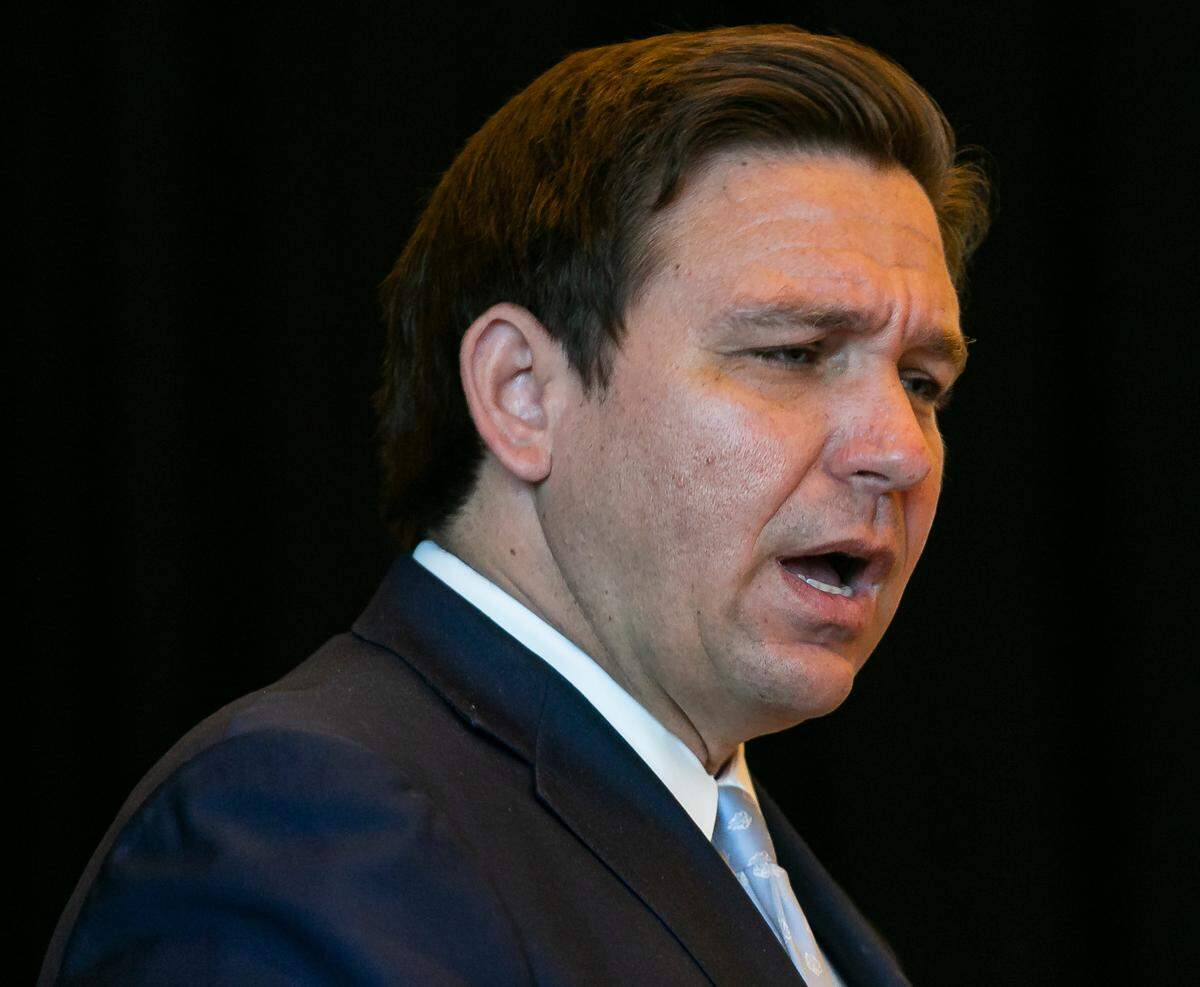
“Look, we’ve been watching sports on TV, but when you watch the NBA looking at an empty arena or Major League Baseball looking at an empty stadium it’s just not quite the same,” said DeSantis, who made the ultimate call on permitting fans at Hard Rock Stadium next month.
“I know this isn’t going to be people falling from the rafters here, but I think it is something that will give people a little bit of hope.”
McClatchy DC Bureau Reporter Alex Daugherty contributed to this story.
This is a breaking news story and we will continue updating it throughout the day.
This story was originally published August 24, 2020 at 9:35 AM.
