
Dolphins CEO, Miami-Dade mayor assure opening Hard Rock Stadium to fans is safe
Gov. Ron DeSantis declared Miami-Dade County safe enough to partially fill stadiums for live sporting events as newly confirmed cases of COVID-19 in Florida hit the lowest single-day amount reported since June 14.
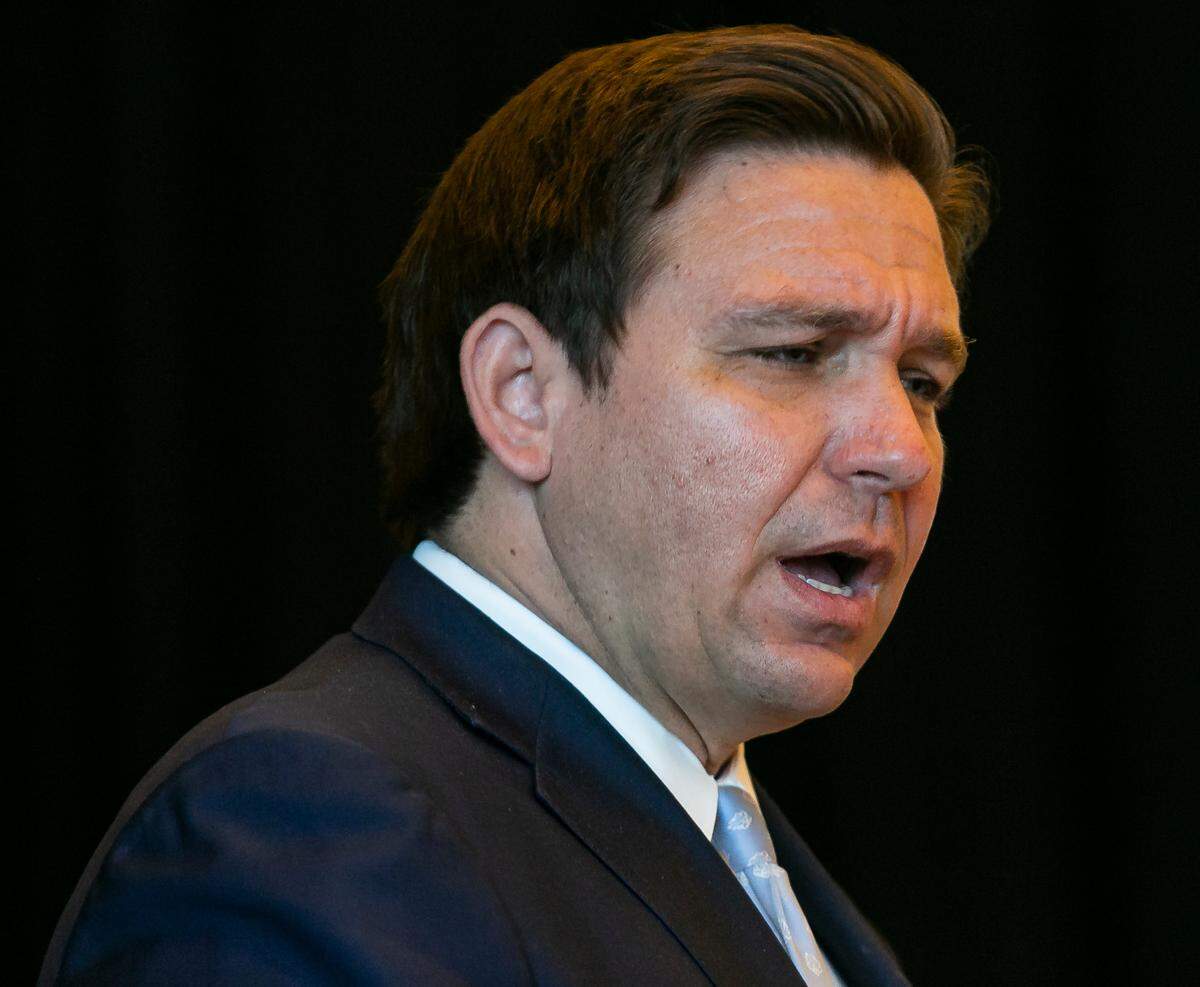
At Hard Rock Stadium in Miami Gardens Monday afternoon, DeSantis discussed a state order that preempts local rules on sporting events, therefore allowing Miami-Dade County, for example, to allow some fans to attend Miami Dolphins and University of Miami Hurricanes games this season
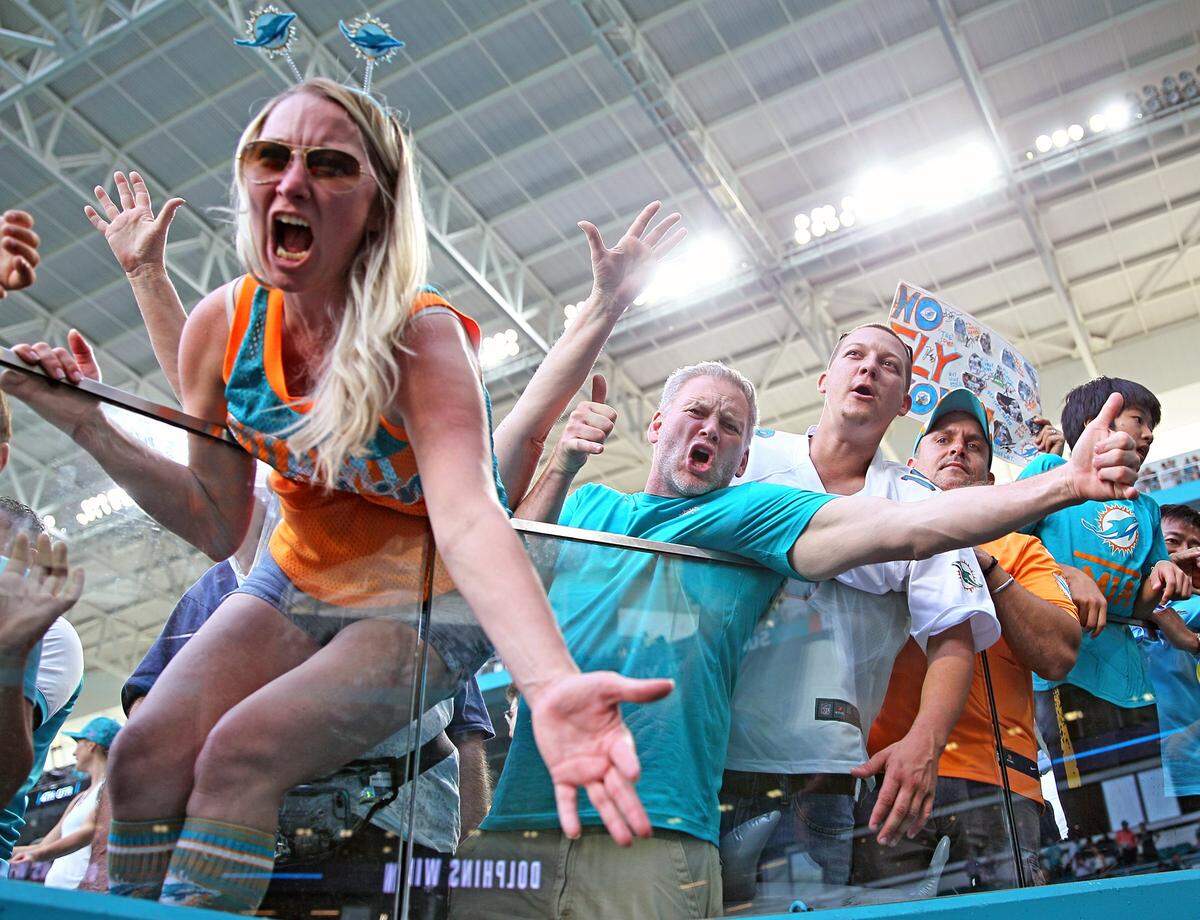
According to the Miami Dolphins, 13,000 fans — or 20% capacity — will be permitted to attend the Dolphins’ home opener against the Buffalo Bills and the Miami Hurricanes’ home opener against the University of Alabama at Birmingham. Season-ticket holders get first dibs, according to the Dolphins.
The new rule goes slightly beyond the recommendations from the governor’s Re-Open Florida task force, which recommended that large spectator sporting events should use strict social distancing guidelines and limit occupancy to 25% capacity.
The 20% number was calculated by counting the number of seats that can be filled while keeping all fans 6 feet apart, per Centers for Disease Control and Prevention recommendations.
While the announcement was being made, a state-run COVID testing site was operating in the stadium parking lot.
“To me, it wasn’t a binary thing, if we were going to be full or we were going to be empty,” said Tom Garfinkel, the president and CEO of the Miami Dolphins and Hard Rock Stadium. “I asked the team if we could create a stadium environment where people could be socially distant and socially present at the same time ... I don’t think staying home on a couch is the only way to stay safe.”
Garfinkel said if health conditions allow, capacity could rise to 50% later this season for both the Dolphins and Hurricanes.
Other teams like the Dallas Cowboys and the Kansas City Chiefs are similarly allowing fans to attend games in a limited capacity. DeSantis said the Tampa Bay Buccaneers and Jacksonville Jaguars are “working on their own plans.”
The governor did not take questions from the press.
Bobby Silvest, a spokesman for the Tampa Sports Authority, the local agency which manages Raymond James Stadium, said his organization does not yet know what the capacity limits will be at Tampa Bay Buccaneers or University of South Florida football games.
Florida’s Department of Health on Monday confirmed 2,258 additional cases of COVID-19, bringing the state’s known total to 602,829. There were also 72 Florida resident deaths announced, bringing the resident death toll to 10,397.
Miami-Dade County last began lifting COVID-19 restrictions in May and June as the first surge in cases from the spring started letting up. But it didn’t last long, and Mayor Carlos Gimenez used his emergency powers to close casinos and impose a 10 p.m. countywide curfew ahead of the July 4 holiday weekend. COVID spread was hitting levels far higher than when the crisis began in March and in July, COVID patients in county hospitals hit a record 1,300 admissions.
That number peaked in July, and Gimenez again ordered more restrictions including closing restaurant dining rooms. COVID statistics improved through August, with the daily rate of positive cases in the county dipping below 10% over the last three days for the first time since June.
But Miami-Dade still hasn’t gotten back to the hospital conditions present the last time Gimenez lifted business restrictions.
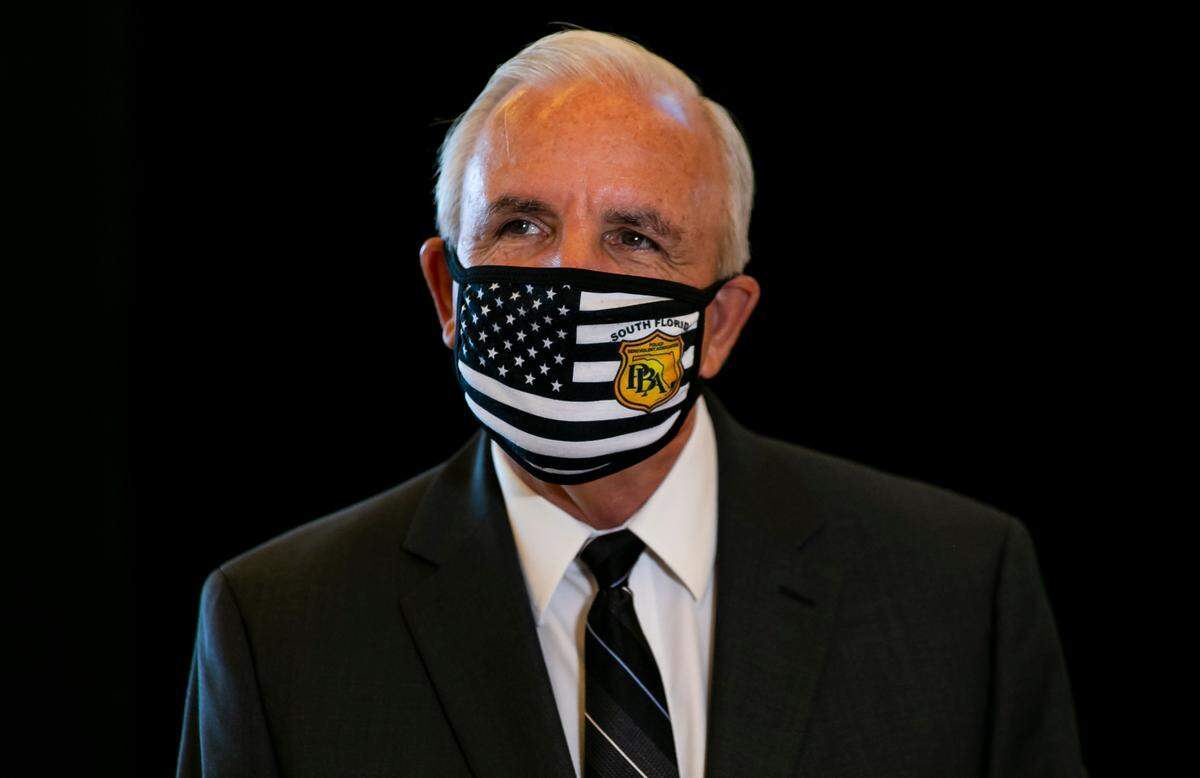
Gimenez, who appeared at the event Monday, said the decision to reopen was ultimately the governor’s, as he issued an executive order that preempts local governments from making rules around sporting events. However, Gimenez noted that he and DeSantis “speak regularly” and that all of his concerns were taken into consideration.
“I have no issues with this,” Gimenez said. “This is as safe an environment that I’ve ever seen.”
He likened eating and drinking maskless at the stadium to “eating at an outdoor restaurant.”
What does the order say?
As of Monday evening, the governor had not issued the executive order clarifying the state’s role in regulating sporting arena attendance. Gimenez referenced the order at Monday’s event, and DeSantis spokesman Fred Piccolo said the order was “in the works.”
Miami-Dade County spokeswoman Myriam Marquez said the county did not have copy of the order, but said she assumed “it will be posted on state’s website.”
Miami Congresswoman Donna Shalala, the former secretary of Health and Human Services and former UM president, told the Herald Monday that “It is very difficult to open anything when you have community spread. We still have community spread.”
She called reopening venues like Hard Rock Stadium “risky.”
Miami Gardens Democrat state Rep. Barbara Watson said while she agrees that bringing in fans poses public health risk, she is more concerned with the idea that the state can preempt local governments from having a say on sporting events.
Miami-Dade County has been a home-rule county since the Florida Constitution was amended to make it so in 1956. In other words, the citizens of Miami-Dade County have the power, within certain areas, to adopt their own rules for governing, with the County Commission acting as the governing body.
“We have to be careful about letting the governor exercise authority in home rule counties like Miami-Dade,” Watson said. “I don’t want to see them trying to camouflage something underneath this executive order.”
Coach Shane McDermott of the Buffalo Bills, Miami’s first home opponent, told the Herald: “I think it’s honestly ridiculous that there will be, on the surface, what appears to be a playing field like that — inconsistently across the league with the different away stadiums.”
The move is a major one, as the NBA, NHL and Major League Baseball are all playing out their seasons in special “bubbles” and without fans. The Big Ten and Pac-12 have announced they will not play football — or any sports — this fall.
DeSantis, however has made it emphatically clear that the Atlantic Coast Conference, to which Miami belongs, should play this fall.
At a news conference earlier this month at Florida State University, FSU President John Thrasher said the other ACC presidents, including the University of Miami’s Julio Frenk, are expected to meet again this week to continue their discussions.
Weighing the public health risk
Gathering thousands of people inside an open-air stadium for football games in September in Miami Gardens could easily ignite an outbreak of COVID-19 if social distancing and other measures aren’t strictly observed and enforced, said Jason Salemi, an associate professor of epidemiology for the University of South Florida.
But given that part of the thrill of live sporting events is the interaction with other fans, Salemi said it may be difficult to ensure that people adhere to the measures that have been begun to show results with fewer cases and hospitalizations in Miami-Dade.
“When you get thousands and thousands of people together, if people don’t self-police on the mitigation activities and they don’t take this seriously, then obviously this could lead to a lot of cases that will spread back into our community,” he said. “This has a way, if you have enough cases, that they will permeate throughout a population and they will get to people who are vulnerable. So there is danger if you don’t do this right, in terms of you could have high numbers of cases that emerge from an event like this.”
Salemi said people are craving a return to normalcy nearly eight months into the pandemic, and he worries about the mental health of those who are socially isolated.
He said those promoting football and other spectator events Hard Rock stadium should partner with the Florida Department of Health and others to craft a balanced message that urges people to act responsibly.
“Couple this desire to return to normalcy with a very strong cautionary tale,” he said. “That will result in people curbing behaviors so we don’t have spread.”
The University of Miami announced Friday that four students from one dorm had tested positive for COVID-19 and another 51 were being quarantined “out of an abundance of caution.” The confirmed cases came four days after classes had begun for the fall semester, and amid a growing number of universities pivoting suddenly to remote courses as students fail to practice social distancing. UM is straddling both in-person classes and remote courses.
The Florida High School Athletic Association went back on its decision to begin the season on time. It took Miami-Dade County Public Schools, home to the top competition in the state when it comes to football, threatening to leave the association to get the organization to delay the season.
Miami Herald staff writer Douglas Hanks, McClatchy DC staff writer Alex Daugherty and Herald/Times Tallahassee Bureau reporter Kirby Wilson contributed to this report
This story was originally published August 24, 2020 at 1:25 PM.