
Lobster miniseason is less than a month away and now is the time to prepare
With the lobster miniseason set for July 30-31, now is the time to prepare if you haven’t already started.
The annual event is the first opportunity for Florida’s recreational divers to catch lobsters since the regular season closed on April 1. And the daily bag limit is 12 lobsters, which is twice the limit during the regular season, which opens Aug. 6. (The miniseason daily bag limit is six per person in Monroe County and Biscayne National Park. Visit www.myfwc.com/fishing/saltwater/recreational/lobster).
The absence of lobster traps and not being poked and prodded by divers armed with snares, tickle sticks and nets for nearly four months usually results in an abundance of bugs, a term that refers to the insect-like appearance of lobsters. The tasty crustaceans also are typically less wary during what is officially known as the two-day lobster sport season.
Divers might also not be as wary as they should be if they haven’t dived in a while.
Not preparing properly can be the difference between a successful miniseason and a deadly one.
Those who wait until the last minute to get their dive gear serviced will find that dive shops are too busy to repair buoyancy compensators, more commonly known as BCs, and regulators, which deliver air to your mouth.
As a dive shop owner explained to me, “there are springs in the BC that tend to rust if you don’t replace them. It’s something you’ve got to watch out for. That could totally ruin your dive.”
A BC that won’t inflate could send you straight to the bottom on your first lobster dive. One that leaks won’t help you return to the surface. And one that won’t release air could send you zooming to the surface and possibly to the hospital to be treated for decompression sickness.
Equipment problems can happen without warning, whether you’ve done a few dives or a few thousand, which is why dive gear should be inspected by a certified technician at least once a year. The shop owner told how he unscrewed the dump valve on a customer’s BC and the spring broke as he opened it. “That would have happened on his next dive and the BC would not have held air.”
Now is also the time to go diving. If you haven’t dived since last year’s miniseason, your skills could be rusty, and it might be wise to take a refresher dive class.
A pre-miniseason dive is also a good way to see if all your gear is working properly, as well as scout for lobsters. On a scouting trip several years ago, my mask kept filling with water. I quickly returned to the boat and discovered that the mask was cracked. Fortunately my buddy had a spare mask, so I was able to return to the water.
Frank Schmidt of Lighthouse Point, who was diving with his son-in-law Jim Pszanka and Doug Williams, rescued two stranded divers from the water several miniseasons ago. They saw one of the divers waving frantically on the surface, then sink.
Pszanka and Williams jumped into the water, went down about five feet, grabbed the diver, released his weight belt and pulled him to the surface. The diver’s BC was filled with water because his dry-rotted inflator hose was torn out of the BC. After they got him into Schmidt’s boat, the diver vomited up “what seemed to be gallons of water.”
The near-drowning victim was dropped off at Hillsboro Inlet, where several law enforcement boats were stationed. Schmidt brought the other diver to his boat, where the driver was drinking a beer and smoking a cigarette.
Asked why he didn’t look for his divers, the driver said he didn’t know how to start the boat.
Don’t leave someone clueless in your boat while you and your buddies dive. Boat drivers need to be vigilant and keep tabs on their divers as well as other divers.
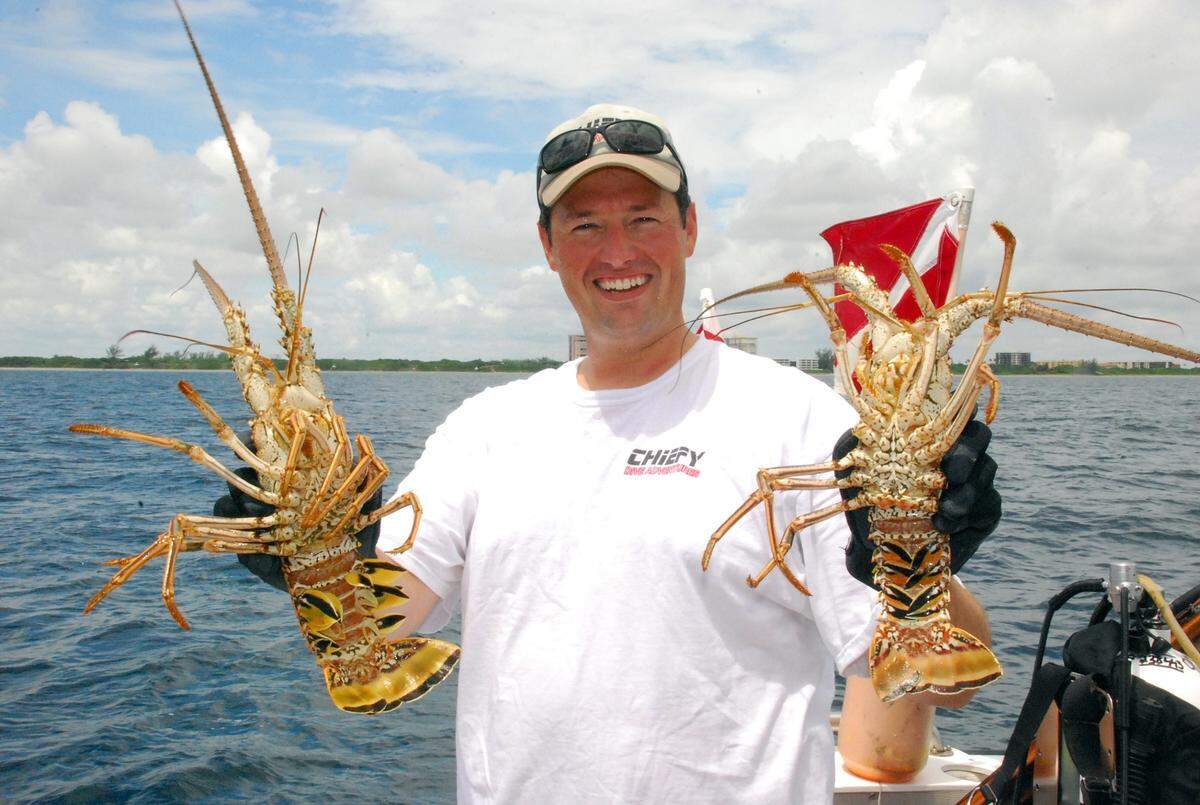
Spending time in the water before miniseason also gives you an idea of where lobsters are located. You can check spots that have produced in the past, as well as look for new spots in a variety of depths.
If you see a spot that looks like it’d be good for lobsters – plenty of marine life and places for bugs to hide -- but none are there, tug on your dive flag so your boat driver can mark it on the boat’s GPS unit. You might find it loaded with lobsters during miniseason.
Jim Mathie of Deerfield Beach once found a spot loaded with lobsters two months before miniseason. He checked it on a regular basis and it remained loaded. On the first day of miniseason, he and his crew all got their 12-lobster limits from that one spot.
LOBSTER MINISEASON
Season: July 30-31, 2025 (last consecutive Wednesday and Thursday of July each year).
Daily Bag Limit: 6 per person for Monroe County and Biscayne National Park; 12 per person for rest of Florida.
Minimum Size Limit: Carapace length must be larger than 3 inches, measured in the water. Possession and use of a measuring device required at all times.
Night Diving: Prohibited in Monroe County during the miniseason. Diving is defined as swimming at or below the surface of the water.
Prohibited Areas: Harvest of lobster is prohibited in John Pennekamp Coral Reef State Park during the miniseason. Harvest of lobster always is prohibited in Everglades National Park, Dry Tortugas National Park, no-take areas in the Florida Keys National Marine Sanctuary, in the Biscayne Bay/Card Sound Lobster Sanctuary, and in the five Coral Reef Protection Areas in Biscayne National Park.
Other regulations: Unless exempt, a recreational saltwater fishing license and a lobster permit are required to harvest spiny lobster. Lobster must be landed in whole condition. Separating the tail from the body is prohibited in state waters. The harvest or possession of egg-bearing lobster is prohibited.