
Captiva Island remains a hotbed for catching redfish and snook despite recent hurricanes
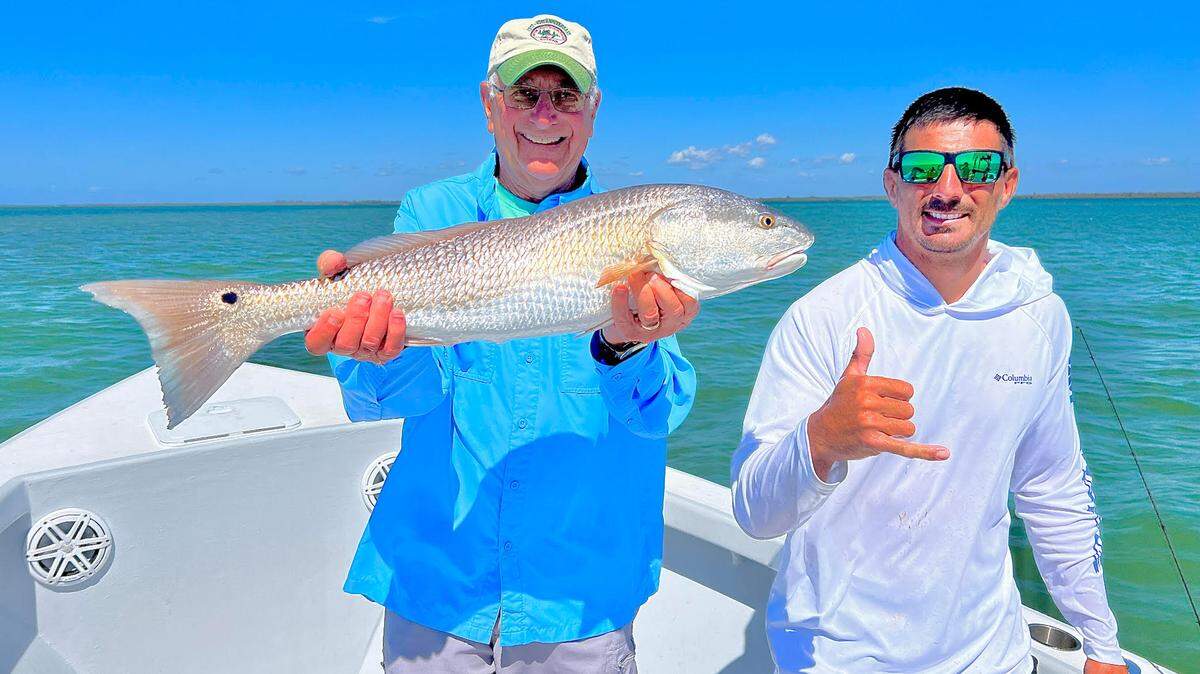
Despite the coastal island of Captiva being impacted by three hurricanes since 2022, the fishing for redfish and snook is as good as captain Dre Luttana can remember.
Fishing in Pine Island Sound, Luttana guided Glenn Sapir, Ray Sarracino and me to so many redfish that we lost count.
Luttana lives in Cape Coral and grew up fishing the inshore waters around the Gulf islands of Captiva and Sanibel. In addition to redfish and snook, Luttana’s Go & Get it Charters (239-910-4449; www.gogetitcharters.com) also specializes in tarpon, which start to show up now. Plus there are always sea trout, jacks, catfish and ladyfish in the fertile waters around the beaches and mangroves bordering Pine Island Sound.
Although Hurricane Ian in 2022 and Hurricane Helen and Hurricane Milton last year did heavy structural damage to the area — there was a steady flow of work trucks going over the Sanibel Causeway when we visited — the fishing has been unaffected.
After picking us up at the dock at the Green Flash Restaurant, where we enjoyed fried grouper sandwiches for lunch, Luttana headed across the sound in his spacious 23-foot Hanson bay boat to a snook spot.
The incoming tide was washing over an exposed oyster bar with a big hole behind it, and Luttana anchored his boat quite a distance away to avoid spooking fish — “Once you spook them, you’re done,” he said.
He rigged chunks of ladyfish on three spinning rods and launched extremely long casts toward the bar. When one of the rods started to bend forward, Sapir, a longtime outdoors writer friend who was visiting from Putnam Valley, New York, picked up the outfit.
“Let him chew on it for a second and then just start reeling,” Luttana said as he watched the rod’s tip. “Wait a couple of seconds. He’s not on there yet. You gotta think that when we eat steak, it takes us a minute to chew on it. You’ll rip that piece right out of their mouth if you reel now. Just reel Glenn when he pulls.”
Sapir waited to feel that pressure, then reeled. After a spirited tussle, he had about a 22-inch snook at the side of the boat. Luttana carefully lifted the fish into the boat, removed the hook and handed the snook to Sapir for some photos before releasing the undersized fish.
After that it was my turn to reel in a snook, then Sarracino, who lives in Fort Myers, released one, and the three of us repeated the process several times.
“I knew they were going to be there,” Luttana said when I asked him about the success we enjoyed at the spot. “Snook like to sit a little shallow and see baitfish swim by.”
But he added that, “generally, cut bait works better than live bait.” And the ladyfish chunks also worked great for redfish.
Luttana took us to one of his best spots, the edge of an oyster bar where he knew the redfish would be schooled up on the grassy flat.
“There’s a nice little drop-off and they’ll sit in the potholes,” he said.
We used the same tackle that we caught the snook on – light spinning rods spooled with 10-pound Sufix braided line with 20-pound fluorocarbon leaders, which are invisible in the water. The leaders were tied to 1/0 Owner SSW hooks and Luttana hooked the ladyfish chunks through the skin.
The bite was immediate, and Sapir and I had a redfish doubleheader. After we both landed and released our keeper fish, Sarracino hooked a truly big one. The fight lasted several minutes before Sarracino got the red, which was well over 30 inches, to the boat, where it was photographed and released.
That was the pattern for the rest of the afternoon: Two of us would be fighting redfish at the same time while the third angler took photos. And another three or four reds were over 30 inches. We ended up keeping two 25-inch fish, which Luttana filleted back at the dock so we could enjoy blackened redfish for dinner.
Redfish and snook are two of the most popular saltwater species in Florida, and after several years of catch-and-release only fishing because of red tides along the Gulf coast, the seasons have been reinstated.
In the Florida Fish and Wildlife Conservation Commission’s Charlotte Harbor Region, which includes Lee County, snook season is open from March 1 to April 30 and from October 1 through November 30. The limit is one fish per person per day measuring 28 to 33 inches in total length. The seasons and limits are the same in the Florida Keys and Everglades National Park.
In the Southeast Region, which includes Miami-Dade, Broward and Palm Beach counties, the snook season is February 1 through May 31 and September 1 through December 14. The bag limit is one fish per day and the slot limit is 28-32 inches.
In all three regions, the redfish season is open all year and anglers can keep one fish 18-27 inches but only a total of two per boat.
The inshore waters from Miami to Jupiter have good snook fishing but very few redfish. So if snook and redfish are on your menu, it’s worth a trip across Alligator Alley to Lee County and the waters of Pine Island Sound.