
Mutton snapper just one of many fall options for South Florida saltwater anglers
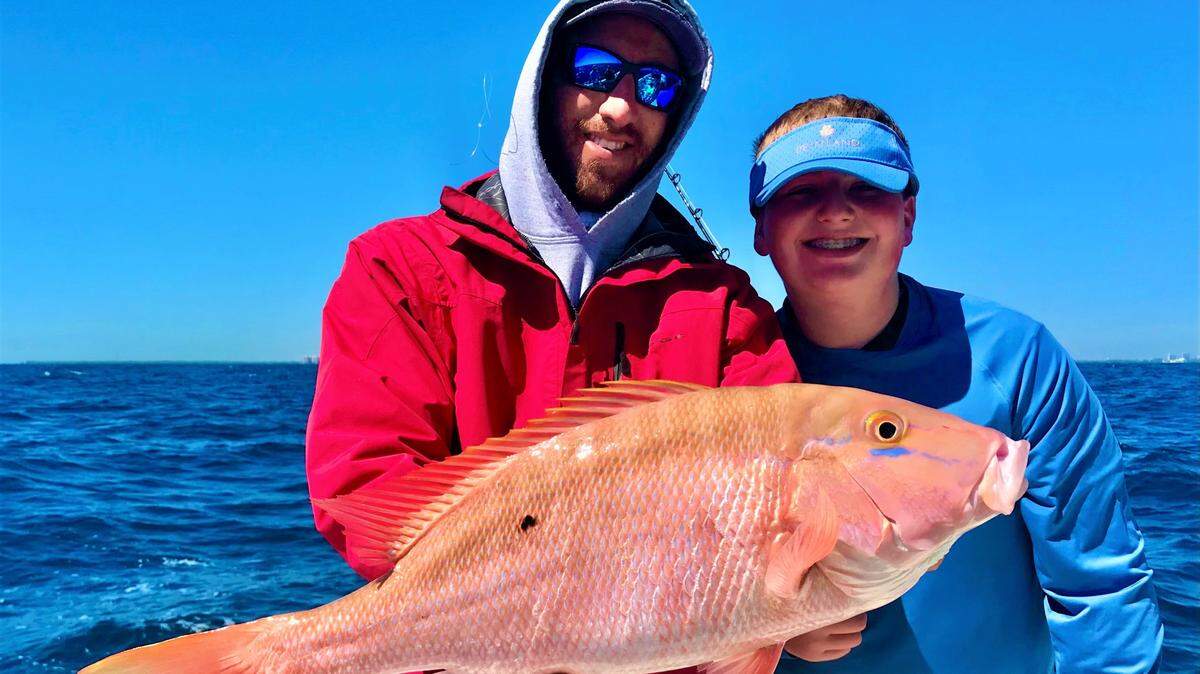
South Florida saltwater anglers have multiple fish-catching options in October. They can fish the fall mullet run from boats, piers and beaches for snook, tarpon, Spanish mackerel, bluefish and jacks. They can head offshore for dolphin. Or they can target tasty mutton snapper, which are congregated on reefs and wrecks.
“In the fall, where you find one mutton, you’ll find a lot more,” Capt. Dennis Forgione said. “They’re usually a little smaller than spring muttons, but there’s usually a lot more around.”
The fish can be found in depths ranging from 20 to 150 feet, so it sometimes takes several stops before locating a concentration. Once you’re on a good spot, you can catch muttons almost every time you drop a bait to the bottom.
Good places to start looking are along the second reef and the third reef, as well as around wrecks in 100-150 feet. You can cover a lot of reef by drifting. When you find the fish, you can anchor. To fish a wreck, slowly troll around it until you find the part of the wreck that is holding the muttons.
“Generally this time of year, the muttons are migrating along the reef,” Forgione said. “Usually it’s the second or third reef, so try both. Use your depthfinder to look for fish.”
If the muttons aren’t on the second reef, located in 50-60 feet, move to the third reef, located in 90-100 feet. If the muttons don’t bite there, try fishing a wreck. If you go an hour without a mutton, try another wreck. If you catch a few muttons, stay where you are.
Forgione likes to anchor his boat when fishing for muttons. Unlike fishing for grouper, you don’t have to set up on top of a wreck or a reef. That’s because muttons usually hang out in the sand around the structure.
If he’s fishing a reef, Forgione anchors on the outside of it. When fishing a wreck, Forgione anchors on the downcurrent side: If the current is running to the north, he anchors on the north side of a wreck. Then he puts out a chum bag on the surface and drops his bait straight down.
Anglers who anchor near reefs and wrecks to fish for kingfish should always drop down a bait for muttons. Put a live pilchard just off the bottom on a conventional outfit. Leave the rod in a rod-holder at the front of the boat and have the reel’s clicker on. While you and your companions watch the kite lines and flat lines behind the boat, listen for the reel’s clicker, a signal that line is being pulled off the reel, often by a mutton snapper.
Most anglers use 20-pound spinning or conventional outfits for muttons. The standard rig for the wary fish consists of an egg sinker placed above a swivel that is attached to 10 to 20 feet of 30-pound fluorocarbon leader. The weight should be heavy enough to rest on the bottom. Forgione uses a 3-ounce sinker for a light current and up to 2 pounds of lead for a screaming current.
Good baits for mutton snapper include live pilchards, finger mullet, ballyhoo and the biggest shrimp you can find, which reduces the amount of bites from less desirable bottom fish. Top dead baits are a chunk of bonito and a ballyhoo plug, which you make by cutting off the bait’s head and tail, then threading a 5/0 or 6/0 hook into the plug.
Capt. Abie Raymond fishes shallow patch reefs for muttons, which he finds by looking for schools of ballyhoo jumping out of the water as they’re being chased by the snapper, as well as sailfish and dolphin.
“It’s usually happening in 20 to 60 feet of water and most people think that’s probably bonitos in there, that’s probably mackerel in there,” Raymond said. “Not this time of year.”
He fishes live ballyhoo on 7-foot spinning rods with 20-pound monofilament line and four-foot, 30-pound fluorocarbon leaders. The shorter leaders work because Raymond is fishing in cloudy water compared with anglers who fish in deeper, cleaner water.
Unless he has patient anglers, Raymond leaves the mutton outfits in his boat’s rod-holders.
“The reason I have them sit in the rod-holder is because they need to be real still,” he said. “Customers have a tendency to want to wind and wind and wind. The rod-holder doesn’t have that tendency.”
When the rod bends over, then you can grab it and reel as fast as you can. If all goes well, you and your family will be enjoying fresh mutton snapper fried, baked or broiled for dinner that night.
This story was originally published October 6, 2023 at 12:07 PM.