
This time of the year is the best to catch ‘one of the most delicious snappers to eat’
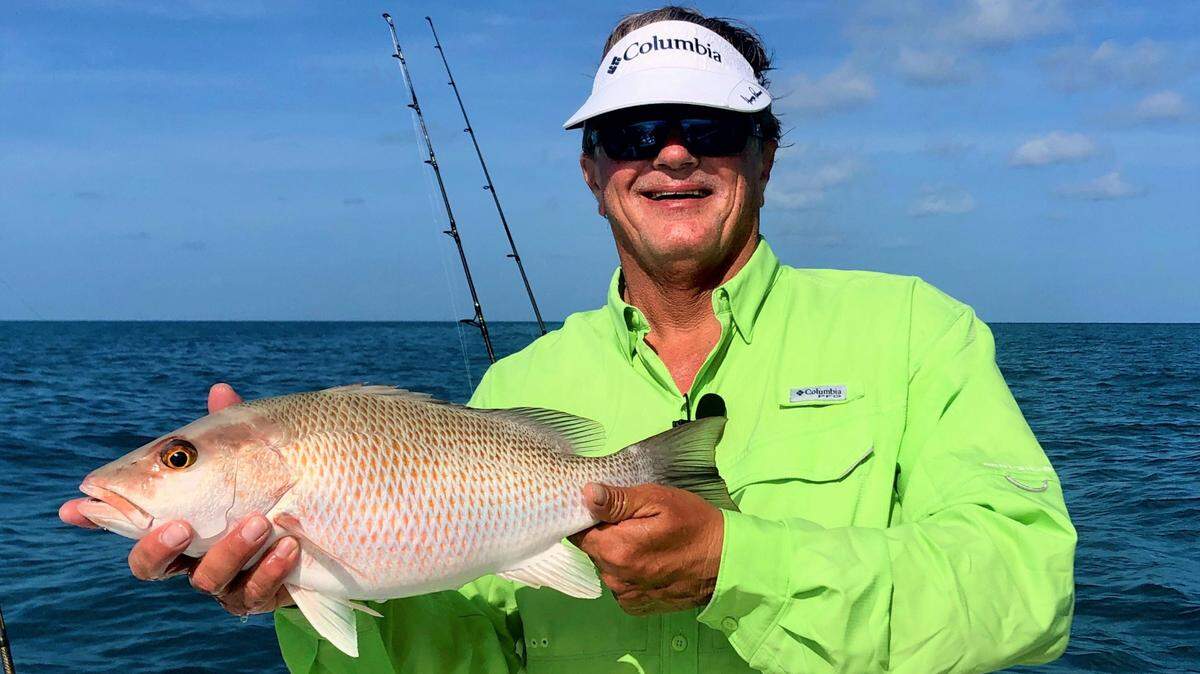
Mangrove snapper can be caught all year in South Florida, but now is the best time to target what saltwater fishing authority George Poveromo called “one of the most delicious snappers to eat.”
The fish, typically found around seawalls and docks in the Intracoastal Waterway and Biscayne Bay, and around mangrove islands in Florida Bay and Everglades National Park, move offshore to spawn in July and August.
“At times they won’t feed,” Poveromo said, “but when they decide to eat, it’s just bar-the-door fishing. It can be some of the most frustrating bottom fishing that I do and some of the most rewarding. It all depends on their mood and how the bite goes when you’re there.”
Poveromo recently caught mangrove snapper, along with several other species, while videotaping fishing trips out of Key West and Cudjoe Key for episodes of “George Poveromo’s World of Saltwater Fishing” for the 2021 season on Discovery Channel. Previous shows can be seen at www.georgepoveromo.com and on YouTube.
The mangrove fillets, which Poveromo cooked on the grill, provided several delicious meals for him and his family back home in Parkland. The daily bag limit in state waters is five mangrove snapper a minimum of 10 inches total length, but the limits are different for federal waters and Biscayne National Park. (Visit www.myfwc.com/fishing/saltwater/recreational/snappers for all snapper regulations.)
When he’s fishing in the Keys, Poveromo uses his Simrad bottom machine to locate hard, rocky bottom and patch reefs in 50 to 70 feet with concentrations of fish. When fishing off Miami-Dade and Broward counties, he looks for irregular, hard bottom in 50 to 80 feet, as well as shallow artificial reefs. After finding a promising spot, he’ll anchor his boat Marc VI upcurrent of the location, put out a block of chum and wait for the chum to “settle in.”
“The times that you do hit it right, I mean really, really right, when they’re concentrated, in many cases those mangroves will actually rise up in the chum slick and anything you throw back there, they’re going to devour,” he said. “It gets pretty wild. Those are the home run days when you find them like that.”
His favorite bait is a live pinfish, which can be caught on grassy flats adjacent to a channel on small, gold hooks baited with pieces of shrimp or purchased at some tackle shops. He free-lines pinfish back in the chum slick if the mangroves are at the surface. If they’re not, he will fish a pinfish on the bottom on a knocker rig.
“I know people love pilchards, which do work,” Poveromo said, “but some of these smaller pinfish, the mangroves go crazy for those. You hook those under the lower jaw and out the upper jaw, drop them straight down, let them hit bottom, reel up just a little bit or let it rest on the bottom. The pinfish work wonders, and they’re a lot hardier than pilchards.”
He uses a spinning outfit with a Penn Spinfisher VI 4500 model reel, which he said is easy to handle and provides an enjoyable fight when catching mangroves 2-3 pounds. He spools the reel with 20-pound braided line and attaches a 30-pound fluorocarbon leader of about 15 feet, which is long enough so the fish don’t get spooked by the braid. He slides an egg sinker on the leader that’s just heavy enough to get the bait to the bottom, followed by a small plastic bead that sits atop the eye of a 3/0 or 4/0 VMC light-wire circle hook.
If the mangroves are finicky, Poveromo drops down to a 20-pound fluorocarbon leader. If they’re in the chum slick and ignoring his offerings, he has gone as light as 10-pound fluorocarbon leader with a 1/0 circle hook to get the fish to bite.
A tactic when you know the fish are on the bottom, but the bite is slow, is to hook four or five thawed, frozen sardines through their eyes on a 10-ounce jig. Poveromo then drops the jig to the bottom and shakes it rapidly so the sardines come free and float around the bottom, which can excite the mangroves into feeding.
Poveromo noted that sometimes mangroves eat dead baits better than live baits. In addition to sardines, half a fresh ballyhoo or a chunk of squid also will catch the snapper when drifted back in the chum slick or fished on the bottom.
When mangroves 4 to 5 pounds are biting, Poveromo uses a Penn Torque 15 lever drag reel spooled with 30-pound braid and a 30-pound fluorocarbon leader. He also upgrades to a stronger 2/0 or 3/0 VMC 3X Tournament Circle Hook. The heavier tackle aids in horsing the snapper away from rocks so they can eventually make an appearance at the dinner table.
This story was originally published July 24, 2020 at 3:51 PM.