
Gators getting a bad rap in South Florida, says an expert from Gatorland. Here’s why
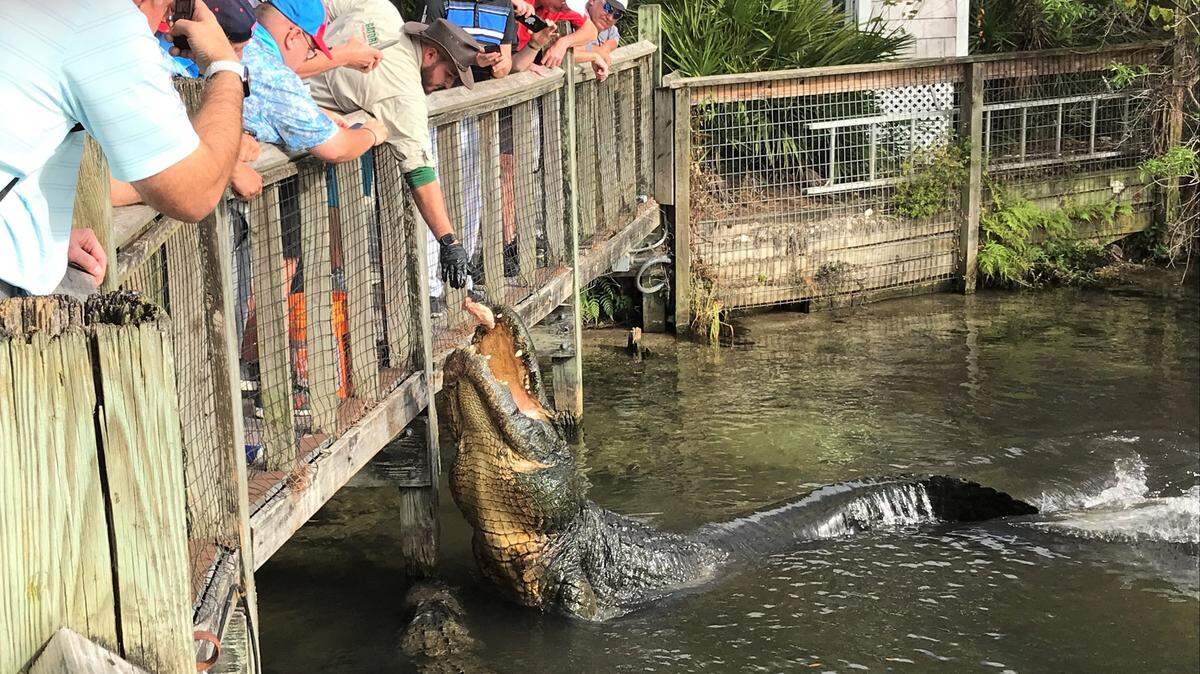
Alligators have a bad reputation in South Florida, which Savannah Boan said is totally undeserved.
Gators are abundant in local waters, and conflicts with humans are more likely to occur during the late spring and summer, when the reptiles mate and hatch their young.
According to Boan, who is the Crocodilian Enrichment Coordinator at Gatorland in Orlando, outdoors lovers need to realize how much good alligators do for Florida’s environment.
“I actually did a TED talk about it, because it’s always a Catch-22,” Boan said. “If you’re watching a cartoon and there’s an alligator or a crocodile in the cartoon, it’s always going to be the villain, right? But we’ve learned as a society. Now we love sharks, we don’t go out and kill them like we used to. We love all kinds of dangerous animals nowadays. But the love for alligators and crocodiles somehow just seems to get missed in it.
“So my personal goal in life is to get people to recognize how important and how valuable alligators are so that they will care about their conservation.”
For example, said Boan, gator holes in the Everglades and other marshes are home to a variety of fish and small invertebrates, which are fed upon by wading birds such as herons, egrets and roseate spoonbills.
Boan’s duties as an enrichment coordinator focus on keeping the reptilian residents at Gatorland happy and healthy.
“That means I think of games and activities for crocodiles and alligators to participate in to keep their muscles strong and they’re minds sharp so that they’re not just lying around,” said Boan, who is also the international ambassador for Gatorland’s conservation work. “Just to keep their skills on point, sometimes we’ll roll a big ball in there and let them knock it around for a little while. They can’t get hurt on the ball.
“Reptile enrichment is kind of a newer sort of thing. People traditionally never thought that reptiles needed to be stimulated or enriched. But now the world is kind of coming around and realizing that they deserve it, too, and it helps them and they like it.”
Gatorland, which was founded in 1949 and reopened three weeks ago with all types of safety measures after being closed because of the COVID-19 pandemic (www.gatorland.com), is one of the best places to see and learn about alligators.
The 110-acre facility, which I visited during a stay in nearby Kissimmee, has some 2,000 gators of all sizes and ages, from babies to “Pops,” who is the oldest at 69. Many of the alligators were purchased from nuisance trappers who remove alligators from residential lakes and golf course ponds. Otherwise the animals would have ended up as leather belts and handbags, and gator bites on restaurant menus.
Gatorland’s alligators are segregated by size so the big ones don’t eat the small ones, and Boan and her co-workers marvel at their many different personalities.
“I learn new stuff every single day,” she said. “I watched alligators play with a stick the other day for five straight minutes, and I don’t know why. Only one stick. There were other sticks around and depending on what your ideas are about animal play, as far as I’m concerned, alligators and crocodiles definitely play.
“We give them pumpkins at Halloween. Pumpkins they can digest, and it’s good for their jaw muscles to crush big things like that. And they love the pumpkins. It looks like an alligator soccer team the way they’ll push them through the water.”
Bass anglers need to be aware that most alligators in lakes and canals are attracted to the splashing of fishing lures. Boan said when gators hear what sounds like an animal in distress, they will check it out and take your bait if they can.
Anglers fishing from shore need to get away from gators that approach them.
“Naturally, alligators are afraid of humans. The only conflict that ever happens is when it’s during nesting or breeding season when they’re on the move looking for females, looking for places to nest, things like that, or when people have been feeding them,” Boan said. “Those are the ones that get people. And they’re not doing it because they’re doing anything wrong.
“They’ve learned that you’ve been feeding them and they know when a person comes down to the water’s edge they’re going to bring food. But they don’t know if I’m walking with my child down there, if I’m walking my dog down there. They just think that it’s going to be another form of food.
“It’s just always best to leave them alone. They don’t have a lot of land left, we took up all their land. Let’s just let them be and have a happy life.”
This story was originally published June 13, 2020 at 9:14 PM.