
This is what you need to know for Florida’s spring turkey season, which starts Saturday
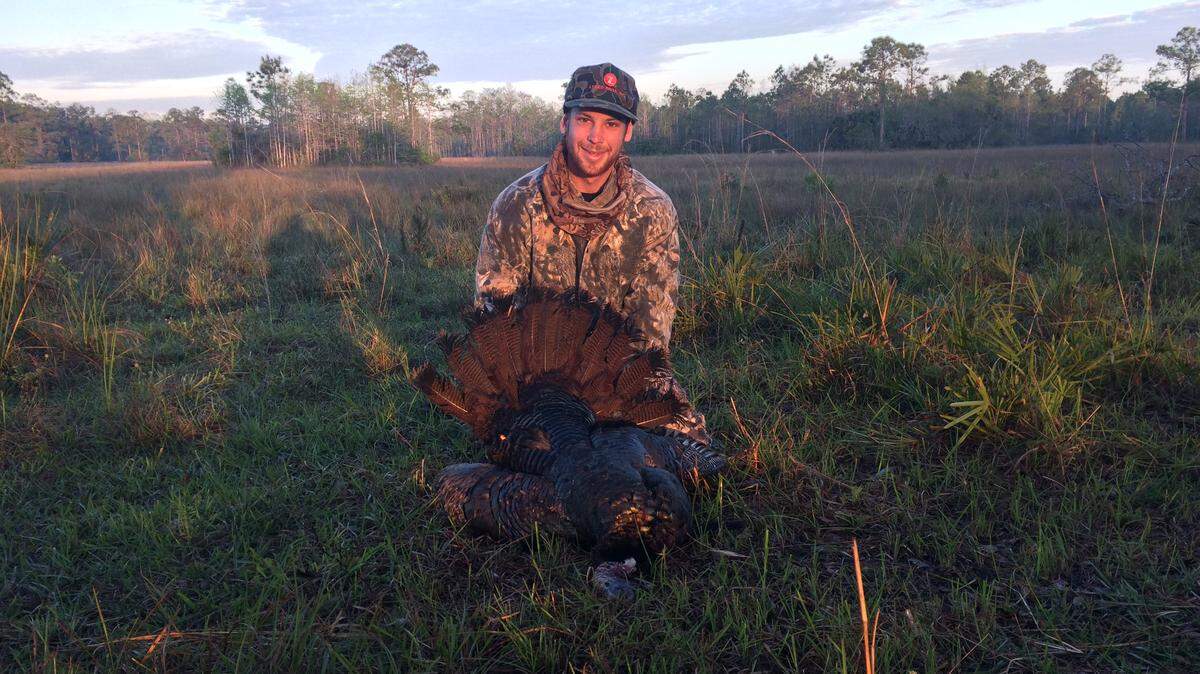
Hunting wild turkeys is almost always challenging and usually frustrating for the most experienced turkey hunters, so imagine how confounding turkey hunting can be for someone who has never pursued the exceptionally wary, often unpredictable birds.
That’s why one of the most rewarding aspects of Florida’s spring turkey season, which is March 2 through April 7 in South Florida, is when a veteran turkey hunter helps a newcomer bag his or her first wild gobbler. Many hunters say they’d rather call in a bird for someone else than shoot one themselves.
I myself have been mentored and been a mentor. After a string of unsuccessful outings when I first started hunting turkeys more than 30 years ago, I was fortunate to have Dave Streb of the Quaker Boy game call company guide me to my first gobbler.
A phenomenal turkey hunter, Dave was able to get the bird to gobble before sunrise, took me to an ideal setup spot based on the turkey’s approximate location, sat down next to me, called to the bird, told me what was happening as the vocal but unseen bird approached and kept me calm as my heart raced when the gobbler finally appeared within shotgun range. To this day, I’m not sure which one of us was more excited.
I know the thrills I experienced helping my nephew, Austin Yarnell, kill his first turkey were the highlight of my season last year.
Ron Bergeron, a businessman and conservationist in Weston, had graciously invited me to bring Austin to his Green Glades West ranch in Hendry County. “Alligator Ron” carefully manages his land for wildlife ranging from deer and turkeys to bears and panthers, so it was a great place to introduce my nephew to turkey hunting.
The first morning we had a gobbler and two hens come into my calling, but the birds did not come close enough to shoot with a shotgun — 40 yards is about the maximum ethical distance using lead shotshells, although the latest tungsten Heavyweight TSS loads from Federal have significantly extended that range. My nephew was disappointed, but I told him such turkey behavior is typical.
Spring is breeding season for wild turkeys. Males gobble and strut, puffing out their body and tail feathers, to attract females. Hunters try to reverse nature by imitating hen calls to attract lovesick gobblers. The odds of that happening are greatly reduced when a gobbler is already with a hen because he’s not going to leave her to meet up with someone else.
The only hope is for a hunter to try “The Jerry Springer Show” strategy and call so loudly and obnoxiously that the hen gets ticked off and charges in to give the upstart hen a beating. The gobbler will almost always follow the angry hen to get a front-row seat for the fight. Little does he know that he’s the main attraction.
Even if a gobbler is by himself, it’s not unusual for him to hang up beyond gun range because he expects the hen that he’s conversing with to go to him. I’ve also had lone birds who were coming in to my calling get intercepted by real hens who heard the gobbling and led them away. Explaining to new turkey hunters that they didn’t do anything wrong keeps them enthusiastic and ready to hunt again.
That afternoon, we set up in a different spot and Austin spotted a gobbler walking toward a stand of pines where he would fly up and spend the night. We waited until it was dark enough to slip away without spooking the bird and heard him gobble every time an owl hooted.
The following morning, I set up a blind in a clump of trees. The bird we had roosted gobbled to my calls, flew down, but scurried past us like he was late for a date with a real hen.
A few minutes later, three other gobblers appeared and seemed to be taking the same path as the first bird, but at a more relaxed pace. As they went behind us, I told Austin to stand up, turn around and shoot as long as he had a clear shot through a gap in the trees. When he fired, the biggest of the turkeys hit the ground and never twitched.
A few hours after that, I cut one of the bird’s breasts into strips, dredged them in seasoned flour and fried them in canola oil for a delicious and unforgettable meal. Then I sent Austin home with the turkey’s other breast, legs and thighs and a promise to take him turkey hunting again this season.
Turkey hunting
▪ Florida’s spring turkey season is March 2 through April 7 in South Florida and March 16 through April 21 north of State Road 70.
▪ Licenses: Florida residents ages 16-64 need a $17 annual hunting license and a $10 turkey permit. Those who hunt on public land also need a $26.50 Wildlife Management Area permit.
▪ Regulations: The bag limit is two gobblers or bearded turkeys per season, both of which may be taken on the same day on private land. Most turkeys are hunted with shotguns, but Florida also allows rifles, pistols, muzzleloaders, pre-charged pneumatic air guns, crossbows and bows to be used on private land. Restrictions apply on public land.
▪ Where to hunt: Big Cypress National Preserve is 728,274 acres of public land west of Miami that is open during the entire South Florida turkey season. Shooting hours are 30 minutes before sunrise to 1 p.m. Locating turkeys in the expansive area is difficult: Only 10 were killed last season. Twenty-seven gobblers were killed in 2018 at the 60,348-acre J.W. Corbett Wildlife Management Area west of West Palm Beach. Turkey hunting is allowed Saturdays, Sundays and Wednesdays from 30 minutes before sunrise to sunset. All other public lands in the region require an already issued quota permit to hunt.
▪ Reissued permits: Hunters can try to get a spring turkey quota permit in weekly reissue drawings that run from noon Saturday to noon Tuesday. These are permits that were returned, and more than two dozen are currently available for popular South Florida hunting areas such as Dinner Island, Dupuis and Fisheating Creek. To see what permits are available, go to https://license.gooutdoorsflorida.com/Customer/LimitedEntryOfferings and click on Quota – Spring Turkey.
▪ More information: www.myfwc.com/hunting/by-species/turkey
This story was originally published February 25, 2019 at 11:44 AM.