
How did the Panthers’ new forward lines look? Breaking down their season opener
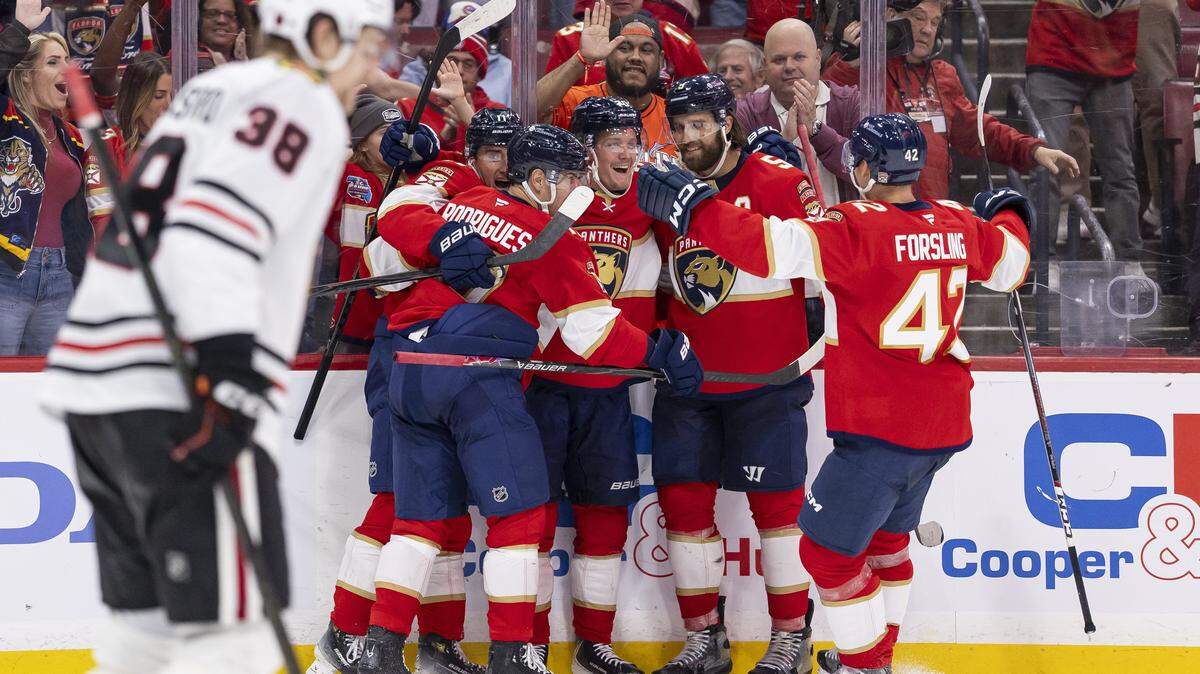
Florida Panthers coach Paul Maurice knows the only thing certain about his forward lines to start the season will probably be uncertainty.
That’s the nature of the business when three key players, each of whom occupies a role on a different line, is sidelined. Captain Aleksander Barkov, out after surgery to repair the ACL and MCL in his right knee, centers the top line. Star winger Matthew Tkachuk, out after surgery to repair a torn adductor muscle and sports hernia, is a big player on the second line. And Tomas Nosek, out after offseason surgery of his own, centers the fourth line.
So Maurice is tasked with working up new combinations and permutations to begin the 2025-26 season and see what works, what doesn’t and what can be stored in his back pocket for down the road.
He showed his first attempt at new lines on Tuesday in the Panthers’ 3-2 season-opening win over the Chicago Blackhawks.
Here’s a look at how each line fared in the game and what stands out about his trio.
All stats are from the advanced hockey statistics website Natural Stat Trick.
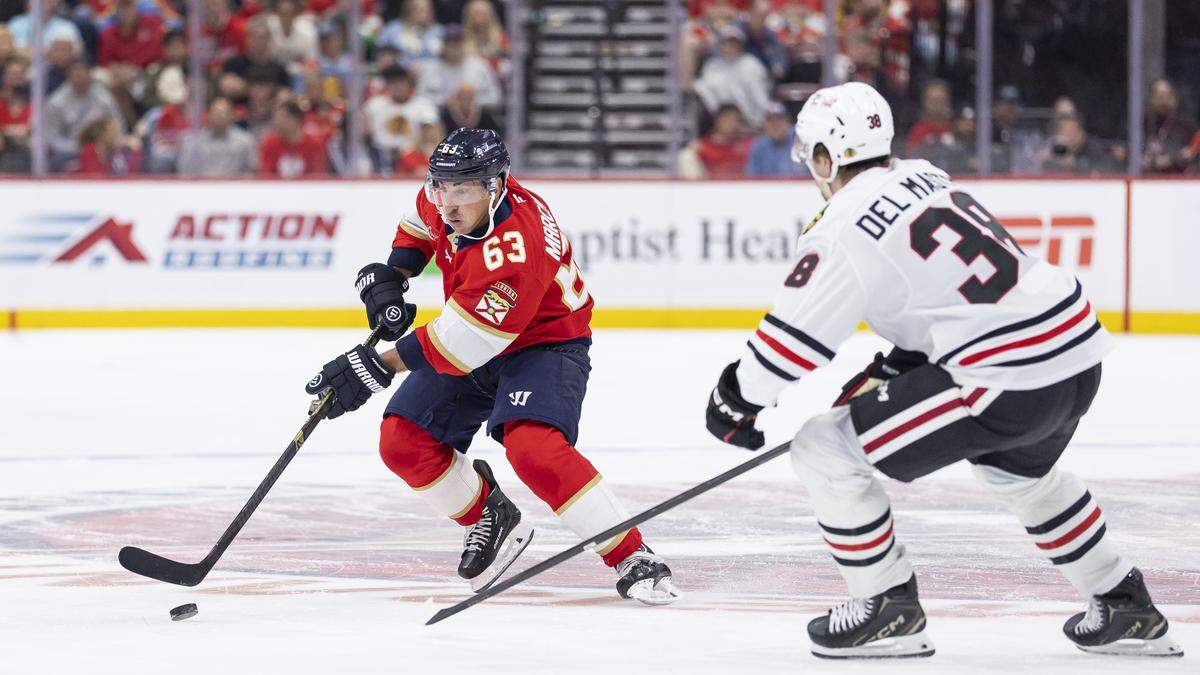
Line 1: Carter Verhaeghe, Sam Bennett, Brad Marchand
The stats: 14:06 time on ice, 25-6 shot attempts, 13-4 shots on goal, 0-1 goals scored, 0.87-0.28 expected goals for, 14-5 scoring chances, 6-2 high-danger chances
Breakdown: Verhaeghe and Bennett have plenty of work together. Marchand is the new element to this line, taking over Tkachuk’s spot on the right wing. Luckily, Marchand and Tkachuk have similar styles — they’re physical, they have quick hands and they have high hockey and emotional IQs.
The line thrived on Tuesday in its first game together.
“I thought we played really well,” Marchand said postgame. “We could have had 10 goals tonight. We had some really good opportunities. There’s definitely some areas I think we can be a little bit better, but considering we I think we skated together for one practice, I liked our game.”
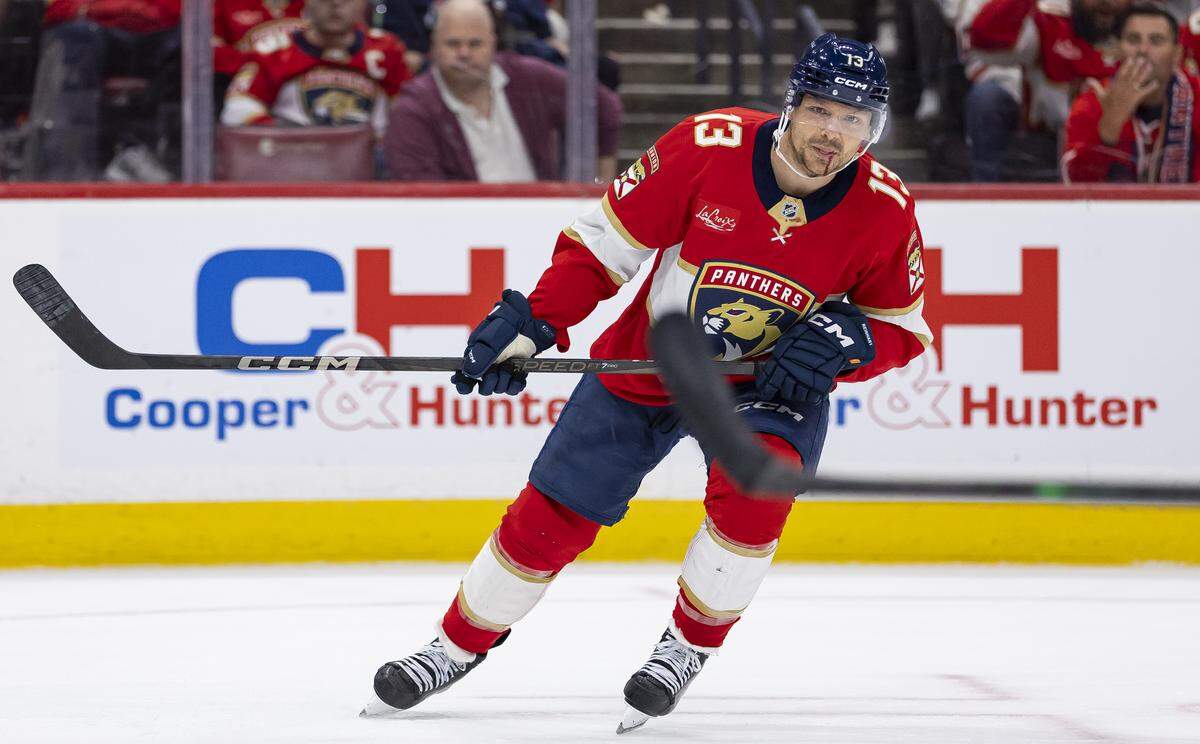
Line 2: Eetu Luostarinen, Anton Lundell, Sam Reinhart
The stats: 11:51 time on ice, 12-11 shot attempts, 7-3 shots on goal, 0-1 goals scored, 0.68-0.34 expected goals for, 5-3 scoring chances, 3-1 high-danger chances
Breakdown: This is the one line where Maurice has a concrete sample size of past work. The trio worked together pretty extensively during the 2023 playoff run and is a fallback that Maurice has gone to on occasion since when he needs to freshen things up. The three players have grown their game a lot since then. Reinhart is a complete two-way winger and has been top-five in Selke Trophy voting the past two years, while Luostarinen and Lundell have found more offense in their games.
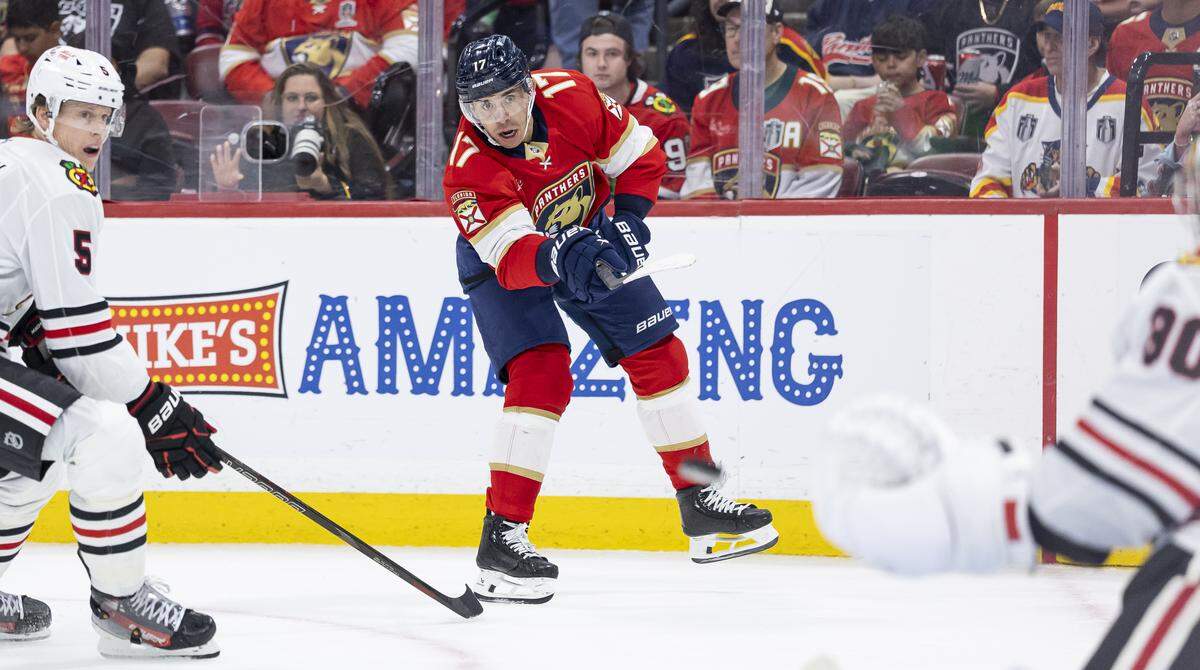
Line 3: Mackie Samoskevich, Evan Rodrigues, Jesper Boqvist
The stats: 8:19 time on ice, 9-10 shot attempts, 3-5 shots on goal, 1-0 goals scored, 0.17-0.28 expected goals for, 4-3 scoring chances, 1-1 high-danger chances
Breakdown: This is the line that entered with the most unknown, which is fitting considering each of their roles with the team. Rodrigues and Boqvist have shown they can move up and down the lineup and shift spots on lines without their game dropping off. Samoskevich is still finding his role in his second full NHL season. The combination has a speed element that isn’t seen as much on Florida’s other lines and could thrive if it can take advantage of forcing turnovers and making opponents pay in transition.
They were on the ice for the game-winning goal, with Boqvist batting in a pass from Samoskevich that came on a puck-dumping attempt by Rodrigues.
“We’re gonna have to wait for our chances and not force things,” Rodrigues said.
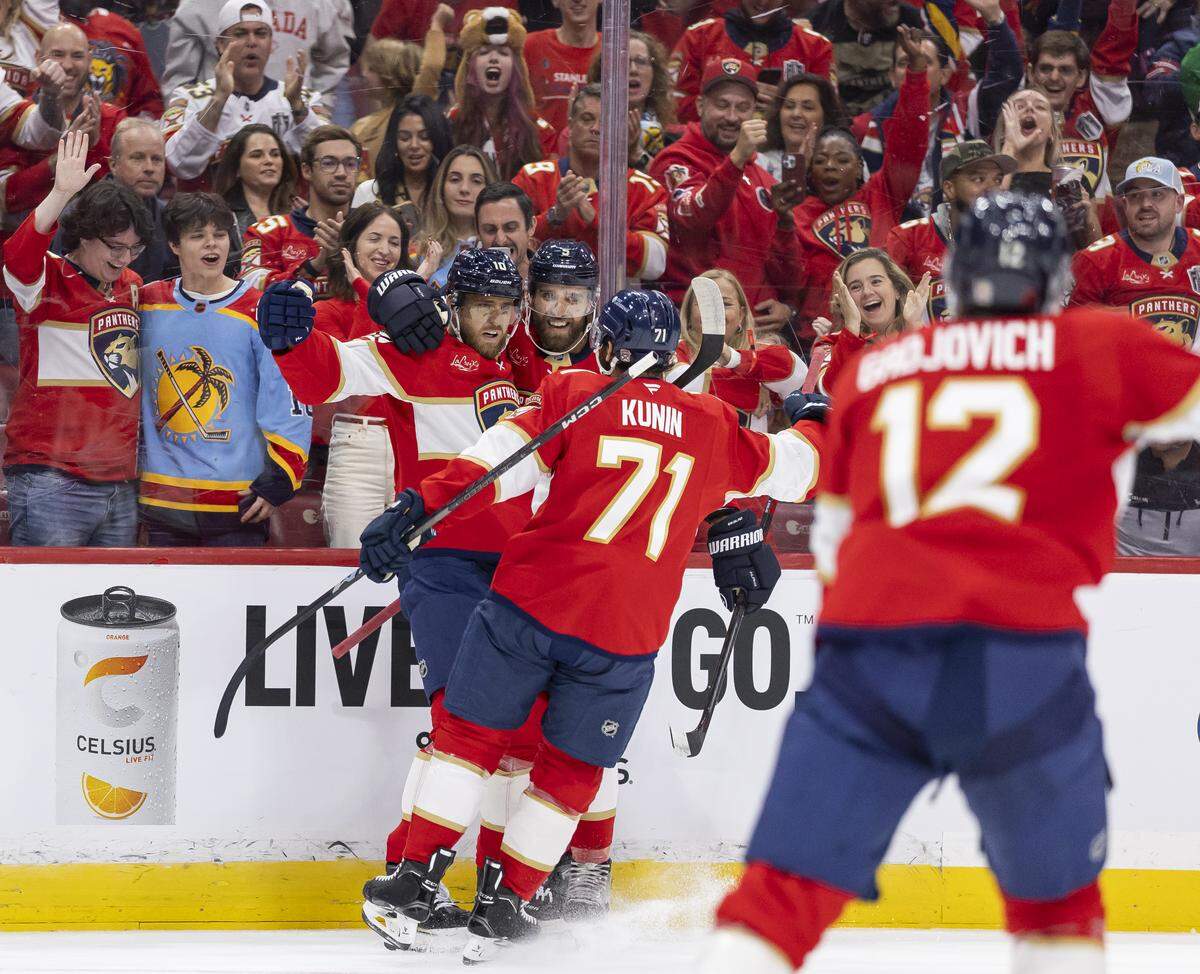
Line 4: A.J. Greer, Luke Kunin, Jonah Gadjovich
The stats: 4:10 time on ice, 5-3 shot attempts, 3-2 shots on goal, 1-0 goals scored, 0.51-0.02 expected goals for, 4-0 scoring chances, 3-0 high-danger chances
Breakdown: This is essentially Florida’s fourth line from the 2025 playoffs except with Kunin at center instead of the injured Nosek. Kunin brings the same physical, enforcing style that Greer and Gadjovich thrive playing. They won’t get heavy minutes, but this group has the potential to limit opponents during their short shifts before rolling the rest of the lines back onto the ice.
“For us,” Gadjovich said, “it’s just about playing simple, running our routes. Communication is huge. I think for us, if we can do that, that’ll allow us to play a little bit faster and get on pucks a little bit better.”
This story was originally published October 8, 2025 at 2:29 PM.
.JPG)