Recent history of Stanley Cup Final rematches doesn’t favor the Panthers
READ MORE
2025 Stanley Cup Final: Florida vs. Edmonton
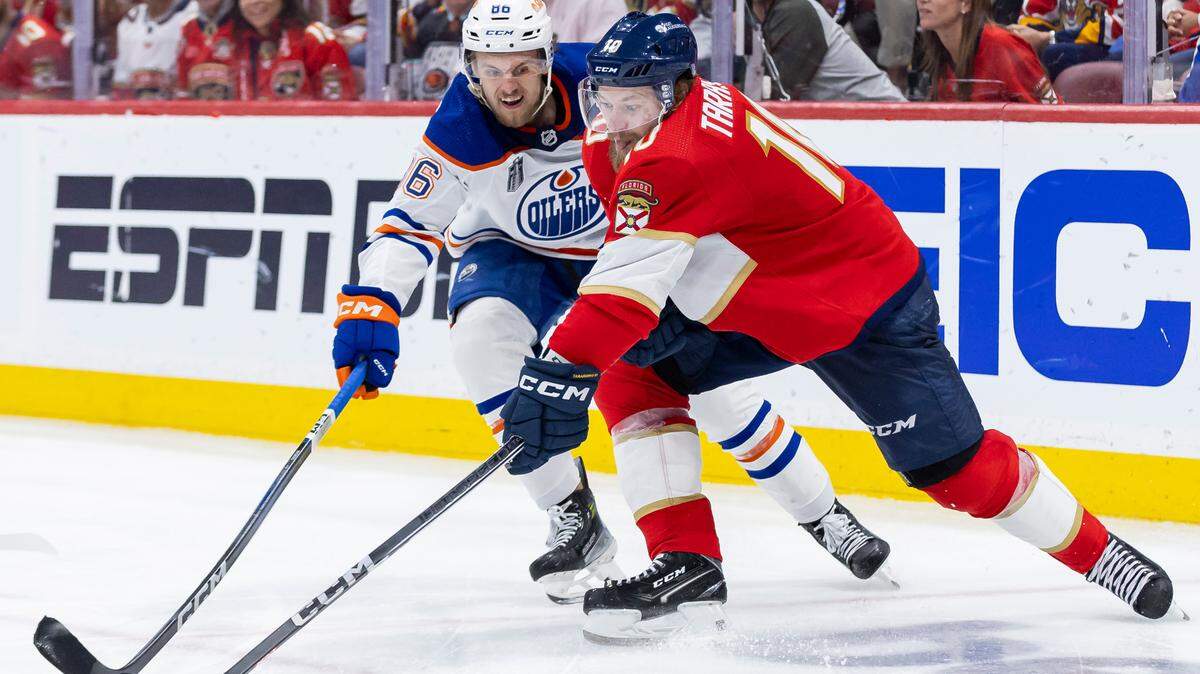
The Florida Panthers return to the Stanley Cup Final for the third consecutive year as they face the Edmonton Oilers in a rematch of last season’s final that the Panthers won in seven games.
Expand All
Passing the torch or passing the Cup at the Elbo Room again?
Appreciate the rarity of what starts Wednesday, a second consecutive Panthers vs. Edmonton fight over the world’s most popular Stanley. You don’t see rematches in the Stanley Cup Final often, only four previous times since the NHL’s 1967 expansion (although that is four more times than you’ve seen Toronto in the Stanley Cup Final since 1967).
And, while the rematch record is 2-2, the two most recent rematches ended with the generation’s preeminent player lifting his first Stanley Cup.
It’s about the only thing Edmonton’s Connor McDavid hasn’t won.
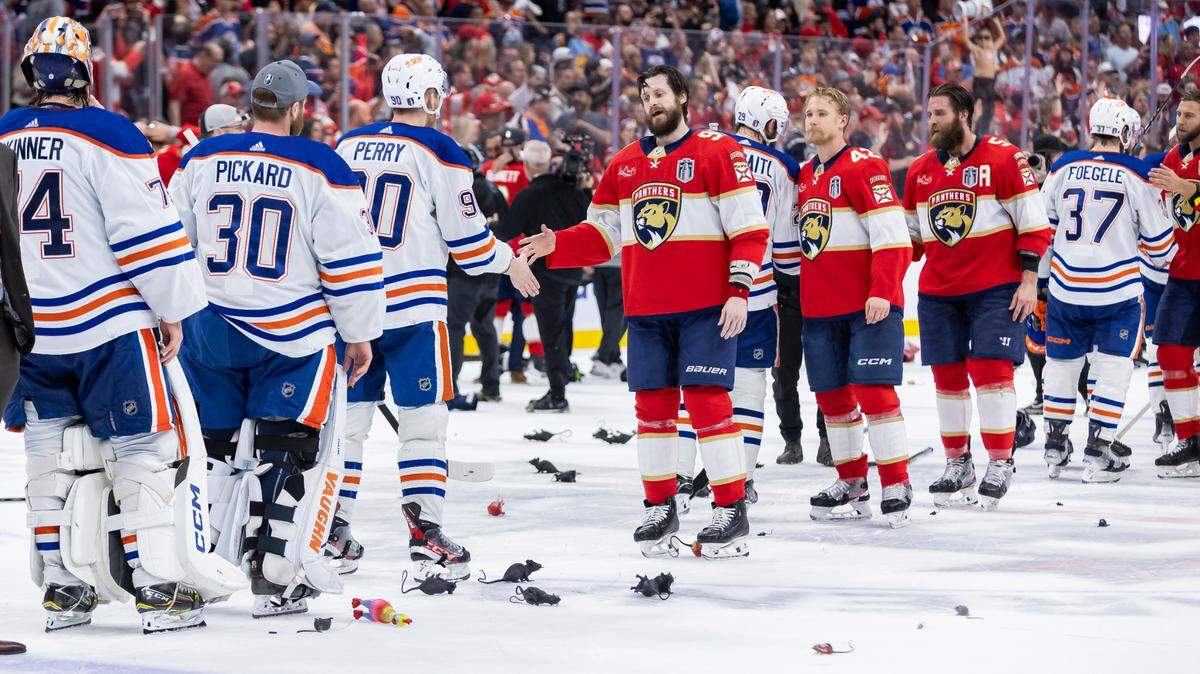
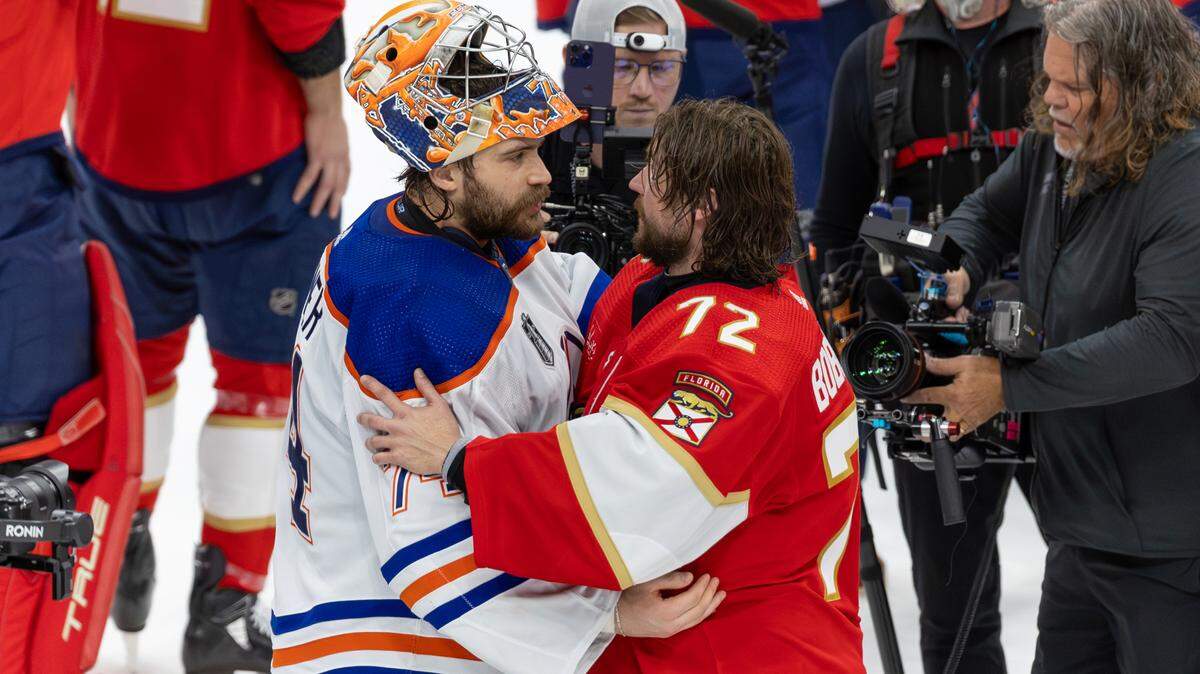
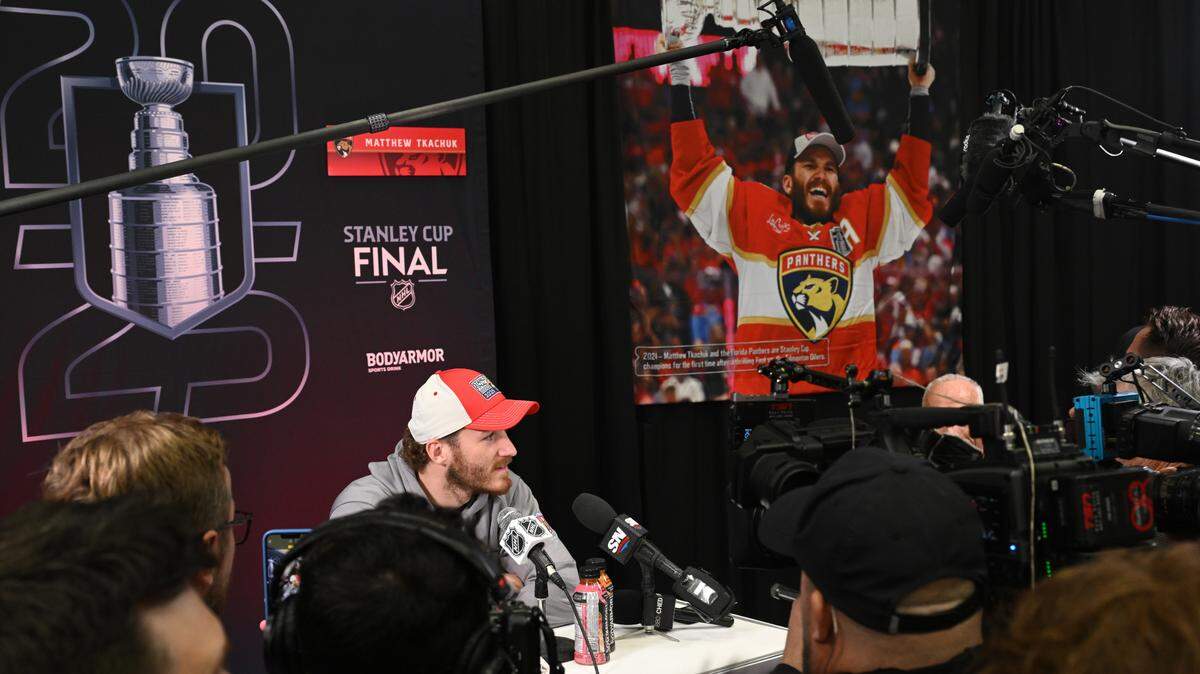
In the handshake line after the Panthers outlasted The Oil last June, the winner’s Matthew Tkachuk said to Edmonton’s Connor McDavid, “Hopefully, we’ll see you next year.”
Tkachuk got what he hoped. Can the Panthers keep what Edmonton wants?
READ MORE: ‘Here we are again:’ Panthers, Oilers set to begin rare Stanley Cup Final rematch
Montreal Canadiens vs. St. Louis Blues, 1967-68 and 1968-69
This counts but maybe shouldn’t
Pursuing TV money, the six-team NHL added franchises in Los Angeles, Oakland, Philadelphia, Pittsburgh, Minnesota and St. Louis. All those franchises went into the West Division. What would later be dubbed “The Original Six” — Toronto, Montreal, Chicago, Boston, the Rangers, Detroit — comprised the East Division. The division champions would play for the Stanley Cup.
There was no free agency, no World Hockey Association siphoning off talent as in the 1970s, no true NHL entry draft. Team change occurred at a pace ranging from glacial to the Titanic trying to avoid the iceberg.
Unsurprisingly, then, the first two seasons after expansion, St. Louis won the West Division with the newbies, Montreal won the East Division with the Original Six teams and the established, star-studded Canadiens swept the Blues twice. Fantastic goaltending by ageless Glenn Hall kept the Blues from getting blown out in the 1968 games, four one-goal losses, one of which was in overtime.
Montreal Canadiens vs. Boston Bruins, 1976-77 and 1977-78
▪ 1976-77: No team marched through an NHL season like the 1976-77 Canadiens. Men among boys? Try gods among men. Without regular-season overtime or shootouts, the defending Stanley Cup champs went 60-8-12, scored the most goals (387) and allowed the fewest (171). They had the NHL MVP and leading scorer, Guy Lafleur; goals leader Steve Shutt feasting on Lafleur’s rebounds; a Big Three of defensemen (Serge Savard, Guy Lapointe, Larry Robinson) with Robinson winning the Norris Trophy; the NHL’s best goalie (Ken Dryden); best defensive forward (Bob Gainey, almost the reason the Selke Trophy was created) and best coach (Scotty Bowman).
READ MORE: Panthers’ Barkov wins third Selke Trophy, first King Clancy Trophy
Against this juggernaut, Boston coach Don Cherry brought his “Lunchpail AC,” a pugnacious group of grinders led spiritually by Terry O’Reilly, offensively by slick Jean Ratelle and big Peter McNab, on the blueline by Brad Park and in goal by racehorse owner Gerry Cheevers.
Montreal lost only two playoff games in the first two rounds, and swept the Bruins with little trouble. They held three-goal, third period leads in each of the first three games and won the Cup on Jacques Lemaire’s overtime Game 4 winner.
“...the difference between us is small, and by playing their best as they always do, they force us to play our best, so each time we play them, we find out what our best is.... It is an important thing to know, and, year after year, only the Bruins do that for us.” — Montreal goalie Ken Dryden, “The Game.”
▪ 1977-78: Second verse, almost same as the first for Les Habitents: 59-10-11, No. 1 offense, No. 1 defense and a then-record 28-game unbeaten streak. Boston remained Boston, but with more scoring punch — an NHL-record 11 players with 20 or more goals — to go with their other punches.
This Cup final rematch, however, wasn’t a rerun until the end. Though Montreal took the first two games, Boston led early in each and took Game 2 to overtime. At home on the tight Boston Garden rink, the Bs won 4-0, and tied the series in a pucks-and-pugilism “old time hockey” classic, Game 4’s 4-3 overtime winner coming, appropriately, from feisty Bobby Schmautz.
But, as they say at the horse tracks beloved by Cheevers, “class tells.” A pair of 4-1 wins gave the fleet Canadiens their third consecutive Stanley Cup and second straight against Boston.
New York Islanders vs. Edmonton Oilers, 1982-83 and 1983-84
▪ 1982-83: The Islanders defined “Now.” Three consecutive Stanley Cups earned by Boss and Trots, sniper Mike Bossy and the game’s best two-way center, Brian Trottier; defenseman Denis Potvin’s precise breakout passes and bone-snapping hits; John Tonelli, Clark Gillies, Duane and Brent Sutter grunt work; combative Billy Smith stopping everything he needed. The Isles cruised into the playoffs before surging through Washington, the Rangers and Boston.
Edmonton embodied “The Future.” A brash team was led by a bunch of 22 and 23-year-olds: record-shattering Wayne Gretzky; Gretzky’s Robin, Jari Kurri; fast, powerful Mark Messier; mercurial right wing Glenn Anderson; swift defenseman Paul Coffey; dazzlingly quick goalie Grant Fuhr and co-No. 1 Andy Moog. Notice the speed theme. They averaged 5.3 goals per game in the regular season, 6.2 in winning 11 of their first 12 playoff games.
The NHL’s No. 1 defensive team squatted on the NHL’s No. 1 offensive team, packing the area in front of their net with three or four players to interrupt the Oilers deft passing, especially from No. 99 (no goals, four assists). Smith set the tone 11 minutes into Game 1, slashing Anderson as the winger circled the net, then later in the series doing the same to Gretzky. The Islanders won in a sweep, 2-0, 6-3, 5-1 and 4-2.
Still, Sports Illustrated’s EM Swift wrote after the first three games you could see a change was going to come because “In the first three games they played virtually flawless hockey and still weren’t easy winners. The Oilers aren’t yet ready to take their place, but Edmonton’s talent is only too apparent.”
To get to the bus after Game 4, Gretzky and teammate Kevin Lowe had to walk past the Islanders’ locker room. Expecting celebration, they saw a banged-up Islanders team tending to wounds while they nursed only the psychological pain of losing.
Lowe said, “That’s how you win championships.”
▪ 1983-84: The Islanders refused to age, actually improving to 50 wins and 104 points. After needing Ken Morrow’s overtime goal in the series-deciding game to get by the arch-rival Rangers, the Isles got rid of perennial victim Washington and Montreal to stretch their playoff series winning streak to 19.
Another year allowed young Edmonton’s strengths to mature. The Oilers averaged a still-record 5.6 goals per game as they zoomed to the NHL’s best record, 57-18-5. Gretzky put up the second of his four 200-point seasons and his best season in points per game. Like the Isles, only their arch-rival, Calgary, took Edmonton to a series-deciding game in the playoffs.
Edmonton won Game 1 of the Final, Islanders-style, 1-0. New York won Game 2 Edmonton-style, 6-1 and had a 2-1 lead in the second period of Game 3 when Messier wheeled away with the puck near the red line. Messier charged toward Gord Dineen and Denis Potvin, lost Dineen with a shake-and-bake move, then fired a low wrister between Smith’s stick side and the left post. Both sides pointed to Messier’s goal as the turning point in the series.
The Future was Now. Edmonton scored the last five goals of that game, then won 7-2 and 5-2 to take the first of five Cups in seven seasons.
Detroit Red Wings vs. Pittsburgh Penguins, 2007-08 and 2008-09
▪ 2007-08: Detroit post-2004-05 NHL lockout looked a whole lot like Detroit, pre-lockout: ridiculously skilled and crisp at both ends of the ice, third in offense, first in defense. Epitomizing this were their top two scorers, Pavel Datsyuk and Henrik Zetterberg, also finishing first and third in the Selke Award (Best Defensive Forward) voting. Their third and fourth scorers were defenseman Nicklas Lidstrom (another Norris Trophy) and Brian Rafalski. Goalie Chris Osgood’s 2.09 goals against average led the league, as did the Wings’ record, and Osgood split games with Hall of Famer Dominik Hasek, on the short list of best goalies ever.
Pittsburgh also came out of the lockout as it went in: rebuilding through the draft. They took goalie Marc Andre-Fleury (No. 1 overall, 2003); center Evgeni Malkin (No. 2 overall, 2004); center Sidney Crosby (No. 1 overall, 2005); center Jordan Staal (No. 2 overall, 2006). They mixed in veteran imports Petr Sykora, defenseman Sergei Gonchar, once-and-again Penguin Mark Recchi and high-class rental Marian Hossa. These Penguins got the franchise’s first series wins since 2001, zipping past Ottawa, Rangers and Flyers with the loss of only two games.
In the Stanley Cup Final, however, the Pens found Detroit too experienced and too complete. The Red Wings won the first two games at home, 4-0 and 3-0, then traded one-goal results in Pittsburgh. Down 3-1 in the series, Sykora struck in triple overtime of Game 5 to keep the Pens alive, but the Wings took a not-that-close 3-2 Game 6 for their fourth Cup in 11 seasons.
▪ 2008-09: Detroit put up another season over 110 points. Datsyuk won the Selke and Lady Byng (gentlemanly play) trophies again while leading the Wings in scoring. Overall, Detroit remained the same, just one year older. Osgood split time with Ty Conklin instead of Hasek and his save percentage dipped under .900. Anaheim, Cup winners two years before, took the Wings to seven games in the second round, but otherwise the Wings looked like champs again.
In Pittsburgh, a healthy Crosby for a full season and Malkin winning the NHL scoring title didn’t prevent slight dips in regular-season record, power play and several other team metrics. Coach Michel Therrien got fired with 25 games left and, under Dan Bylsma, the Pens won 18 of their last 25 games. The Pens seven-game, second-round drama turned out to be an exhilarating Battle of the NHL Stars epic triumph over Washington and Alexander Ovechkin.
The Cup Final opened as it did the previous year, the Wings winning similar games, both 3-1. But, the Pens matched them with a pair of 4-2 wins in Pittsburgh. In a last fart of immaturity, the Pens took undisciplined penalties and gave up three second-period power play goals in a 5-0 Game 5 loss.
But, in the last Stanley Cup Final games at Pittsburgh’s Mellon Arena (The Igloo) and Detroit’s Joe Louis Arena, the Penguins pulled the Cup from Detroit with a pair of gritty 2-1 wins. After defenseman Rob Scuderi saved the Game 6 win by stopping Johan Franzen with Fleury out of position, Fleury saved Game 7 in the last seconds by diving across the goal mouth to stone Lidstrom on a rebound. That let Maxime Talbot’s two goals stand up for the win.
Detroit hasn’t gotten past the second round since. Pittsburgh won Stanley Cups in 2015-16 and 2016-17 with different rosters still anchored by Crosby, Malkin, Fleury and defenseman Kris Letang.
This story was originally published June 4, 2025 at 9:12 AM.