Dual-threat quarterbacks, defense and white-haired coaches: the 49ers Super Bowl history
“San Francisco 49ers Super Bowl history” calls up images of Jerry Rice gliding into the end zone under beautiful rainbow throws from Joe Montana or maybe Steve Young. Offensive football as performance art. Can we get a symphony and some pinot noir with that?
It’s really about dual-threat quarterbacks, defense and former Stanford coaches.
Great as Rice was, the 49ers lifted the Lombardi twice before they drafted him — the second time, months before drafting Rice — and got Super again long after he had left for Oakland, then Seattle, then retirement.
Fun fact for those of you who forgot or never knew Montana used to roll out and run with the best of them before his 1986 back surgery: Montana’s 59 yards rushing in Super Bowl 19 vs. the Dolphins was 10 more than Young’s game-high rushing total in Miami 10 years later and only 3 yards fewer than Colin Kaepernick’s total in when San Francisco lost Super Bowl 47 to Baltimore.
By the way, Kaepernick’s 302 yards passing that game isn’t that far off Young’s 325 yards (OK, six touchdowns) in Super Bowl 29 or Montana’s 331 yards in Super Bowl 19. Instead of waiting for someone to call Young and Montana “duel threat quarterbacks,” we’ll just do it ourselves.
None of them won a daggone thing without the defense, no matter if the coach was former Stanford coach Bill Walsh, former Walsh 49ers assistant George Seifert or former Stanford coach Jim Harbaugh. Walsh might be the most influential offensive mind since the merger, but even he famously said the key to winning in the NFL is a late-game pass rush.
So it figures that San Francisco’s back in the climactic game with a devastating front four that makes quarterbacks shiver the way Fred Dean and Charles Haley did in the 1980s.
The 49ers have never won a Super Bowl without a Hall of Fame quarterback. They’ve also never won a Super Bowl without a Hall of Fame defensive back.
SAN FRANCISCO 26, CINCINNATI 21
▪ Jan. 24, 1982
▪ Pontiac Silverdome, Pontiac, Mich.
▪ MVP: San Francisco QB Joe Montana, 157 yards and one touchdown passing, 18 yards and one touchdown rushing.
▪ Should’ve Been MVP: Montana
▪ Super Bowl Rank: 26th
Though Bill Walsh gets credit for being an offensive innovator, defensive changes rose the 49ers to power in the 1981 season.
Oh, third-year quarterback Joe Montana grew into an offense that seemed molded for his ability to roll out and hit any pass under 40 yards. But credit the jump from six wins to Super Bowl mainly to the defense reducing points allowed from 415 in 1980 to 250 in 1981. And credit that to The Draft and The Trade.
The 49ers drafted cornerback Ronnie Lott in the first round; cornerback Eric Wright in the second round; and safety Carlton Williamson in the third round and started them with safety Dwight Hicks. Before their sixth game, San Francisco took advantage of a contract dispute in San Diego to bring quick, country strong defensive end Fred Dean up the coast.
Suddenly, San Francisco had one of the best secondaries in NFL history and a pass rush perfect for a league falling in love with the pass. In the first game after the Dean trade, San Francisco announced itself by walloping established powerhouse Dallas, 45-14. A series of sacks and pressures by Dean with a Lott Pick Six swirled into the mix announced a new power for those paying attention.
(A measure of Dallas being the most loved and hated team of the era: San Francisco jumped out to a 24-0 lead before some of the 1 p.m. games were done, but Sports Illustrated later reported the ratings for the game went up as it continued. America’s Team got thrashed and America was there for it.)
The 49ers went 12-1, counting the playoffs, after the trade for Dean.
In the conference championship games, past was prologue.
Cincinnati had trashed San Diego, 40-17, in Southern California warmth in November and 27-7 in the Freezer Bowl, the second coldest game in NFL history (minus 9 degrees with a minus 59 wind chill).
After humiliation in October, Dallas suffered heartbreak on their return to Candlestick Park. Down 27-21, the 49ers crossed up Dallas by running the ball down the field against a defense ready for an air assault. The drive ended with Montana rolling right, about to run out of available field and throwing over 6-9 Dallas defensive end Ed “Too Tall” Jones. Dwight Clark, running across the back of the end zone, skied to bring down The Catch and a 28-27 win.
Occasionally, you’ll see a CBS TV shot of Montana yelling something at Jones as he backpedals to the touchdown celebration. Some stories say Montana, hearing old money Dallas didn’t respect the nouveau riche 49ers, yelled at Jones, “Respect that, (rhymes with “other clucker”)!”
So, if the Super Bowl continued the trend, the 49ers had it. They’d beaten the Bengals, 21-3, in Cincinnati late in the season.
Though this game matched the AFC and NFC No. 1 seeds, this could be called The Cinderella Super Bowl.
Host city Detroit, forever in recovery from the 1967 riots, still looked like it needed a fairy godmother. Each team emerged from its conference in 1981 after going 6-10 in 1980, an improvement on 1979 and 1978 (two 4-12s for the Bengals, two 2-14s for the 49ers).
Really, though, this was The Bill Walsh Super Bowl.
The Bengals still ran most of the offense Walsh designed in 1970s as a Cincinnati assistant after powerhouse Greg Cook. Only when Walsh began winning in San Francisco with a 2.0 version of that offense would people start calling it “The West Coast Offense.”
Walsh opened the week by greeting his team at the hotel in a bellhop uniform and helped carry their bags off the bus. On Super Sunday, the 49ers team bus got caught in traffic on the way to the game. Walsh used the time to add a few more plays to what became known as “The Script,” the game’s first 25-30 plays.
The 49ers version of the West Coast offense, directed by Joe Montana, flummoxed the Cincinnati defense early as did Ray Wersching’s intentionally squibbed kickoffs. The Bengals fumbled one of those, helping the 49ers to a 20-0 halftime lead.
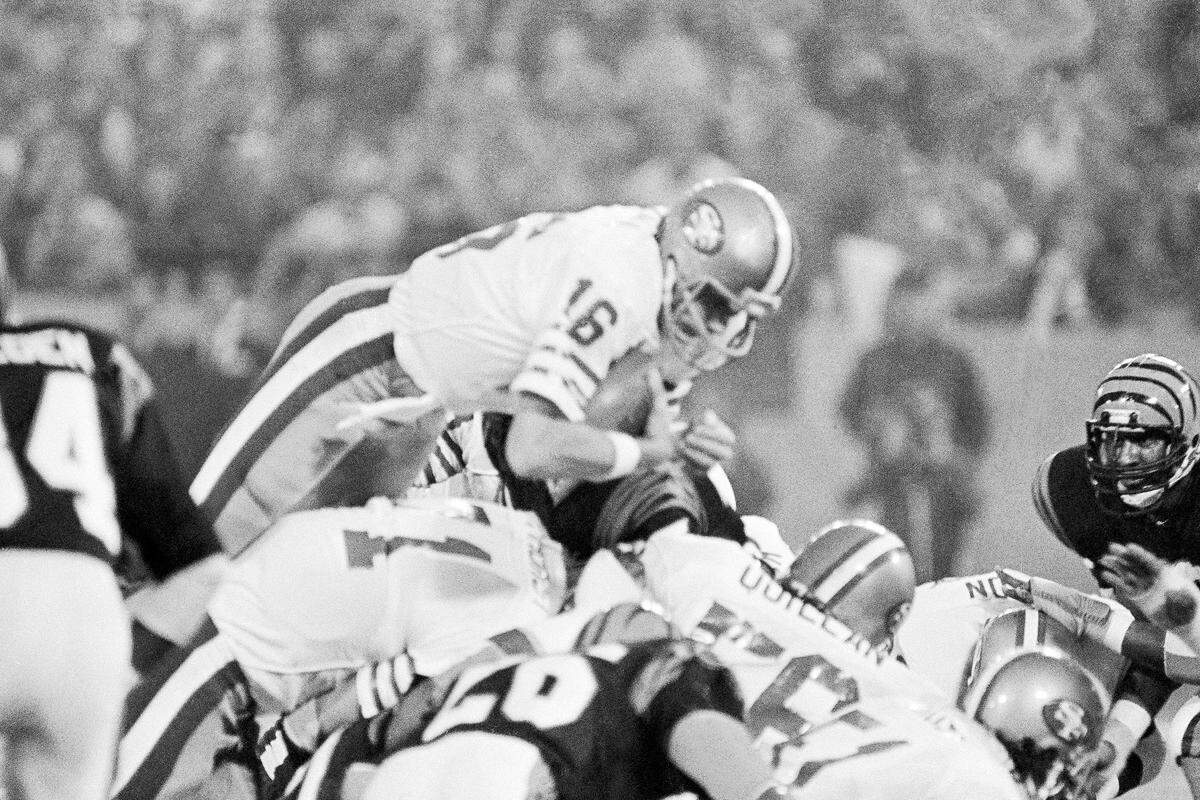
What’s still the highest rated Super Bowl ever – 49.1 rating, 73 share – found drama in the second half. The Bengals Dan Ross would finish setting a Super Bowl record with 11 catches. At 20-7, the Bengals reached the 3-yard line, first and goal in the third quarter.
On the first play, the 49ers held massive chunk of a fullback Pete Johnson to 2 yards despite linebacker Keena Turner staying on the sideline, not hearing his unit called to go into the game. Johnson didn’t get in on second down. Dan Bunz tackled fullback Charles Alexander on the 1 after a reception. Once more, the Bengals went with their Johnson, but San Francisco had Bunz, a Lott, and a Hacksaw, Jack “Hacksaw” Reynolds. Johnson didn’t make it.
With the clock and two more field goals in their favor, the 49ers confirmed the arrival of a new NFL powerhouse.
SAN FRANCISCO 38, DOLPHINS 16
▪ Jan. 20, 1985
▪ Stanford Stadium, Stanford, Calif.
▪ MVP: QB Joe Montana, San Francisco, 331 yards and three touchdowns passing, 59 yards and one touchdown rushing.
▪ Should’ve Been MVP: Montana.
▪ Super Bowl Rank: 40th
A cursory comparison predicted an epic Super Bowl shootout that could go either way.
The 14-2 Dolphins brought the NFL’s No. 1 offense ignited by NFL passing leader Dan Marino setting records for yards (5,084) and touchdowns (48) that would stand for two decades. The 15-1 San Francisco 49ers had the NFC’s leading passer, Joe Montana, guiding the NFC’s No. 1 offense.
But a serious breakdown revealed a Dolphins team that couldn’t run vs. the NFL’s No. 1 scoring defense. That defense had furious pass rushers in Fred Dean and Gary Johnson supporting safety Ronnie Lott and that great secondary. On the other side, Montana would be taking the NFL’s well-balanced No. 2 scoring offense against a banged up defense that allowed 28 points against pedestrian Pittsburgh in the AFC title game.
Oh, and the NFC champs would be in their home Bay Area at the stadium where Bill Walsh had been head coach before coming to the 49ers. Small thing, but...
New conclusion: San Francisco would score as often as it had to for the win.
That’s pretty much what happened. Scoring on five consecutive possessions, the 49ers turned a 10-7 deficit into a 38-16 third quarter lead. In this game, San Francisco and its quarterback had the stunning numbers: 390 yards total offense for Montana, three touchdowns for backup running back Roger Craig, 537 total offensive yards.
That’s right, backup Roger Craig — Wendell Tyler ran for 1,246 yards in the regular season and a game-high 65 in the Super Bowl. When the backup running back is one season from putting up the first 1,000-yard rushing/1,000-yard receiving season, that’s an offense more loaded than a Costco cart on payday.
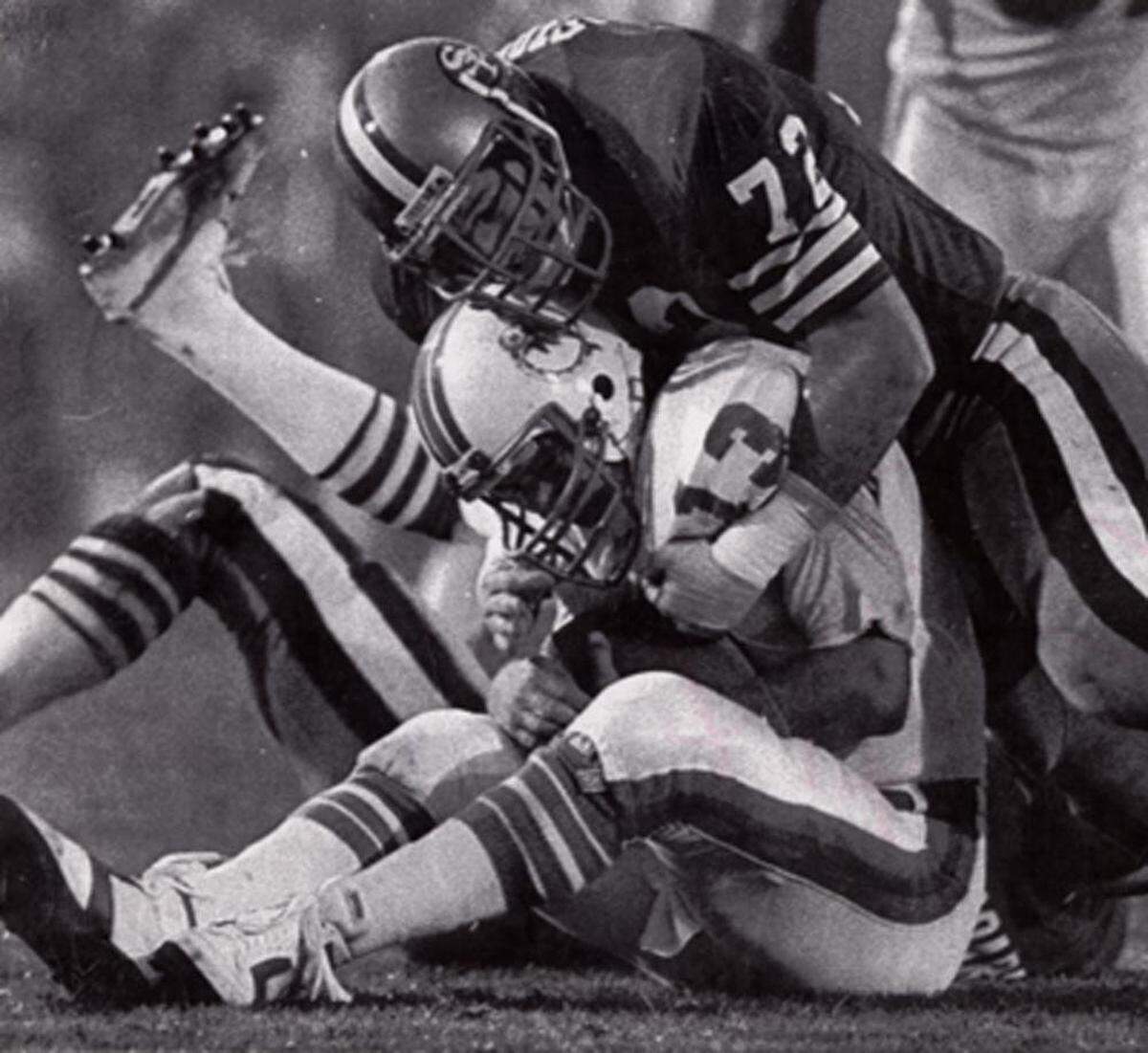
The 49ers sacked Marino, taken down only 14 times in 18 previous games, four times and picked him off twice. San Francisco shut out the Dolphins in the second half.
That seemed as unbelievable as the idea that Marino would be shut out of future Super Bowl appearances.
SUPER BOWL XXIII
SAN FRANCISCO 20, CINCINNATI 16
▪ Jan. 22, 1989
▪ Joe Robbie Stadium, Miami
▪ MVP: Jerry Rice, WR, San Francisco, 11 catches, 215 yards, one touchdown.
▪ Should’ve Been MVP: Rice.
▪ Super Bowl Rank: 16th
Unlike the strike-affected 1987, when the 49ers looked like the NFL’s best team by a Napa Valley vineyard before getting pass rushed out of the playoffs by Minnesota, San Francisco tottered through the first 11 games at 6-5. A 95-yard John Taylor punt return ignited a 37-21 Monday Night Football win against Washington that propelled the 49ers to a 4-1 finish.
In the playoffs, they served cold revenge to Minnesota, 34-9, then cooked the Bears, 28-3, on an arctic Chicago day that the local partisans swaggered was “Bear Weather.”
Weather wouldn’t be a concern at this Super Bowl, in Miami’s year-old Joe Robbie Stadium. NBC telecast the game, the climax to a week that resembled a two-part episode of NBC’s Miami Vice.
From their hotel, the Bengals could see Overtown burning from yet another riot, this one sparked by a Miami police officer shooting a black motorcyclist. The night before the game, the Bengals found fullback Stanley Wilson sitting on a hotel room floor, indulging in cocaine.
That was all before the game, during which Cincinnati nose guard Tim Krumrie broke his leg in the first quarter. Ickey Shuffle choreographer and rookie running back Ickey Woods ran wild until a gunshot-sounding hit from San Francisco safety Ronnie Lott made him much more docile. A defensive struggle sat at 6-6 with 50 seconds left in the third after a 49ers field goal.
Suddenly, the game went BOOM. Stanford Jennings streaked straight downfield on a 93-yard kickoff return touchdown. In answer, the 49ers drove to a 14-yard touchdown pass to Jerry Rice. Jim Breech’s third field goal of the game put the Bengals up 16-13 and a penalty on the kickoff put the 49ers on their 8 yard line.
After spending the TV timeout doing some celebrity spotting – “Hey, that’s John Candy,” 49ers quarterback Joe Montana said, pointing at the comedian in the stands – Montana treated Uncle Buck and the TV audience to the greatest late game drive in Super Bowl history to that point: 92 yards in 11 plays.
Rice had the biggest catch, a 27-yarder on second and 20 from the Bengals 45 with 1:15 left. Taylor had the last catch, a 10-yard touchdown with 39 seconds left a play after the Bengals dropped a game-saving interception.
Roll credits.
SAN FRANCISCO 55, DENVER 10
▪ Jan. 28, 1990
▪ Louisiana Superdome, New Orleans
▪ MVP: Joe Montana, QB, San Francisco, 22 of 29, 297 yards, five touchdowns
▪ Should’ve Been MVP: Montana.
▪ Super Bowl Rank: 53rd. Everybody knew what was going to happen and it did.
Walsh retired, handing George Seifert a surfeit of well-meshed, experienced talent.
Few, if any, defending Super Bowl champions marched back to NFL Olympus the following season with decisive, confident power of gods returning home. The 49ers lost but two games by a combined five points (strangely, both at home). A very good Philadelphia defense on its way to greatness suffered through surgeon Joe Montana slicing open its heart with four fourth quarter touchdowns to turn 21-10, Iggles, into 38-28, 49ers.
In the playoffs, mere mortals from Minnesota returned to Candlestick Park for the NFC Divisional Round for the third consecutive year and were violently dismissed, 41-13. One of the two teams to beat the 49ers, the Los Angeles Rams, found itself looking for mercy in a 30-3 NFC Championship Game drubbing.
The 49ers two-year NFC playoff aggregate score: 133-28. And, now, it was their turn with Denver, Super Bowl losers by a combined 81-30 two and three years previous.
Denver was to the 1980s what Minnesota was to the 1970s – the team too good for the weaker conference to keep out of the big party but punk fodder for the powerhouses from the stronger conference. At least on Super Sundays.
What followed surprised no one. Montana rained five touchdown passes on the Broncos while the defensive penetration disrupted Denver’s offense. Jerry Rice caught touchdown passes of 20, 38 and 28 yards. The 49ers didn’t let up after taking a 27-3 halftime lead, scoring 14 points in each of the final two quarters.
SUPER BOWL XXIX
SAN FRANCISCO 49, SAN DIEGO 26
▪ Jan. 29, 1995
▪ Joe Robbie Stadium, Miami
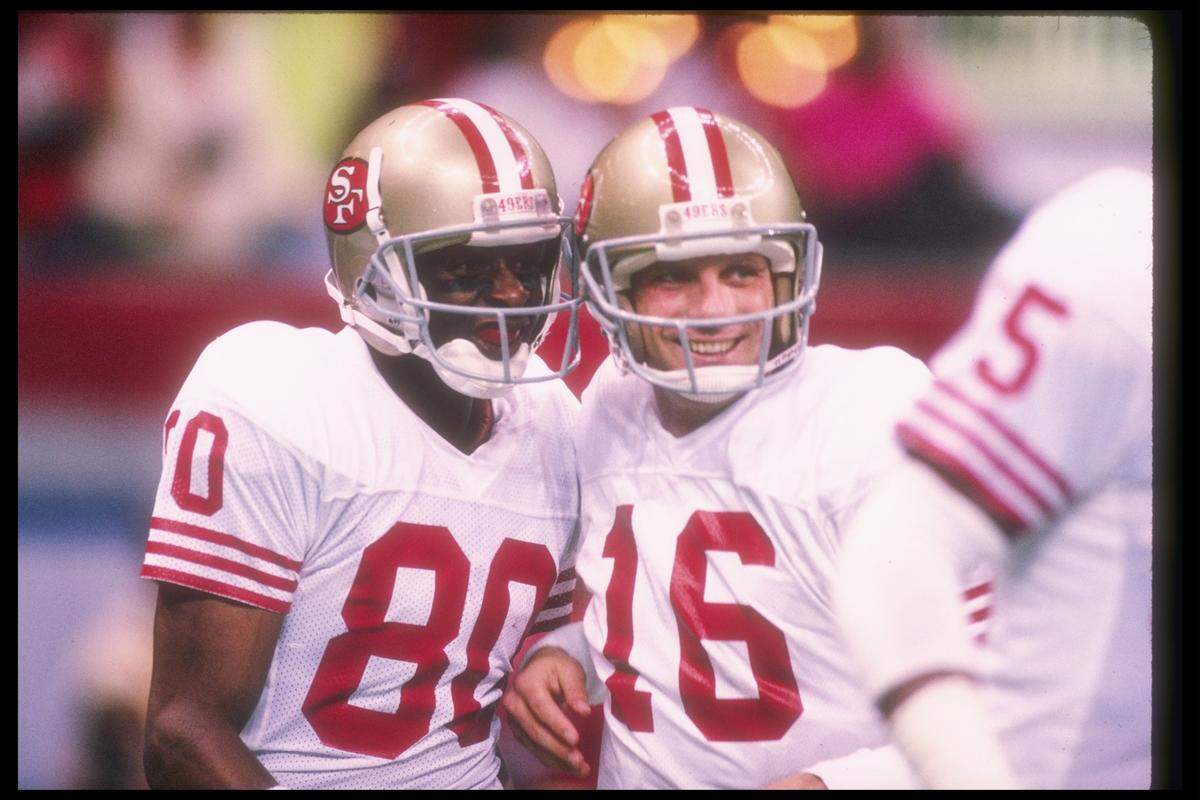
▪ MVP: San Francisco QB Steve Young, 325 yards passing and six touchdowns, a game-high 49 yards rushing.
▪ Should’ve Been MVP: Did you not see six touchdown passes and led the game in rushing?
▪ Super Bowl Rank: 45th
San Francisco fans still wanted Joe Montana. No matter Steve Young’s passing titles. No matter that these weren’t the 1980s 49ers defensively. No matter Dallas’ rise blunting the 49ers. Joe had four Super Bowl titles, Steve had none, they wanted Joe.
But in 1994, the 49ers retooled their defense. They brought in cornerback Deion Sanders, who would win NFL Defensive Player of the Year, as a free agent from division rival Atlanta. They got Pahokee native linebacker Rickey Jackson out of division rival New Orleans. They raided Dallas, which had spanked San Francisco in consecutive NFC title games, for linebacker Ken Norton Jr. Thus did the NFL’s No. 1-ranked defense get put together.
Meanwhile, Young won another passing title, this time with a 112.8 passer rating that broke Montana’s 1989 record. But Young’s fighting fury — he wanted some of head coach George Seifert after being pulled —during a 40-8 blasting by Philadelphia and toughness in a win over Detroit were what galvanized the locker room behind him.
After jumping to a turnover-assisted 21-0 lead, San Francisco outlasted Dallas in the NFC Championship Game, 38-28. Hours earlier, San Diego shocked “Blitzburgh” in the AFC Championship Game, taking out the one AFC defense that looked as if it might matchup with the 49ers.
Maybe it wouldn’t have mattered. Four weeks after Montana finished his career on the same field with a playoff loss to the Dolphins, Young had possibly the greatest Super Bowl anybody has ever had: 24 of 36 passing, 325 yards, six touchdowns and a game-high 49 yards rushing. The 49ers got up 14-0 after seven plays and won easily. As the game wound down, Young bent over, shouting to teammates, “Somebody take this monkey off my back!”
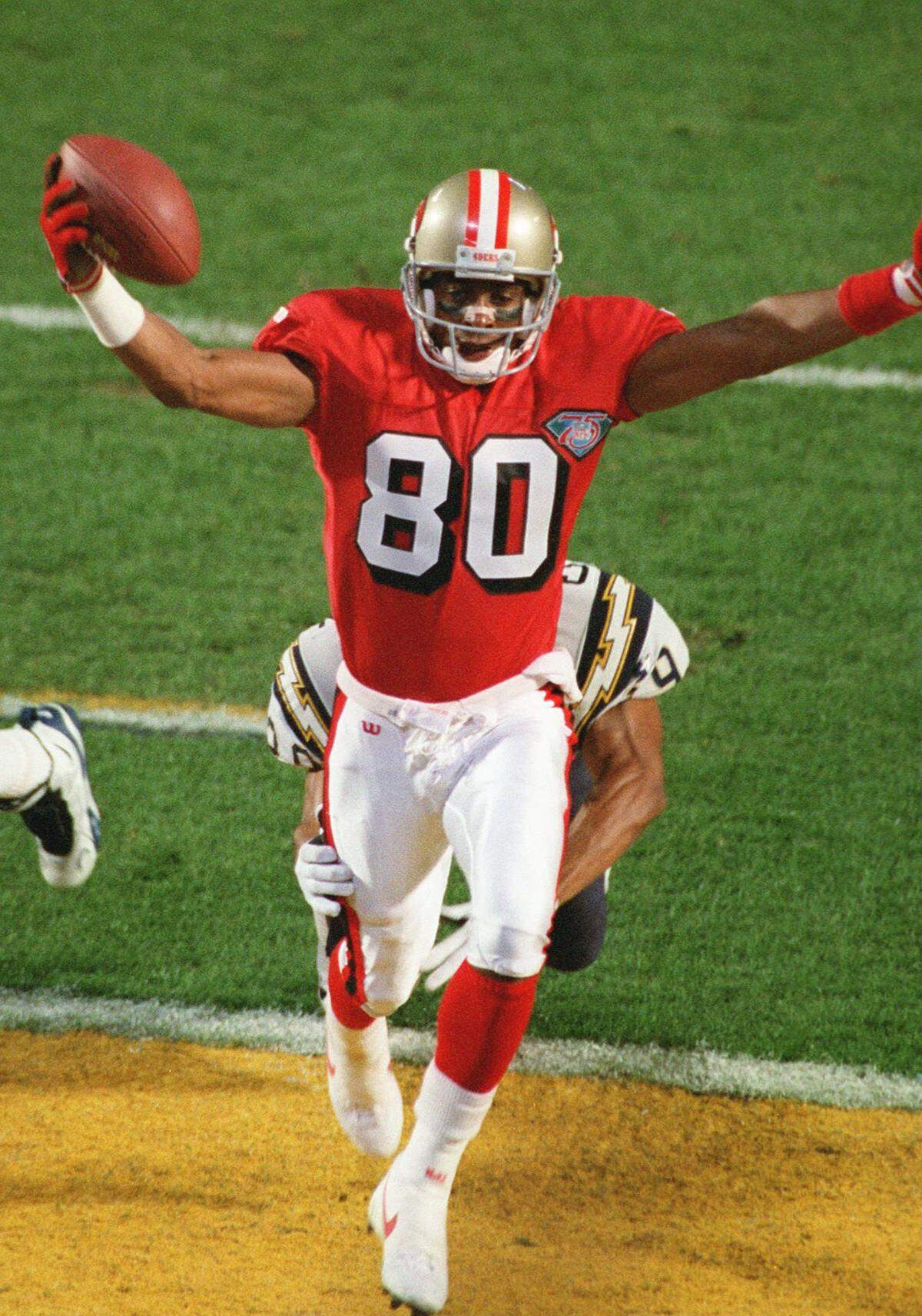
Sanders would head for Dallas the next season. Guess who got another Lombardi Trophy the following January.
SUPER BOWL XLIV
BALTIMORE 34, SAN FRANCISCO 31
▪ Feb. 3, 2013
▪ Mercedes-Benz Superdome, New Orleans
▪ MVP: Baltimore QB Joe Flacco, 22 of 33 passing, 287 yards, three touchdowns.
▪ Should’ve Been MVP: Flacco
▪ Super Bowl Rank: 10th
The Super Har-Bowl.
Taking sibling rivalry beyond Bobby and J.R. Ewing but short of Cain and Abel, this Super matched the ultra-competitive Brothers Harbaugh as head coaches: John in his fifth year with Baltimore vs. Jim in his second year with the 49ers.
John still had the same starting quarterback, Joe Flacco, as when he ascended from Eagles special teams coach to Ravens head coach. After dropping the ball in the previous year’s AFC Championship Game at New England, Baltimore hung on against Denver in the Divisional Round with a ridiculous 70-yard Flacco-to-Jacoby Jones bomb behind two bumbling Broncos defensive backs with 31 seconds left in regulation. An overtime win sent the Ravens to New England, where they wore down the Patriots 28-13.
Jim didn’t have the same starting quarterback that he did in September. When veteran dual threat quarterback Alex Smith suffered a concussion, second-year dual threat quarterback Colin Kaepernick played as if Smith should forget about the job no matter the state of his memory. When both were healthy, Harbaugh stayed with Kaepernick, who gashed Green Bay and Atlanta in the playoffs with his right arm and both legs.
The final game for linebacker Ray Lewis, the franchise’s greatest player in its Baltimore incarnation, started like a 1980s Superdome Super Bowl blasting. When Jones, Baltimore’s expert at scoring from afar, returned the second half kickoff 108 yards to go with his 56-yard touchdown catch, the Ravens held a 28-6 lead.
Minutes later, the building went metaphor. The Superdome lights on the half of the building with the 49ers sideline went as dark as San Francisco’s chances. If felt like the building was saying, “New Orleans didn’t put me back together after Katrina for another Bears-Patriots butt-kicking. Party over.” The game stopped for 34 minutes. The Ravens stopped for much longer. Or, as Atlanta and Green Bay would argue, San Francisco’s offense was too good to keep down the whole game.
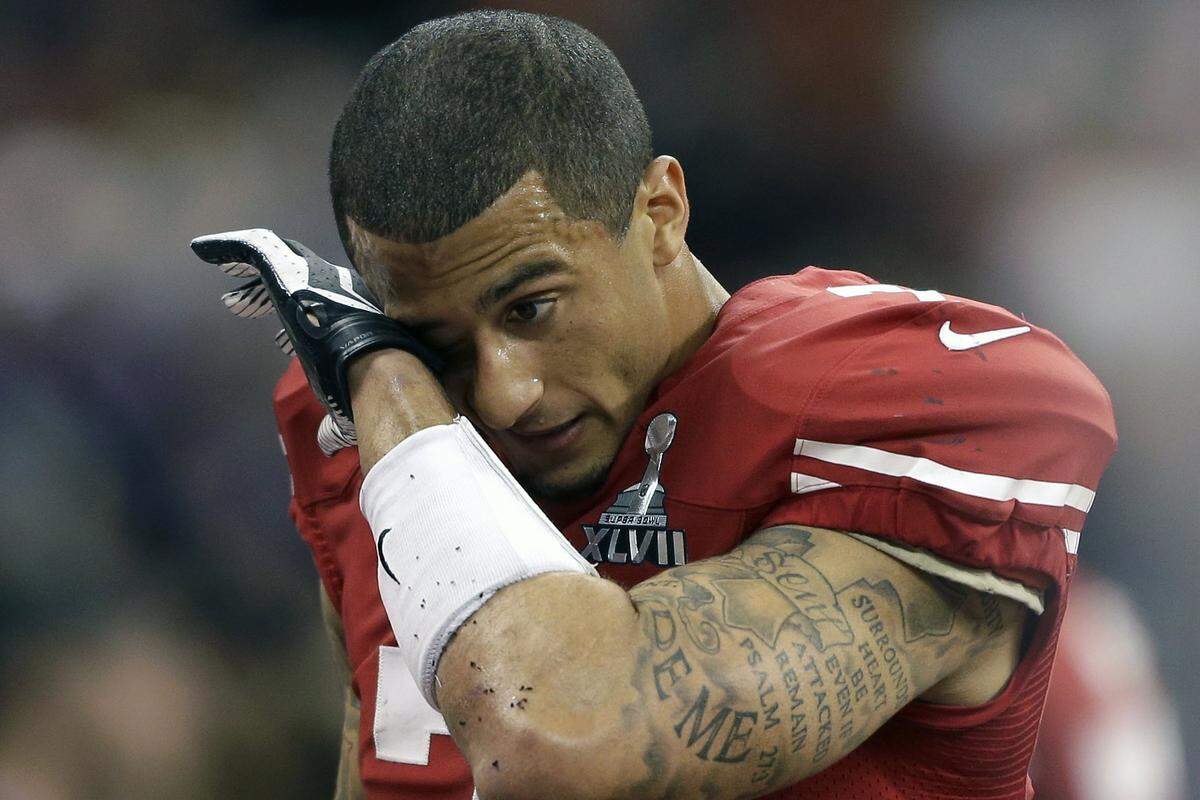
The 49ers began ripping off gains by the yard – backyard, front yard, Harvard Yard. Kaepernick would average 10.8 yards per pass and 18.9 yards per completion for the game. Running back Frank Gore ran for 110 yards at 5.79 yards a pop. A pair of touchdown drives and a field goal chopped Baltimore’s lead to 28-23 before the fourth quarter started. A Ravens field goal got countered with a 15-yard Kaepernick touchdown run.
A failed two-point conversion left the 49ers down 31-29. One more Justin Tucker field goal gave Baltimore a five-point buffer that could only be overcome by a touchdown. Big difference going into the 49ers final drive, especially after splash plays by Gore (33-yard run) and wide receiver Michael Crabtree (24-yard pass) got the 49ers to first and goal on the Ravens 7.
A 2-yard run. Then, incomplete and incomplete. The Super Bowl came down to a Kaepernick lob for Crabtree to the right sideline. Despite the wax-on, wax-off handfighting between Crabtree and Jimmy Smith and more jersey grabbing than a sports memorabilia store’s Going Out of Business sale, no flag fell as the pass fell beyond Crabtree’s reach.
The Ravens ran the clock down and took an intentional safety. They had their second Super Bowl title. Ray Lewis had his perfect career ending.
And John Harbaugh had bragging rights at every family dinner for the foreseeable future.
This story was originally published January 31, 2020 at 2:22 PM.