Lessons learned as a prep star at Miami High shaped Udonis Haslem into icon of ‘Heat Culture’
READ MORE
Mr. 305: Hometown Hero
Udonis Haslem has been part of multiple NBA title teams on the court, but his off-the-court work has been equally impressive.
Expand All
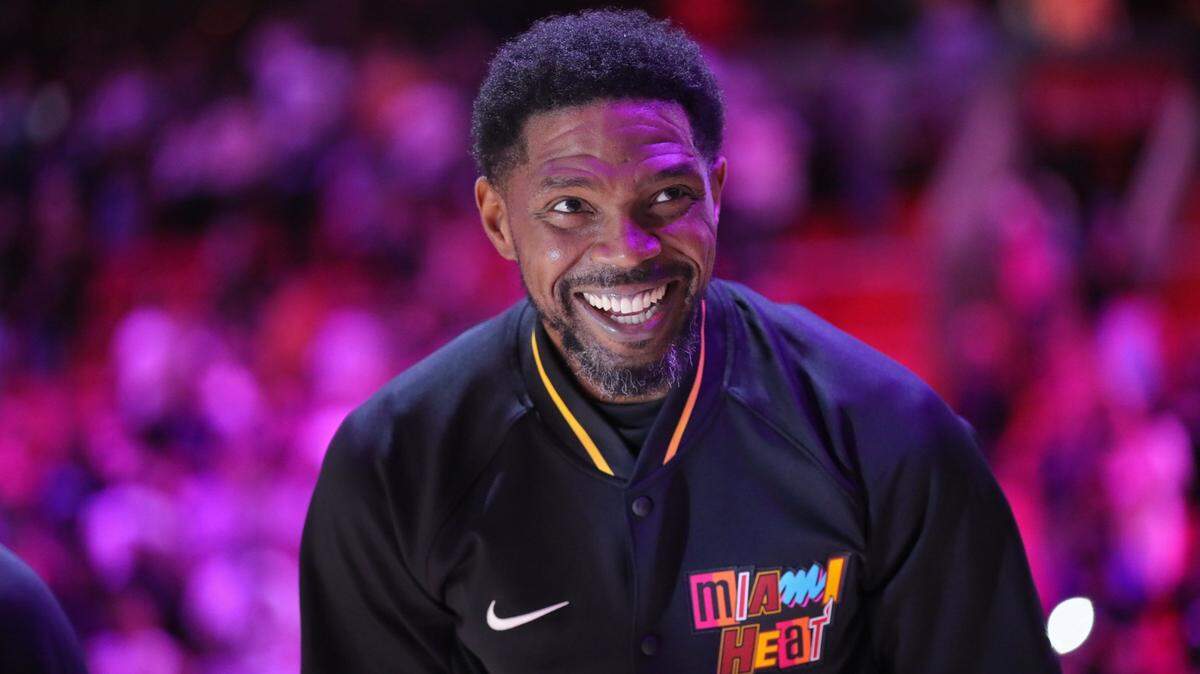
Back in the late 1990s when Frank Martin was coaching Miami’s most storied high school basketball program at Miami High, he often tested his teams’ toughness.
He often had a gauge for how far he could push his team to the limit.
His barometer was a hard-nosed 6-foot-6 forward named Udonis Haslem.
“We were at the end of practice one day, and it was a hard practice because it was playoff time,” Martin said. “Udonis was keeping up and running, and keeping up and running, and I was being hard on the whole team. I stopped and started talking to the team. Then, he started throwing up. I said, ‘OK, now we are ready to play.’
“I stopped practice right there. I knew, if we had pushed Udonis to exhaustion, we were ready.”
Haslem would go on to become a 19-year NBA veteran, the respected captain of one of the league’s most successful franchises, and the embodiment of the toughness that helped create “Miami Heat Culture.”
Haslem, whose father, John, played college basketball at Stetson, was a skilled player himself from a young age. But without the lessons he learned playing for Martin at Miami High, Udonis Haslem knows none of that would have been possible.
“Basketball was easy up until then. Basketball came natural,” Haslem said. “I was bigger than everybody. My dad was good at it. Basketball was just a sport that just came natural. I didn’t take it seriously until I got to Miami High and Frank Martin took it way more seriously than I ever thought it would be. That was the first time that I had to decide like, ‘Yo, do I really want to play basketball or what because this [expletive] is hard.’ It wasn’t that hard at first. Nobody ever pushed me until I got to Miami High and played for Frank.”
Whether it was running laps in practice or pushing himself further on the court, Haslem’s resilience was on display both on and off the court throughout his final two years in high school during which he led Miami High to the final two of three consecutive state championships.
“You’re not a 20-year NBA player because you’re just talented,” Martin said. “His talent was incredible and you can get by without pushing yourself to an extreme. We would constantly challenge him to grow and to do more and he did. He didn’t like it. But he understood it. The great ones comprehend that they need to be pushed.”
Those tough days would shape Haslem into the player he became at the University of Florida, where he’d start at center for four seasons despite being considered undersized at the position at 6-foot-8. Haslem would lead UF to the NCAA Tournament all four seasons, including one appearance in the national championship game in 2000, laying the seeds for the Gators’ future national championship seasons.
That toughness helped Haslem persevere through personal tragedy, when he lost his mother to cancer and later when he lost his older brother, Sam, who first taught him how to play basketball, and this year when he lost his father.
That toughness helped Haslem persevere when his NBA dream was in jeopardy and his only choice was to play basketball in France.
“That grit that I learned at Miami High, that’s the grit that got me through not being drafted. That’s the grit that got me through being undersized. That’s the grit that got me through Europe. That’s the grit that got me through the NBA,” Haslem said. “I think when people talk about the Miami Heat culture and everything, and there is a true culture. But what people don’t understand is I’ve been a part of a culture long before the Miami Heat.
“When people look at the history of Miami High and the championships, you can’t put together that kind of team and those kinds of runs without a culture. So I’ve been a part of a culture where the older guys come back and there’s a standard and you got to work your [butt] off and you’re held accountable.”
Martin coached a number of talented players during his days coaching at Miami High and during the past two decades at the college level at both Kansas State and South Carolina.
Martin said he’s rarely seen a player as selfless as Haslem.
It’s a big reason Haslem has become an icon not just of the Heat, but of the city of Miami.
“He always wanted to be a great teammate. Guys who are great teammates are the ones respected where they live. That was a family trait, the way he was raised,” Martin said. “He’s in a contract year and the Heat drafted Michael Beasley. They had never met. And he asked for Beasley’s locker to be next to his. He’s trying to help a guy the Heat drafted to take his job. Why? Because he’s one of us. That’s who he is as a husband, a father, a son, a friend. That supersedes everything else. That’s why he’s so beloved where he lives, because he looks out for people.”
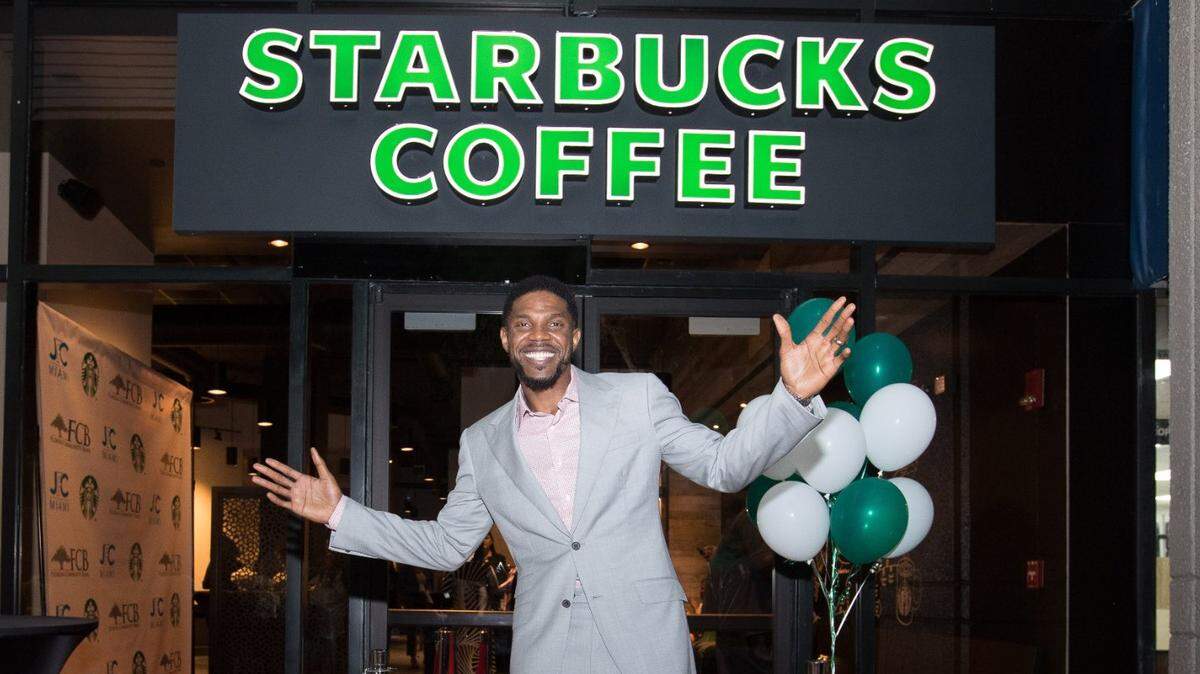
Haslem has shown his love for Miami more and more through the years, whether it’s as one of the city’s prominent voices for social justice or through his business endeavors, where he puts an emphasis on helping people in the local community.
“He absolutely loves Miami. He’s opened up businesses in the inner city and he goes out and hires people that live in the inner city and trains them,” Martin said. “That’s real, man. That’s creating jobs. That’s changing the lives of others. That’s helping people. And that’s who he is.”
This story was originally published December 15, 2021 at 7:00 AM.