
It’s been a year since the Marlins hired Skip Schumaker. Reflecting on what he accomplished
When Skip Schumaker was formally introduced as the Miami Marlins’ manager last offseason, some of his first comments paved the way for the 12 months that followed.
“How do we get to the postseason?” Schumaker asked rhetorically. “That’s what I’m concerned about every single day. How do we get to the postseason — not just one year, but year after year after year. That’s the expectation I’m going to bring when I enter that clubhouse.”
Wednesday marks the one-year anniversary of the Marlins naming Schumaker as the club’s 14th manager (not including the one-game stints by Cookie Rojas in 1996 and Brandon Hyde in 2011).
And in the year since Schumaker took the helm, it’s easy to see how things have shifted inside the clubhouse.
Through it all — from that introductory press conference through spring training, the stellar start of the season, a near second-half collapse and, finally, that playoff berth — Schumaker’s message to his team remained steadfast: He knew the Marlins had the talent to make the playoffs even if nearly everyone outside the organization did not. The belief needed to be self-driven, and the buy-in needed to come from everyone.
The result: An 84-78 record (a 15-win improvement over a season earlier), including a 33-14 record in one-run games and 41 come-from-behind victories. That season ended by getting swept in the wild card round by the Philadelphia Phillies, but the path to get to that point still showed that a standard was established and paves the way for the Marlins as they enter Schumaker’s second year.
“He came in and he showed us what it was like to win,” Marlins center fielder Jazz Chisholm Jr. said. “None of us have really been through that, especially in this organization.”
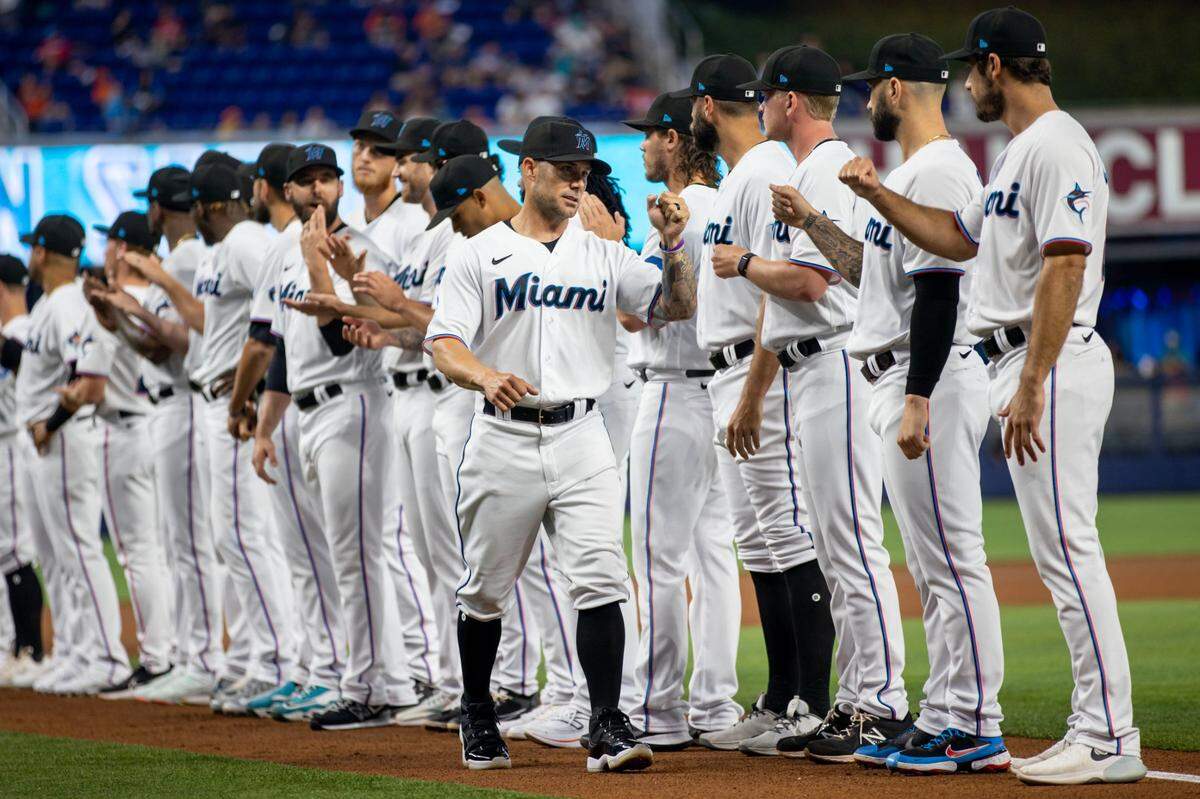
For Schumaker, the success and the trust between the players and staff started with open communication from the get-go and the players’ willingness to handle tough conversations throughout the season.
“That happened in Spring Training, and trying to get guys to get better,” Schumaker said. “We had an idea of how each guy could get better and how the plan stood out for them. And then they started trusting us once it started happening. I think, once you get that, then you get buy-in from everybody. That’s not easy to do with a brand new staff. Everybody was new except for the pitching guys, and once you have buy-in from your best players on your team, that goes a long way.”
All-Star second baseman Luis Arraez, who came to Miami this offseason in a trade with the Minnesota Twins and won his second consecutive batting title, agrees with that sentiment. Schumaker’s ability to win over the clubhouse comes down to his ability to succeed on the most basic fronts.
“He’s the best,” Arraez said. “He knows how we feel when we hurt or when we need a day off. He talks with us a lot every day. ... We’ve got a really good staff here and amazing players, so I want to say thank God to those guys and especially Skip; he’s the best.”
Added Marlins ace Sandy Alcantara: “Since the first day he came here, he gave us a lot of energy, a lot of confidence. That’s what we needed. He had an opportunity and we trust each other.”
That trust between clubhouse and manager will carry over into Year 2 even if the cast of characters will be different. There will be new players on the roster. There will also be new people in the front office following the departure of general manager Kim Ng.
Schumaker next season will be one of the constants driving the Marlins in 2024.
And if 2023 showed anything, he has the ability to navigate through it.
“Those guys are now understanding what winning looks like and should look like. It was a really fun year,” Schumaker said after the Marlins were eliminated from the playoffs. “I grew a lot as a person, as a coach. Met a lot of good people, new people in baseball and just really fell in love with those guys. The sad part about it is, because it’s baseball, you’re not going to see all the same people in Spring Training. That’s what sucks because I came to the field every day away from my family, but so grateful to be a part of another family.”
.JPG)